Artwork
The Landing Stage
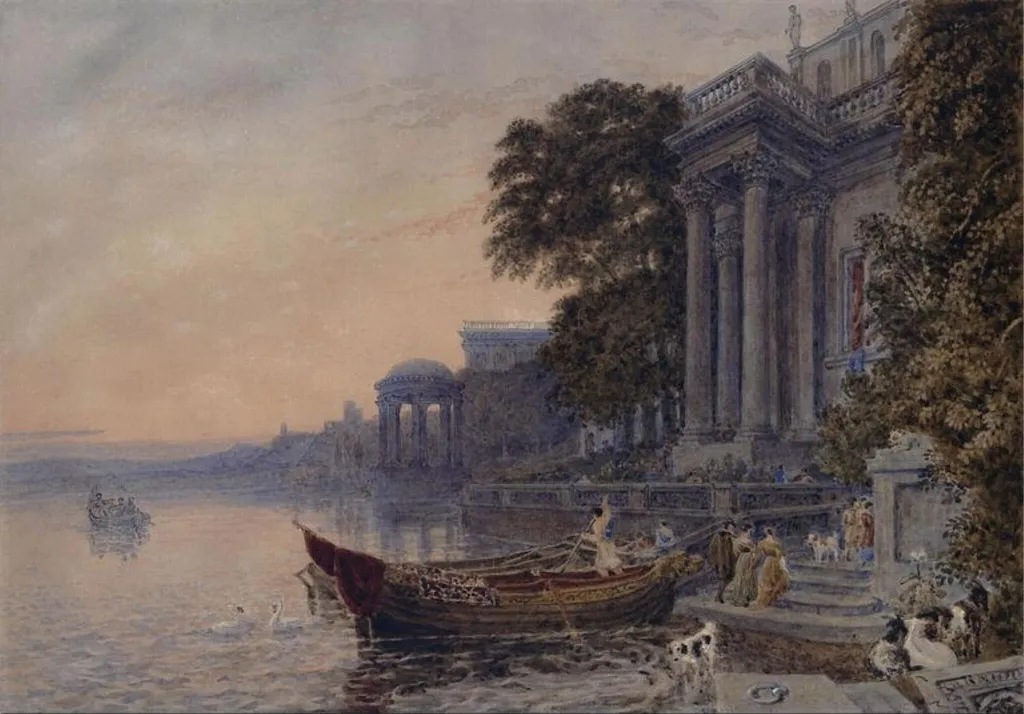
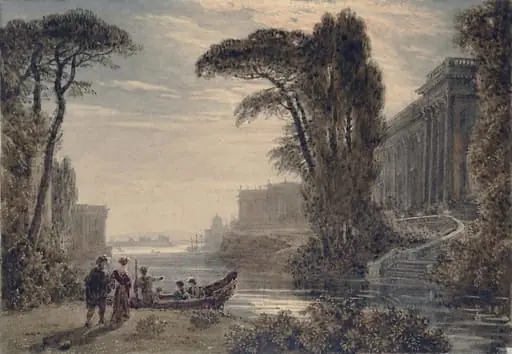
The Landing Stage is a watercolor work on paper by the Romanticist artist George the younger Barret. It dates from 1790 and is held in the collection of the Victoria and Albert Museum. This watercolour depicts a tranquil waterfront scene at a stone landing stage, where figures disembark from a small rowing boat.
About this work
Overview
This watercolour depicts a tranquil waterfront scene at a stone landing stage, where figures disembark from a small rowing boat.
This watercolour depicts a tranquil waterfront scene at a stone landing stage, where figures disembark from a small rowing boat. A classical-style building with columns rises behind the platform, its form softened by the pale, diffused light of a hazy sky. The water reflects subtle ripples, and swans glide gently nearby. Trees along the right edge frame the composition, enhancing its sense of quiet seclusion.
Subject & Meaning
The scene captures a moment of transition—people leaving a boat and stepping onto land—suggesting arrival, departure, or daily ritual. The classical architecture implies a cultivated, perhaps aristocratic setting, while the calm atmosphere and natural elements convey serenity rather than grandeur. The absence of overt drama invites contemplation of quiet, everyday moments in a refined landscape.
Technique & Style
The artist employed delicate washes and soft blending to achieve a luminous, ethereal quality. Details in the boat and figures are rendered with precision, yet the overall effect remains light and atmospheric. Subtle variations in tone suggest texture in stone, water, and foliage without heavy definition, reinforcing the dreamlike stillness of the composition.
History & Provenance
The work is a watercolour from the 19th century, likely created as a study or finished piece for private collection. It has been held in institutional collections, including the Victoria and Albert Museum, which holds a significant number of similar topographical and landscape watercolours from the period, indicating its alignment with contemporary artistic interests in serene, observed scenes.
Context
Produced during a time when watercolour was gaining recognition as a serious medium, this piece reflects the era’s fascination with classical architecture and natural harmony. Artists often depicted such tranquil waterfronts to evoke idealized visions of leisure and order, influenced by both Romantic sensibilities and the popularity of Grand Tour imagery.
Legacy
Though not widely exhibited, the work contributes to a broader tradition of British watercolour landscape painting that valued subtlety and observation over spectacle. Its presence in museum collections underscores its role as an example of refined, understated topographical art from the 19th century.
Artist & collection
Artist
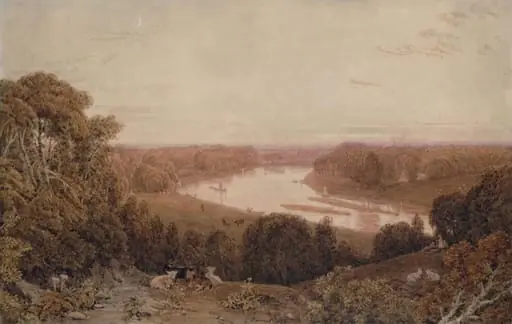
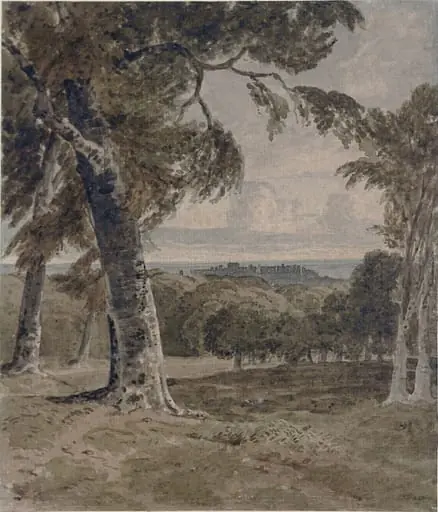
This English painter built quiet drama into gentle views. His watercolours show cattle grazing near Richmond, evening rivers winding through hills, and Windsor Castle glimpsed across a Surrey park. Barret worked in the…

 A Classical Composition
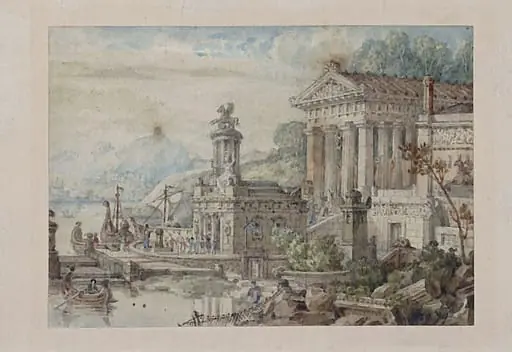 A Temple of Victory
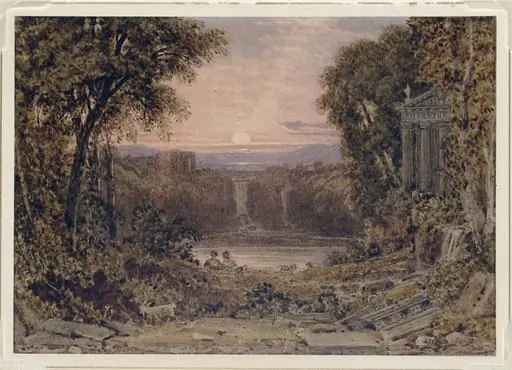 Tivoli - Sunset
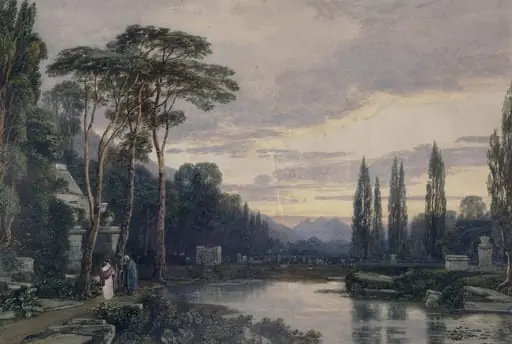 Evening: A Cemetery
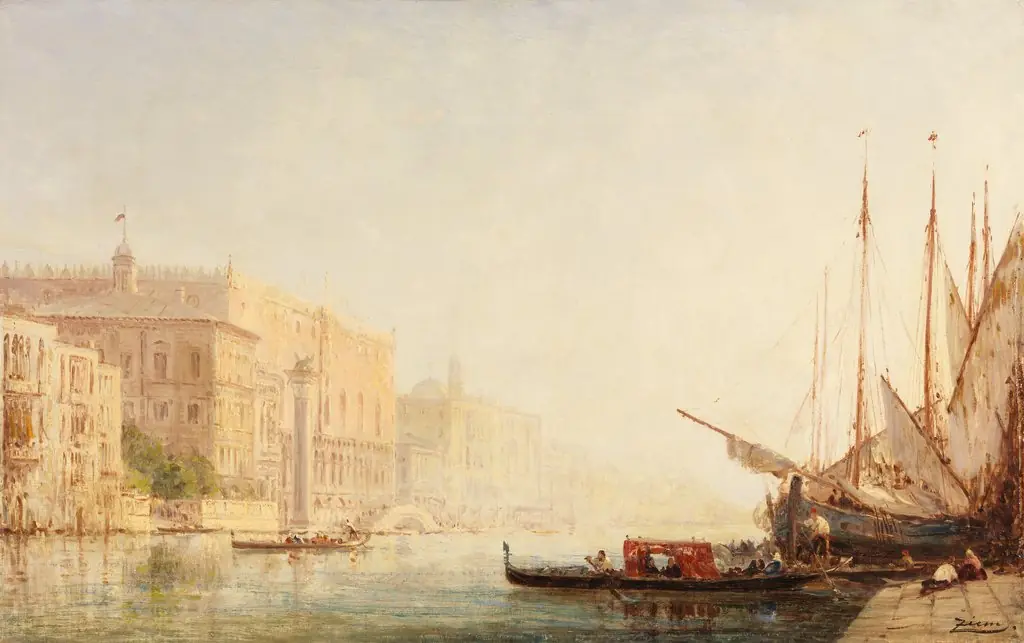 Venice: a Canal Scene
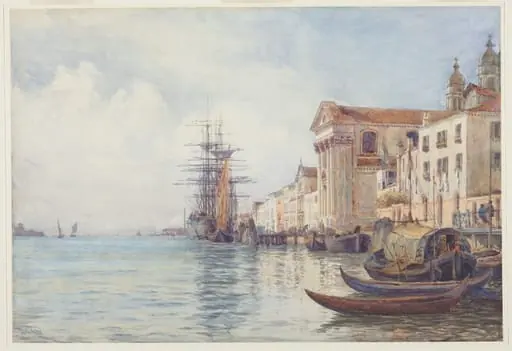 The Giudecca Canal with Shipping near the Chiesa dei Gesuati
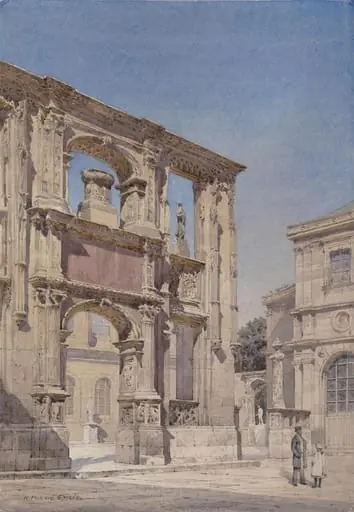 Part of the Chateau de Gaillon re-erected in the court of the Palais des Beaux Arts
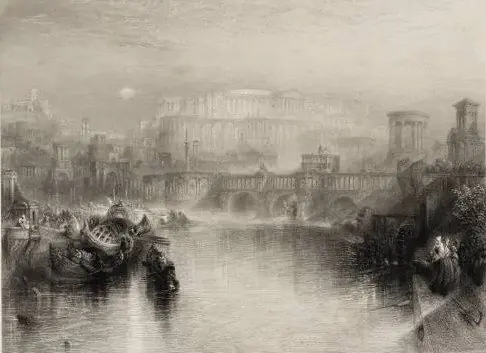 Ancient Rome
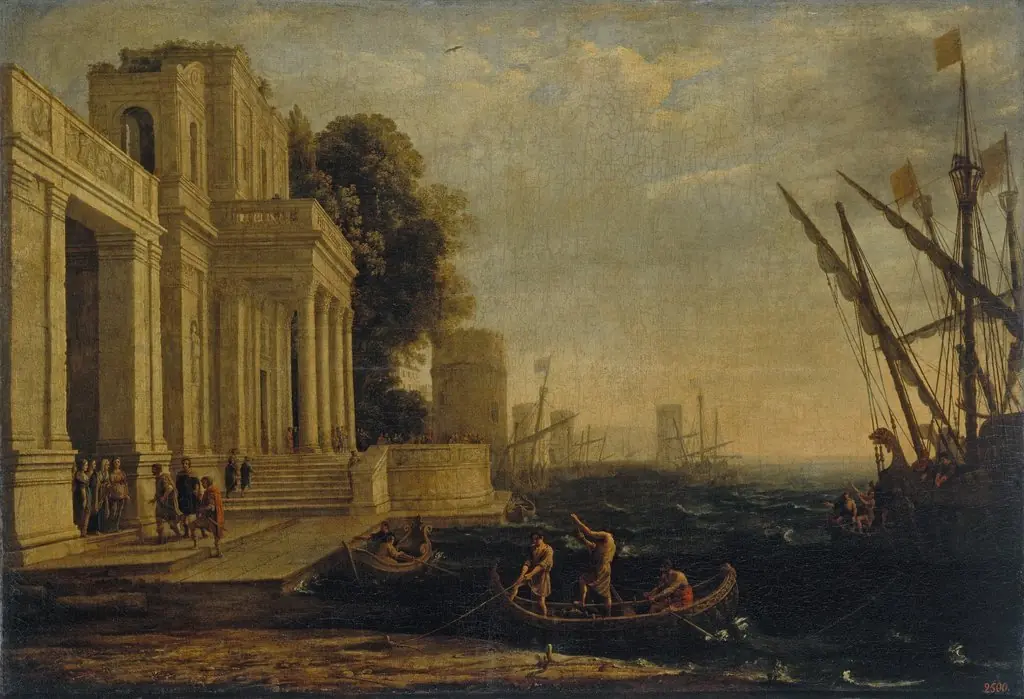 Ulysses Recieved by the Daughters of Lycomedes
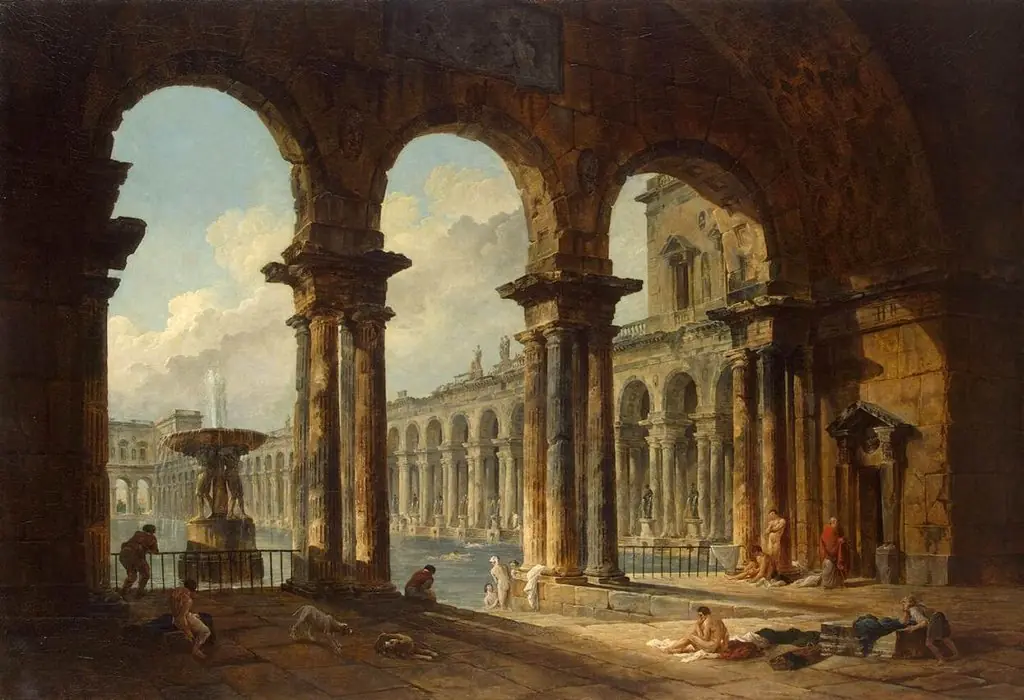 Ancient Ruins Used as Public Baths
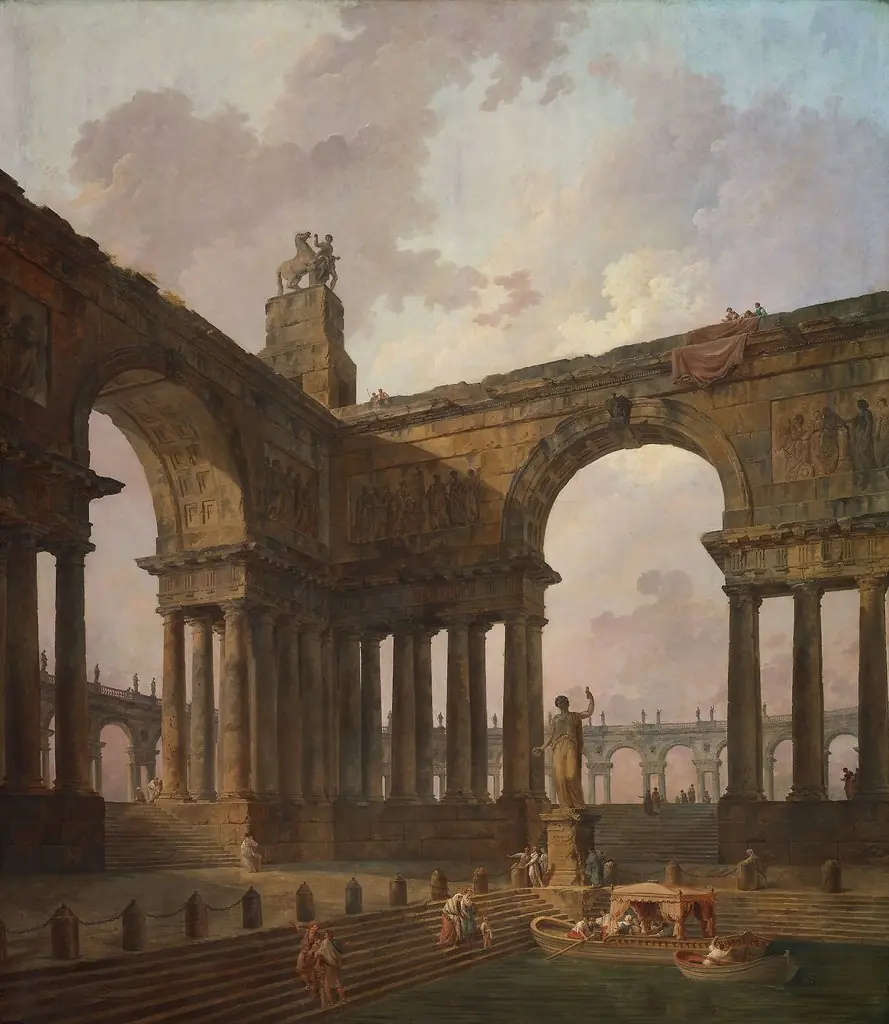 The Landing Place