Artwork
Landscape
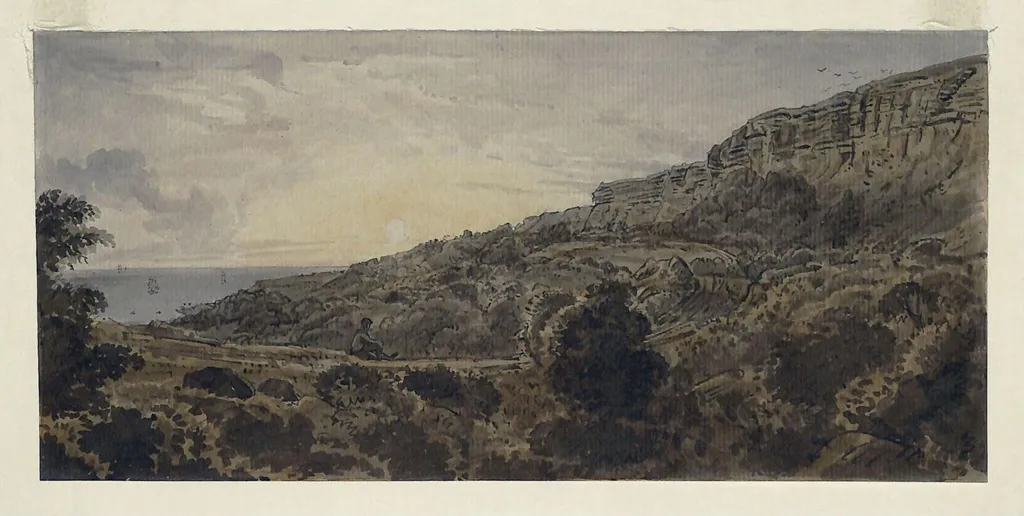
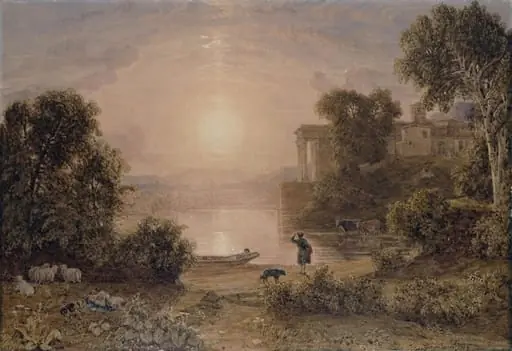
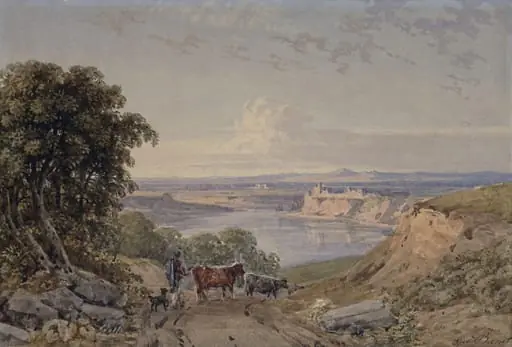
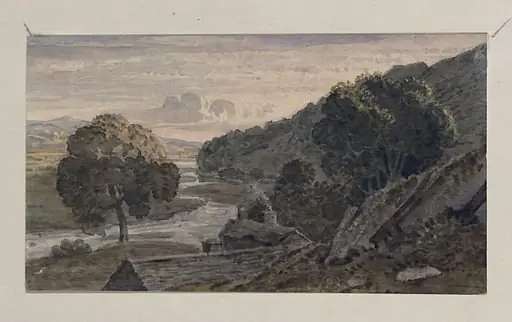
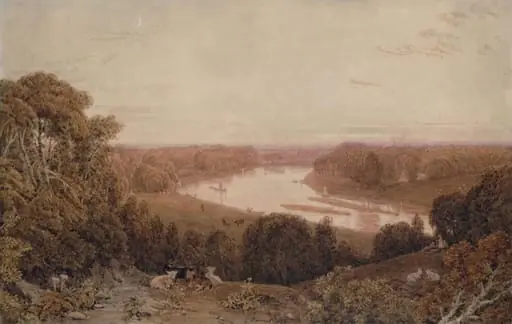
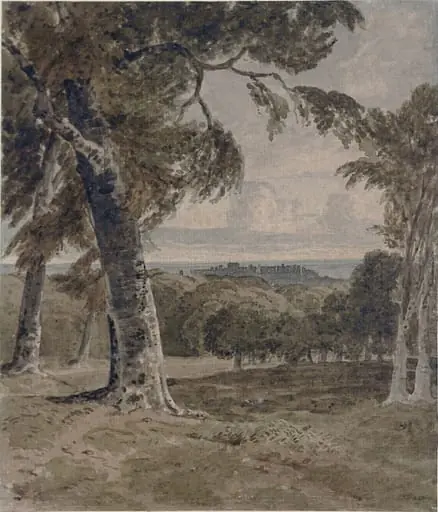
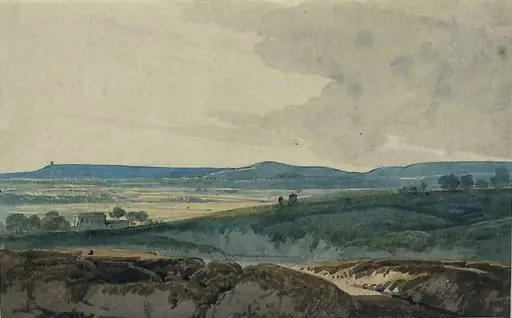
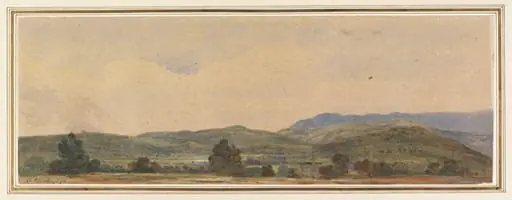
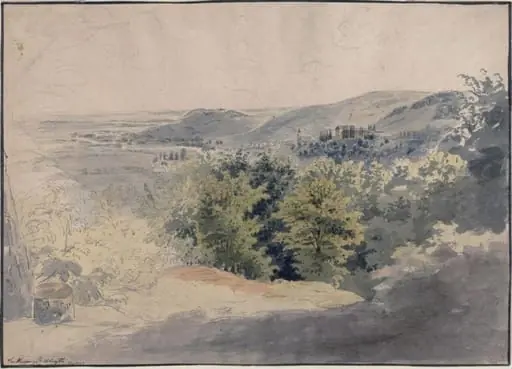
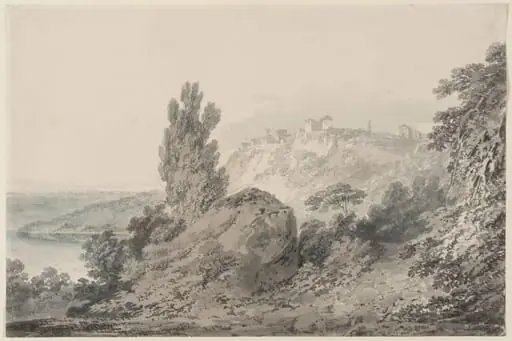
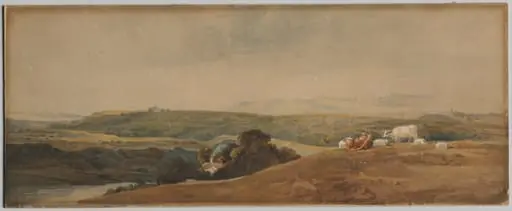
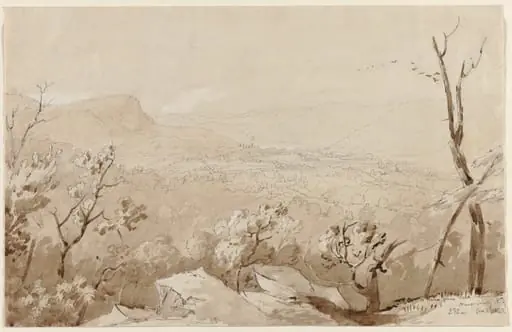
Landscape is a watercolor work on paper by George the younger Barret. It dates from 1750 and is held in the collection of the Victoria and Albert Museum.
About this work
Overview
Created around 1750, this watercolor landscape is attributed to George Barret the Younger. It resides in the collection of the Victoria and Albert Museum, representing a quiet moment in the British topographical tradition. The work exemplifies the artist’s skill in capturing natural scenery with restrained color and delicate handling, typical of mid-18th-century watercolor practice.
Subject & Meaning
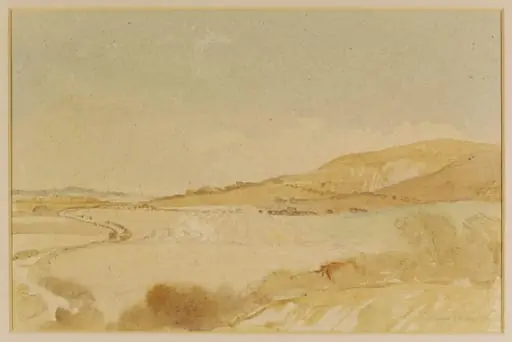
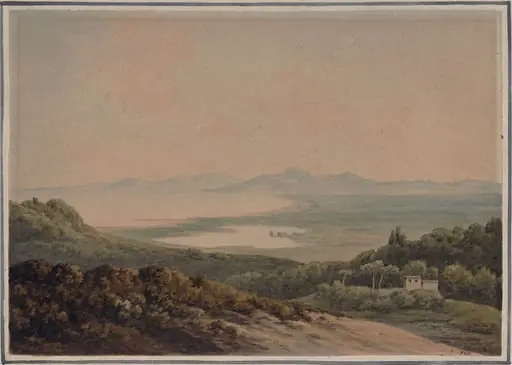
The scene depicts a tranquil coastal path descending from a weathered cliff to a still shoreline, where a solitary boat rests. The composition invites quiet contemplation, emphasizing solitude and the subtle interplay between land and sea. No human figures are present, reinforcing a sense of stillness and natural order rather than narrative or drama.
Technique & Style
Barret employed watercolor with a light, fluid touch, allowing the paper’s white to suggest highlights and atmosphere. Colors are muted—soft grays, pale blues, and earth tones—blended to create atmospheric depth. Brushwork varies from fine, sketchy lines in the foliage to broader washes in the sky, producing a sense of spontaneity and gentle imperfection.
History & Provenance
The work entered the Victoria and Albert Museum’s collection as part of its broader effort to preserve British watercolor art from the 18th century. While specific early ownership records are not documented, its preservation reflects the museum’s commitment to maintaining examples of topographical watercolor by lesser-known but skilled practitioners of the period.
Context
During the 1750s, watercolor was increasingly used for landscape studies and travel sketches, often as preparatory work for oil paintings or as independent records of scenery. Barret, trained in the tradition of topographical drawing, contributed to this growing interest in natural observation, aligning with broader Enlightenment-era values of empirical seeing and quiet aesthetic appreciation.
Legacy
Barret’s watercolors, though not widely celebrated in his time, now serve as valuable records of 18th-century British landscape sensibility. This piece, like others in his oeuvre, illustrates the transition from documentary sketch to expressive medium, influencing later generations who valued watercolor for its immediacy and subtlety over grandeur.
Artist & collection
Artist
This English painter built quiet drama into gentle views. His watercolours show cattle grazing near Richmond, evening rivers winding through hills, and Windsor Castle glimpsed across a Surrey park. Barret worked in the…