Artwork
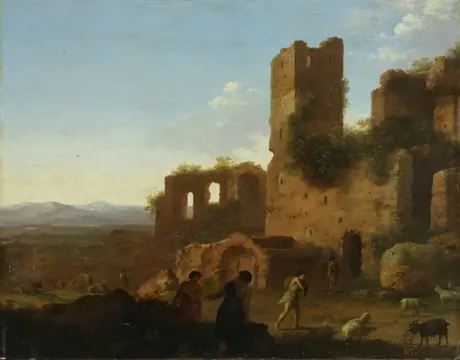
Landscape with the Ruins of the Baths of Diocletian, Rome
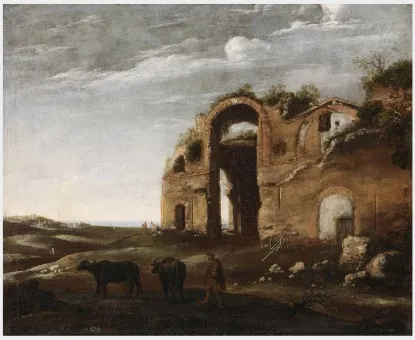
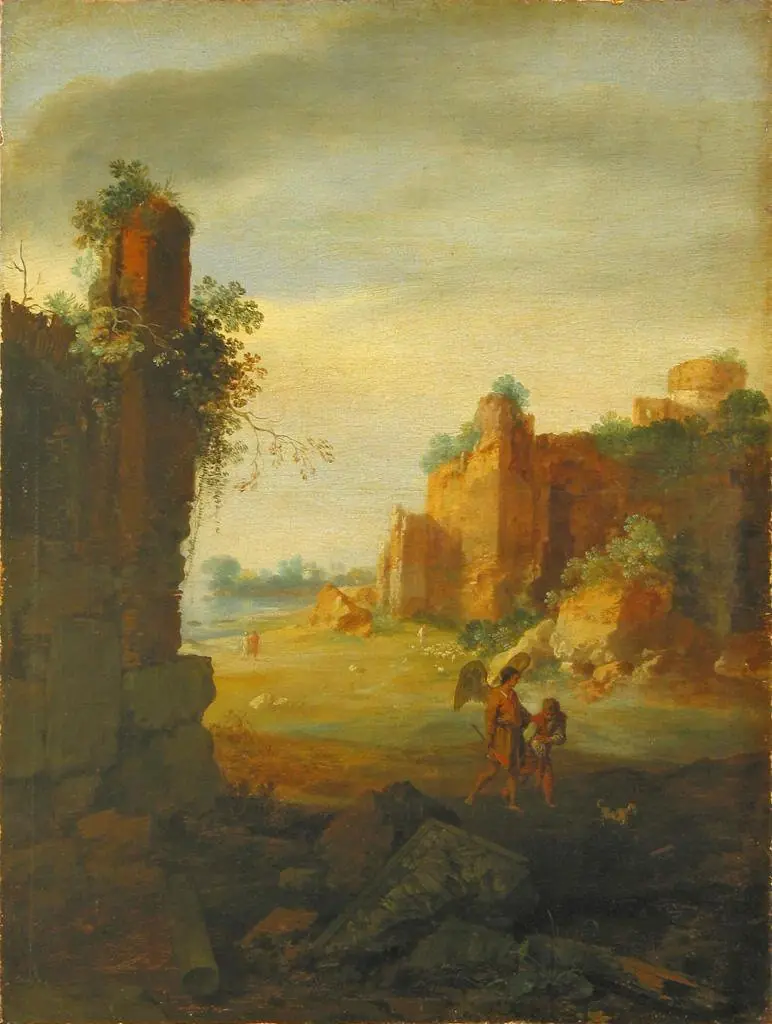
Landscape with the Ruins of the Baths of Diocletian, Rome is an oil painting by the Dutch Golden Age artist Bartholomeus Breenbergh. It dates from 1625 and is held in the collection of the National Gallery of Ireland.
About this work
Overview
Painted in 1625 by Bartholomeus Breenbergh, this oil-on-canvas work captures a view of the ancient Baths of Diocletian in Rome.
Painted in 1625 by Bartholomeus Breenbergh, this oil-on-canvas work captures a view of the ancient Baths of Diocletian in Rome. Breenbergh, a Dutch artist who lived in Italy from 1619 to 1630, used the ruins as a focal point in a broader landscape. The painting reflects his engagement with Roman antiquity during his formative years abroad, before returning to Amsterdam. It remains part of the National Gallery of Ireland’s collection.
Subject & Meaning
The scene presents the monumental remains of the Baths of Diocletian amid a quiet rural setting. Two figures—a man leading a cow and another walking beside him—move through the foreground, their small scale emphasizing the scale and endurance of the ruins. The composition suggests contemplation of time’s passage, blending human activity with the silent remnants of imperial Rome without overt narrative or symbolism.
Technique & Style
Breenbergh employed oil paint to model forms with subtle gradations of light and shadow, enhancing spatial depth. Warm ochres and terracottas in the stone ruins contrast with the cooler blues and grays of the sky and hills, creating atmospheric harmony. The brushwork is precise yet unobtrusive, favoring quiet realism over dramatic effect. The handling of light reflects an awareness of Italian landscape traditions without adopting full chiaroscuro intensity.
History & Provenance
Created during Breenbergh’s decade-long stay in Rome, the painting is one of several works from this period that document Roman ruins through a Northern European lens. It entered the National Gallery of Ireland’s collection in the 20th century, likely through acquisition or bequest. Its survival and preservation reflect its status as a representative example of Dutch artists’ engagement with classical Italy in the early 17th century.
Context
In the early 1600s, many Northern European artists traveled to Rome to study antiquity and classical ruins, producing landscapes that fused topographical observation with poetic mood. Breenbergh’s work aligns with this trend, alongside contemporaries like Cornelis van Poelenburch. His depiction of the Baths of Diocletian, then partially buried and overgrown, reflects how Romans and visitors alike perceived these structures—as evocative fragments of a lost world.
Legacy
Breenbergh’s painting contributes to a broader tradition of Dutch-Italian landscape painting that influenced later generations of travelers and artists. While not widely exhibited, it remains a quiet testament to how Northern Europeans interpreted Roman antiquity—not as grand monuments, but as integrated elements of a living, evolving countryside. Its presence in Dublin underscores the international circulation of such works in the modern era.
Artist & collection
Artist
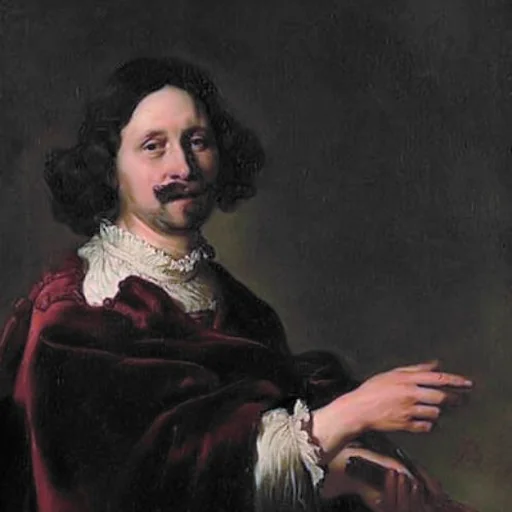
Bartholomeus Breenbergh (before 13 November 1598 – after 3 October 1657) was a Dutch Golden Age painter of Italian and Italianate landscapes, in Rome (1619-1630) and Amsterdam (1630-1657).

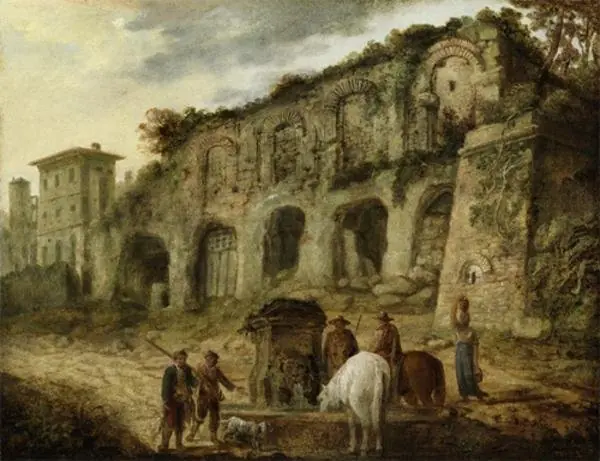 Peasants and Horses Standing By A Fountain: The Curia Ostilia and the Basilica Porzia on the Palatine Hill Beyond
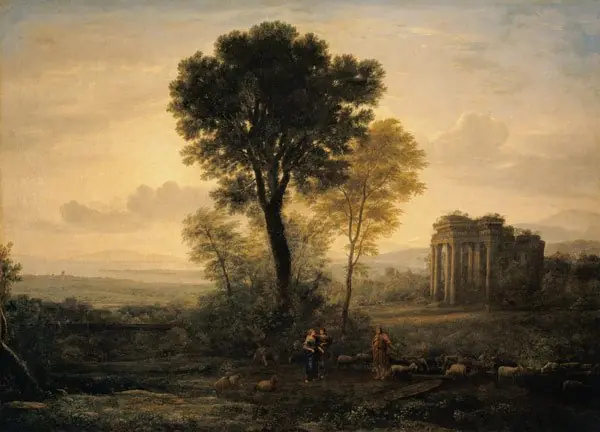 Landscape with Jacob, Rachel and Leah at the Well (Morning)
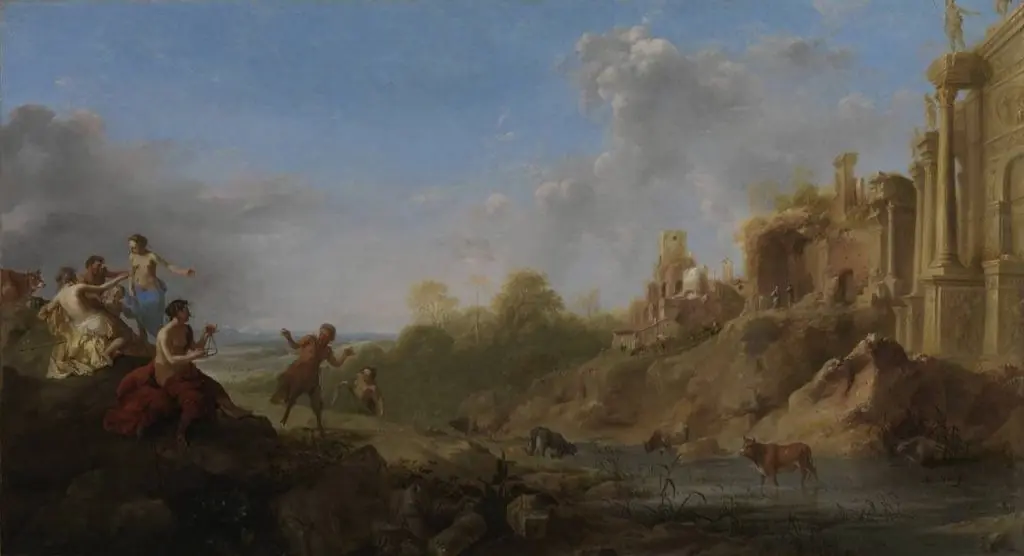 Ruinenlandschaft mit tanzendem Faun
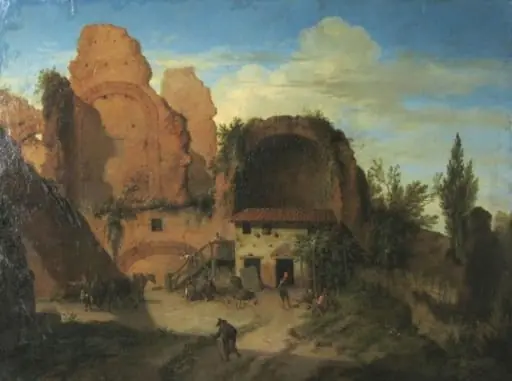 Ruină cu cârciumă țărănească
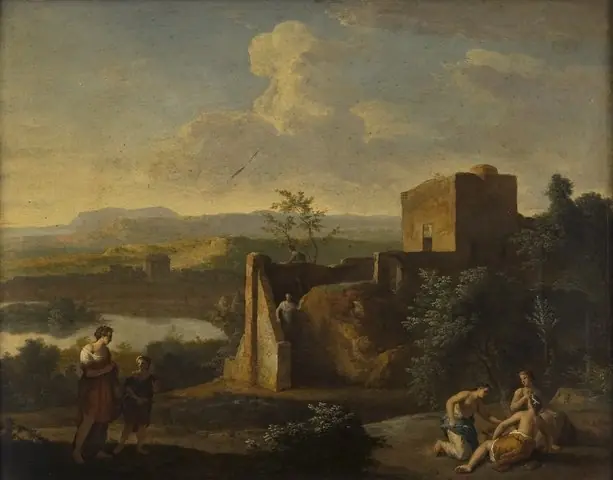 Idyllic Landscape with Watch-tower
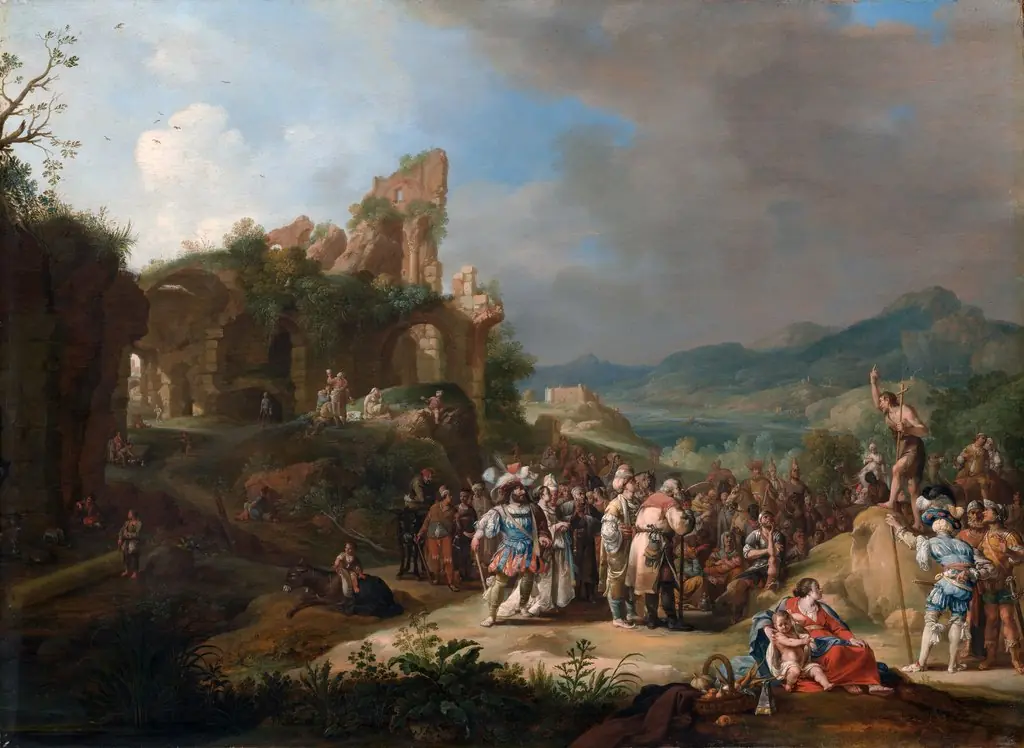
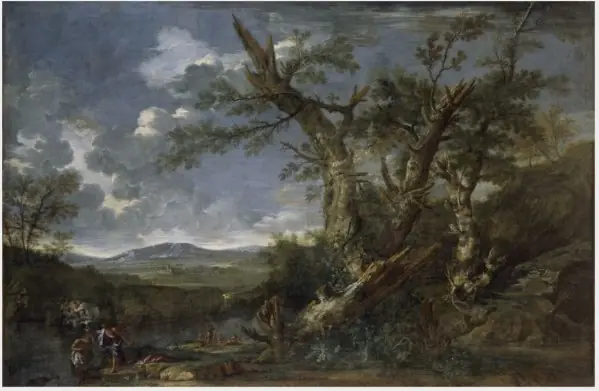 Landscape with the Baptism of Christ in the River Jordan
 Landscape with figures and ruins