Artwork
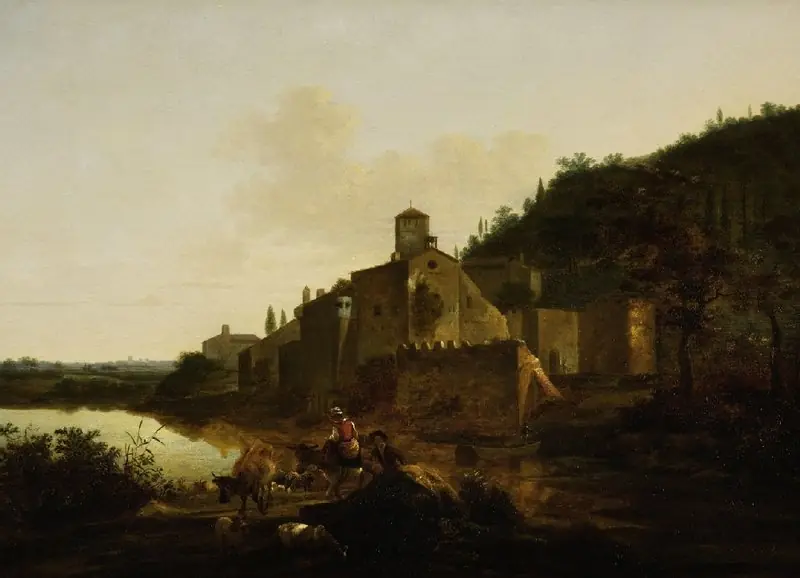
Peasants and Horses Standing By A Fountain: The Curia Ostilia and the Basilica Porzia on the Palatine Hill Beyond
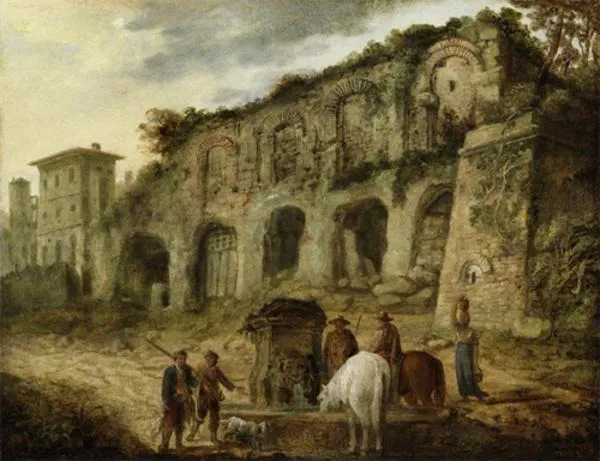
Peasants and Horses Standing By A Fountain: The Curia Ostilia and the Basilica Porzia on the Palatine Hill Beyond is an unspecified painting by the Rococo painting artist Alexander Runciman. It dates from 1767 and is held in the collection of the National Galleries Scotland.
About this work
Overview
Though Runciman was primarily known for mythological themes, this piece reflects his engagement with classical landscapes during his time in Italy.
Painted in 1767 by Scottish artist Alexander Runciman, this work captures a quiet moment near a rural fountain, with figures and animals resting under the shadow of ancient Roman ruins. Though Runciman was primarily known for mythological themes, this piece reflects his engagement with classical landscapes during his time in Italy. It is held in the collection of the Scottish National Gallery, offering a rare glimpse into his topographical studies.
Subject & Meaning
The scene portrays ordinary peasants and their horses gathered around a fountain, their presence grounded and unidealized. Behind them, the crumbling remains of the Curia Ostilia and Basilica Porzia rise on the Palatine Hill, evoking the passage of time and the quiet persistence of daily life amid historical decay. The composition suggests a contemplative contrast between human routine and the silent endurance of antiquity.
Technique & Style
Runciman employs soft chiaroscuro to model forms and create spatial depth, guiding the viewer from the foreground figures to the distant ruins. The brushwork is restrained, favoring atmospheric tone over detailed ornamentation. The palette is muted, with earthy tones dominating, reinforcing the scene’s quiet realism. This approach diverges from the theatricality of high Rococo, leaning instead toward a subdued, observational naturalism.
History & Provenance
Runciman painted this work during his travels in Italy, likely between 1765 and 1767, as part of a broader interest in Roman antiquities. It entered the Scottish National Gallery’s collection in the 19th century, possibly through private acquisition or bequest. Its survival as a relatively minor work by a lesser-known artist highlights the gallery’s commitment to preserving diverse strands of Scottish artistic output from the period.
Context
In the mid-18th century, British artists increasingly traveled to Italy to study classical ruins, often blending topographical accuracy with romanticized nostalgia. Runciman’s painting aligns with this trend, yet avoids grandeur in favor of humble, everyday life. Unlike contemporaries who idealized antiquity, he presents ruins as part of an ongoing, lived environment—reflecting a more intimate, less heroic view of the classical past.
Legacy
Though not widely exhibited or studied, the painting remains a quiet testament to Runciman’s ability to merge observation with historical awareness. It contributes to the understanding of how Scottish artists engaged with classical ruins outside the conventions of grand historical painting. Its presence in a national collection ensures its role as a subtle but enduring record of 18th-century visual culture.
Artist & collection
Artist
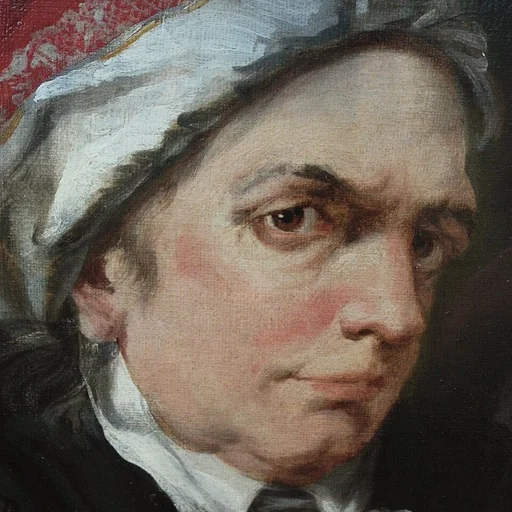
Alexander Runciman (15 August 1736 – 4 October 1785) was a Scottish painter of historical and mythological subjects. He was the elder brother of John Runciman, also a painter.

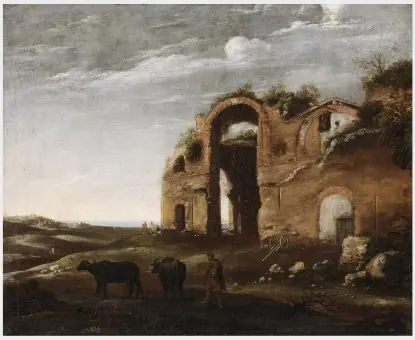 Landscape with the Ruins of the Baths of Diocletian, Rome
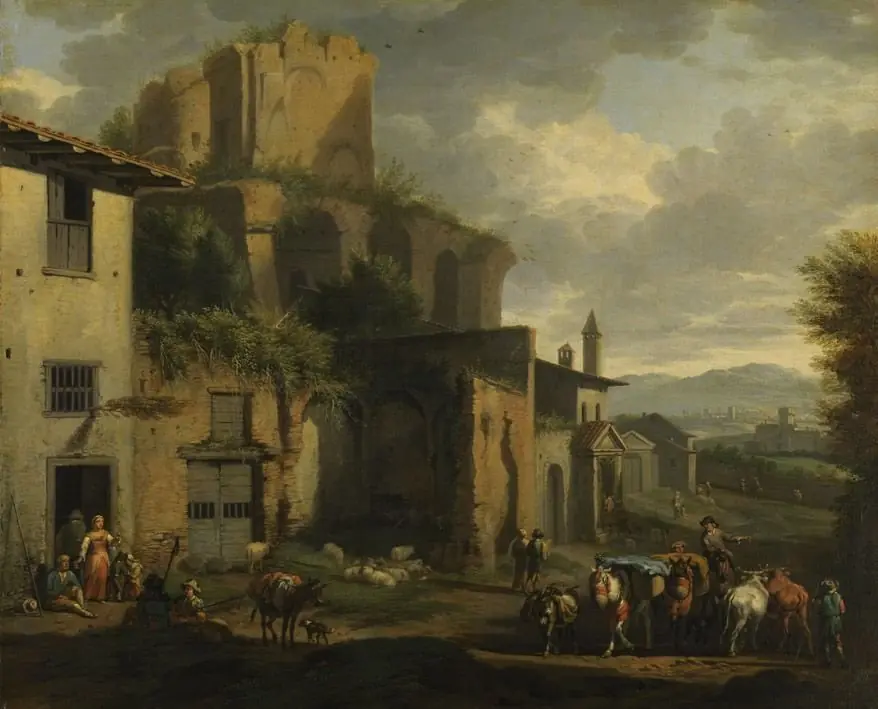 Szene vor einer römischen Ruine
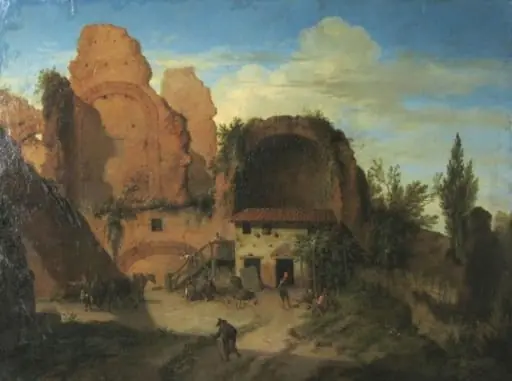 Ruină cu cârciumă țărănească
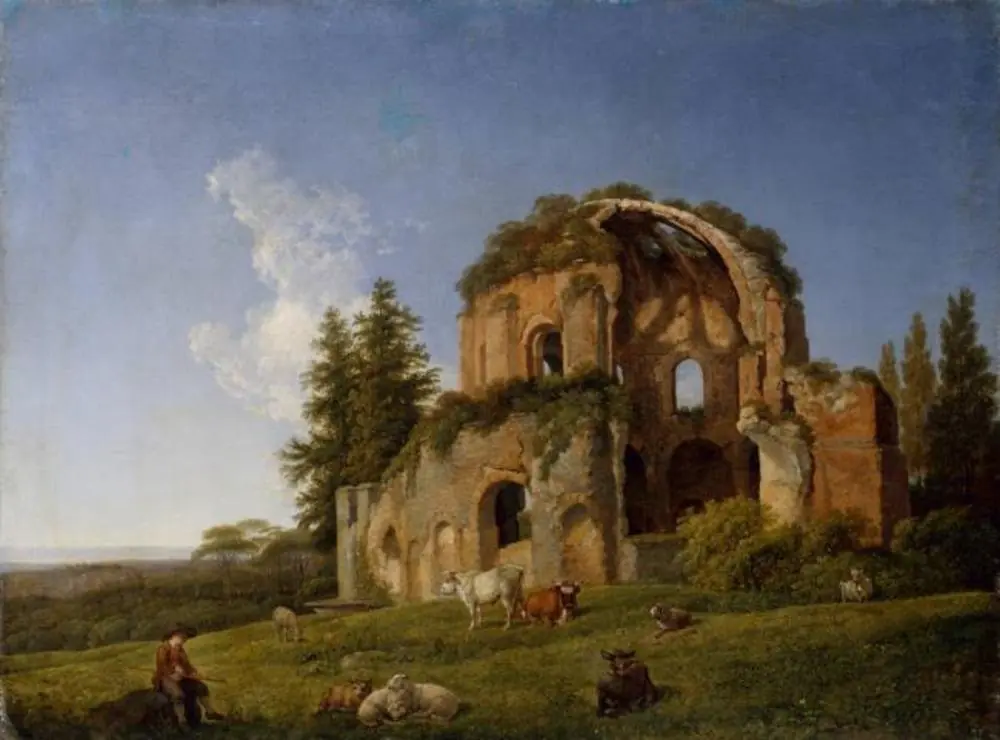 Landscape with the Minerva Medica ruin near Rome
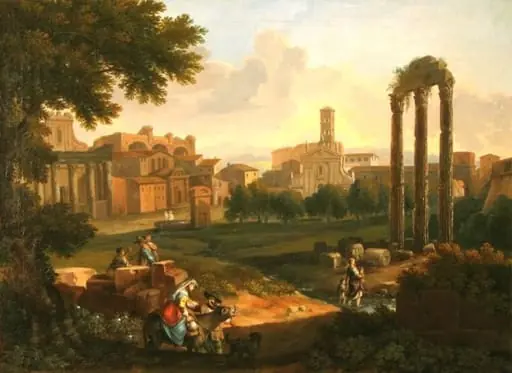 Vedere din Roma Veche (Roma cu columnele templului lui Jupiter)
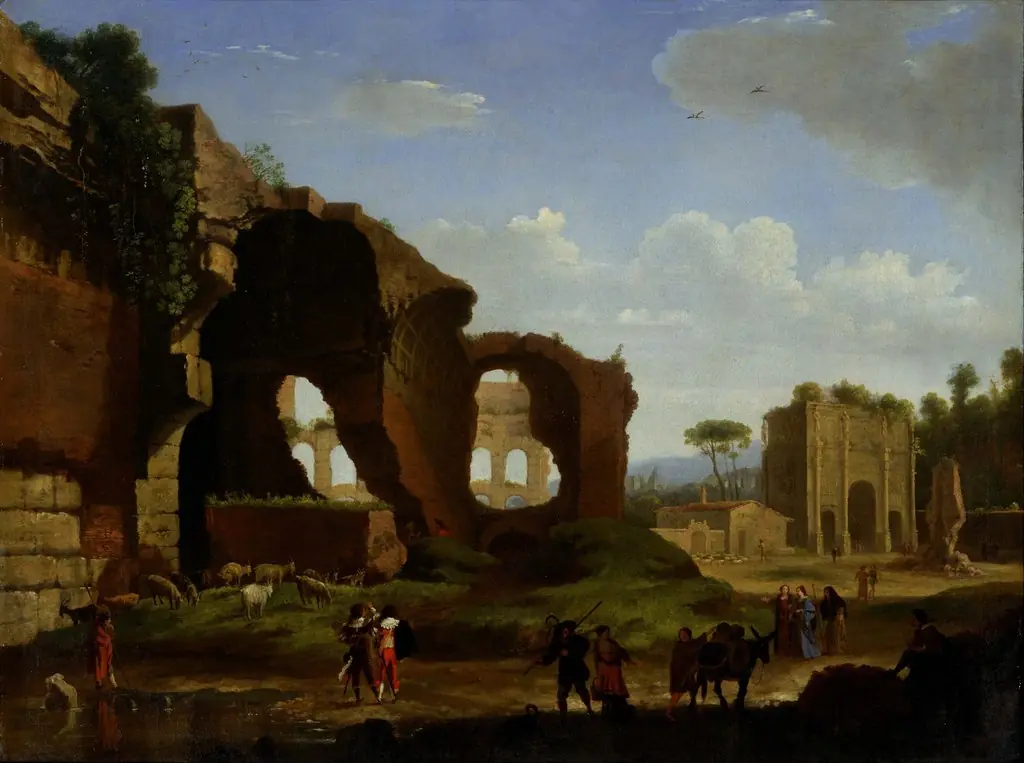 A Roman View of the Ruins of the Temple of Venus and Rome with the Colosseum and the Arch of Constantine
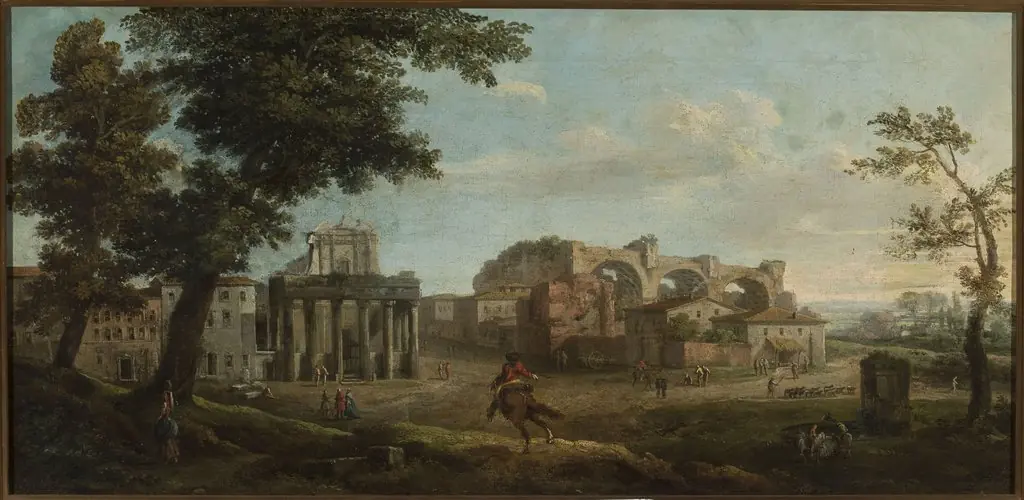 View of Rome
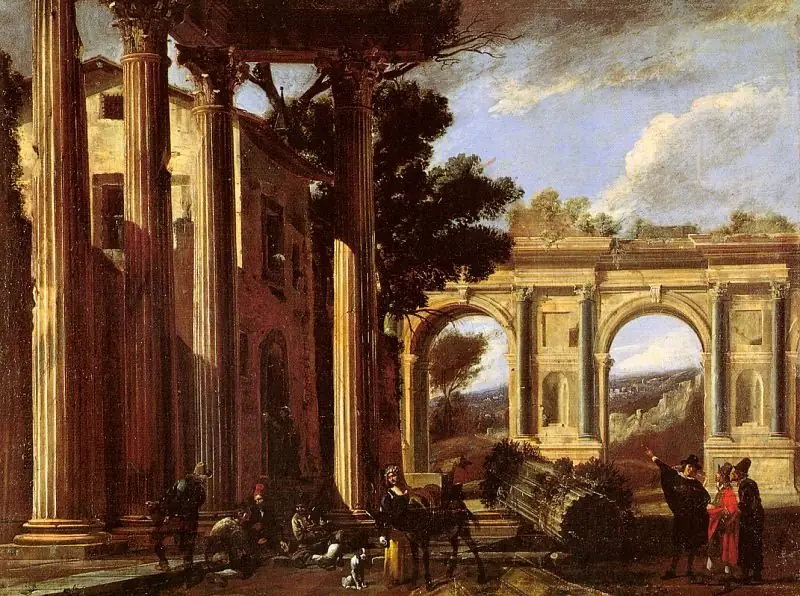 Architectural View
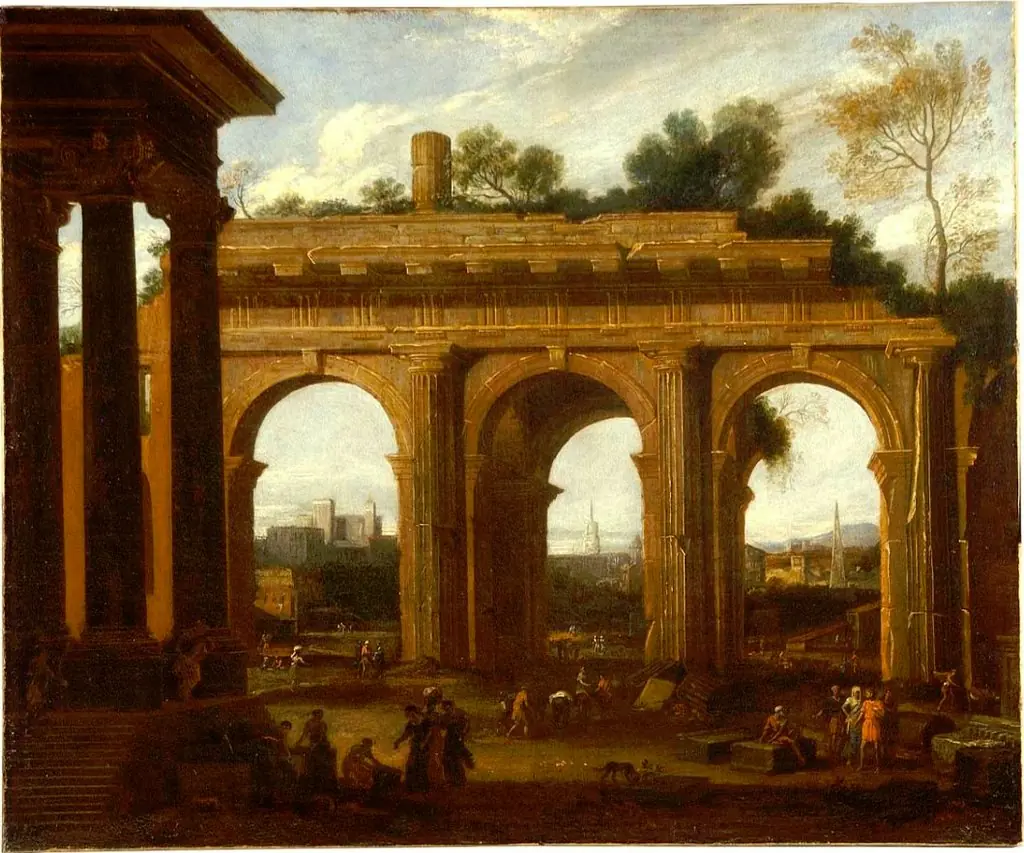 Landscape with ruins and figure
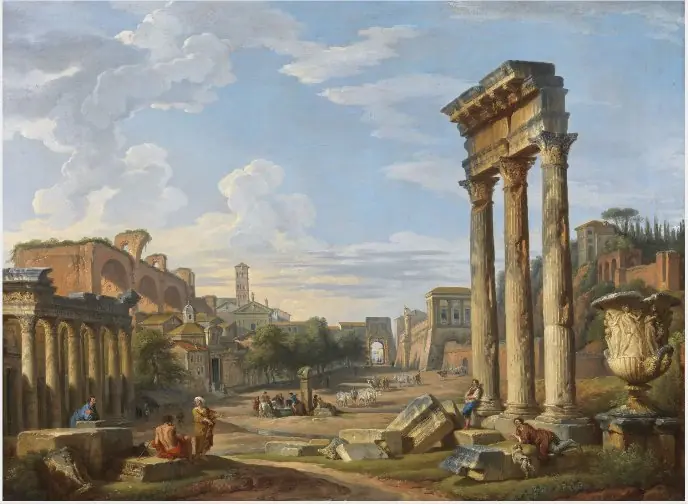 The Roman Forum
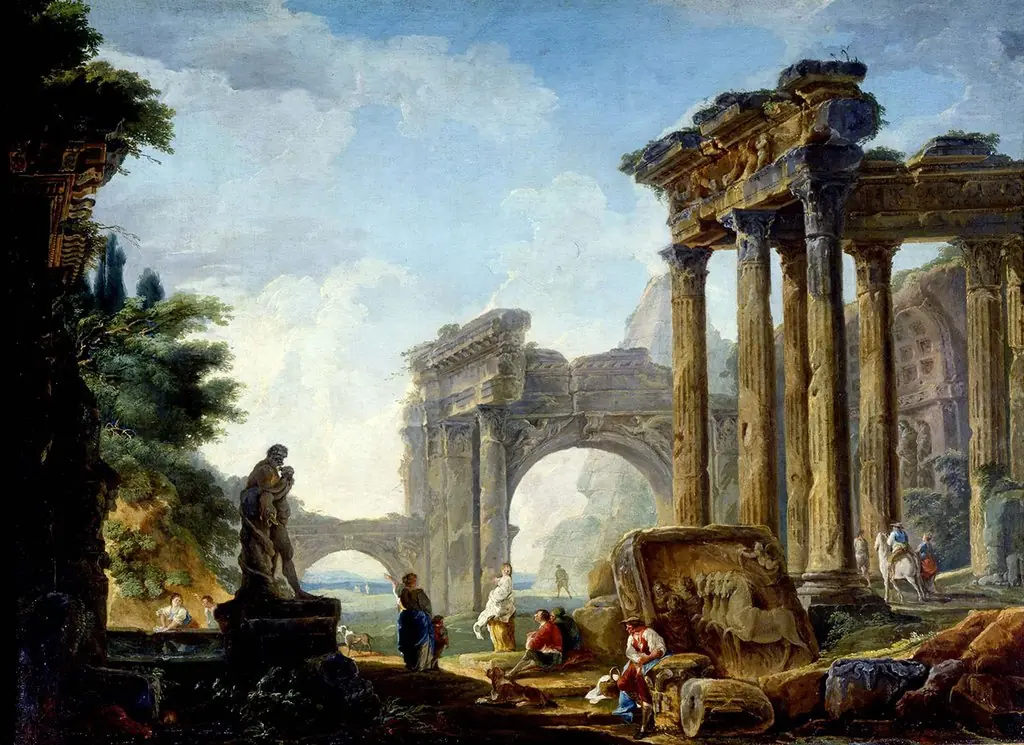 Paysage avec ruines romaines
 Italian landscape with a Monastery