Artwork
Camellias
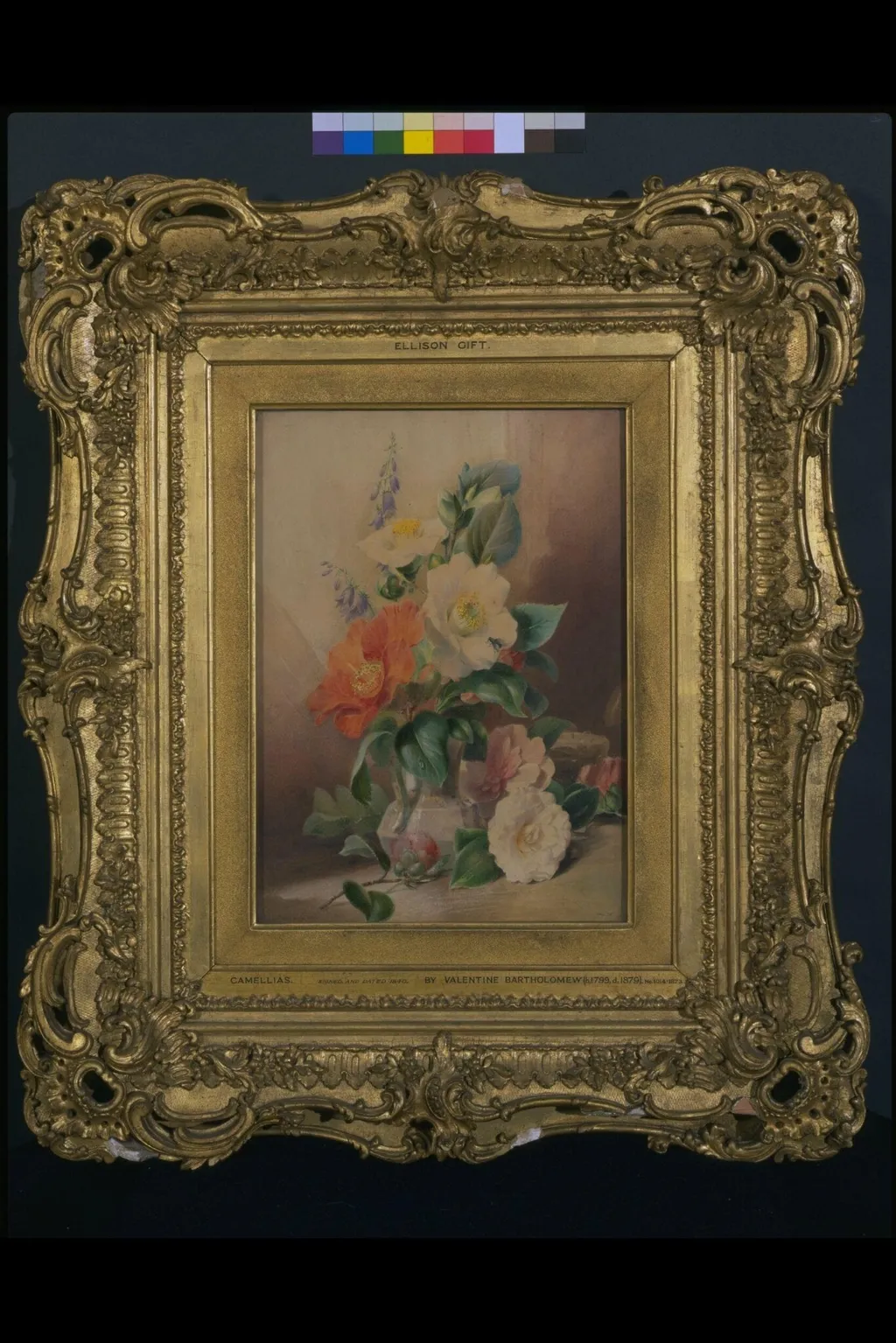
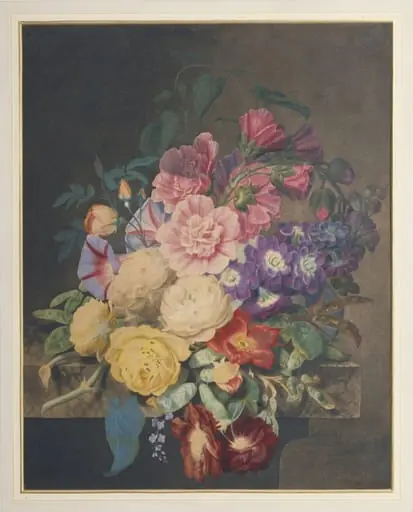
Camellias is a watercolor work on paper by the British Romanticist artist Valentine Bartholomew. It dates from 1840 and is held in the collection of the Victoria and Albert Museum.
About this work
The flowers are the main focus, but the frame is almost as detailed as the artwork.
This painting shows a fancy gold frame holding a close-up of flowers. The flowers are bright—pink, white, and red camellias with green leaves. They’re arranged in a small vase on a dark, simple background. The brushstrokes are soft, and the colors look fresh but slightly faded.
The artist signed and dated it 1840 on the painting itself. The flowers are the main focus, but the frame is almost as detailed as the artwork.
If you like this kind of flower painting, check out Romanticism.
Overview
Valentine Bartholomew’s 1840 watercolour presents a close‑up of camellias rendered in pink, white and red, set against a dark, unadorned backdrop. The flowers occupy a small vase, framed by an ornate gold border that receives almost as much attention as the blossoms themselves. The composition is intimate, emphasizing the delicate forms and subtle colour shifts of the petals and foliage.
Subject & Meaning
The work focuses on the camellia, a flower prized in the Victorian era for its elegance and seasonal rarity. By isolating the blossoms and presenting them in a simple setting, Bartholomew highlights their natural beauty and the fleeting freshness associated with cultivated garden plants.
Technique & Style
Executed in watercolour, the painting employs soft, translucent brushstrokes that convey the velvety texture of the petals. The palette balances vivid hues with a slightly muted finish, suggesting both immediacy and a gentle passage of time. Bartholomew’s handling of light and shadow creates a three‑dimensional sense within the flat medium.
History & Provenance
Bartholomew, a leading figure in nineteenth‑century floral still lifes, exhibited regularly with the Old Watercolour Society and the Royal Academy, later serving as Flower Painter to Queen Victoria. This piece, signed and dated by the artist, reflects the period’s taste for detailed, naturalistic flower studies.
Context
During the mid‑1800s, botanical illustration and decorative flower painting were popular among the British middle and upper classes. Bartholomew’s work aligns with Romantic sensibilities that prized the emotional resonance of nature, while also satisfying the era’s demand for accurate, lifelike representations of flora.
Artist & collection
Artist
Valentine Bartholomew spent his days painting flowers in watercolor for Queen Victoria’s court, where every petal had to look perfect.

 Flowers and Grapes
 Flori
Flori Buchet cu flori într-un vas
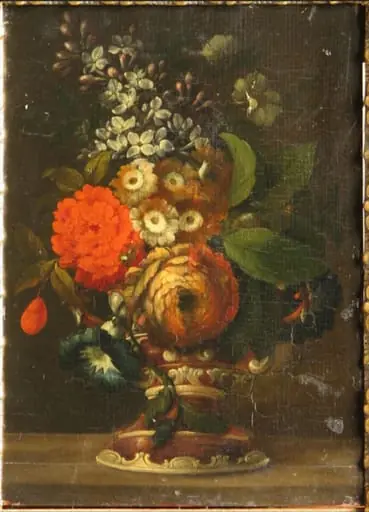 Buchet de flori cu anemone; pandant: Buchet cu flori de lămâi
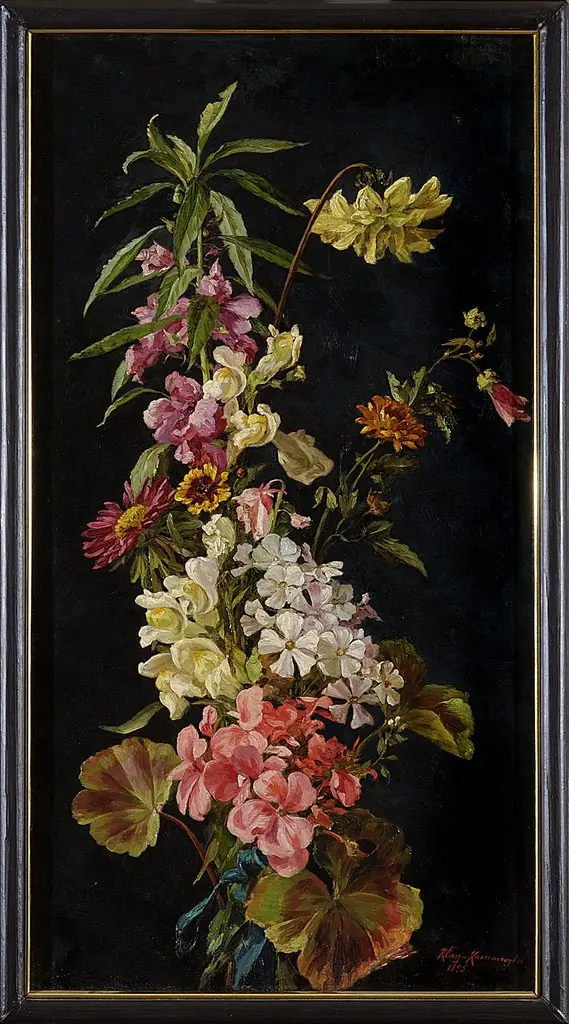 Flowers
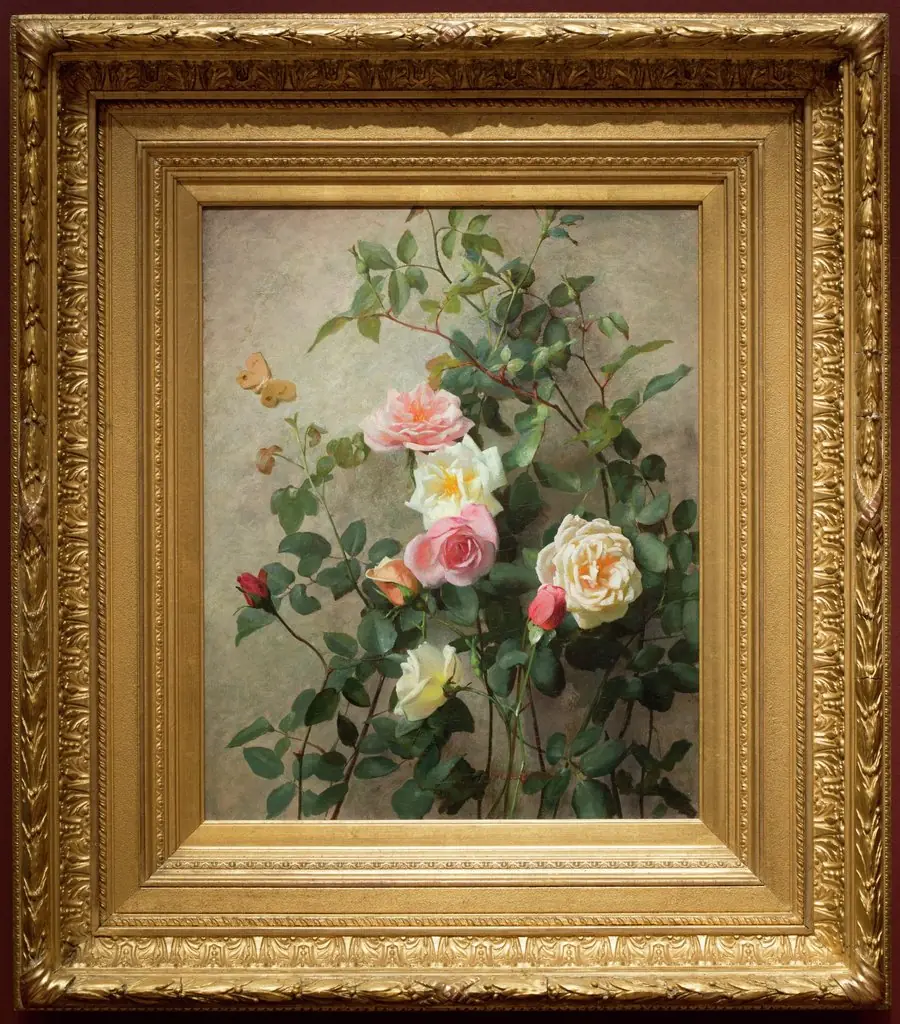 Roses on a Wall
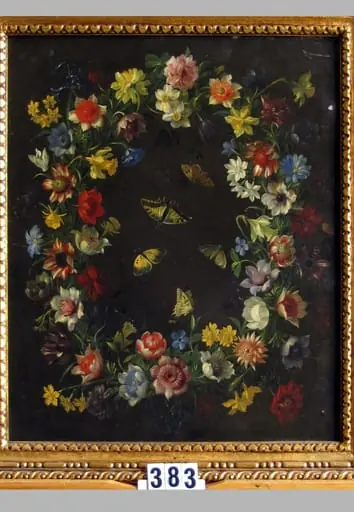 Ghirlandă de flori cu cinci fluturi (în registrul inventar: Cunună de flori cu cinci fluturi)
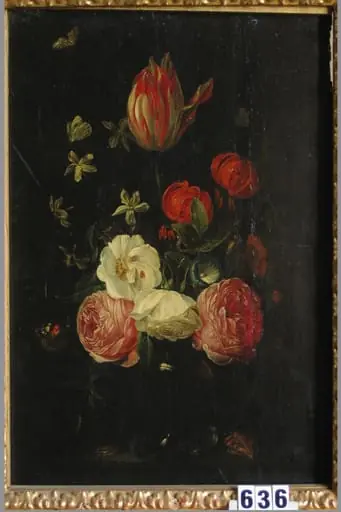 Buchet de trandafiri (în registrul inventar: Flori cu trandafiri)
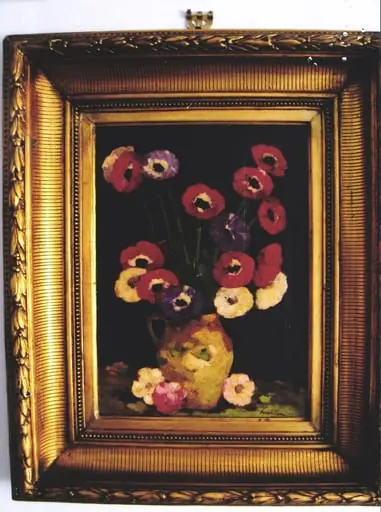 Flori - Anemone
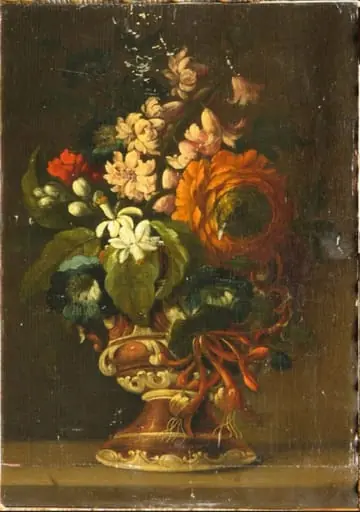 Buchet cu flori de lămâi; pandant: Buchet de flori cu anemone
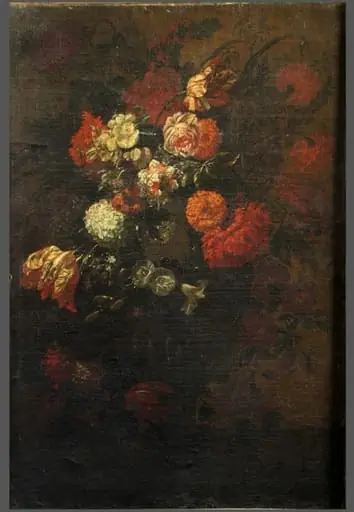 Lalele și maci; pandant: Trandafiri și maci
 Hollyhocks, Roses, Etc