Artwork
Corturi la Ciric
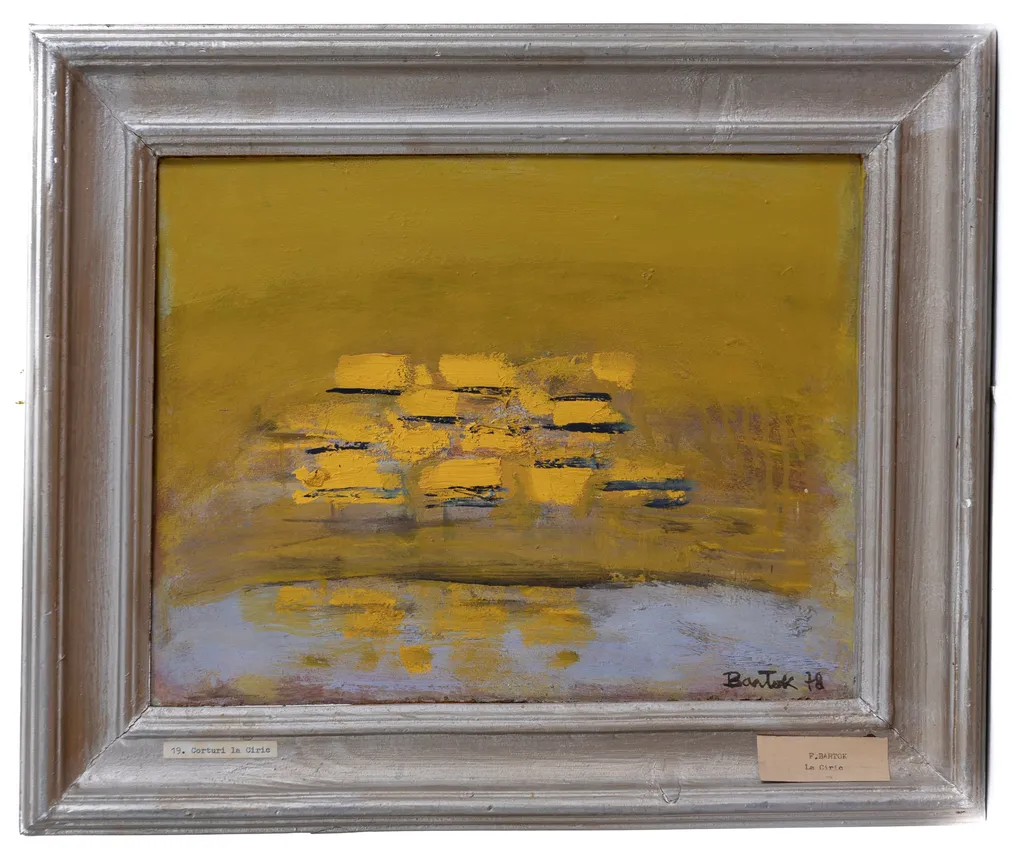
Corturi la Ciric is a print by Bartok Francisc. It dates from 1961 and is held in the collection of the Moldova National Museum Complex.
About this work
Overview
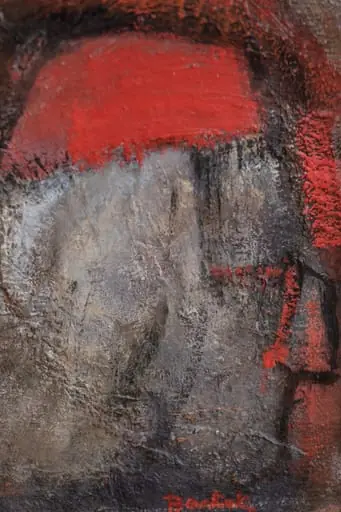
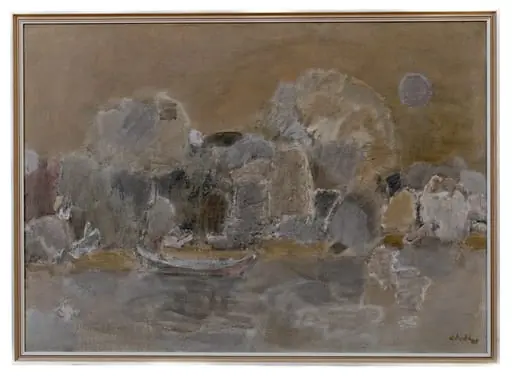
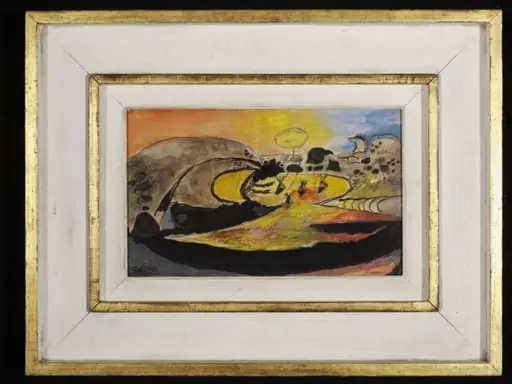
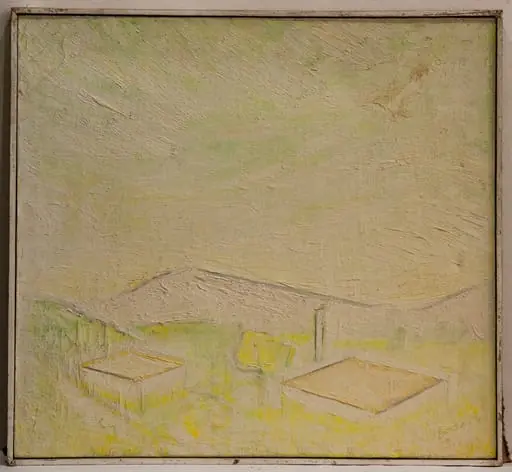
A thick, uneven application of paint creates a tactile surface, while a stark, horizontal line bisects the composition, adding visual tension.
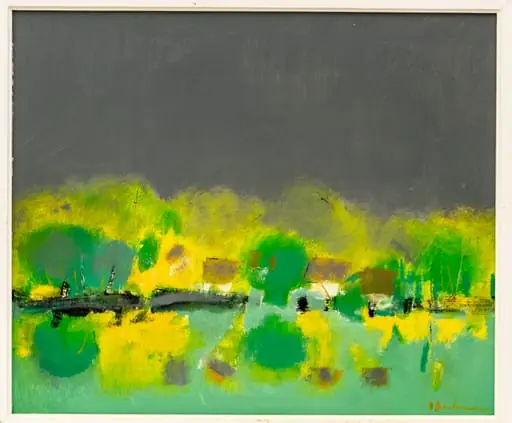
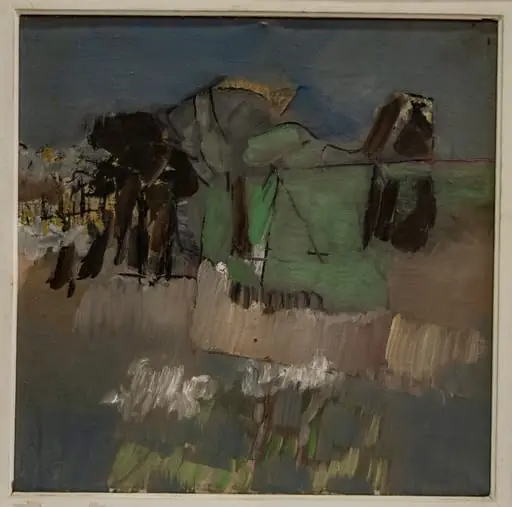
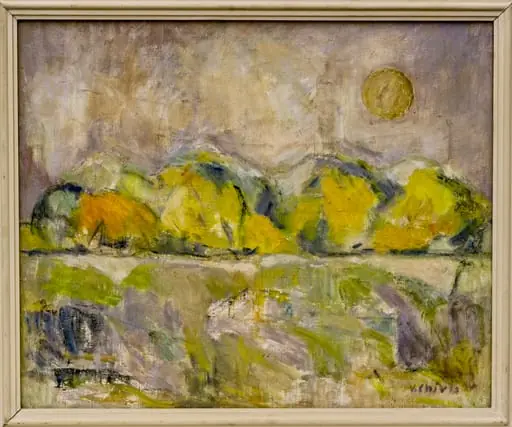
Corturi la Ciric is an oil painting executed around 1961 by Romanian artist Bartok Francisc. The work presents an ambiguous, sun‑washed landscape dominated by warm yellows and earthy browns, punctuated by dark, block‑like forms that suggest structures or dwellings. A thick, uneven application of paint creates a tactile surface, while a stark, horizontal line bisects the composition, adding visual tension.
Subject & Meaning
The title, Corturi la Ciric, references a specific locale, likely a village or district named Ciric, and hints at the depiction of its rooftops or façades. The blurred, almost abstracted architecture invites viewers to contemplate the relationship between built environment and the surrounding light, suggesting a fleeting impression of a place rather than a detailed record.
Technique & Style
Bartok employs a pronounced impasto technique, laying on paint in heavy, textured strokes that give the canvas a three‑dimensional quality. The palette is limited to warm yellows, ochres, and deep browns, while the dark linear elements cut across the field, creating contrast. The brushwork is deliberately irregular, emphasizing the materiality of the medium over precise representation.
History & Provenance
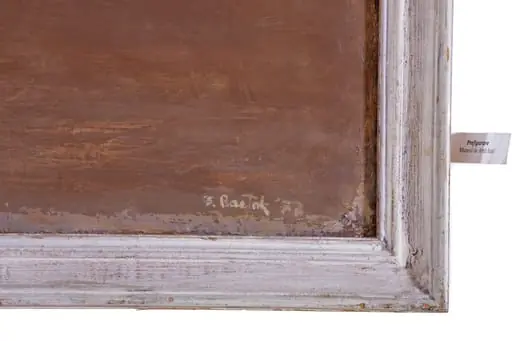
Created circa 1961, Corturi la Ciric belongs to the early‑sixties period of Bartok Francisc’s oeuvre, a time when he explored atmospheric effects through thick paint layers. The artist’s signature appears in the lower corner, though it is faint. The work’s subsequent ownership and exhibition history have not been widely documented, and it remains primarily referenced in catalogues of Romanian mid‑twentieth‑century painting.
Artist & collection
Artist
Bartok Francisc painted Romanian scenes and portraits across the 20th century. He left works like *Natură statică cu flori* (1966) and *Portretul pictorului Coreliu Baba*, plus historical scenes such as *23 august…