Artwork
Peisaj
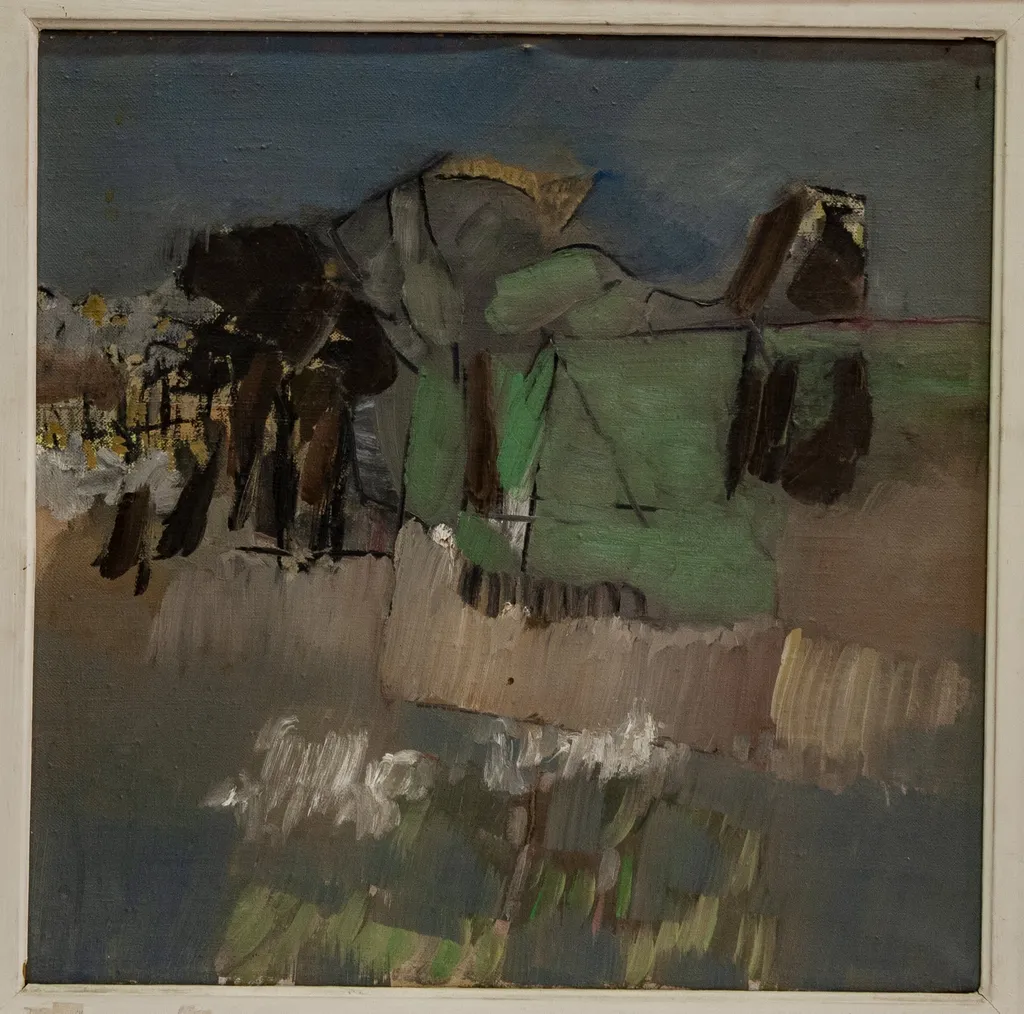
Peisaj is a print by Popovici Petre. It is held in the collection of the Gavrila Simion Eco-Museum Research Institute Tulcea.
About this work
Overview
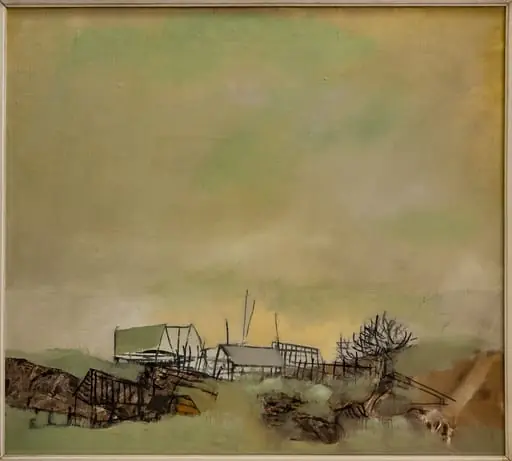
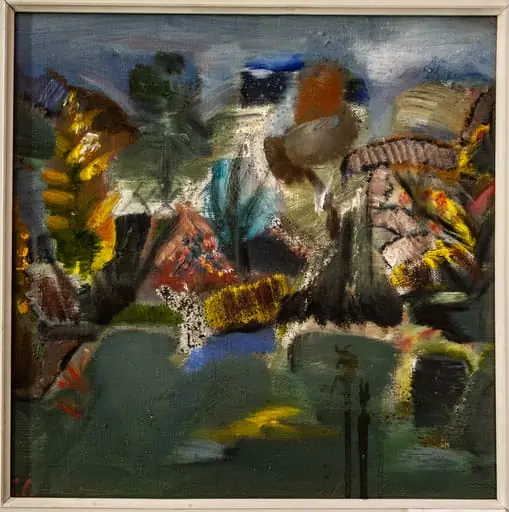
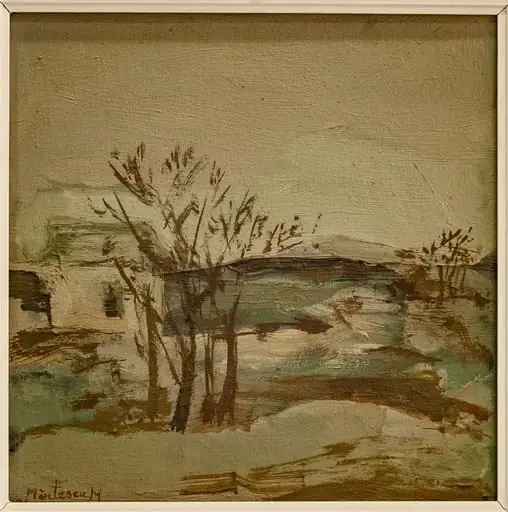
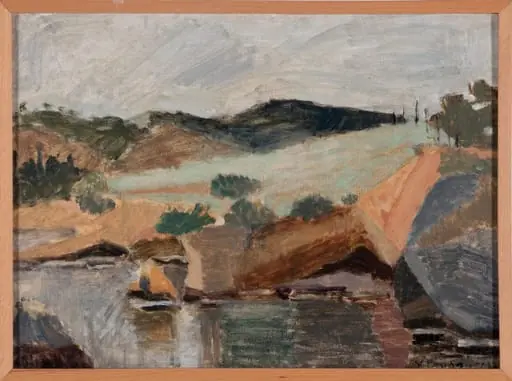
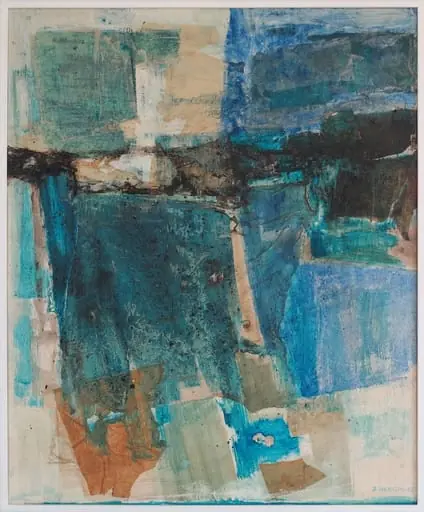
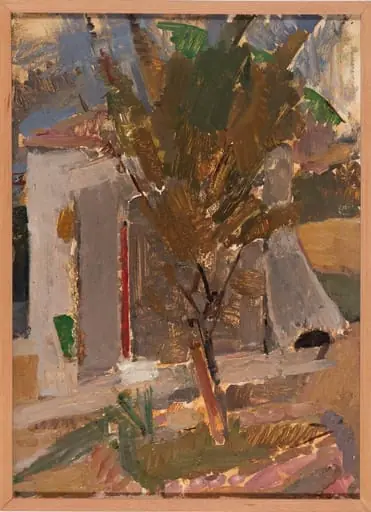
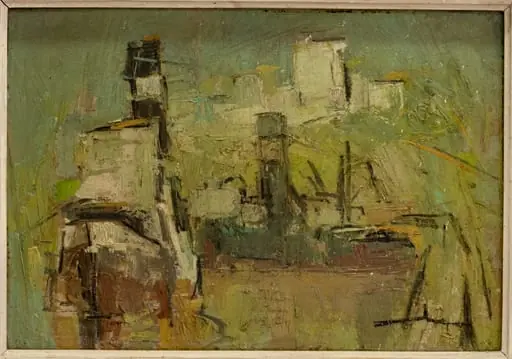
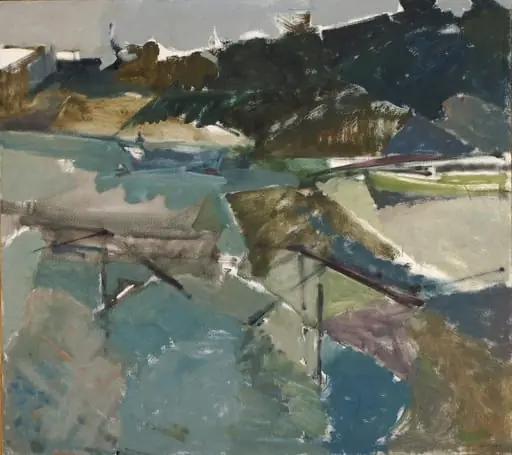
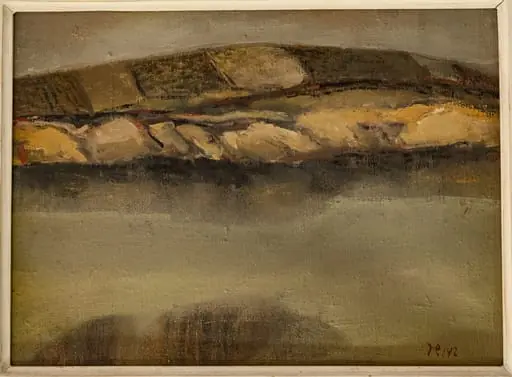
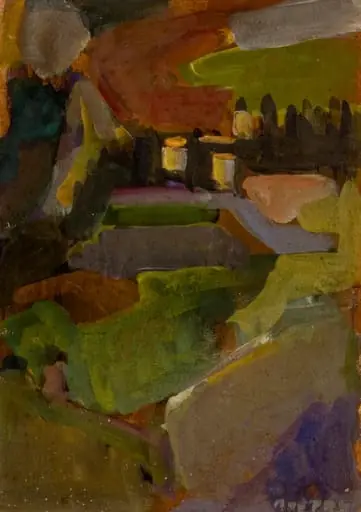
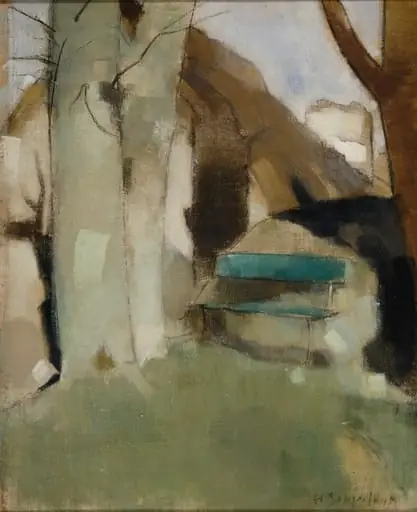
This untitled landscape, labeled *Peisaj*—Romanian for 'landscape'—presents a rugged natural scene rendered with vigorous, unrefined brushwork.
This untitled landscape, labeled *Peisaj*—Romanian for 'landscape'—presents a rugged natural scene rendered with vigorous, unrefined brushwork. The composition lacks traditional perspective or smooth transitions, instead favoring a tactile, almost chaotic surface. Thick layers of paint create a sense of physicality, with the horizon line barely distinguishable from the terrain below, reinforcing an impression of raw, unmediated nature.
Subject & Meaning
The painting depicts a sparse, somber terrain dominated by dark, angular forms and a heavy sky. A central structure, indistinct and blocky, emerges as a solitary human presence amid the wildness. Its ambiguous form resists clear identification—perhaps a ruin, shed, or abstracted dwelling—suggesting isolation or abandonment. The absence of detail invites interpretation, framing the landscape not as a place but as a mood: quiet, unresolved, and elemental.
Technique & Style
The artist employs a direct, gestural approach, applying paint with visible, uneven strokes that build texture rather than define form. Colors are applied in patches—deep blues, muted browns, and streaks of white—without blending, preserving the energy of each mark. The heavy impasto and lack of refinement suggest immediacy, as if the scene was recorded in a single, urgent session, prioritizing emotional resonance over polished representation.
History & Provenance
The work’s origin is undocumented in public records, and no known exhibition history or collector lineage has been established. It is attributed to an artist working within a Romanian modernist context, likely in the early to mid-20th century, though the specific creator remains unidentified. Its survival as a standalone piece suggests it may have been a private study or experimental work, never intended for public display.
Context
Emerging from a period when Romanian artists were redefining national identity through landscape, this work diverges from romanticized depictions of the countryside. Instead, it aligns with broader European modernist trends that embraced abstraction and emotional intensity over realism. Its roughness reflects a rejection of academic conventions, echoing contemporaneous experiments in Germany and France that valued expression over precision.
Legacy
Though not widely exhibited or studied, the painting contributes to a lesser-known strand of Eastern European modernism that valued materiality and emotional honesty. Its unpolished aesthetic anticipates later postwar movements that celebrated process over perfection. As a quiet example of non-conformist practice, it stands as a testament to artists who explored landscape not as scenery, but as a visceral, unfiltered experience.
Artist & collection
Artist
Romanian printmaker and painter Popovici Petre made quiet scenes of water and village life.
Museum
Gavrila Simion Eco-Museum Research Institute Tulcea
Continue through works from the same source collection.