Artwork
El archiduque Carlos de Austria, duque de Stiria
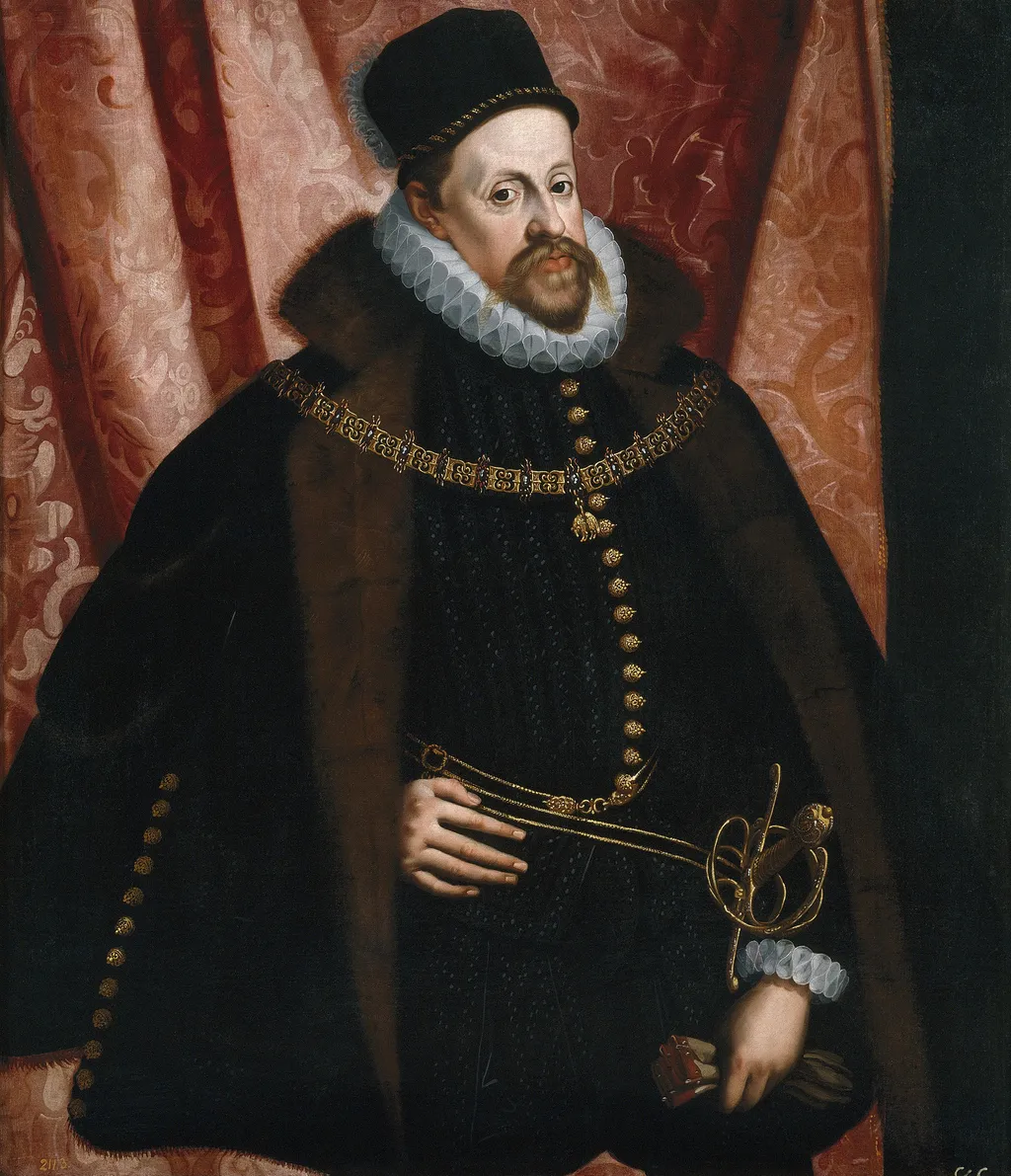
El archiduque Carlos de Austria, duque de Stiria is an oil painting by the Early Baroque Italian artist Bartolomé González y Serrano. It dates from 1608 and is held in the collection of the Museo del Prado.
About this work
Overview
El archiduque Carlos de Austria, duque de Stiria is a 1608 oil painting by Spanish Baroque portraitist Bartolomé González y Serrano. The work depicts Archduke Charles of Austria in formal, ornate attire, set against a distinctive red, floral-patterned curtain.
Subject & Meaning
The subject, Archduke Charles of Austria, Duke of Styria, is portrayed in a pose of quiet authority, with a gemstone (not visible in provided visual note) and a sword, symbolizing wealth and military or noble status. His attire, including a black outfit, white ruffled collar, black hat, and fur-lined cloak, underscores his high rank.
Technique & Style
González employs the early Baroque Italian movement's characteristics, likely incorporating chiaroscuro to create depth and volume, as suggested by the contrast between the dark, intricately detailed clothing and the vibrant, patterned background.
History & Provenance
Created in 1608, the painting follows the tradition of Spanish court portraiture. It is currently part of the Museo del Prado's collection.
Context
The painting reflects the artistic and social norms of early 17th-century Spain, where such portraits served to affirm the status and power of nobility.
Legacy
As part of the Museo del Prado's collection, *El archiduque Carlos de Austria, duque de Stiria* contributes to the understanding and appreciation of Spanish Baroque portraiture, though specific details on its broader impact or exhibitions are not provided.
Own this work as a print
Artist & collection
Artist
Bartolomé González y Serrano (1564–1627) was a Spanish Baroque painter specializing in portraits that represent a continuation of Renaissance court portrait types practiced by Alonso Sánchez Coello and especially by Juan Pantoja de la Cruz.