Artwork
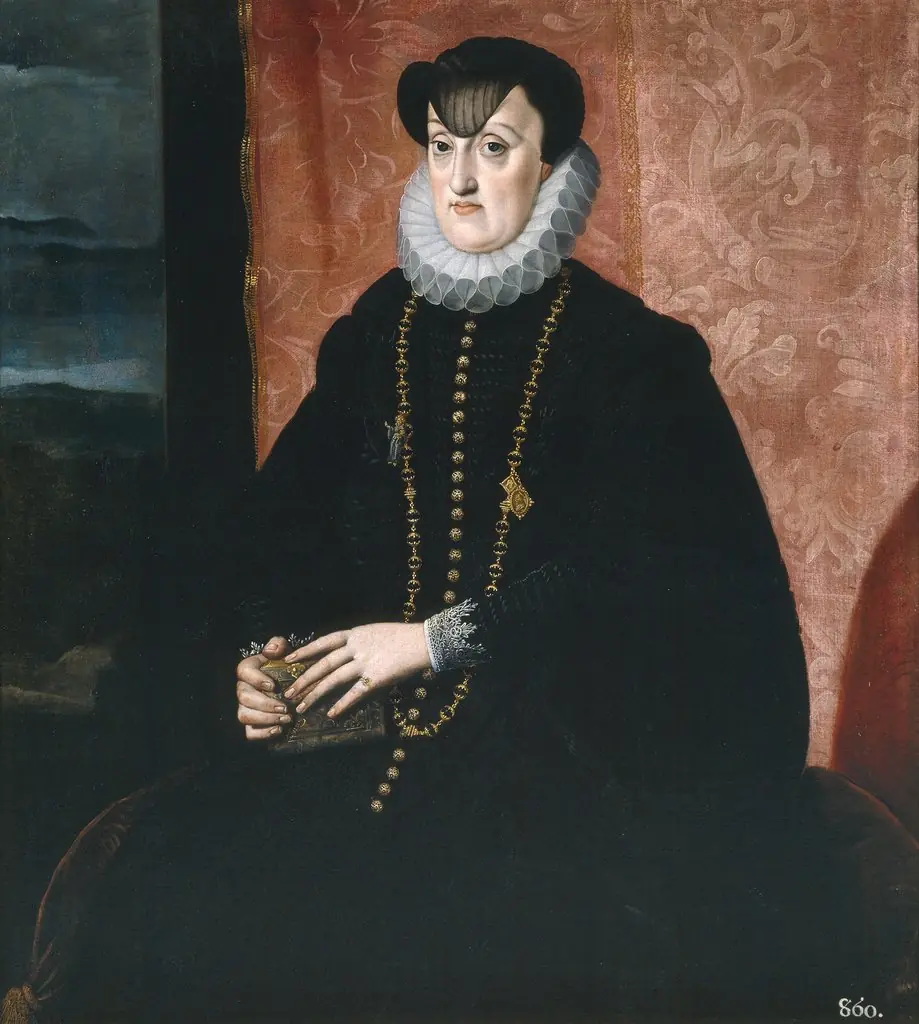
Queen Anne of Austria, fourth Wife of Philip II
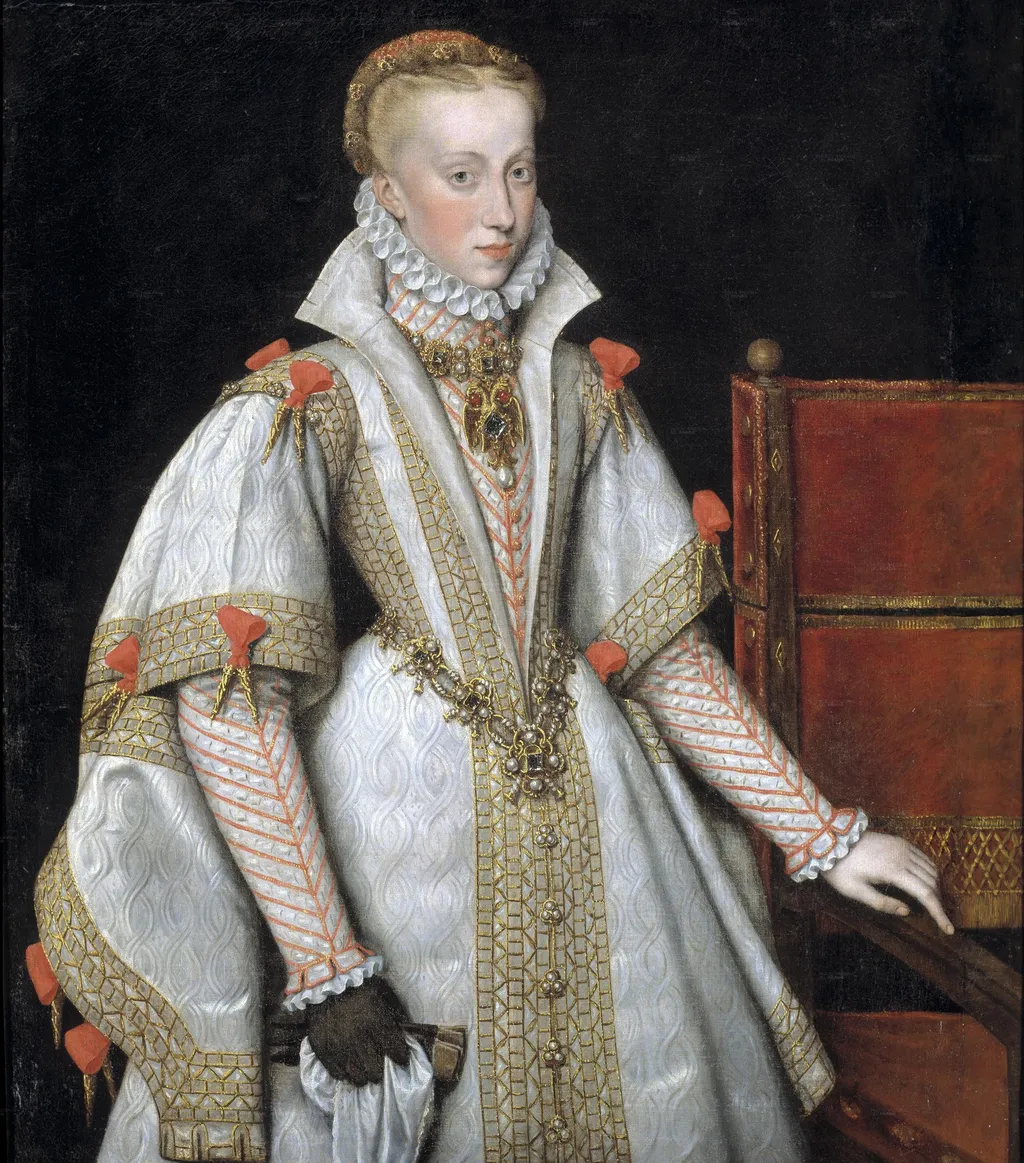
Queen Anne of Austria, fourth Wife of Philip II is an oil painting by the Early Baroque Italian artist Bartolomé González y Serrano. It dates from 1616 and is held in the collection of the Museo del Prado.
About this work
Overview
Bartolomé González y Serrano, an early‑17th‑century Spanish painter associated with the Baroque movement, executed a portrait of Queen Anne of Austria in 1616. The work, rendered in oil on canvas, presents the queen in elaborate attire and is presently part of the Museo del Prado’s collection.
Subject & Meaning
The canvas portrays Anne of Austria, the fourth consort of Philip II, positioned beside a dark red cabinet. She holds a jeweled object in her left hand—interpreted as a glove—while her right hand rests on the piece of furniture. The composition emphasizes her regal status through sumptuous dress and accessories.
Technique & Style
González y Serrano adopts an early Baroque idiom influenced by Italian models, yet his approach retains the meticulous realism of the Spanish court portrait tradition. The painting features a luminous white gown embroidered with gold‑thread chain‑mail motifs, red puffed sleeves, and a heavy necklace of large stones, all achieved through layered glazing that creates depth and sheen.
History & Provenance
Created shortly after the queen’s death, the portrait entered the Spanish royal collection and remained in the Habsburg inventory for centuries. It was transferred to the Museo del Prado during the 19th‑century reorganization of state artworks, where it has been displayed as part of the museum’s Baroque holdings.
Context
The portrait continues the lineage of court portraiture established by artists such as Alonso Sánchez Coello and Juan Pantoja de la Cruz. By combining Renaissance compositional conventions with Baroque lighting and texture, González y Serrano reflects the transitional aesthetic of early 1600s Spain, where royal imagery served both diplomatic and propagandistic purposes.
Own this work as a print
Artist & collection
Artist
Bartolomé González y Serrano (1564–1627) was a Spanish Baroque painter specializing in portraits that represent a continuation of Renaissance court portrait types practiced by Alonso Sánchez Coello and especially by Juan Pantoja de la Cruz.