Artwork
Bream
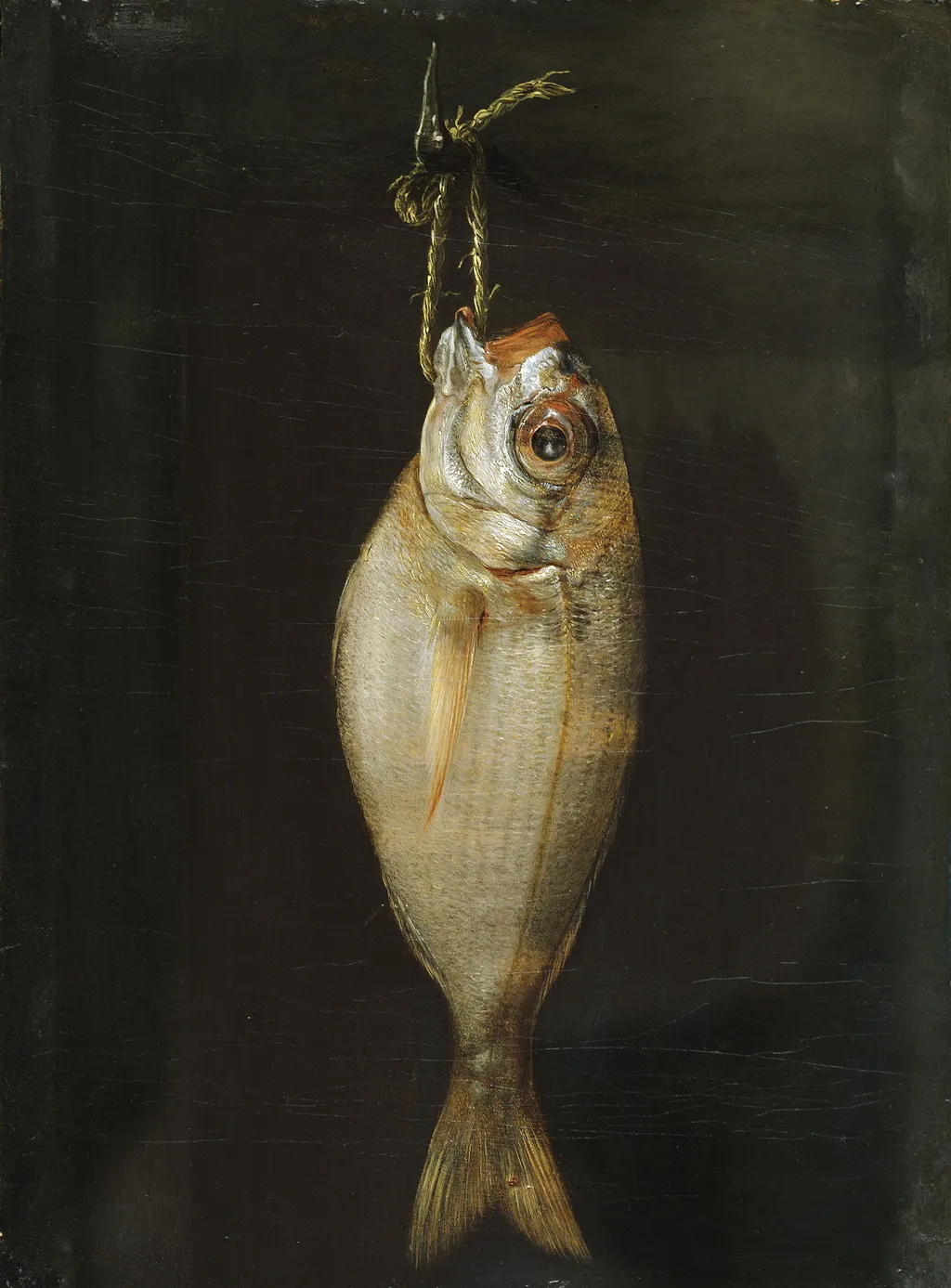
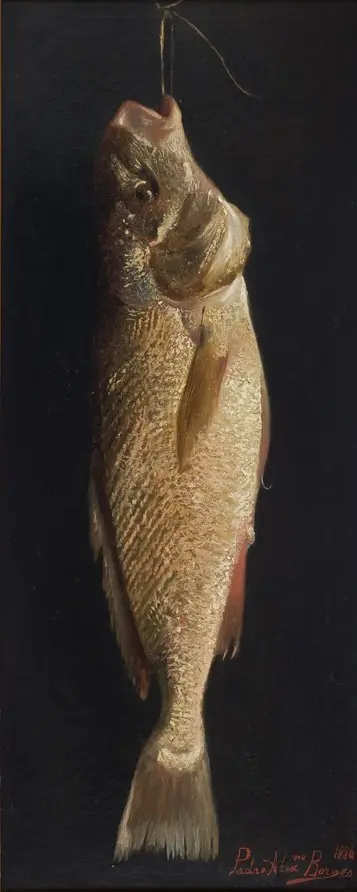
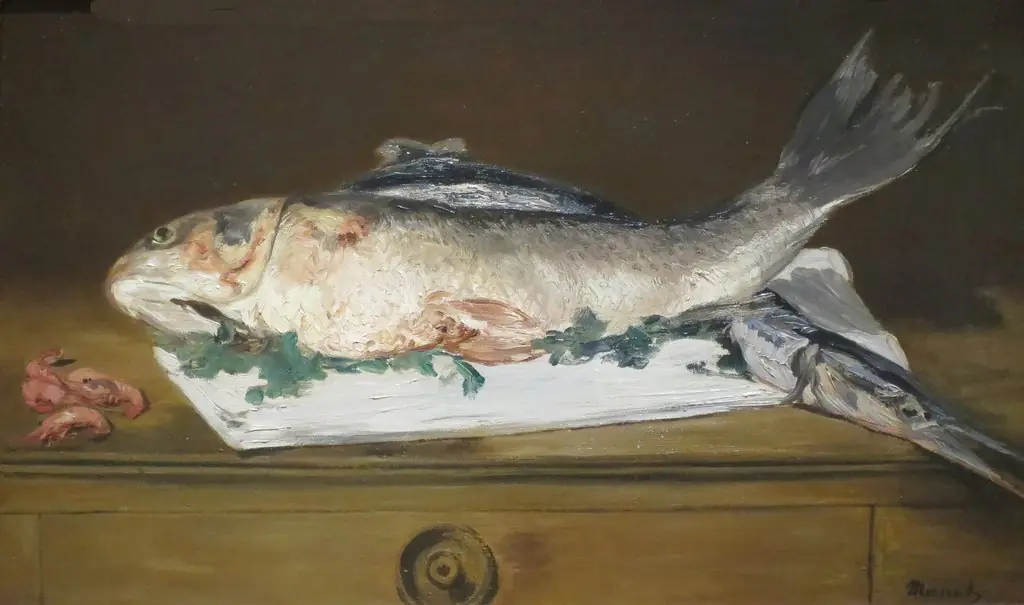
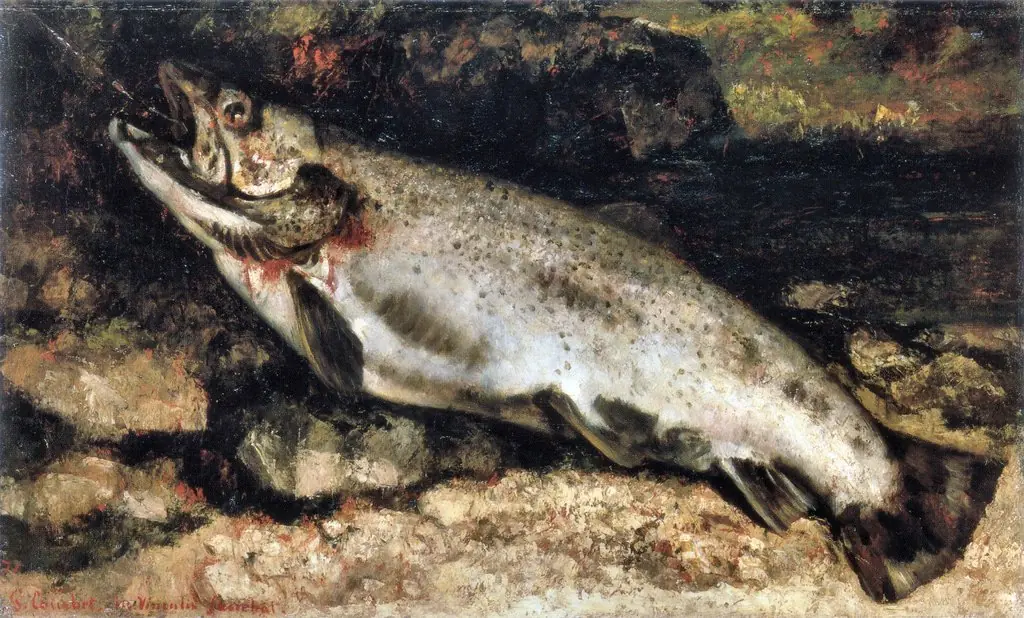
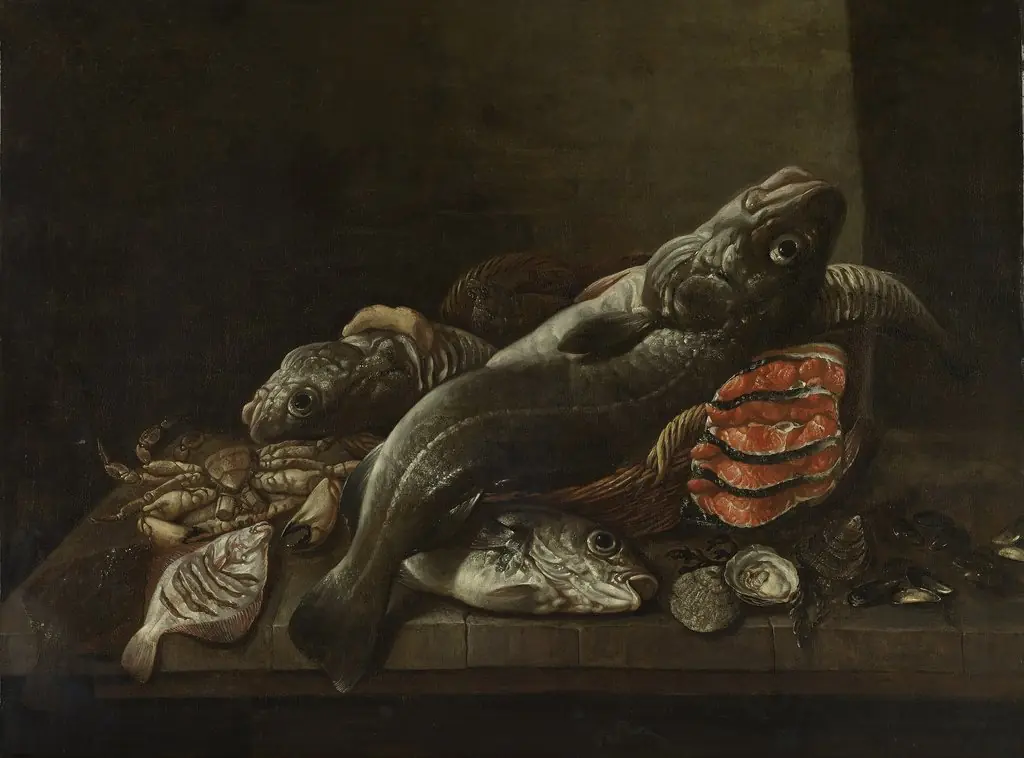
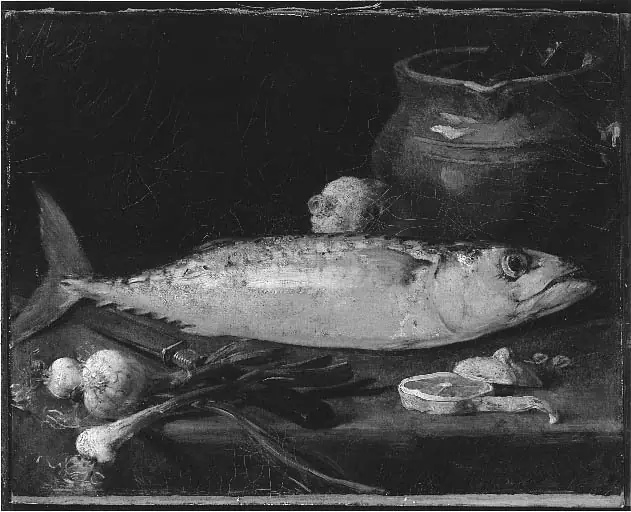
Bream is an oil painting by the Rococo painting artist Bartolomé Montalvo. It dates from 1750 and is held in the collection of the Museo del Prado.
About this work
Overview
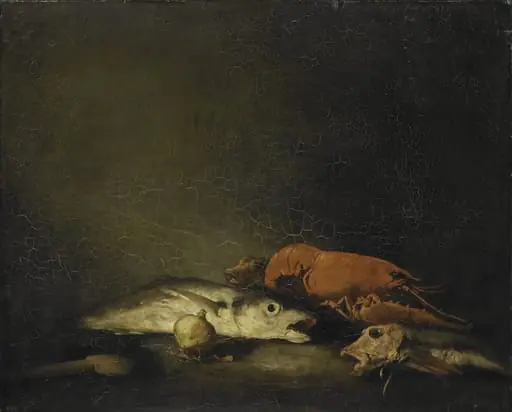
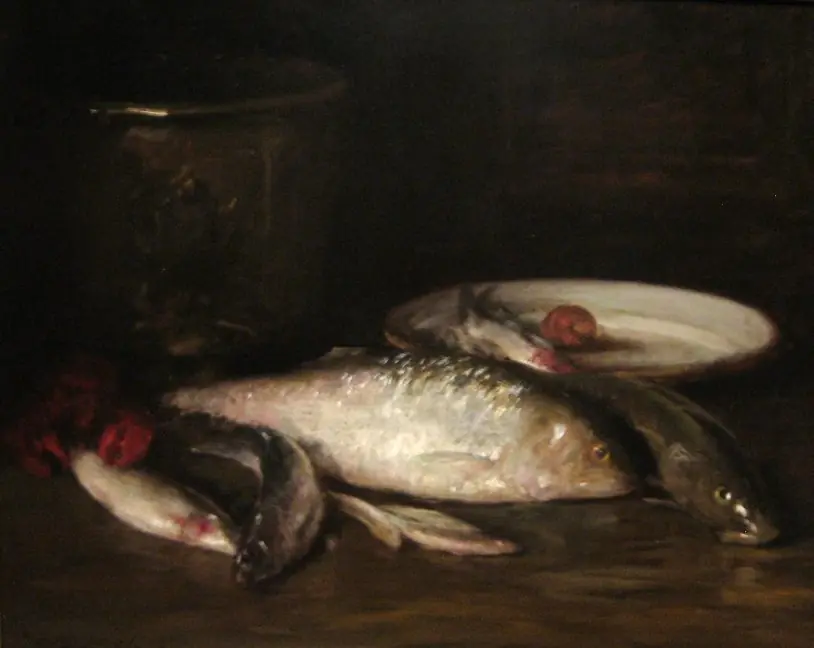
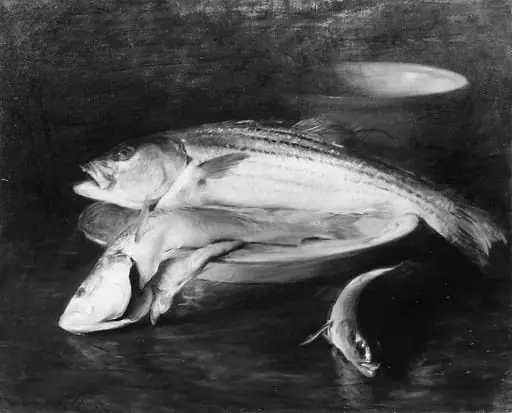
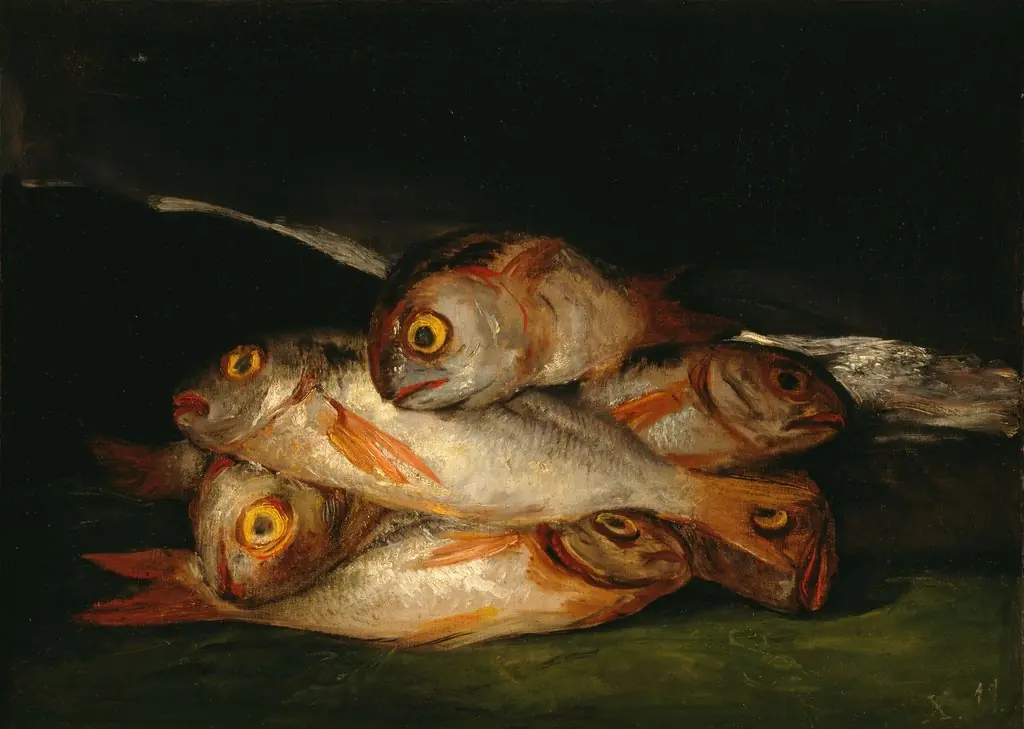
Created circa 1750, *Bream* is an oil painting that exemplifies the decorative sensibility of the Rococo era. The work presents a single freshwater fish rendered with meticulous detail, set against a stark, dark backdrop that isolates the subject and draws the viewer’s attention to its form.
Subject & Meaning
The composition centers on a bream, a common European fish, displayed as if suspended by a hook or string. By isolating the creature, the artist emphasizes its natural texture and anatomy, inviting contemplation of the everyday object as a study of light, surface and materiality.
Technique & Style
Montalvo employs chiaroscuro to model the fish’s body, using a limited palette of whites, browns and muted tones that contrast sharply with the deep background. The smooth brushwork and subtle gradations of tone create a three‑dimensional effect, while the overall decorative elegance aligns the piece with Rococo aesthetics.
History & Provenance
The painting is attributed to Bartolomé Montalvo, a Spanish artist born near Segovia in 1769 who trained under Zacarías Velázquez and later specialized in landscapes and still lifes. Though the work predates his birth according to the dating, it remains linked to his oeuvre as an early example of his still‑life practice.
Own this work as a print
Artist & collection
Artist
Bartolomé Montalvo (1769 – 11 August 1846) was a Spanish painter born in Sangarcía near Segovia.