Artwork
Stilleven met haringen
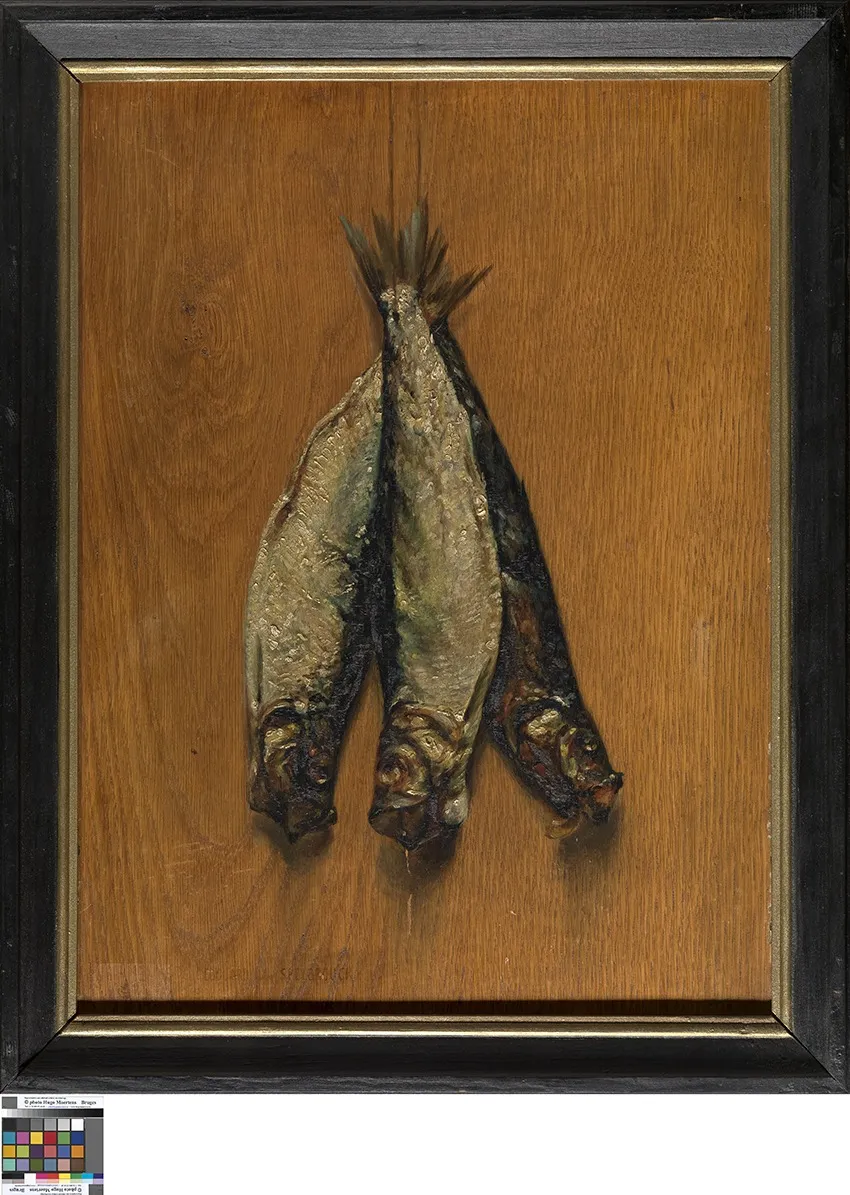
Stilleven met haringen is an oil painting by the Post-Impressionist artist Edouard van Speybrouck. It dates from 1890 and is held in the collection of the Groeningemuseum.
About this work
Overview
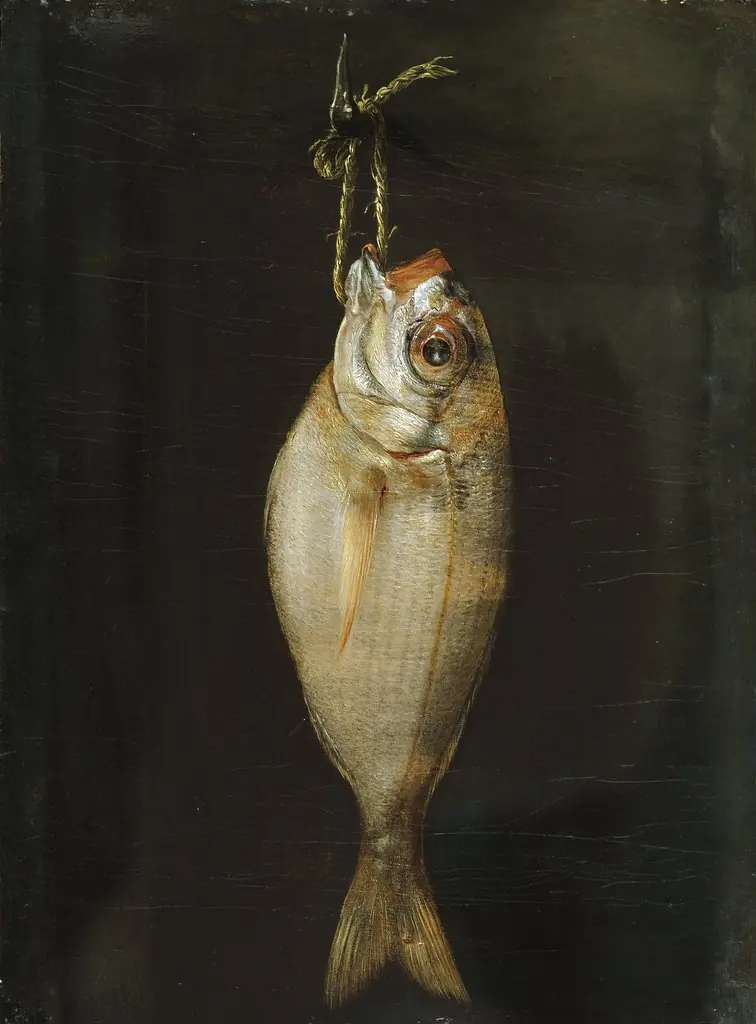
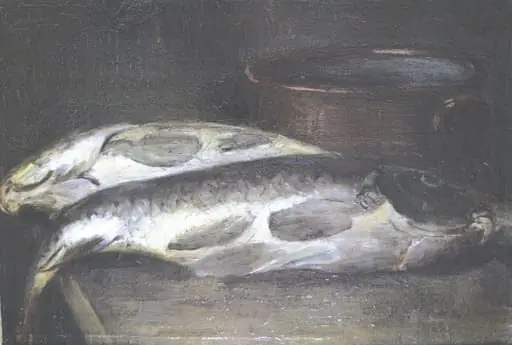
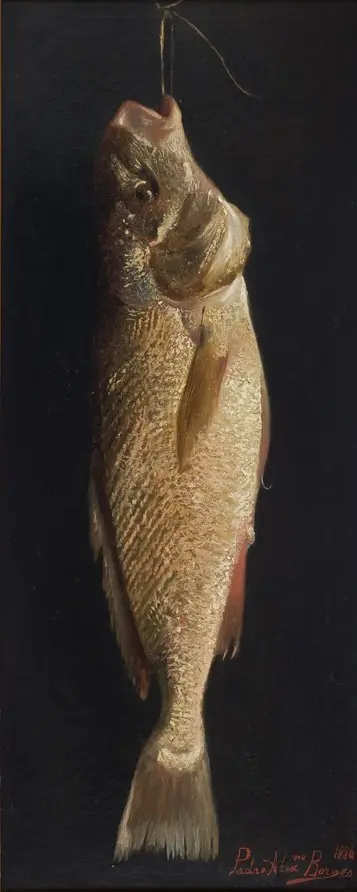
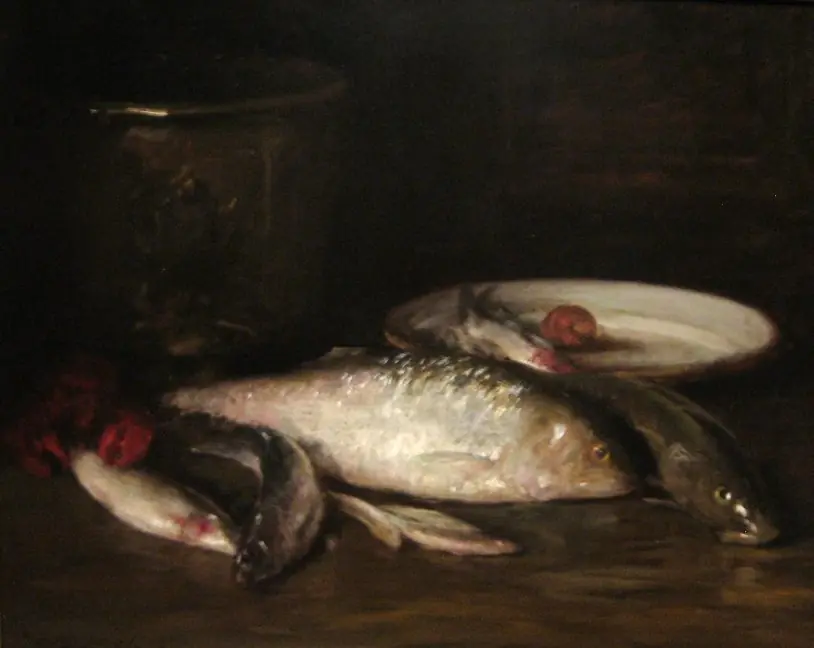
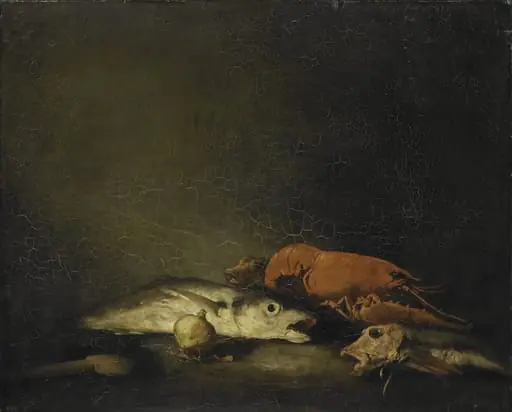
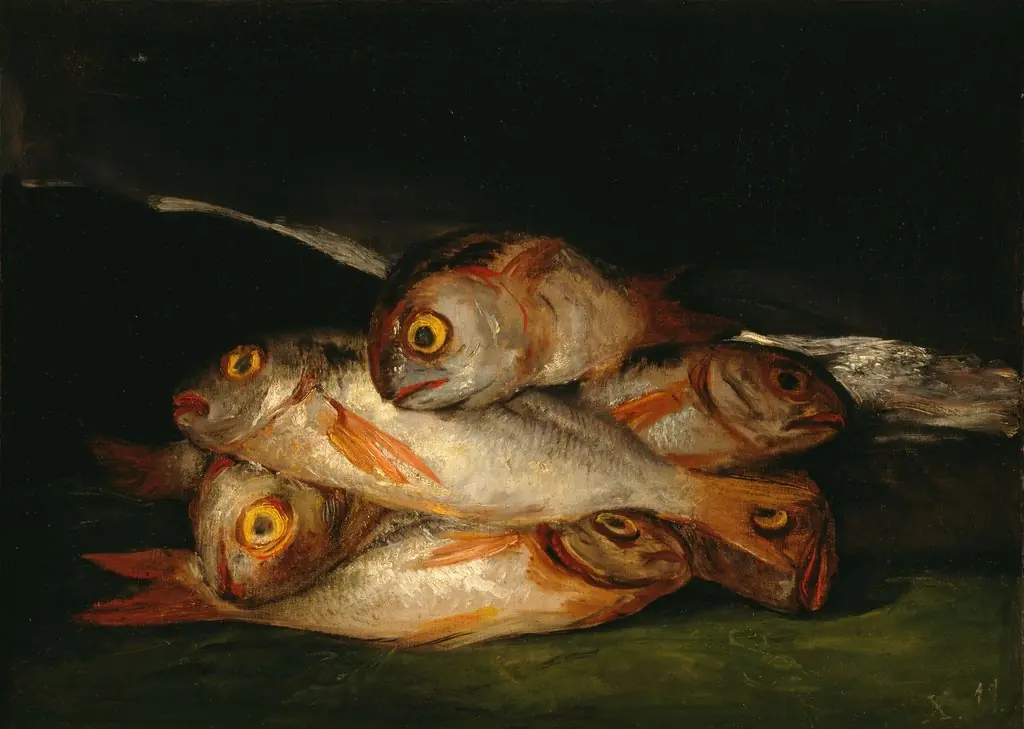
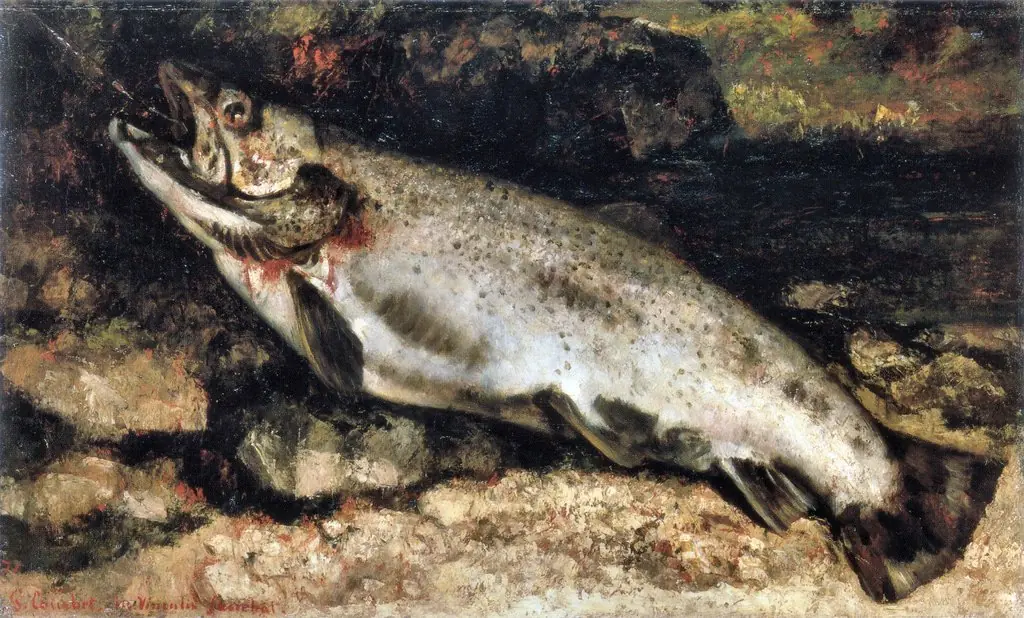
Painted in 1890 by Edouard van Speybrouck, this oil on canvas work is a quiet still life featuring two herring suspended from a wooden surface. The composition is minimal, focusing solely on the fish and the textured backdrop. It belongs to the collection of the Groeningemuseum in Bruges, where it reflects the artist’s interest in everyday subjects rendered with precision.
Subject & Meaning
The painting presents two herring hung by strings threaded through their mouths, a common method of preservation in 19th-century coastal communities.
The painting presents two herring hung by strings threaded through their mouths, a common method of preservation in 19th-century coastal communities. Their placement against a plain wooden wall suggests a utilitarian setting, perhaps a fishmonger’s stall or storage area. The work does not idealize the subject but instead observes it with neutrality, emphasizing the ordinary nature of food and labor.
Technique & Style
Van Speybrouck employs a detailed, observational approach, rendering the fish’s silvery scales and dark fins with careful brushwork. The wood grain of the background is subtly indicated, adding tactile depth without distraction. The lighting is even and diffuse, avoiding dramatic shadows, which reinforces the painting’s documentary tone and focus on material texture over emotional narrative.
History & Provenance
The painting has remained in the collection of the Groeningemuseum since its acquisition. There is no documented record of prior ownership or exhibition history beyond its inclusion in the museum’s holdings. Its presence there suggests early recognition of its quiet formal qualities, though it was never widely reproduced or publicly celebrated during the artist’s lifetime.
Context
In late 19th-century Belgium, still lifes often depicted food as symbols of abundance or domestic life. Van Speybrouck’s choice of herring—a humble, working-class staple—diverges from ornate floral or banquet scenes. This work aligns with regional tendencies in Flemish art to value understated realism, reflecting the material culture of coastal economies rather than aristocratic ideals.
Legacy
Though not widely known outside regional collections, the painting contributes to an understudied strand of Belgian realism that elevates mundane subjects through technical care. It stands as a quiet example of how everyday objects were rendered with dignity in art of the period, offering insight into the visual language of ordinary life in Flanders.
Artist & collection
Artist
A painter active in Brussels between 1880 and 1912, Édouard van Speybrouck made small, finely brushed oil panels of city corners and riverbanks.