Artwork
The Lament of Aminta
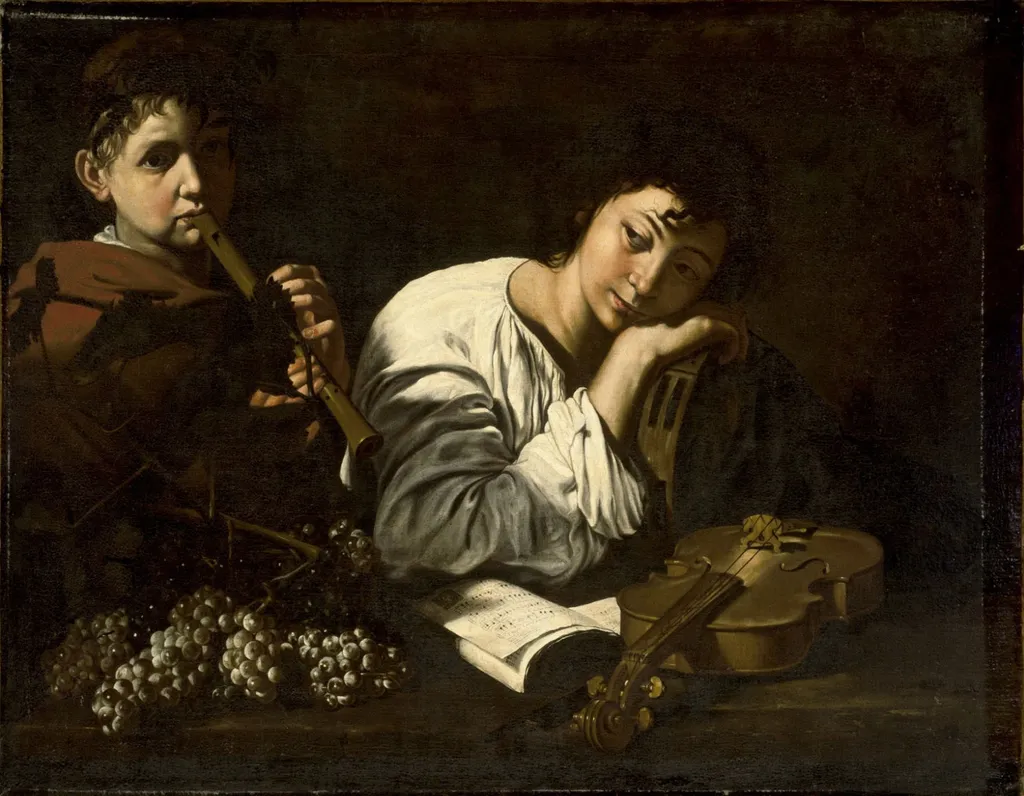
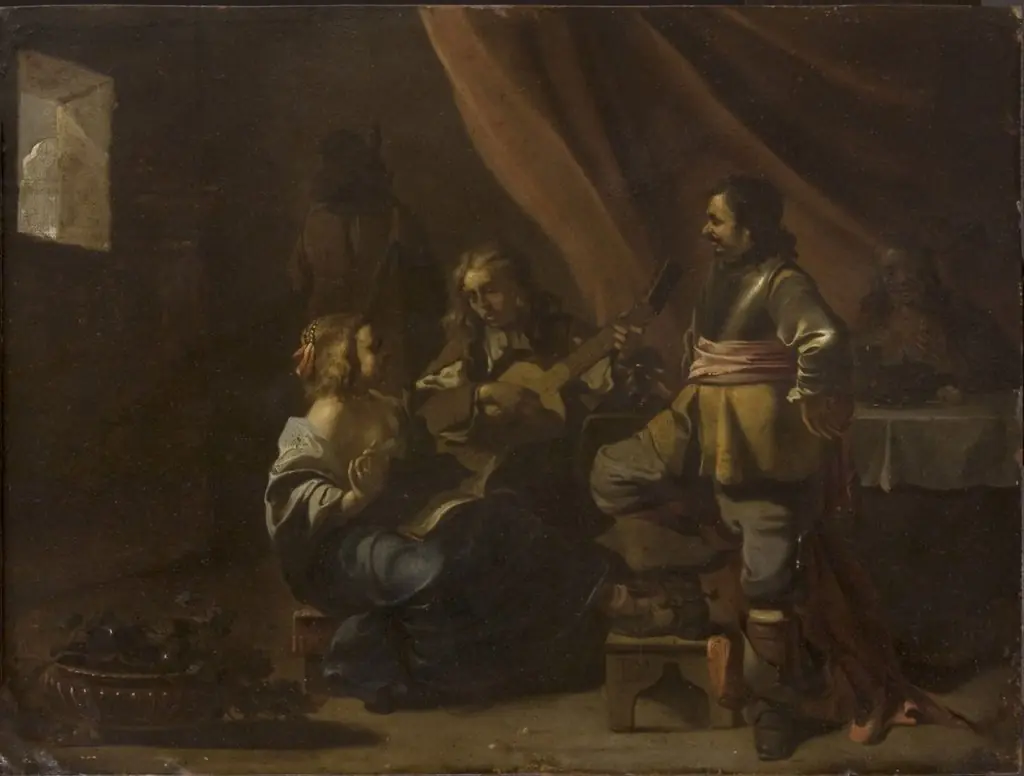
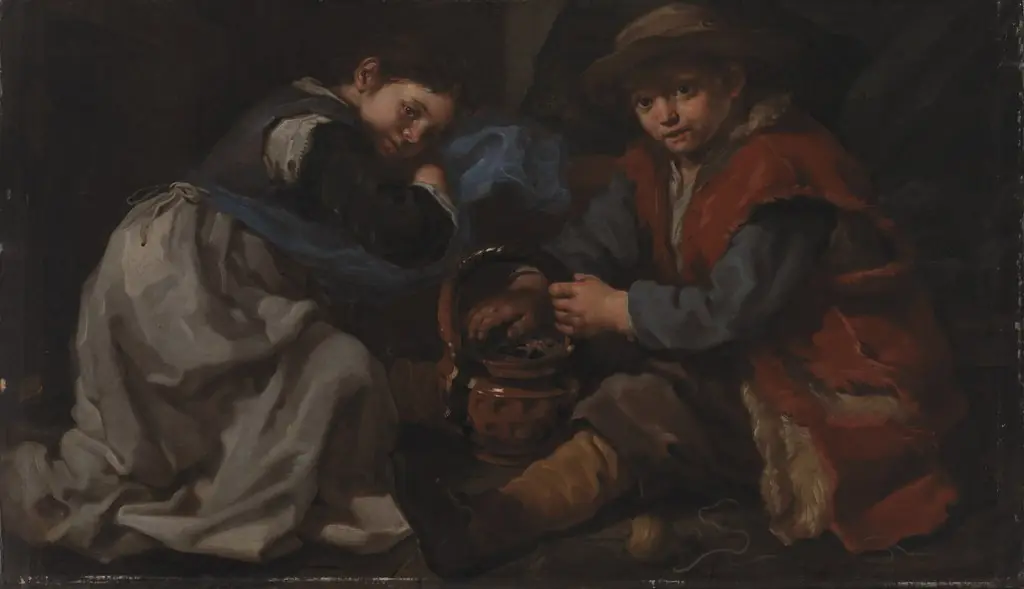
The Lament of Aminta is an oil painting by the Early Baroque Italian artist Bartolomeo Cavarozzi. It dates from 1616 and is held in the collection of the Philadelphia Museum of Art.
About this work
Overview
A practitioner influenced by Caravaggio, Cavarozzi trained in Rome before extending his artistic reach to Spain, where he disseminated Caravaggesque techniques.
Bartolomeo Cavarozzi executed *The Lament of Aminta* circa 1616, a work situated within the early Baroque period in Italy. A practitioner influenced by Caravaggio, Cavarozzi trained in Rome before extending his artistic reach to Spain, where he disseminated Caravaggesque techniques. The painting resides in the Philadelphia Museum of Art and exemplifies the dramatic interplay of light and shadow characteristic of its era.
Subject & Meaning
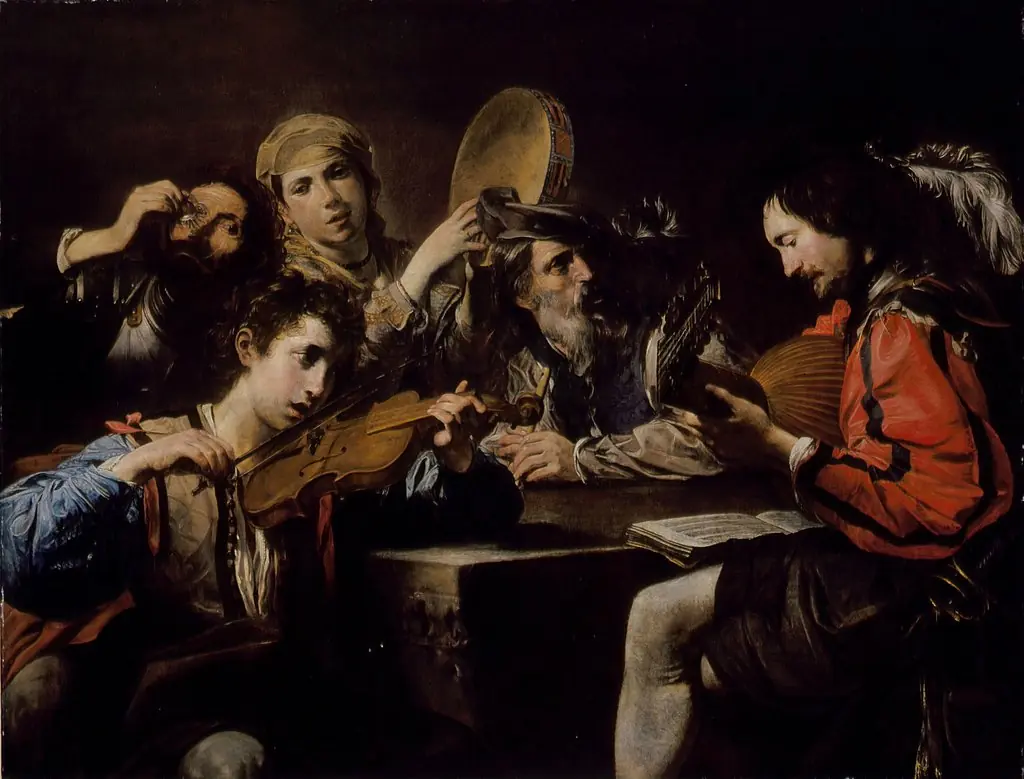
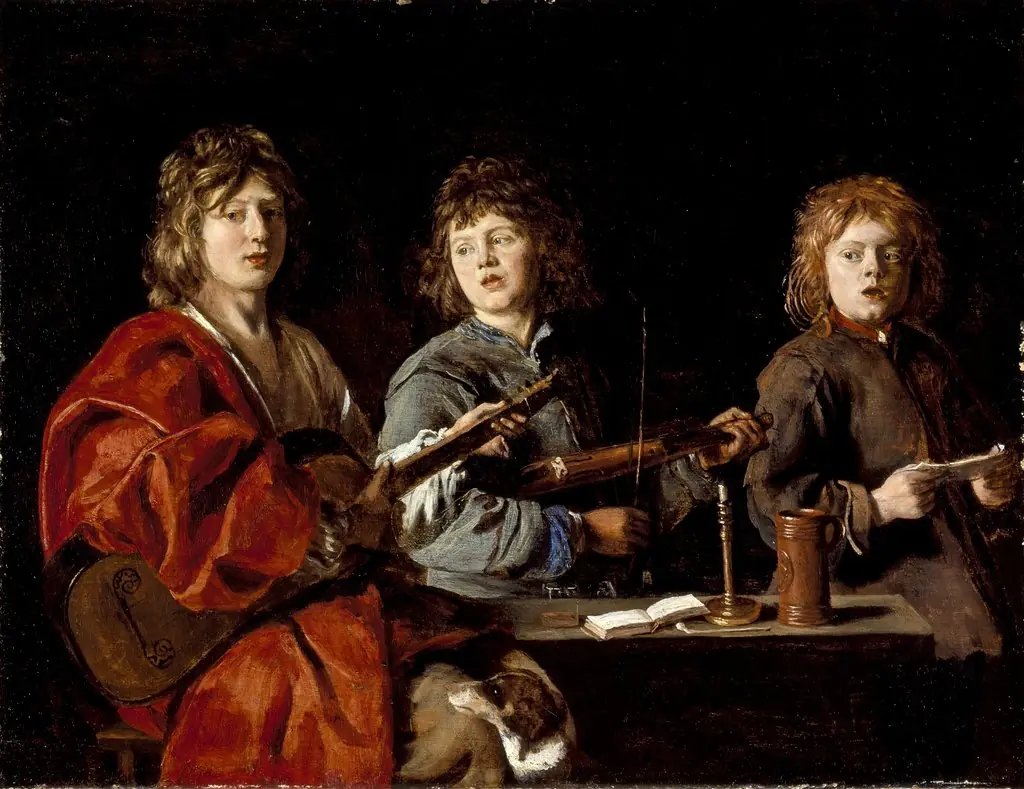
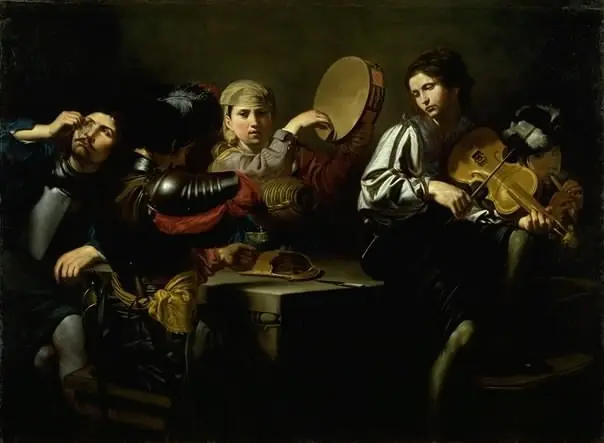
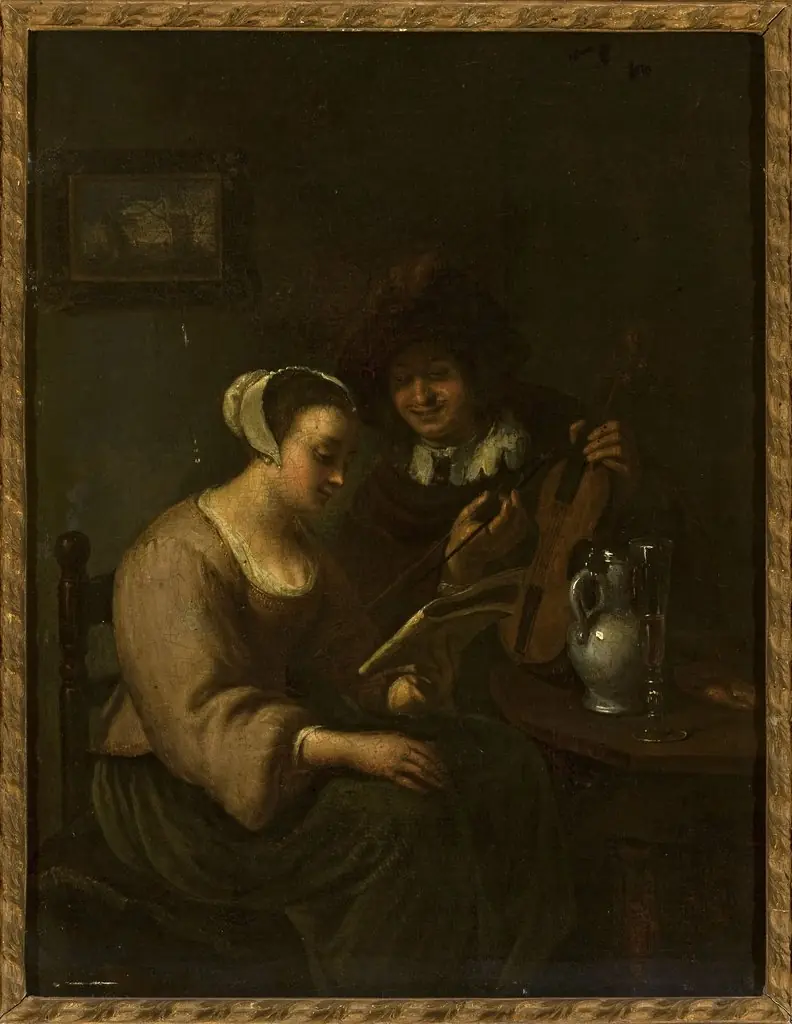
The composition portrays two figures seated at a table laden with symbolic objects—a grape cluster, sheet music, a recorder, and a violin. The central figure, likely Aminta, conveys melancholy through a gesture of resting the head on one hand, while the companion holds a tambourine. These elements suggest a narrative drawn from classical mythology, though the precise allegorical significance remains open to interpretation.
Technique & Style
Cavarozzi employs chiaroscuro to heighten emotional intensity, contrasting deep shadows with sharply illuminated forms. Muted earth tones dominate the palette, while the figures’ drapery—particularly the red cloak—introduces a subtle chromatic accent. The rendering of textures, from the sheen of musical instruments to the soft folds of fabric, demonstrates a meticulous attention to material realism, a hallmark of Caravaggesque painting.
History & Provenance
Created during Cavarozzi’s Roman period, *The Lament of Aminta* reflects the artist’s engagement with Caravaggio’s circle before his departure for Spain. Little is documented about its early ownership, though its acquisition by the Philadelphia Museum of Art secures its place within a public collection. The work’s condition and provenance remain subjects of ongoing scholarly examination.
Context
The painting emerges from a cultural milieu in which mythological themes intersected with naturalistic representation. Cavarozzi’s travels between Italy and Spain facilitated cross-regional artistic exchange, particularly the transmission of Caravaggio’s innovations. *The Lament of Aminta* participates in this broader dialogue, blending narrative ambiguity with technical precision to evoke emotional resonance.
Artist & collection
Artist
Bartolomeo Cavarozzi (1587–1625), occasionally referred to as Bartolomeo Crescenzi, was an Italian caravaggisti painter of the Baroque period.