Artwork
The Virgin and Child enthroned with Saints
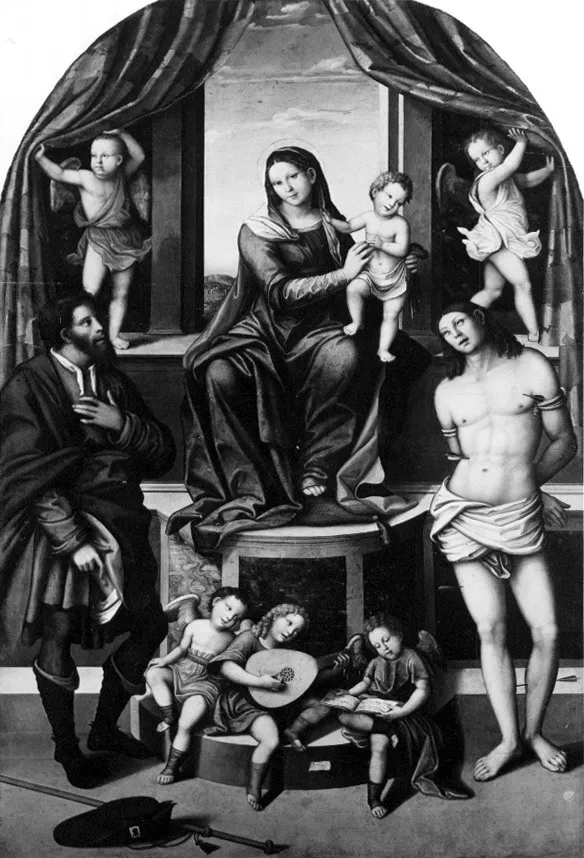
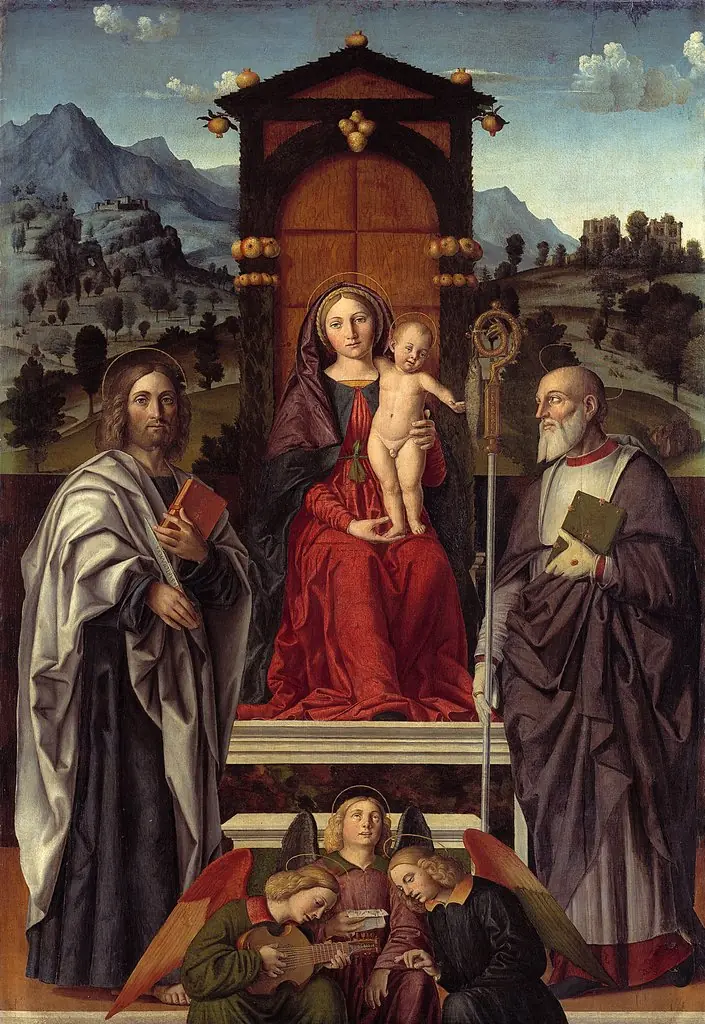
The Virgin and Child enthroned with Saints is a paint painting by the High Renaissance artist Bartolomeo Coda. It dates from 1515 and is held in the collection of the Gemäldegalerie Berlin.
About this work
Overview
Bartolomeo Coda, often identified as Da Rimini, completed the painting *Virgin and Child enthroned with Saints* in 1515. Executed in paint during the High Renaissance, the work presents the Virgin seated on an elaborate throne, holding the infant Christ, surrounded by a group of saints and attendant figures. The composition is now part of the collection of the Gemäldegalerie in Berlin.
Subject & Meaning
The central focus is the Virgin Mary, serene and robed in dark fabric, cradling the Christ Child who gazes upward.
The central focus is the Virgin Mary, serene and robed in dark fabric, cradling the Christ Child who gazes upward. Flanking the throne are five youthful figures, some playing musical instruments, and two male saints—one kneeling, the other standing unclothed—suggesting a narrative of devotion and celestial intercession. The arrangement underscores the theological theme of divine motherhood surrounded by holy intercessors.
Technique & Style
Coda employs a pronounced chiaroscuro, using strong contrasts of light and shadow to model the figures against a muted, curtain‑draped backdrop. The illumination highlights the Virgin’s calm visage and the animated gestures of the children, while the darker surroundings give depth to the spatial setting. The handling of paint reflects the balanced composition and refined modeling characteristic of early 16th‑century High Renaissance art.
History & Provenance
Trained by his father Benedetto Coda, Bartolomeo surpassed his mentor in technical proficiency, producing this work toward the end of his career. The painting entered the Berlin Gemäldegalerie collection in the early 20th century, where it remains on display as a representative example of the artist’s mature period and of the regional Riminese school.
Context
Created at a time when devotional images were central to both private and public worship, the work reflects the prevailing demand for richly detailed altarpieces. Coda’s Riminese background combined with broader High Renaissance influences, resulting in a synthesis of local tradition and the emerging emphasis on naturalistic light, anatomical precision, and harmonious composition.
Artist & collection
Artist
Bartolomeo Coda (or Codi) flourished about the year 1543. He was called Da Rimini, as was also his elder brother Francesco, who painted in 1533. He was instructed in the art by his father, Benedetto, whom he surpassed.…

 charity
 La Belle Jardinière
 Madonna and Child with Angels
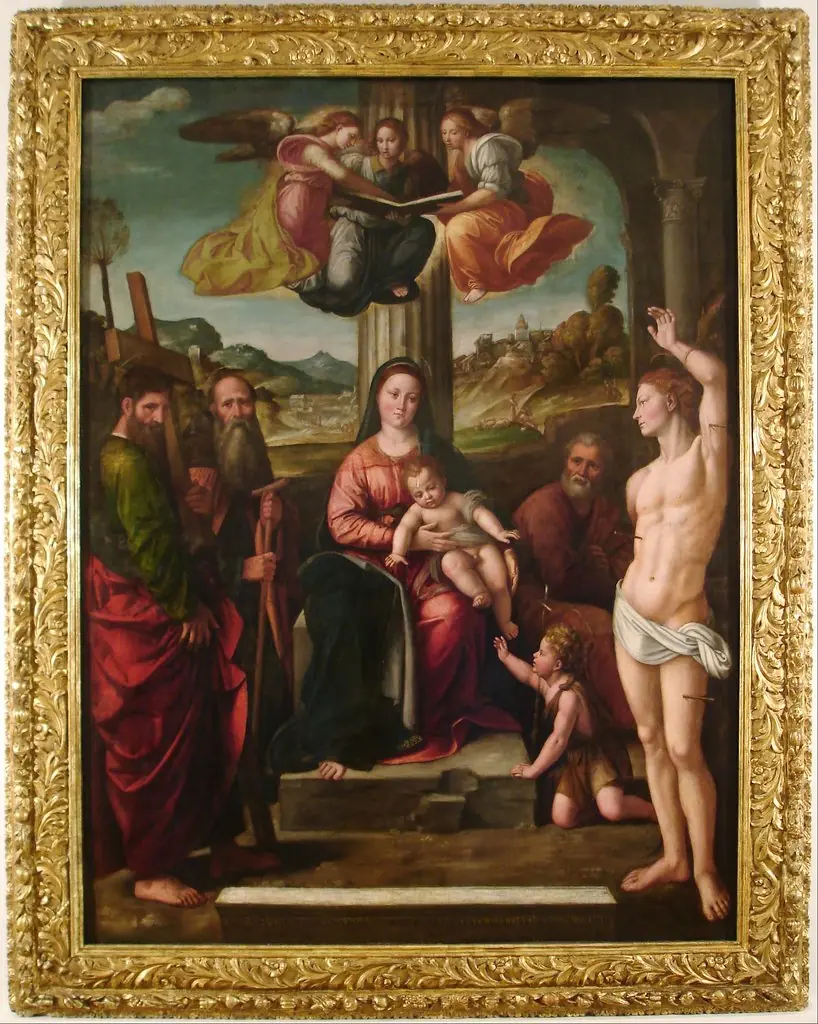 Santa Conversación
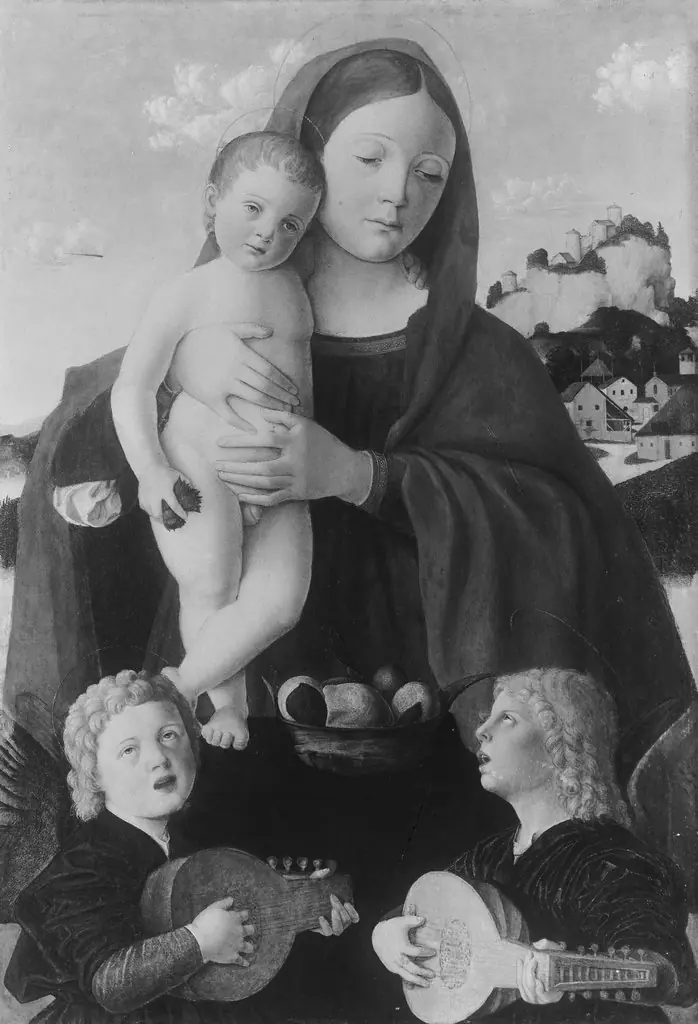 Mary with the Child
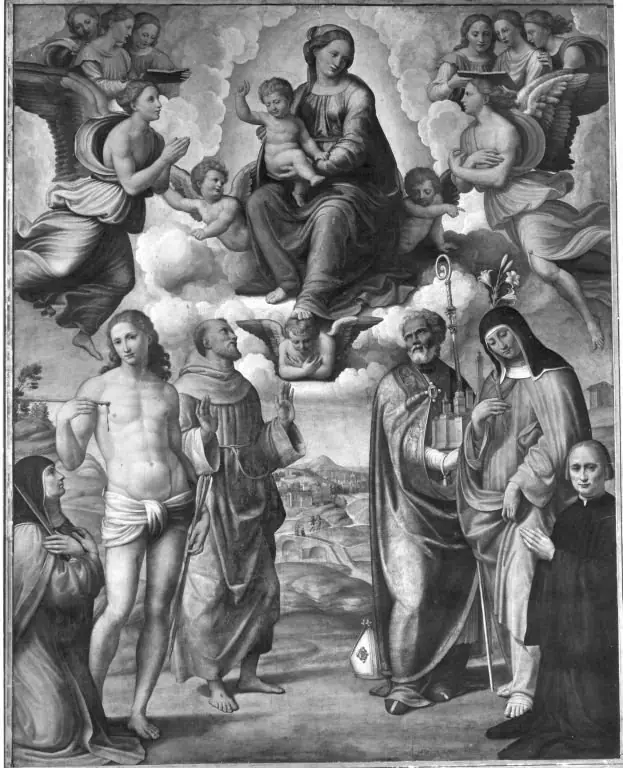 Maria mit Kind und den hll. Katharina von Siena, Sebastian, Franziskus, Petronius, Klara und Stifter
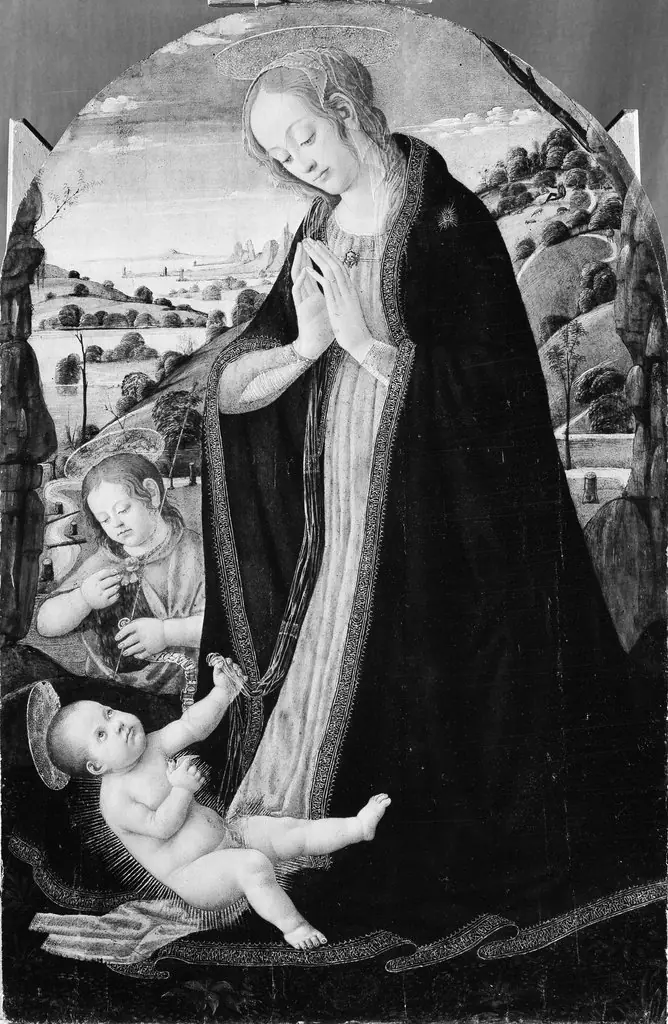 The Nativity
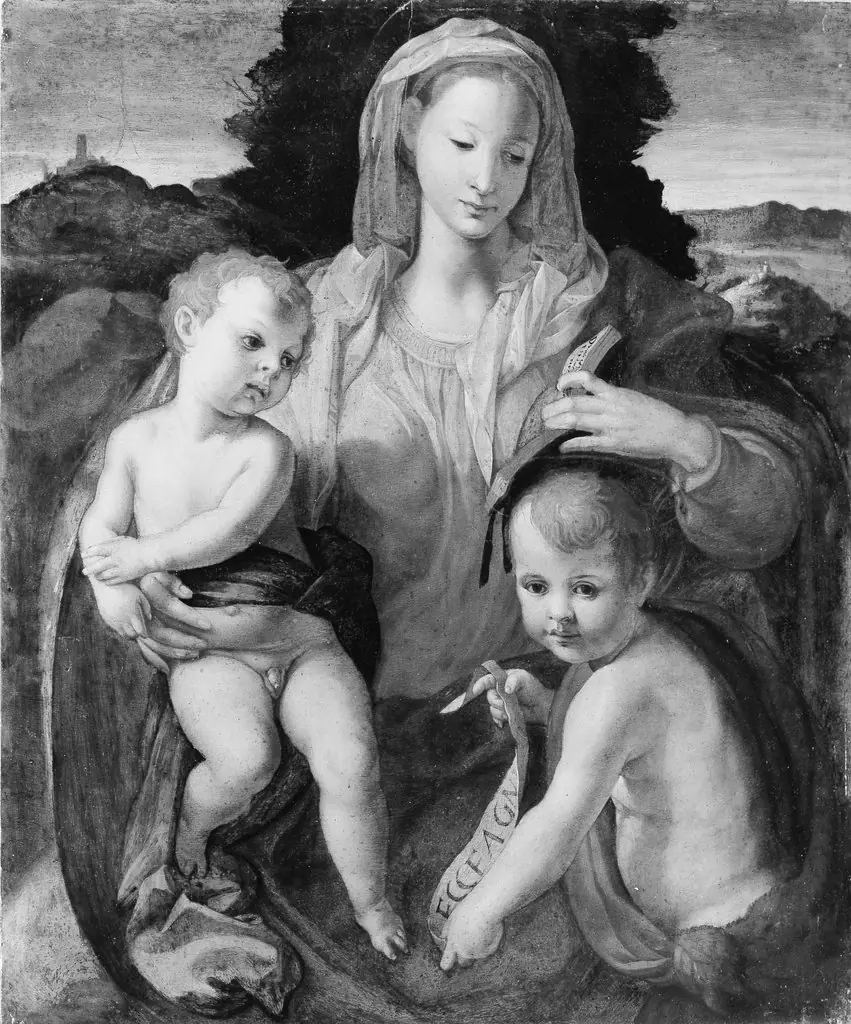 Madonna and Child with the Young Saint John the Baptist
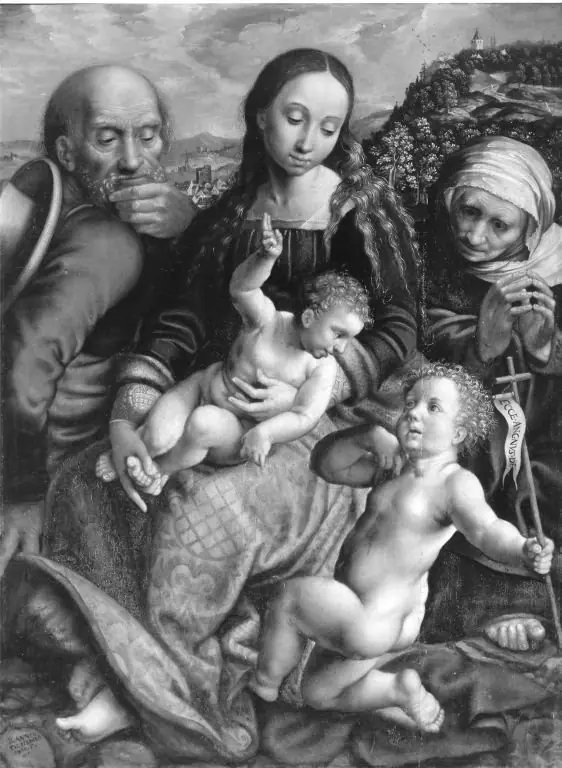 The Holy Family with Saint Elisabeth and the young St. John the Baptist
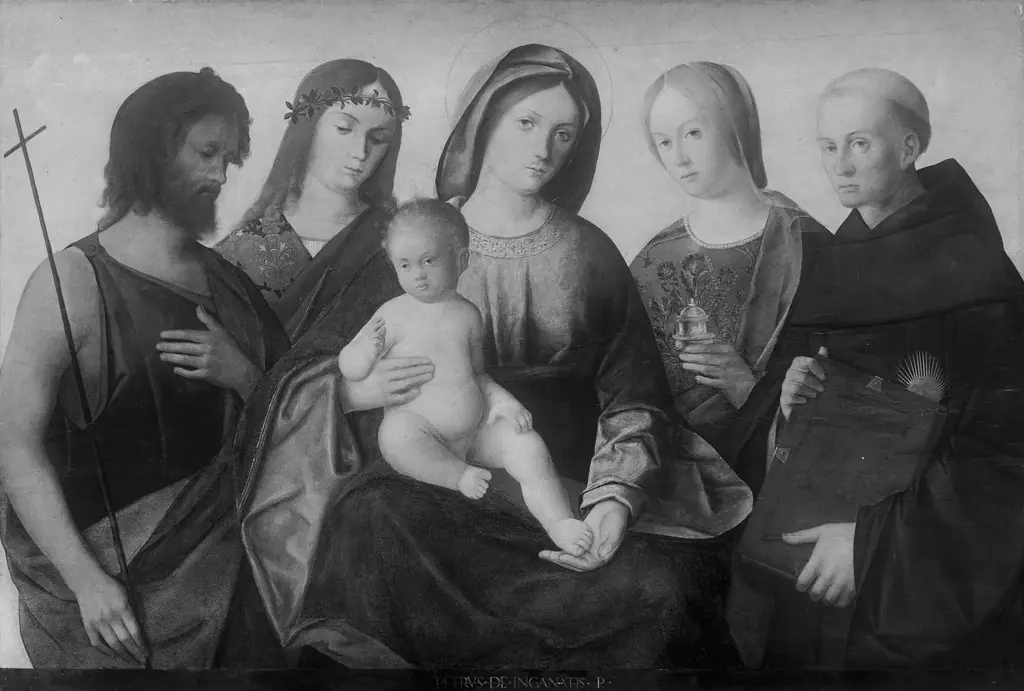 Mary with the child and four saints
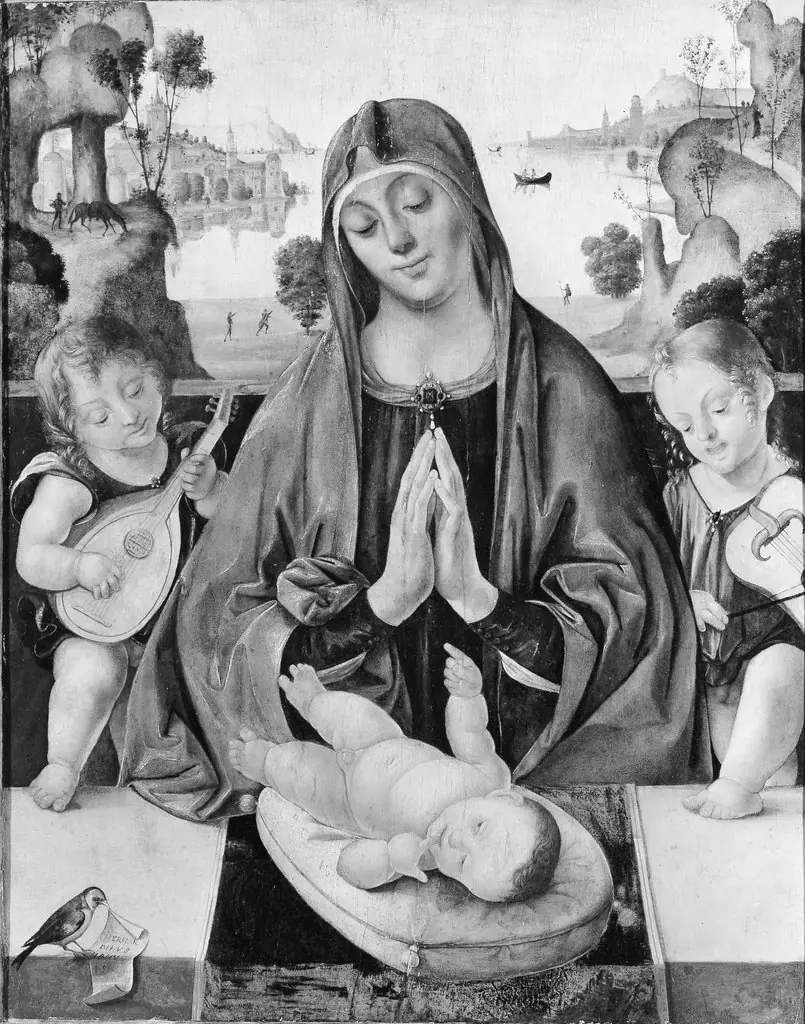 Madonna and Child with Angels
 Mary and Child Enthroned with Saints