Artwork
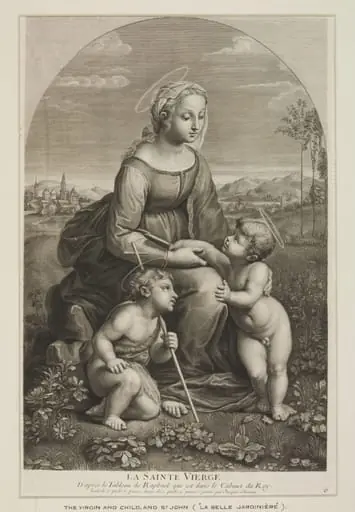
La Belle Jardinière
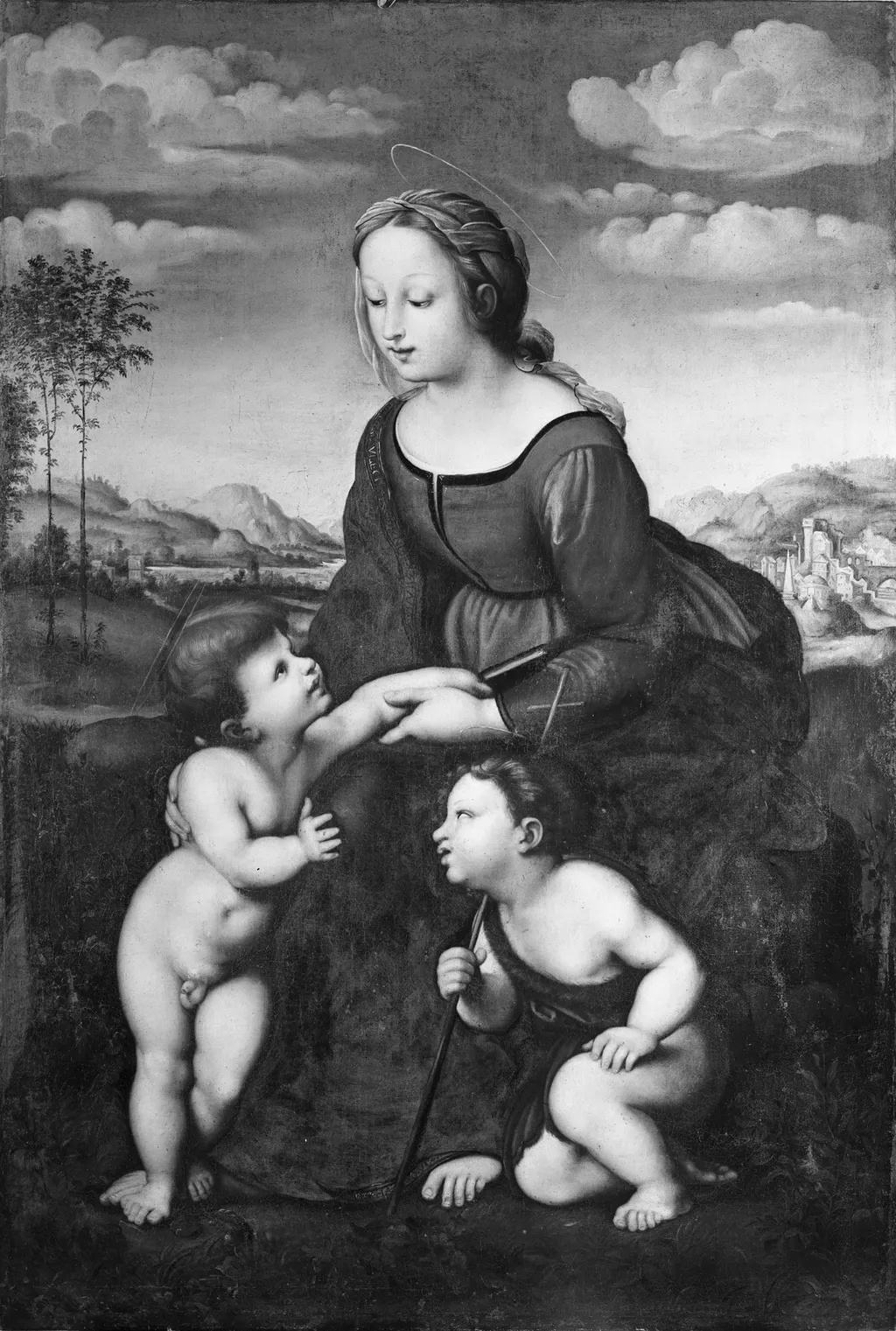
La Belle Jardinière is an oil painting by the High Renaissance artist Unknown. It dates from 1650 and is held in the collection of the Walters Art Museum.
About this work
Overview
La Belle Jardinière is an oil painting that presents a seated woman flanked by two nude children within a tranquil landscape.
La Belle Jardinière is an oil painting that presents a seated woman flanked by two nude children within a tranquil landscape. The woman, clothed in dark garments, bears a halo and rests a book on her lap, while the children stand on either side—one reaching toward her hand, the other holding a stick and gazing upward. The backdrop features trees, rolling hills, and a cloudy sky, conveying a calm, devotional atmosphere.
Subject & Meaning
The central figure is depicted as a sanctified mother, suggested by the halo and the presence of a book, which may allude to religious or moral instruction. The juxtaposition of the clothed adult with naked children emphasizes innocence and dependence, reinforcing themes of maternal care and spiritual guidance within a natural setting.
Technique & Style
Executed in oil, the work employs a balanced composition and subtle modeling of forms, creating a gentle transition between figures and landscape. While the overall lighting is even, the painter’s handling of color and texture hints at an awareness of chiaroscuro principles, reminiscent of the tonal contrasts explored by contemporaneous Dutch artists.
Context
The painting aligns with a tradition of devotional genre scenes that combine everyday domesticity with religious symbolism. By placing a holy figure in a pastoral environment, the artist bridges the sacred and the secular, reflecting a broader 17th‑century interest in portraying spiritual narratives within familiar, naturalistic contexts.
Artist & collection

 Domestic Scene
 Giacomo and Cardinal Marco, investing Andrea, Abbot of San Zeno, with his Benefice
 The Nymph of Fontainebleau
 Portrait of a Woman
 Madonna and Child with Saints in the Enclosed Garden
 Venus and Minerva
 Family Group of Four on Sofa
 Wall painting from Room H of the Villa of P. Fannius Synistor at Boscoreale
 Madonna and Child with St John
 charity
 Mary with the Child
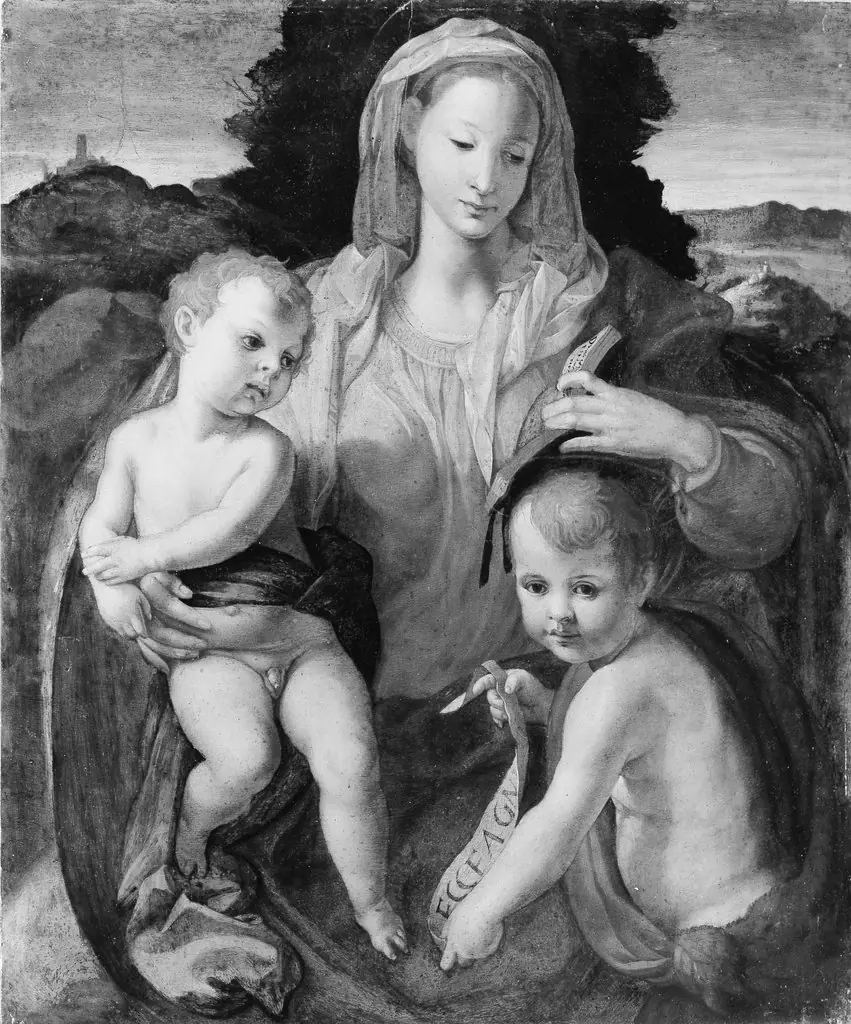 Madonna and Child with the Young Saint John the Baptist
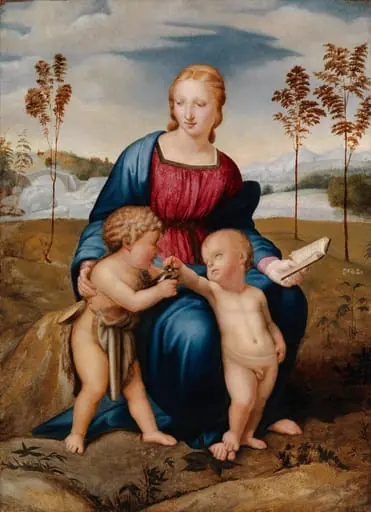 Madonna del Cardellino, kopio Rafaelin (Raffaello Sanzio) mukaan
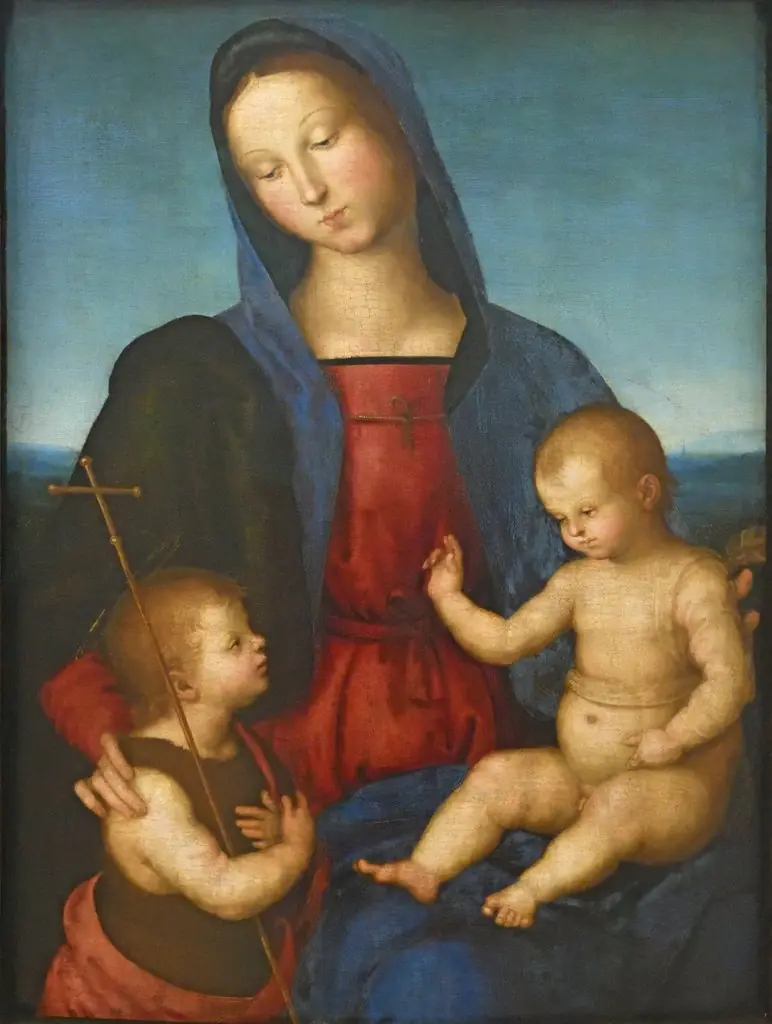 Madonna Diotallevi
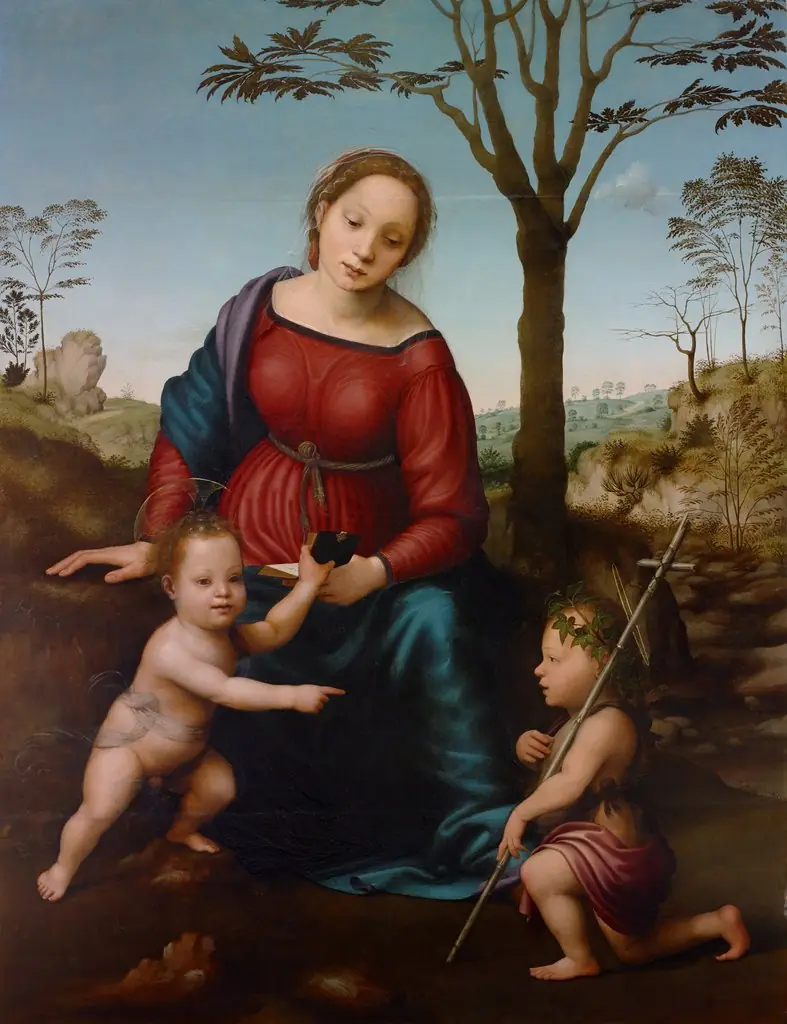 Madonna and Child Seated in a Landscape with Saint John the Baptist
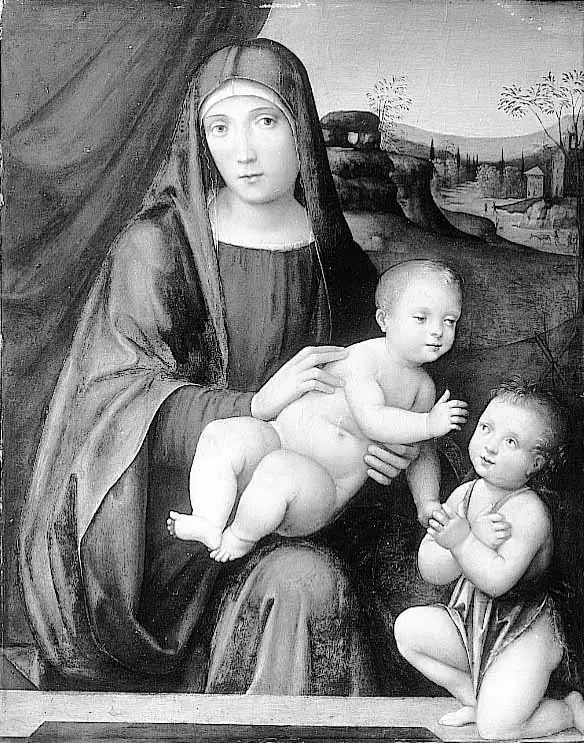 The Virgin and Child with the Young St. John
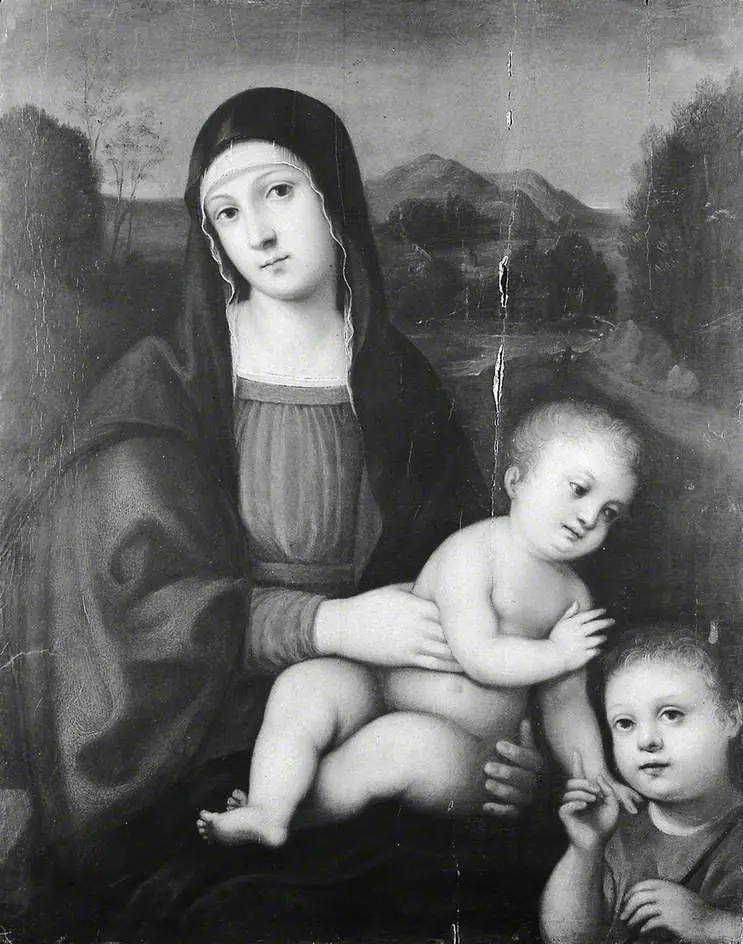 The Virgin and Child with the young St John the Baptist
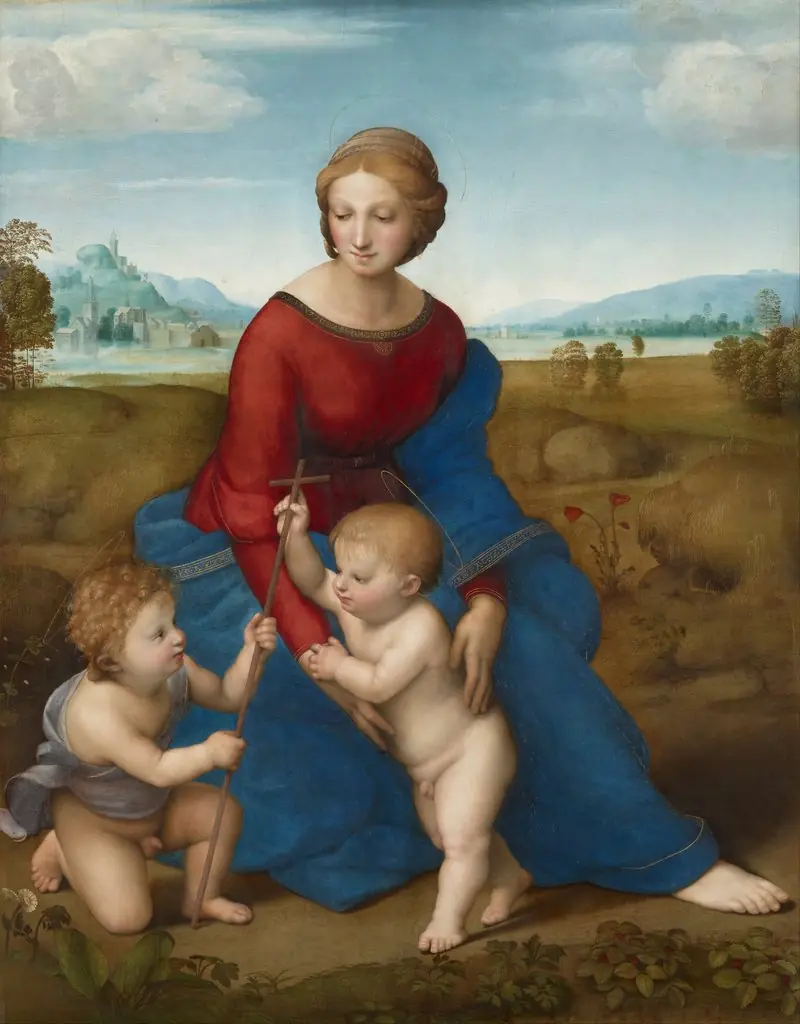 Madonna del Prato
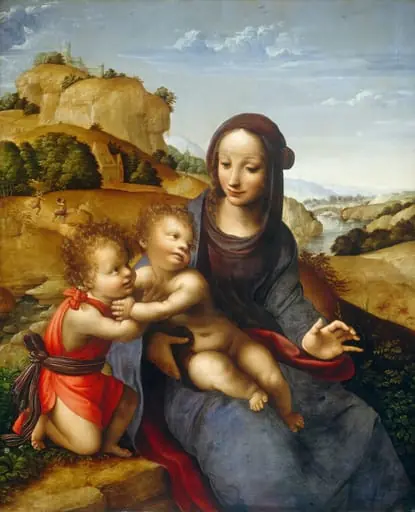 Madonna and Child with the Infant Saint John
 La Belle Jardinière