Artwork
Cain kills Abel
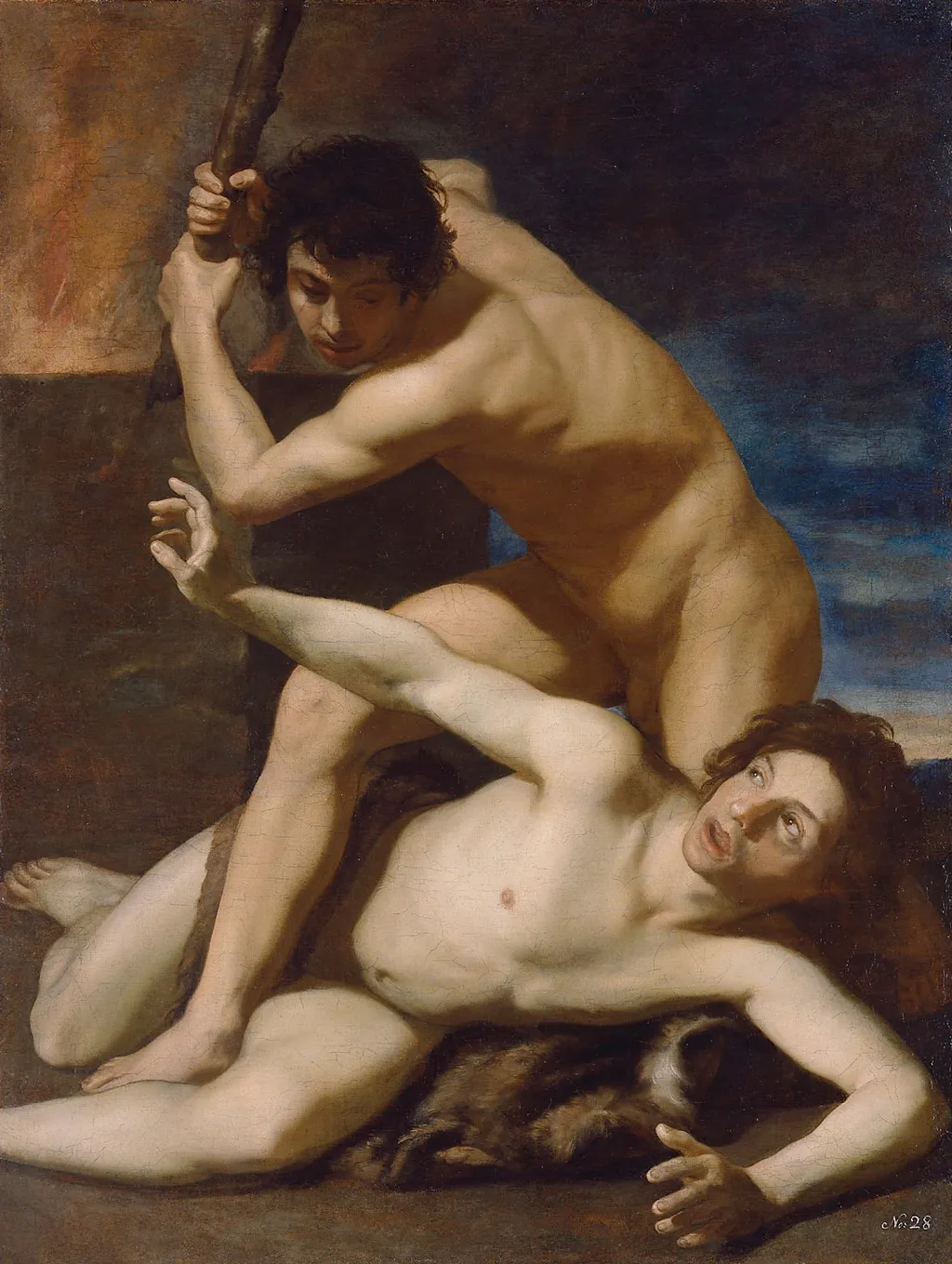
Cain kills Abel is an oil painting by the Early Baroque Italian artist Bartolomeo Manfredi. It dates from 1615 and is held in the collection of the Kunsthistorisches Museum.
About this work
Overview
The artist eliminates extraneous background details, forcing the viewer's attention onto the physical struggle and the psychological weight of the act.
Bartolomeo Manfredi's 'Cain kills Abel,' executed in 1615, is a seminal example of early Baroque religious painting that adapts the Caravaggesque style to a biblical narrative. The composition focuses tightly on the fratricide, depicting Cain standing over his fallen brother, Abel, in a moment of violent climax. Manfredi renders the scene with dramatic chiaroscuro, using stark contrasts of light and shadow to model the figures' muscular forms and heighten the emotional intensity. Cain, characterized by dark hair, grips a heavy club in his right hand, poised to deliver the fatal blow, while Abel, distinguished by lighter hair, lies prone on the ground, his expression conveying terror and resignation. The artist eliminates extraneous background details, forcing the viewer's attention onto the physical struggle and the psychological weight of the act. This work reflects Manfredi's pivotal role in disseminating Caravaggio's naturalism to a generation of followers, known as the Caravaggisti. By focusing on the raw, unidealized humanity of the figures and the immediacy of the violence, Manfredi moves away from Mannerist conventions, establishing a gritty realism that defined his career and influenced the development of genre painting in the early seventeenth century.
Subject & Meaning
The painting visualizes the first fratricide recorded in Genesis, emphasizing the stark contrast between the two brothers. The standing figure, dark‑haired and armed, embodies violent intent, while the prone figure, lighter‑haired and gazing upward, conveys shock and helplessness. This juxtaposition underscores themes of jealousy, moral transgression, and divine punishment.
Technique & Style
Manfredi employs a pronounced chiaroscuro, allowing deep shadows to envelop the background while a focused light bathes the two men, heightening the drama. The strong modeling of flesh and the tactile rendering of the club demonstrate the influence of Caravaggist realism, while the limited palette reinforces the scene’s emotional intensity.
History & Provenance
Created in the early seventeenth century, the canvas entered the Kunsthistorisches Museum’s holdings in the nineteenth century, though earlier ownership records are sparse. Its presence in the museum’s Baroque department reflects the institution’s commitment to preserving works that illustrate the diffusion of Caravaggio’s style beyond Italy.
Context
Manfredi, a leading figure among the Caravaggisti, often chose biblical moments that allowed for stark moral contrasts. By 1615, such violent narratives were popular in Counter‑Reformation art, serving as visual warnings against sin. The painting thus aligns with contemporary religious didacticism while showcasing the artist’s mastery of light and narrative tension.
Artist & collection

Artist
Bartolomeo Manfredi was an Italian painter, a leading member of the Caravaggisti of the early 17th century.