Artwork
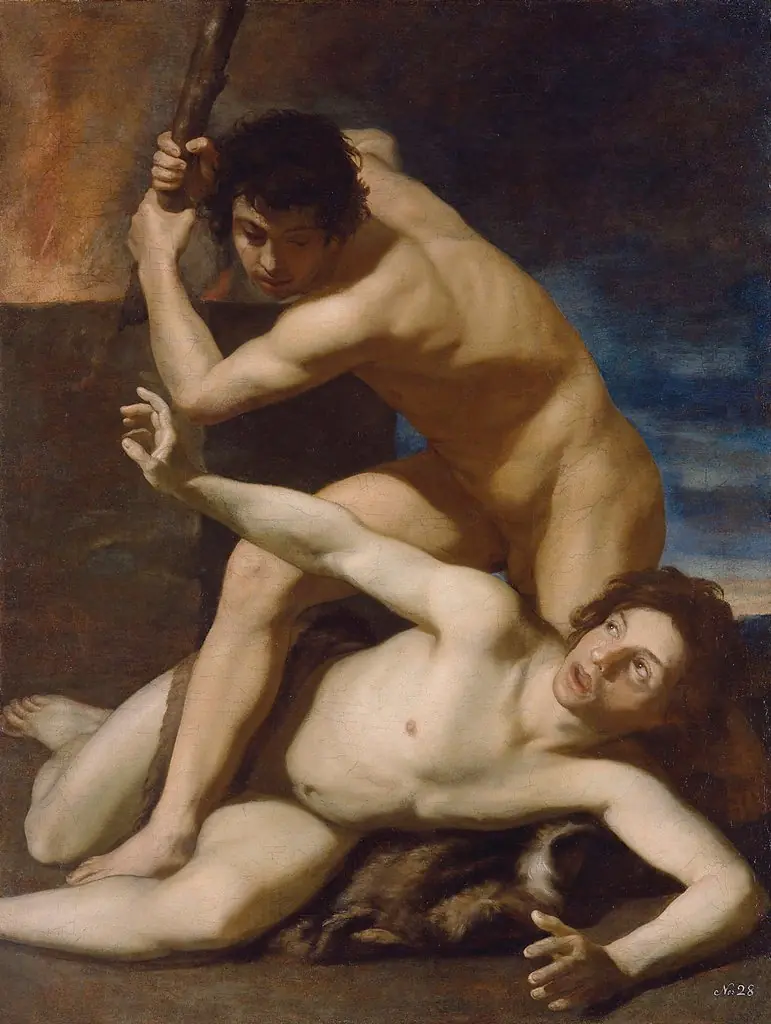
Cain Slaying Abel
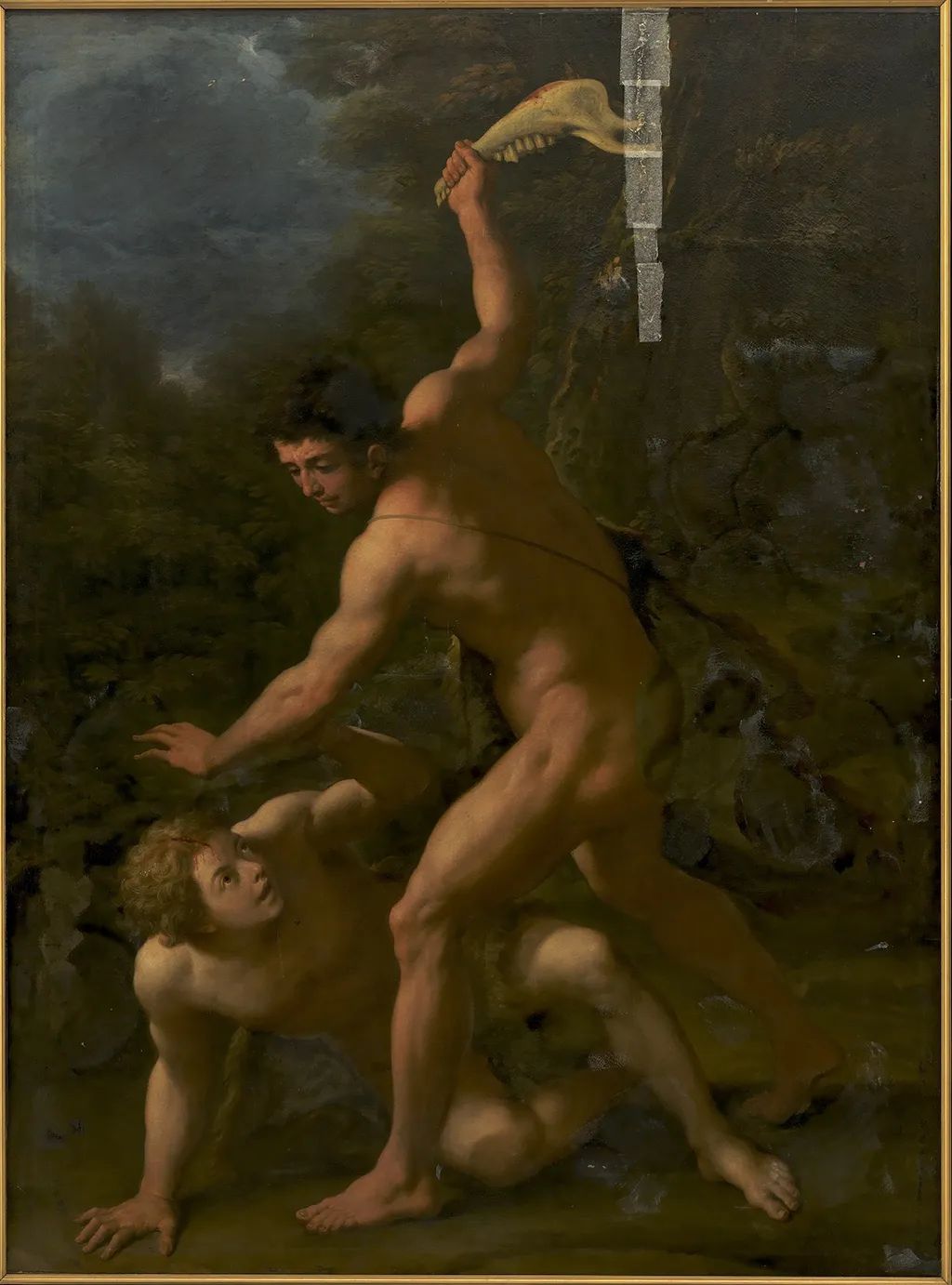
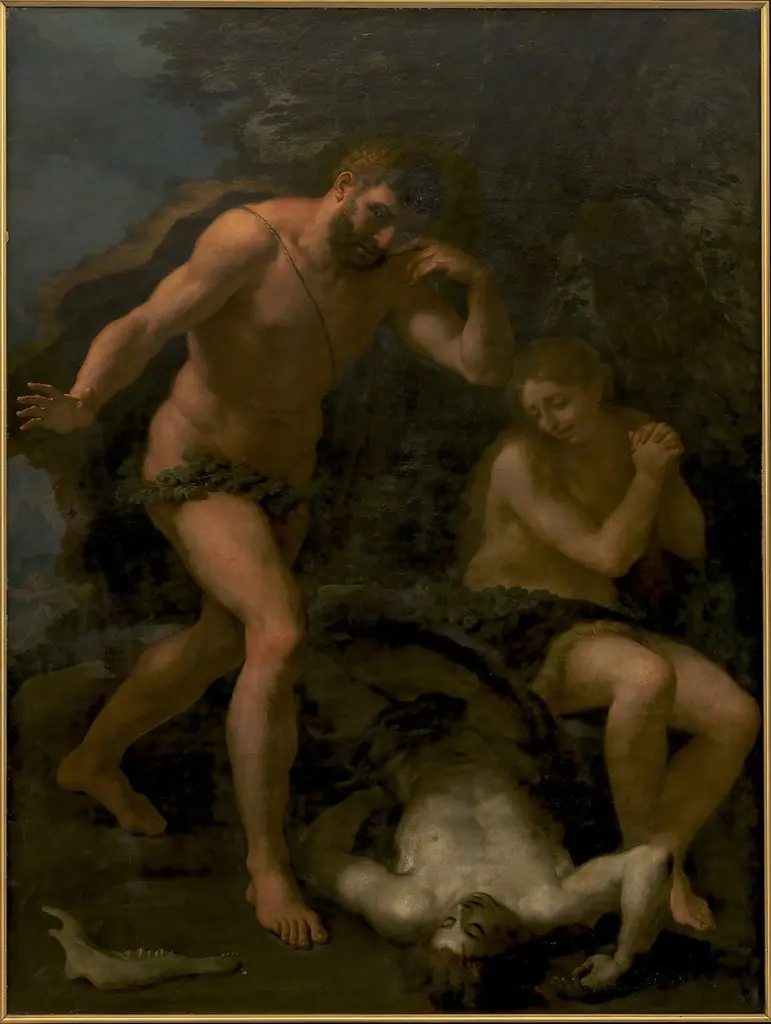
Cain Slaying Abel is an oil painting by the Early Baroque Italian artist Paolo de Matteis. It dates from 1707 and is held in the collection of the Statens Museum for Kunst.
About this work
Overview
Paolo de Matteis’s oil on canvas, dated 1707, portrays the biblical episode of Cain murdering Abel. The work is part of the collection of Denmark’s Statens Museum for Kunst. It presents two unclothed male figures in a stark, rocky interior, rendered in a palette of muted greens and earth tones, with selective illumination highlighting the skin and faces.
Subject & Meaning
The composition captures the moment of fratricide: a towering figure, clutching a large animal hide, looms over a kneeling, down‑cast brother whose gaze is directed upward. The contrast between the dominant, twisted posture of the aggressor and the subdued, contemplative stance of the victim underscores themes of violence, guilt and divine judgment inherent in the Genesis narrative.
Technique & Style
De Matteis employs a pronounced chiaroscuro, using deep shadows to model the rugged terrain and the bodies, while a narrow band of light falls on the skin and faces, creating a dramatic three‑dimensional effect. The brushwork is tight in the figures, allowing fine detail in musculature, while the background is rendered with broader, textured strokes that suggest a cavernous or cliffside setting.
History & Provenance
Executed in the early eighteenth century, the painting reflects de Matteis’s mature Baroque period. After its creation, the canvas entered private collections before being acquired by the Statens Museum for Kunst, where it remains on display as part of the museum’s European Baroque holdings.
Context
The work belongs to a broader tradition of biblical scenes popular in Catholic Europe, where artists used dramatic lighting and dynamic poses to convey moral lessons. De Matteis, a Neapolitan painter trained under Francesco Solimena, often combined theatrical composition with refined color harmonies, situating this piece within the late Baroque emphasis on emotional intensity.
Artist & collection