Artwork
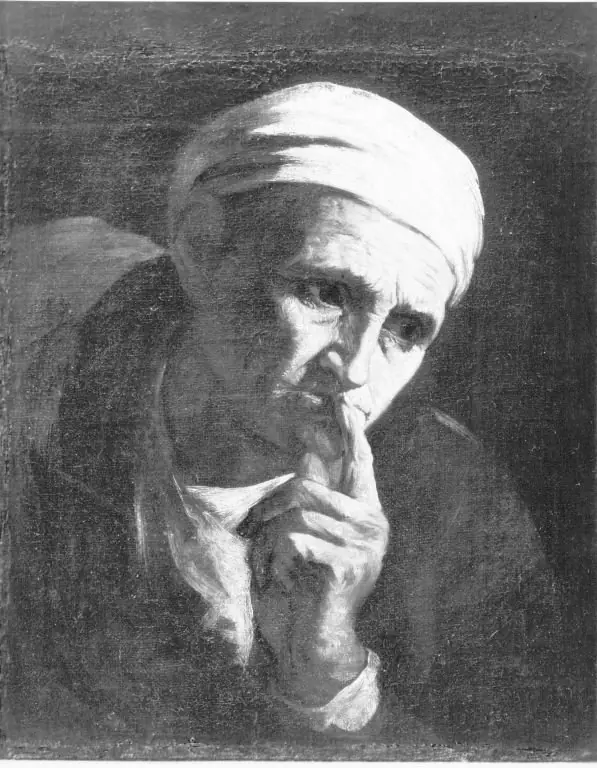
Ritratto di vecchia
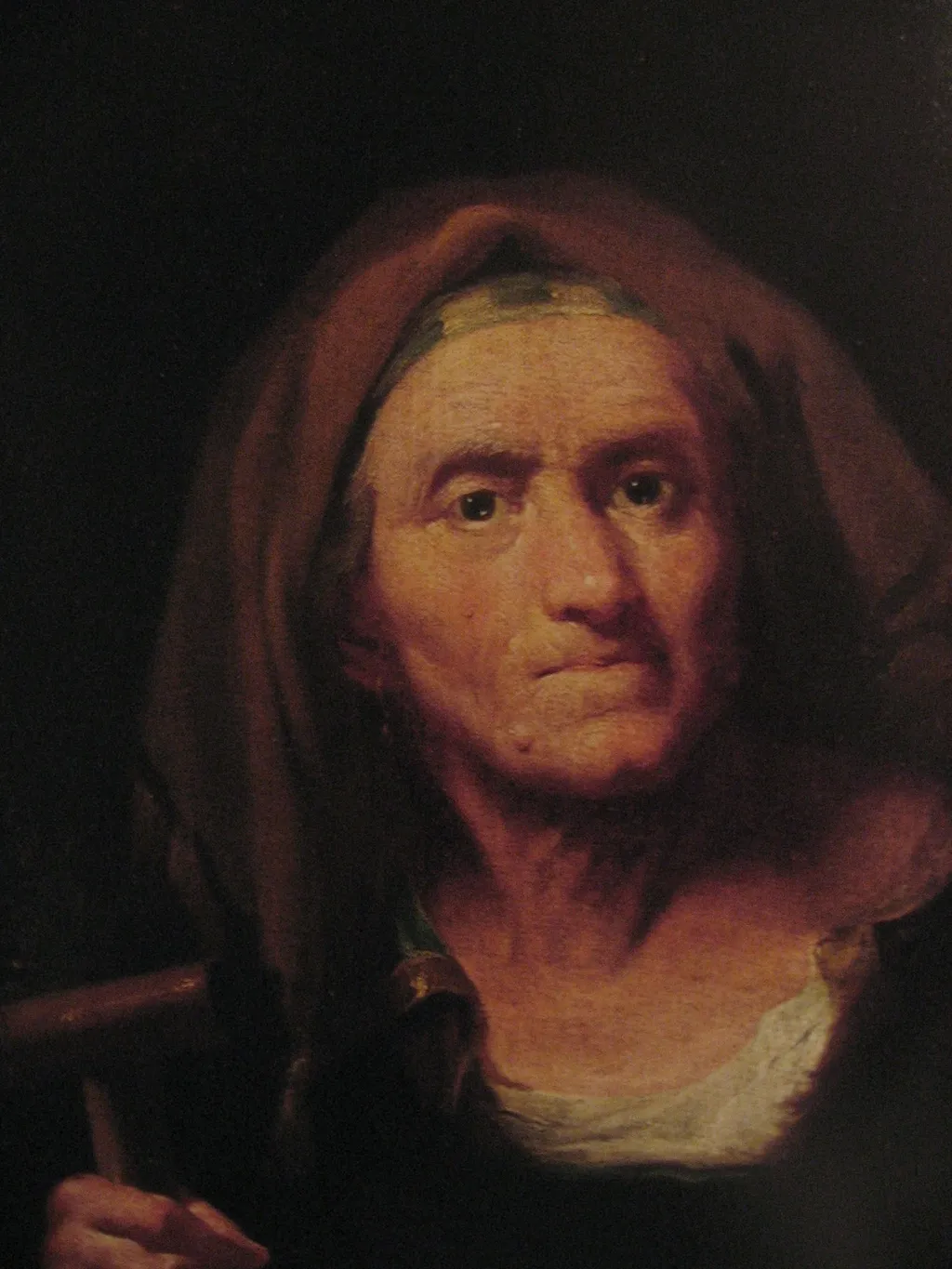
Ritratto di vecchia is an unspecified painting by Bartolomeo Nazari. It dates from 1735 and is held in the collection of the Accademia Carrara.
About this work
Overview
Painted around 1735 by Bartolomeo Nazari, an Italian artist active in Venice during the late Baroque period, this portrait captures an elderly woman with quiet intensity. Nazari, known for his focus on portraiture, rendered the subject with restrained realism. The work is held in the Accademia Carrara’s collection and exemplifies the period’s interest in psychological depth over idealization.
Subject & Meaning
The absence of ornamentation and the somber tone suggest a life of quiet reflection, possibly religious or intellectual.
The subject is an older woman, her face marked by time, dressed in dark clothing with a crisp white collar. She holds a book, her gaze lowered as if absorbed in its contents. The absence of ornamentation and the somber tone suggest a life of quiet reflection, possibly religious or intellectual. Her posture and expression convey introspection rather than narrative, inviting contemplation of inner experience.
Technique & Style
Nazari employs chiaroscuro to model the woman’s face, using soft transitions between light and shadow to emphasize texture and age. The dark, undefined background isolates her form, drawing attention to her features—wrinkles, furrowed brow, and the subtle sheen of skin. Brushwork is precise but unobtrusive, prioritizing naturalism over theatricality, aligning with Venetian portraiture of the era.
History & Provenance
The painting entered the Accademia Carrara’s collection in Bergamo, where it remains today. While little is documented about its early ownership, its presence in a major Italian academy suggests it was valued for its artistic merit rather than its subject’s identity. Nazari’s reputation as a portraitist likely contributed to its preservation and institutional recognition.
Context
In early 18th-century Venice, portraiture was increasingly focused on individual character rather than social status. Nazari worked within this shift, influenced by both Venetian colorism and the northern European tradition of psychological realism. This portrait reflects a broader trend: the dignified depiction of ordinary, non-noble subjects, particularly women of advancing age.
Legacy
Though Nazari is not widely known today, this portrait endures as a quiet example of Venetian realism. It stands as a testament to the period’s capacity to find gravity in the unadorned human form. Its preservation in a public collection ensures continued study of how artists of the time approached aging, solitude, and inner life without sentimentality.
Artist & collection
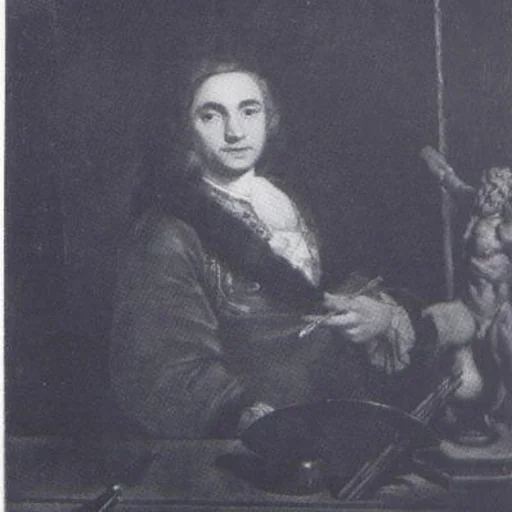
Artist
Bartolomeo Nazari (31 May 1693 – 24 August 1758) was an Italian painter of the late-Baroque, mainly active in Venice as a portraitist.


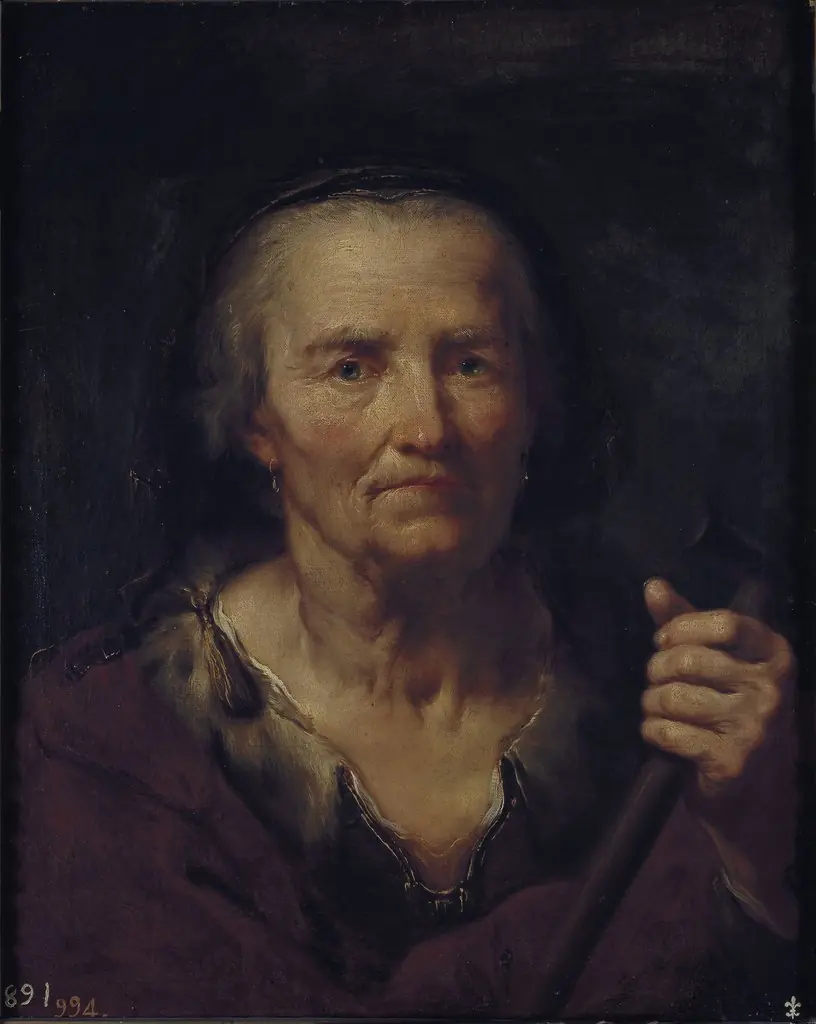 Old Lady with a crutch
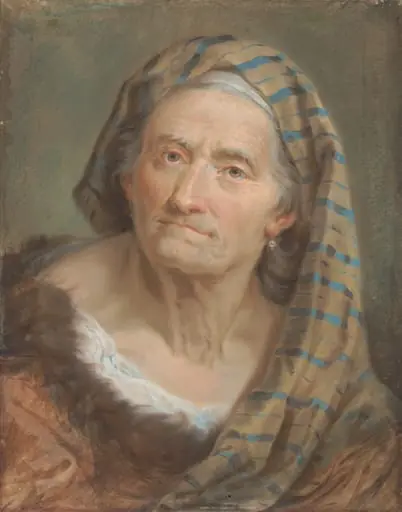 An Elderly Woman in a Striped Shawl
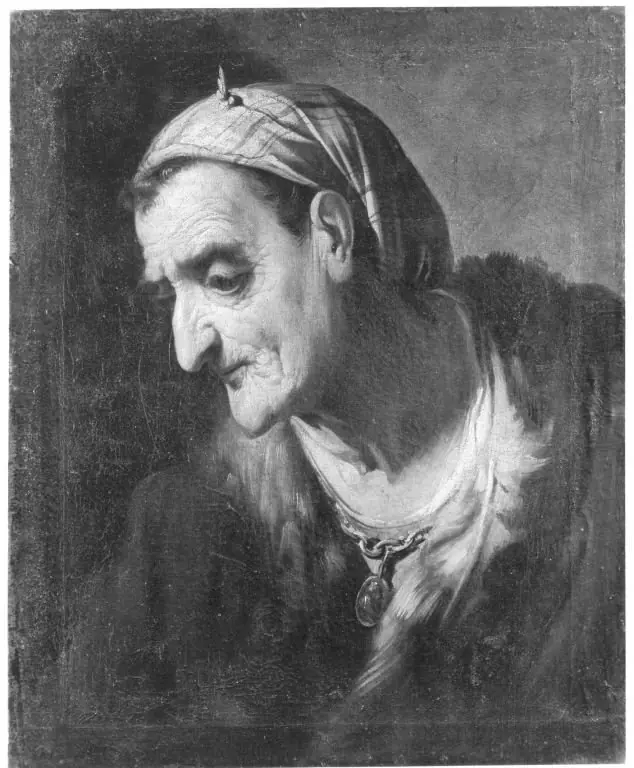 Bildnis einer alten Frau (?)
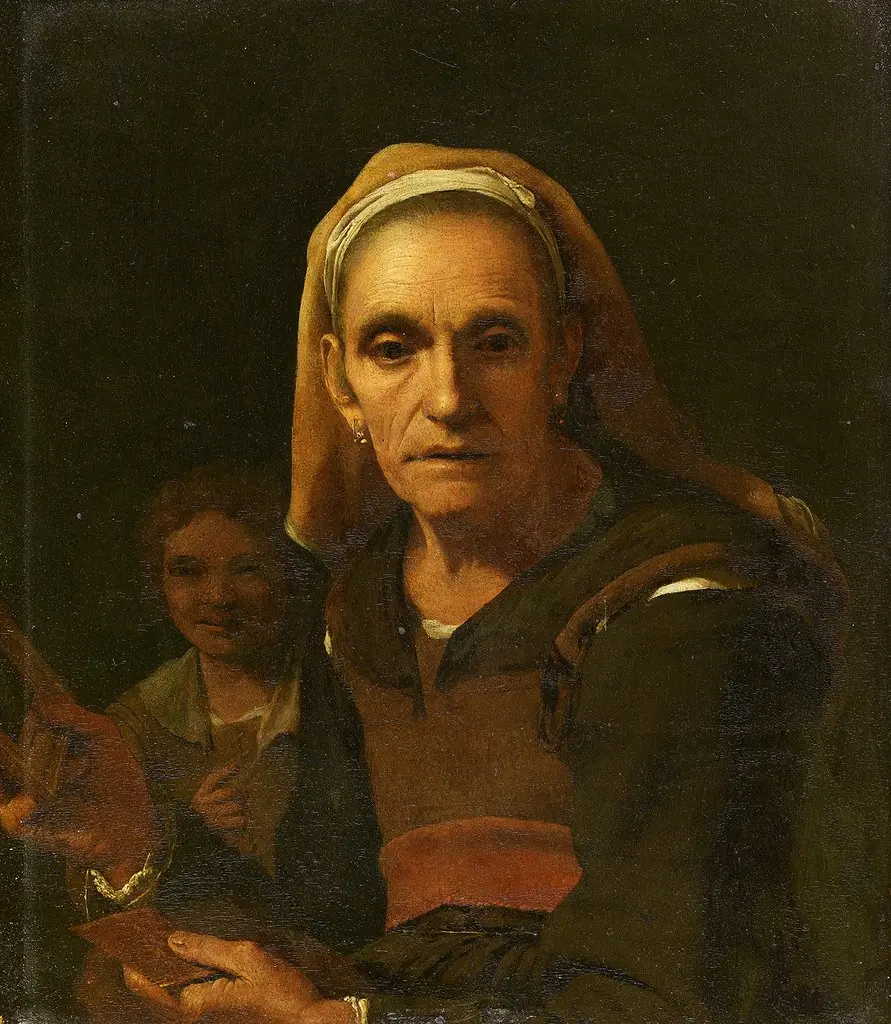 Old Woman With a Girl
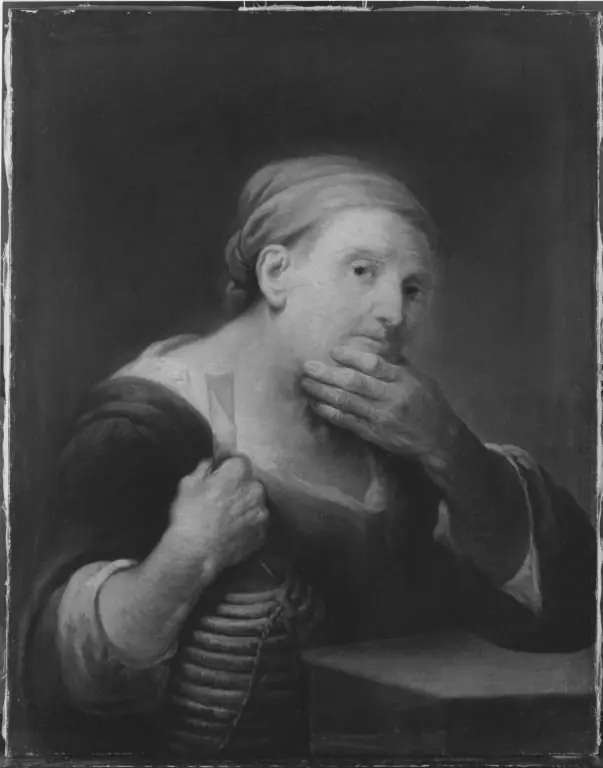 The old woman with a wine bottle
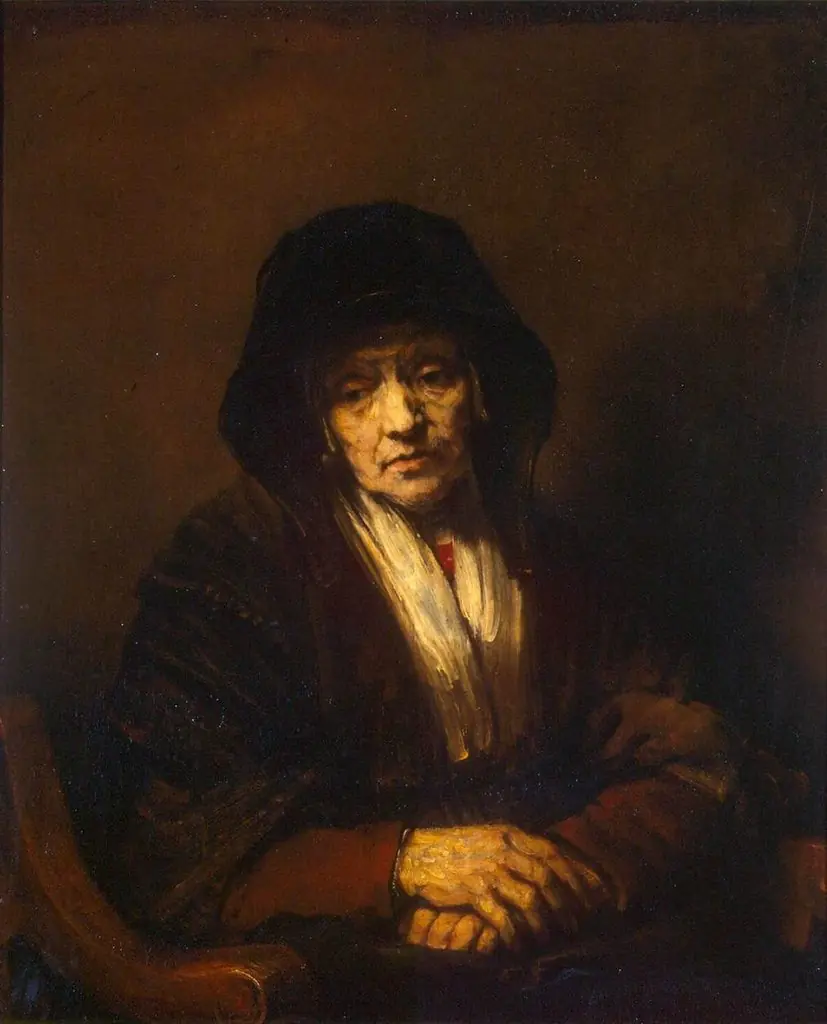 Portrait of an Old Woman
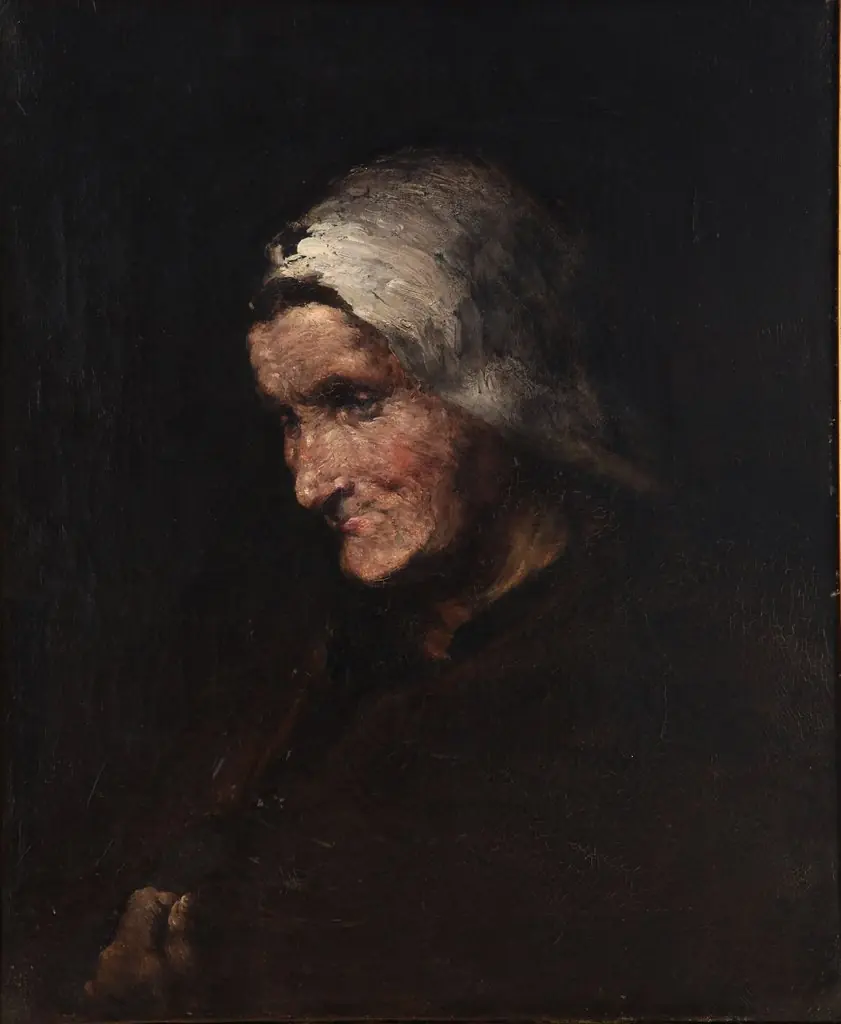 Cabeza de anciana
 Old woman with jead lowered
 Portrait of an old woman with fur
 Head of an Aged Woman
 Portrait of an unknown lady
 Bildnis einer alten Frau (Nachfolger)