Artwork
Saint Mary Magdalen
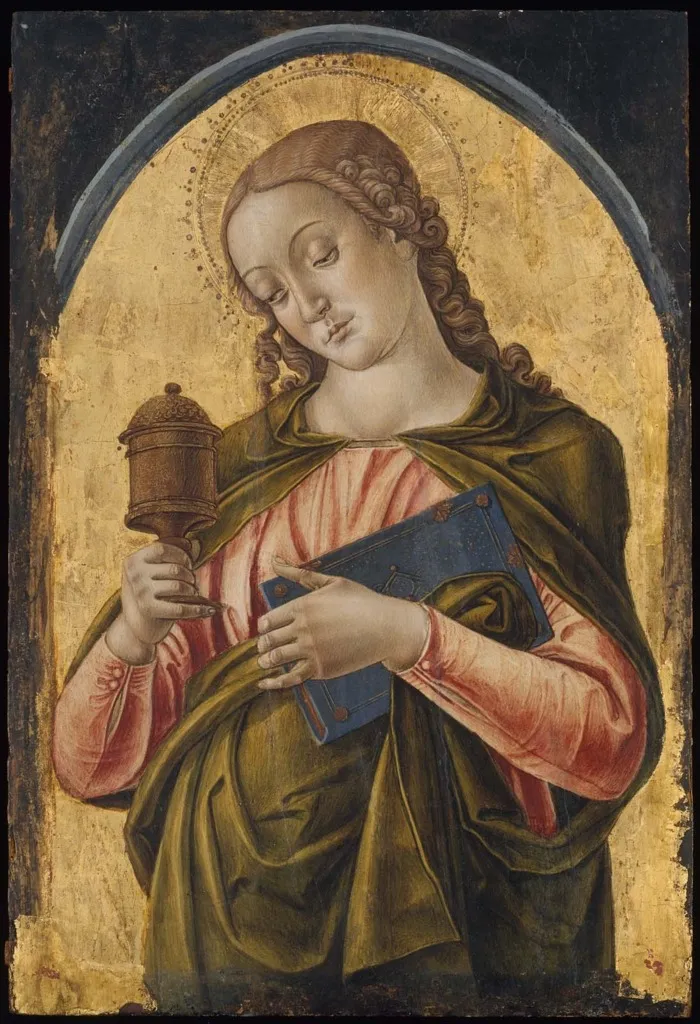
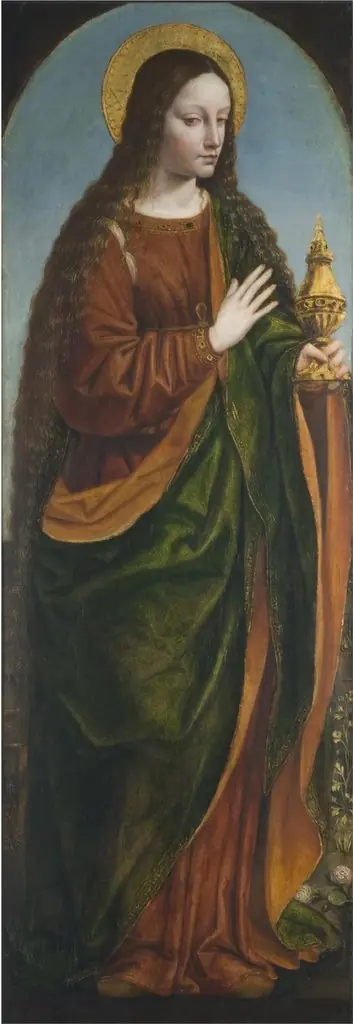
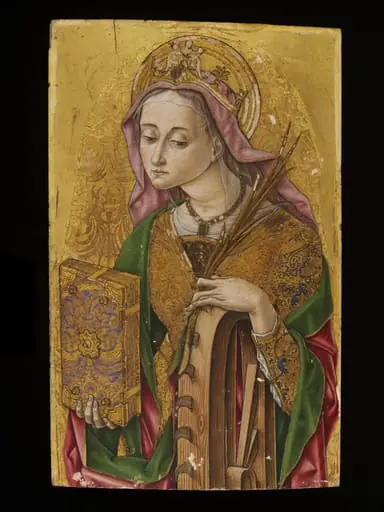
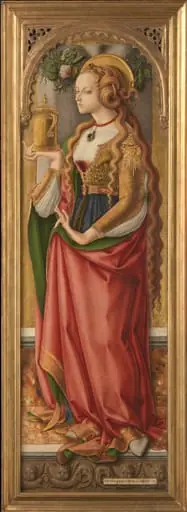
Saint Mary Magdalen is an unspecified painting by the Early Renaissance artist Bartolomeo Vivarini. It dates from 1475 and is held in the collection of the Museum of Fine Arts Boston.
About this work
Overview
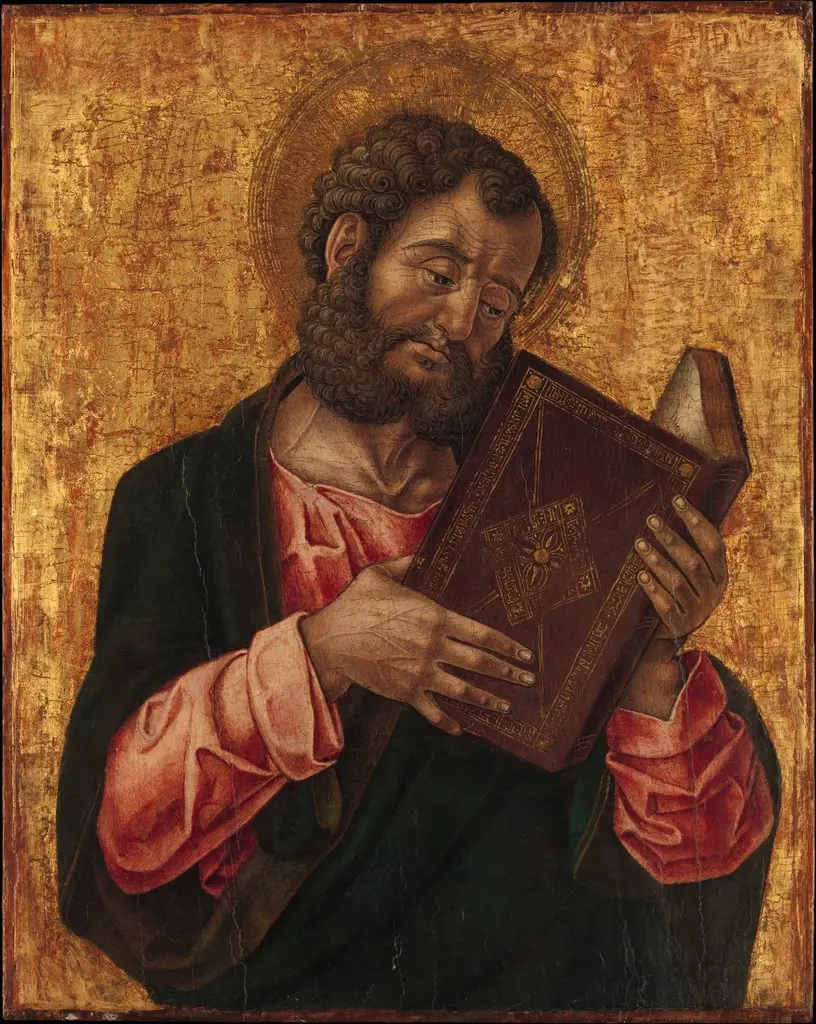
Saint Mary Magdalen is a painting created by Bartolomeo Vivarini around 1475, during the early Renaissance. The work is a religious depiction of Mary Magdalene and is part of the collection at the Museum of Fine Arts, Boston.
Subject & Meaning
The painting portrays Mary Magdalene in contemplative solitude, symbolized by her deep, thoughtful expression. She holds a blue book with gold letters, representing her association with knowledge and religious scripture, and a small jar, often linked to her role in anointing Christ. These elements underscore her dual connection to faith and intellectual devotion.
Technique & Style
Vivarini employs characteristic Venetian Renaissance techniques, evident in the subject's naturalistic portrayal and the use of rich, vibrant colors such as the red and gold of her robe, set against a simple gold background. The soft, calm facial features and curly brown hair demonstrate a focus on realism and serenity.
History & Provenance
Created circa 1475, Saint Mary Magdalen reflects Vivarini's contribution to the Venetian painting scene during a period of renewed interest in classical themes and naturalistic representation. The painting is now housed at the Museum of Fine Arts, Boston.
Context
This work was produced during the early Renaissance, a time of cultural and artistic transformation in Italy. Vivarini's style, blending traditional religious themes with emerging naturalistic tendencies, situates the painting within the broader artistic shifts of the 15th century.
Artist & collection
Artist
Bartolomeo or Bartolommeo Vivarini (c. 1432 – c. 1499) was an Italian Renaissance painter, known to have worked from 1450 to 1499.