Artwork
St. Corona
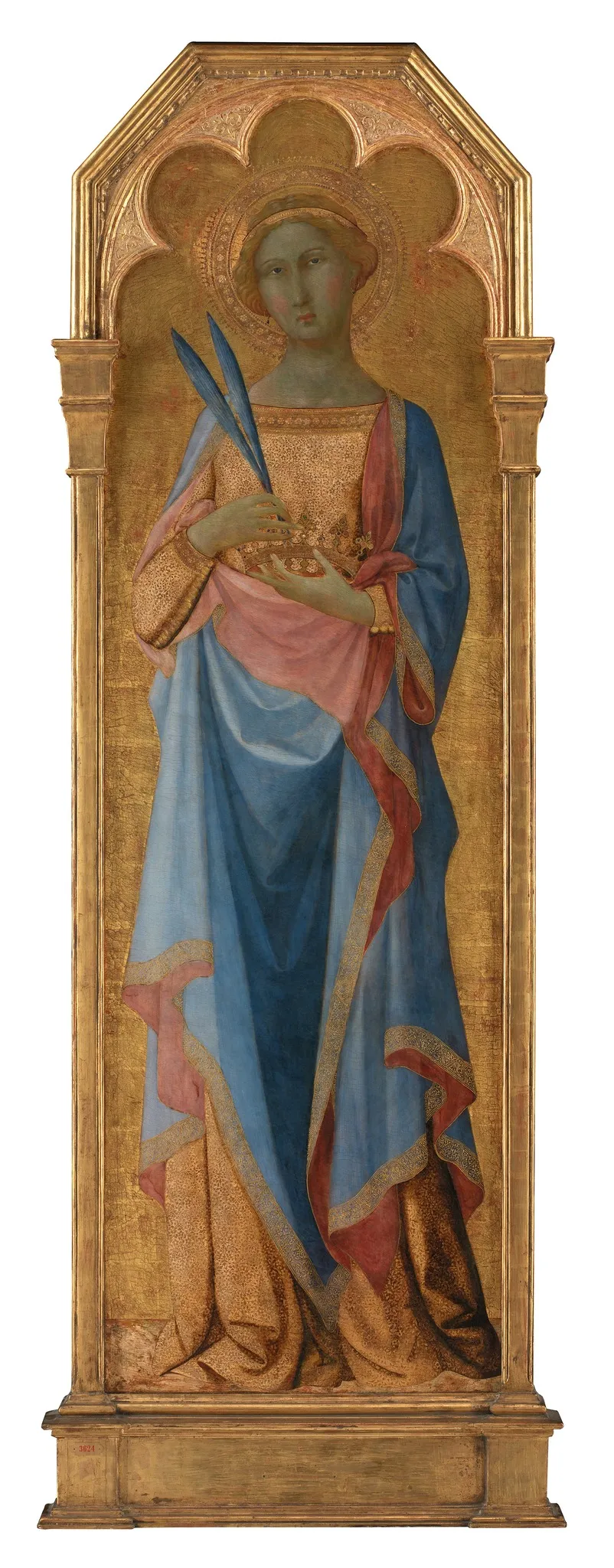
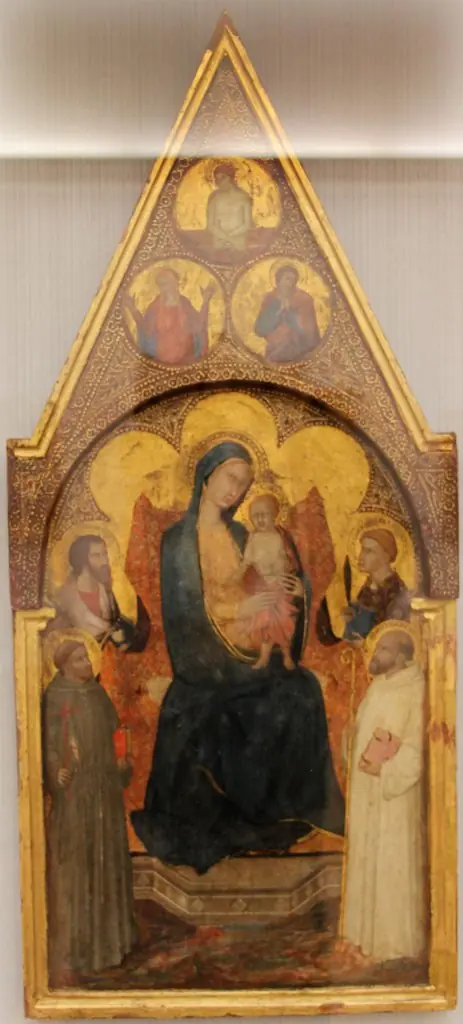
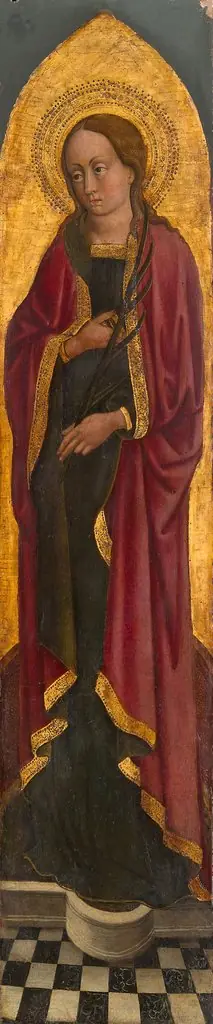
St. Corona is an unspecified painting by the Byzantine icon painting artist Master of the Palazzo Venezia Madonna. It dates from 1350 and is held in the collection of the Statens Museum for Kunst. Created around the middle of the 14th century, this panel painting portrays the early Christian martyr St.
About this work
Overview
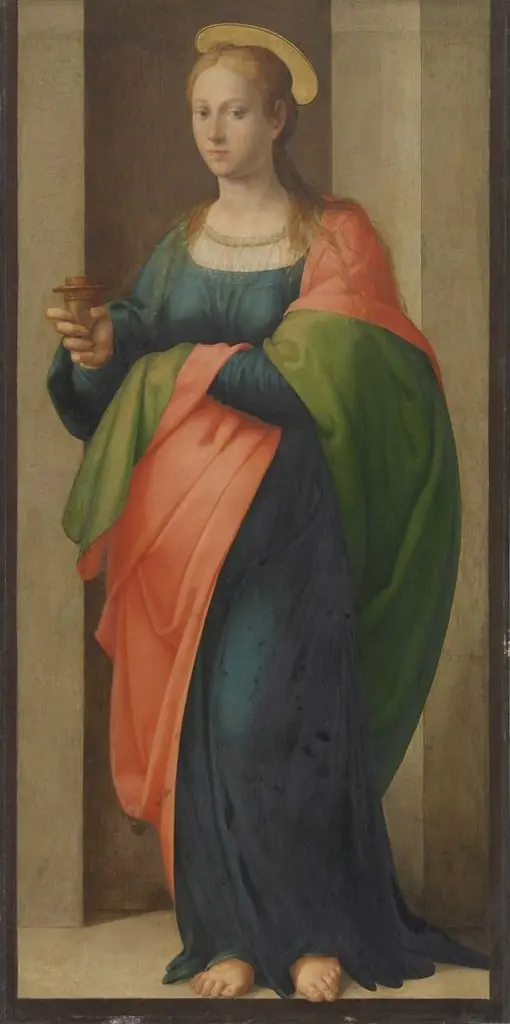
Created around the middle of the 14th century, this panel painting portrays the early Christian martyr St. Corona. The figure stands before a luminous gold ground, dressed in a blue mantle trimmed with a red sash and a gilded under‑garment. In her left hand she clasps a small crown, while her right hand bears a palm branch, traditional symbols of martyrdom and triumph.
Subject & Meaning
St. Corona, venerated for her steadfast faith, is shown with a serene expression that conveys both humility and divine favor. The crown she holds references her name—"Corona" meaning crown—and the palm branch signals her victory over earthly suffering, a common iconographic element denoting martyrdom in medieval devotional art.
Technique & Style
The artist employs a richly layered gold leaf background that creates a radiant, otherworldly space, typical of Italian Gothic panel painting. Delicate modeling of the face and drapery is achieved through fine brushwork, while the contrasting blue and red pigments enhance the figure’s three‑dimensional presence against the flat gold field.
History & Provenance
Attributed to the anonymous Master of the Palazzo Venezia Madonna, the work dates to circa 1350. It entered the collection of Denmark’s national gallery, the Statens Museum for Kunst, where it remains on display, offering insight into the cross‑regional circulation of Italian Gothic imagery during the 14th century.
Context
The painting reflects the devotional practices of the period, when saints were invoked for protection and intercession. Its luxurious materials—gold leaf, vivid pigments—suggest a commission for a wealthy patron or ecclesiastical setting, aligning with the era’s emphasis on visual splendor to inspire piety.
Artist & collection

Artist
Master of the Palazzo Venezia Madonna
Master of the Palazzo Venezia Madonna (1340–1360) was an artist.