Artwork
Bacchanal with a Dancing Couple in the Center
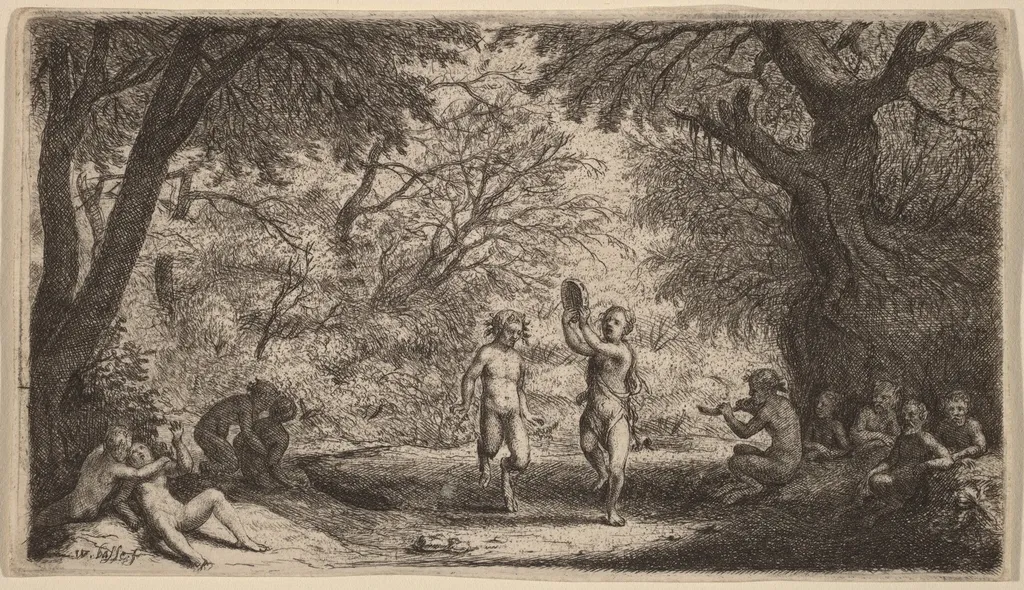
Bacchanal with a Dancing Couple in the Center is an ink print by the Baroque artist Willem Basse. It dates from 1642 and is held in the collection of the National Gallery of Art.
About this work
Overview
Willem Basse’s print, titled *Bacchanal with a Dancing Couple in the Center*, was produced in 1642. Executed as an etching combined with engraving on laid paper, the work presents a festive gathering set within a wooded clearing. The composition centers on a pair of dancers, while surrounding figures either observe, sit, or play musical instruments, conveying a light‑hearted, celebratory mood.
Subject & Meaning
The scene portrays a bacchanalian revel, a motif common in 17th‑century art that evokes themes of abundance, music, and communal joy. By placing the dancing couple at the focal point, Basse emphasizes the vitality of human interaction and the pleasure of shared festivities, suggesting an idealized vision of rural merriment under the canopy of nature.
Technique & Style
Basse employed a hybrid of etching and engraving, allowing fine line work alongside deeper, richer tones. The laid‑paper substrate contributes a subtle texture that enhances the perception of depth. Through careful shading and contrast, the artist creates a sense of movement, guiding the eye toward the central dancers while rendering surrounding foliage and figures with atmospheric clarity.
Context
Created during the Baroque period, the print aligns with contemporary interests in dynamic composition and dramatic narrative. Bacchanal scenes were popular among Dutch and Flemish artists, who often used them to explore themes of leisure and moral allegory. Basse’s work reflects this broader artistic fascination with exuberant, communal celebrations.
Artist & collection