Artwork
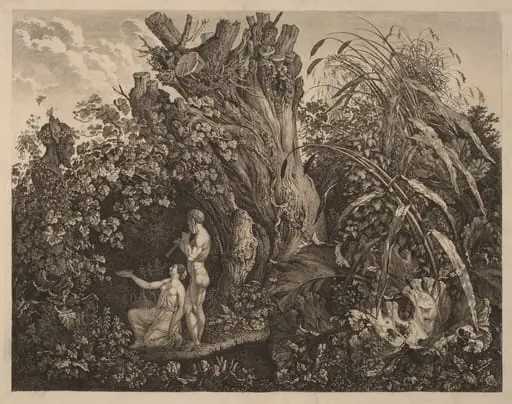
Two Satyrs in a Forest
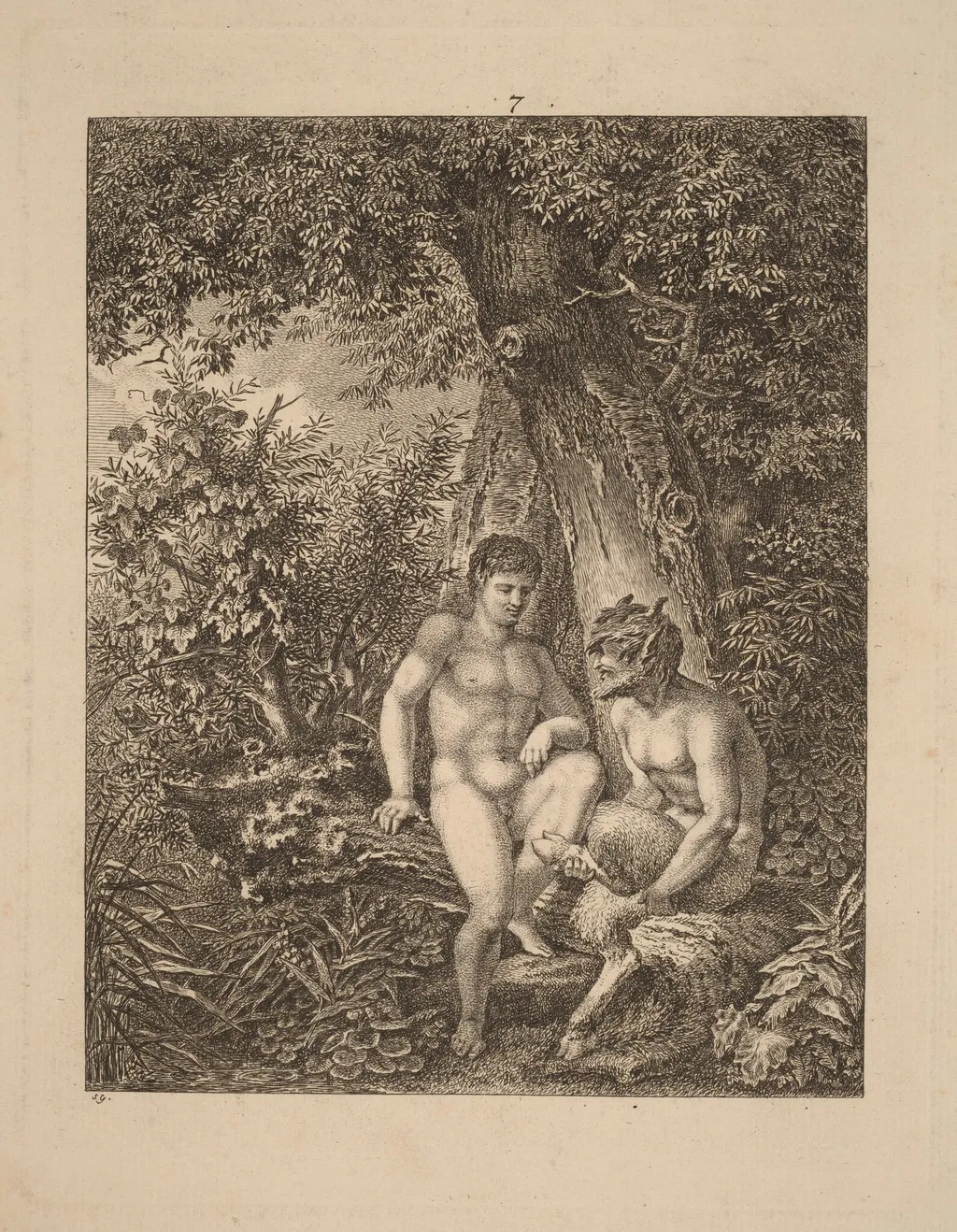
Two Satyrs in a Forest is an ink print by the Romanticist artist Salomon Gessner. It is held in the collection of the National Gallery of Art.
About this work
Overview
The work belongs to the printmaking tradition of the late 18th century, where fine-line etching allowed for intricate naturalistic detail.
Created in 1777 by Salomon Gessner, this etching on laid paper depicts two satyrs within a dense woodland. The composition centers on their interaction with each other and a goat, set against a backdrop of thick, interwoven foliage. The work belongs to the printmaking tradition of the late 18th century, where fine-line etching allowed for intricate naturalistic detail. Its quiet, contemplative mood distinguishes it from more theatrical mythological scenes of the period.
Subject & Meaning
The two satyrs—mythological forest spirits with human and animal traits—appear in a moment of stillness rather than revelry. One holds a staff, suggesting authority or guardianship; the other kneels near a goat, implying a bond with the natural world. Their nudity and setting evoke classical associations with untamed nature, yet the tone is introspective, not bacchanalian. The scene may reflect Enlightenment-era ideals of harmony between humanity and the wild.
Technique & Style
Gessner employed fine, controlled etching lines to render the textures of bark, fur, and dense leaves. The precision of the tool allowed for subtle gradations of light and shadow, enhancing the depth of the forest. Unlike broad washes or bold strokes, the method relies on cumulative detail to suggest atmosphere. The paper’s laid texture subtly interacts with the ink, adding a tactile quality to the printed surface.
History & Provenance
The print was produced during Gessner’s later years, when he increasingly turned to graphic art after achieving fame as a poet and painter. Few impressions of this specific etching survive, and known examples are held in European institutional collections. Its creation coincided with a broader revival of interest in classical mythology through intimate, non-monumental formats, reflecting a shift in artistic patronage toward private collectors.
Context
In the late 1770s, European artists were reinterpreting mythological subjects with greater psychological nuance and naturalism. Gessner’s etching aligns with this trend, moving away from grand narratives toward quiet, solitary encounters in nature. It also reflects the influence of Swiss landscape sensibilities and the growing Romantic fascination with wilderness, even before the movement fully emerged in the next decade.
Legacy
Though not widely reproduced, the etching remains a significant example of Gessner’s graphic work and of 18th-century printmaking’s capacity for lyrical expression. It influenced later artists interested in mythological themes rendered with restraint and attention to natural detail. Its preservation in public collections underscores its role as a quiet but enduring artifact of Enlightenment-era visual culture.
Artist & collection


 Arcadian Landscape with an Obelisk
 Satyr Carrying a Nymph on His Back
 A Fisherman and Two Children in a Landscape with Thatched Cottages
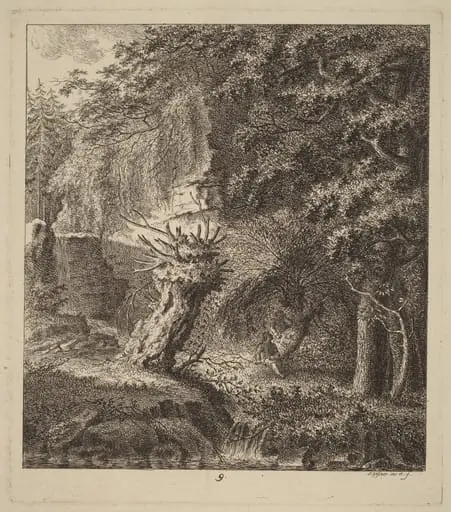 Wooded Landscape with a Pollarded Tree
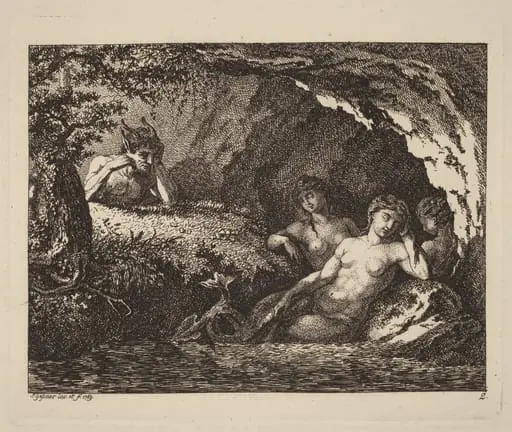 Three Sleeping Sprites with a Satyr
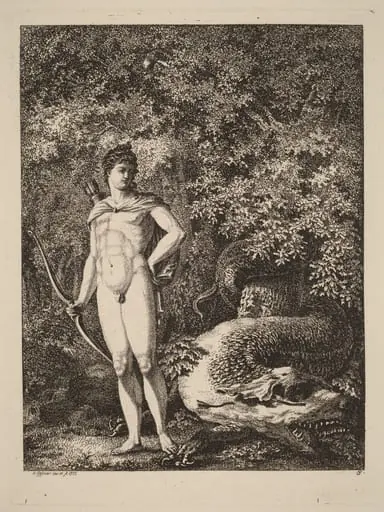 Apollo with a Bow and Dragon
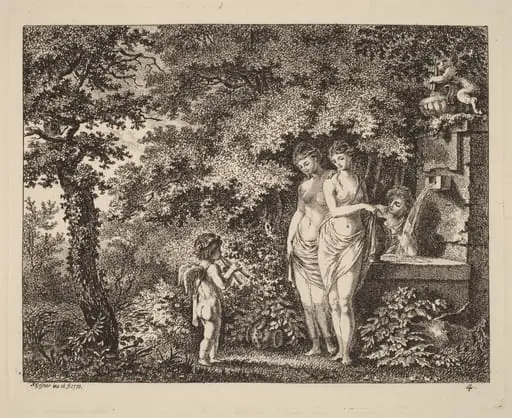 Eros with Three Girls at a Fountain
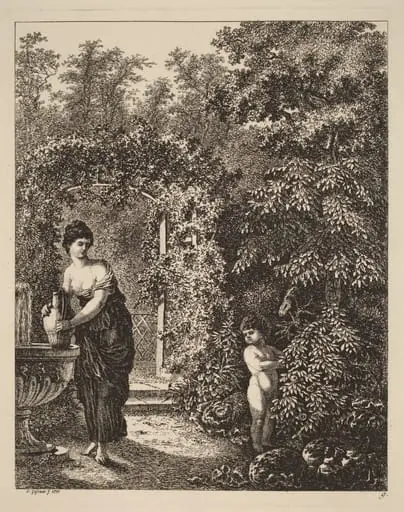 Putto Visiting a Girl at a Fountain
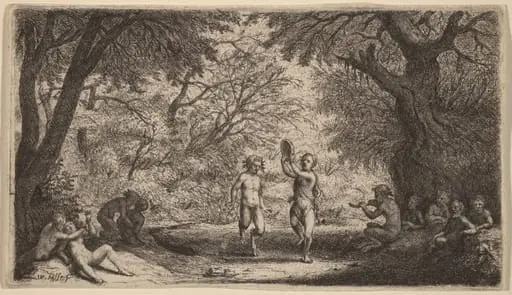 Bacchanal with a Dancing Couple in the Center
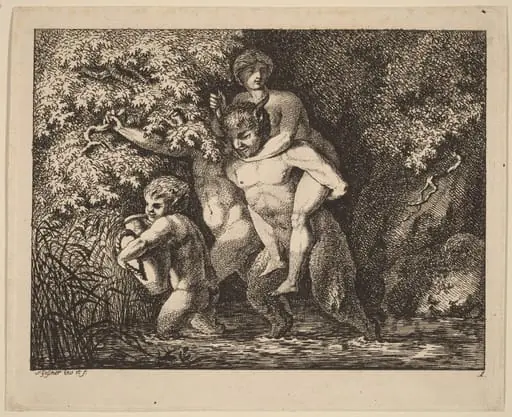 Satyr Carrying a Nymph
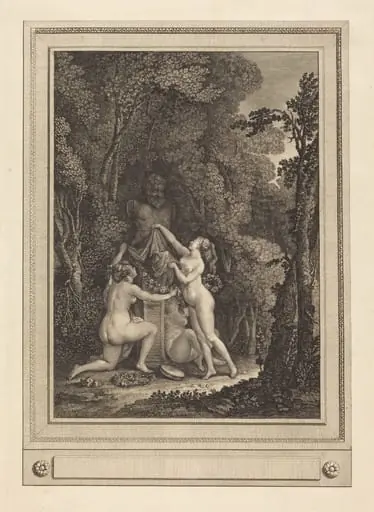 Les nymphes scrupuleuses
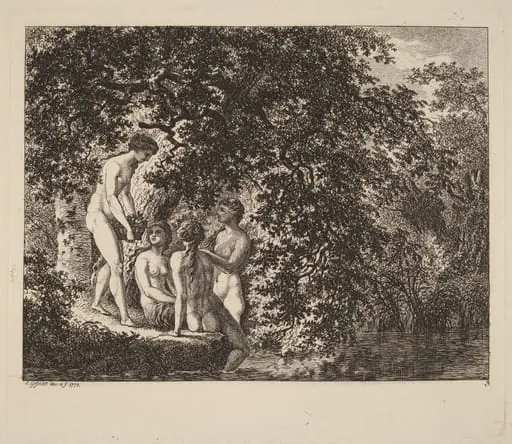 Girl Carrying a Basket of Fruit
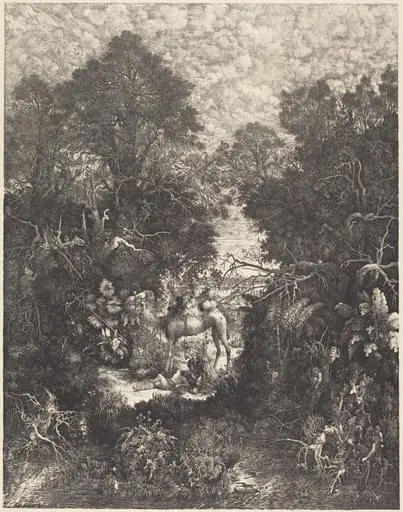 The Good Samaritan (Le Bon Samaritain)
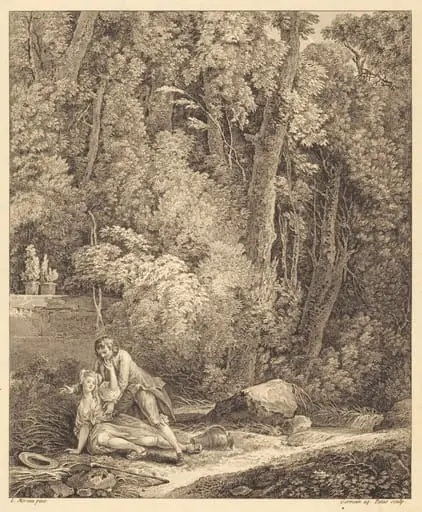 Le villageois entreprenant
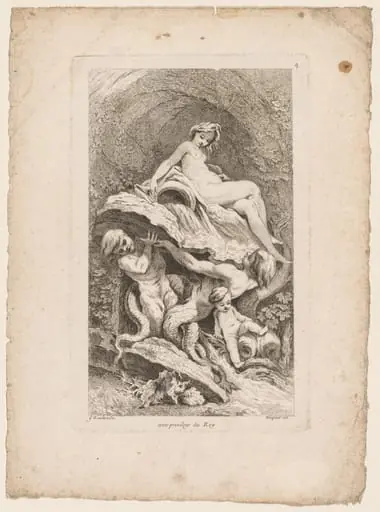 Book of Fountains: No. 4
 An Offering to Pan
 Temptation of Man
 St. John the Baptist in the Desert
 Reynard the Fox: The Wolf in the Monkey's Den