Artwork
The Abduction of Europa
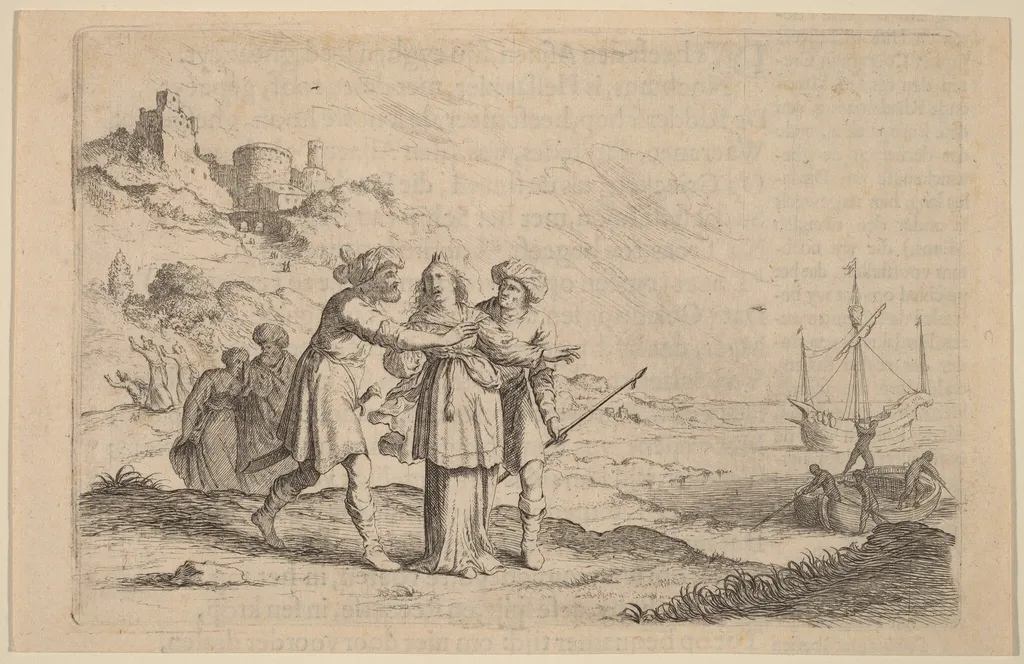
The Abduction of Europa is an ink print by the Baroque artist Willem Basse. It dates from 1634 and is held in the collection of the National Gallery of Art.
About this work
Overview
Willem Basse’s print titled The Abduction of Europa, executed in 1634, is an engraving on laid paper. The composition depicts the mythological scene of Europa riding a bull across water, rendered in a single monochrome image that measures roughly the size of a standard sheet of paper.
Subject & Meaning
The work illustrates the moment from the Greek myth when Zeus, transformed into a bull, carries Europa away. Europa is shown seated sideways on the animal’s back, her white garment billowing, while two smaller figures—interpreted as attendants—grasp the bull’s tail, emphasizing the motion and drama of the abduction.
Technique & Style
Basse employed a traditional engraving process, incising lines into a metal plate with a burin. The dense, sharply cut lines create a textured surface that conveys the weight of the bull’s body and the turbulence of the water. The overlapping hatching produces a sense of depth and immediacy characteristic of early‑17th‑century printmaking.
History & Provenance
Created in 1634, the print belongs to Basse’s oeuvre of mythological subjects. Surviving impressions are held in several public collections, including the National Gallery of Art in Washington, which houses comparable works by the artist, confirming its circulation among European print markets of the period.
Context
The image reflects the broader Baroque interest in dynamic mythological narratives and the use of print media to disseminate such scenes beyond the confines of painted commissions. Basse’s treatment aligns with contemporary Dutch and Flemish approaches to line work and narrative clarity in reproductive prints.
Artist & collection


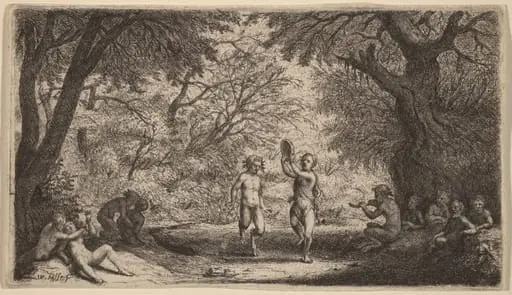 Bacchanal with a Dancing Couple in the Center
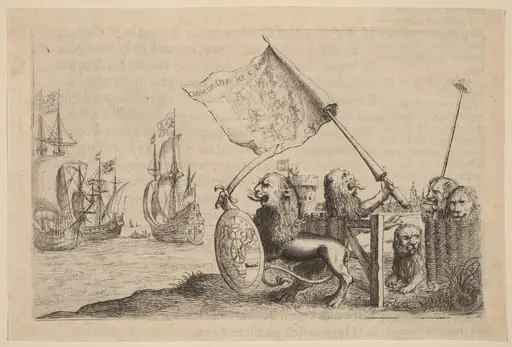 Lions Protecting the Garden of the United Provinces
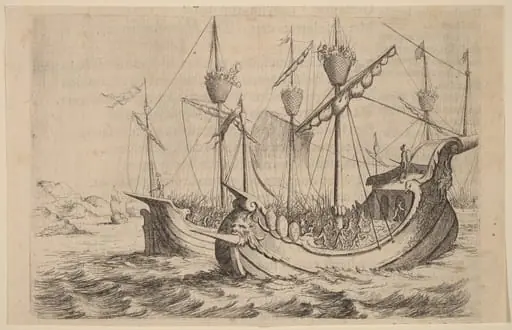 Hannibal's Navy Battling the Rhodians
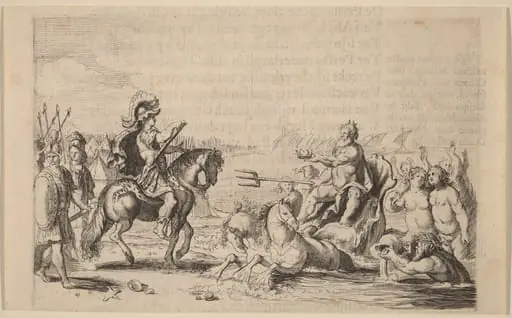 Alexander the Great and Neptune
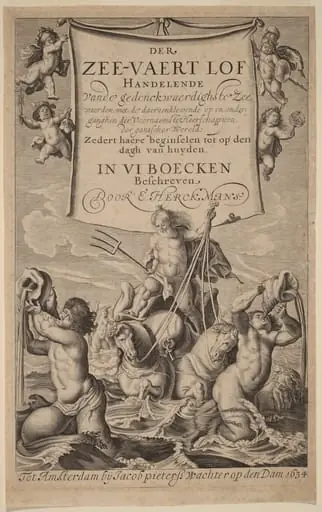 Title Page
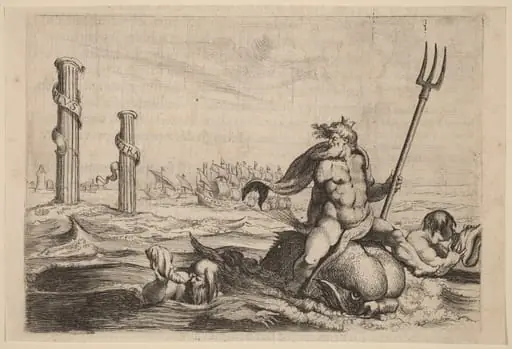 Neptune and the Pillars of Hercules
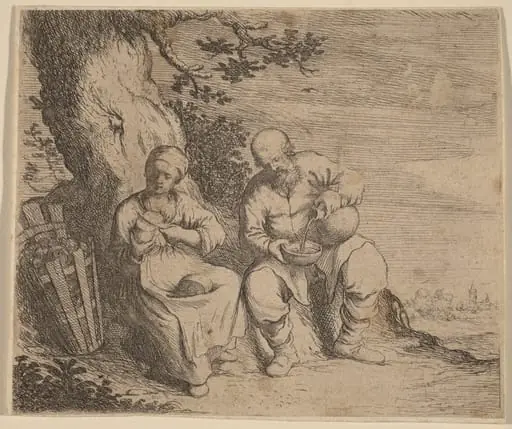 Peasant Couple Sitting under a Tree
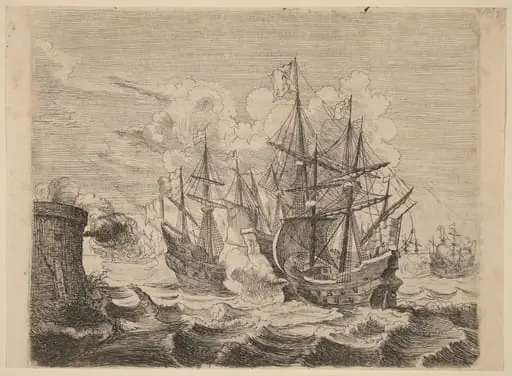 Heemskerck's Victory Over the Spanish Fleet at Gibraltar
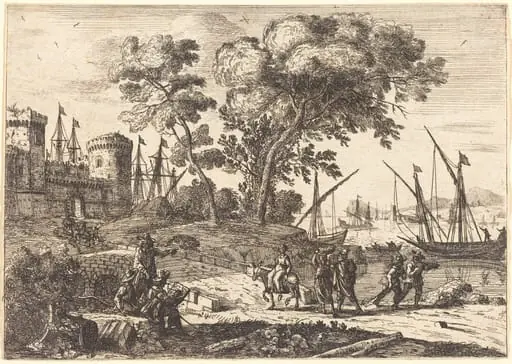 Coast Scene with an Artist (Le dessinateur)
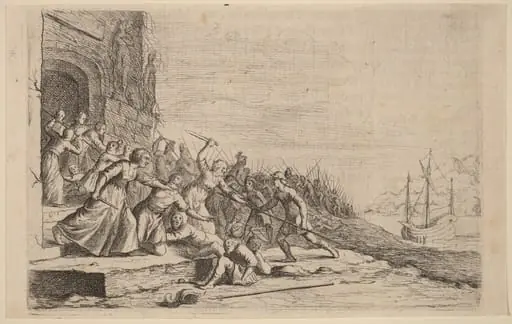 The Followers of Solon Defending the Temple of Venus
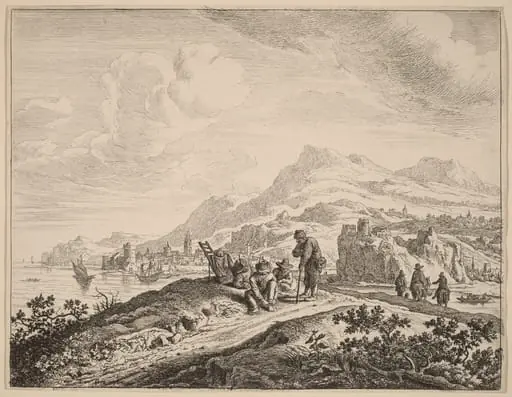 View of the River Rhine
 The Small Carrying of the Cross
 Seated Youth Leaning Against an Urn
 Pharoah Perishing in the Red Sea
 Noah's Ark and the Flood
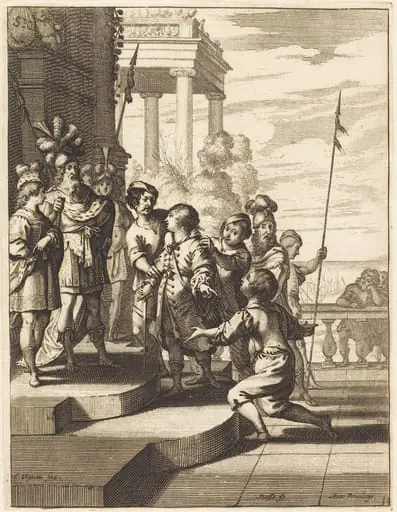 Illustration to Jean Desmarets' "L'Ariane"
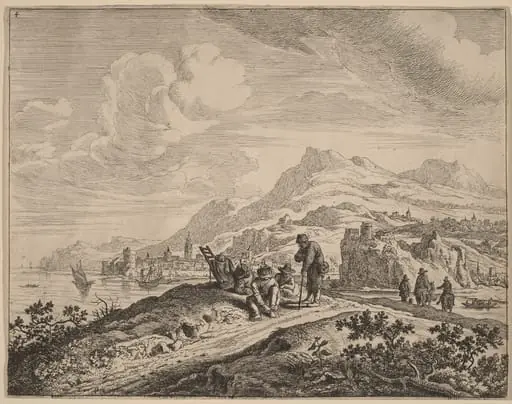 View of the River Rhine
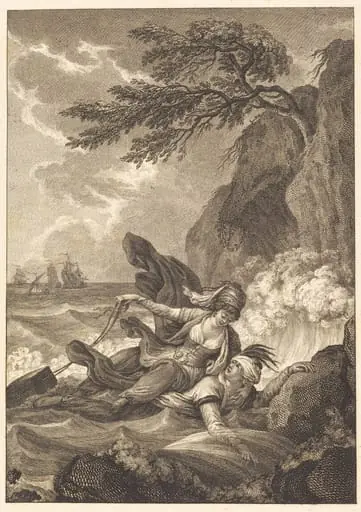 La fiancee du roi de Garbe: La cassette
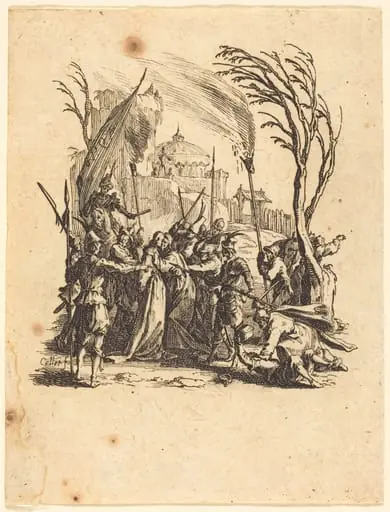 The Betrayal
 Fisher of Men