Artwork
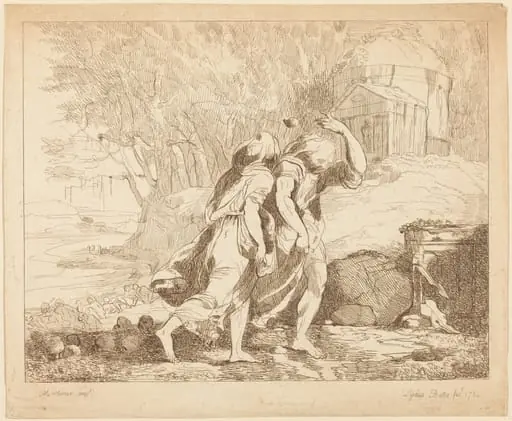
Two Fleeing Figures
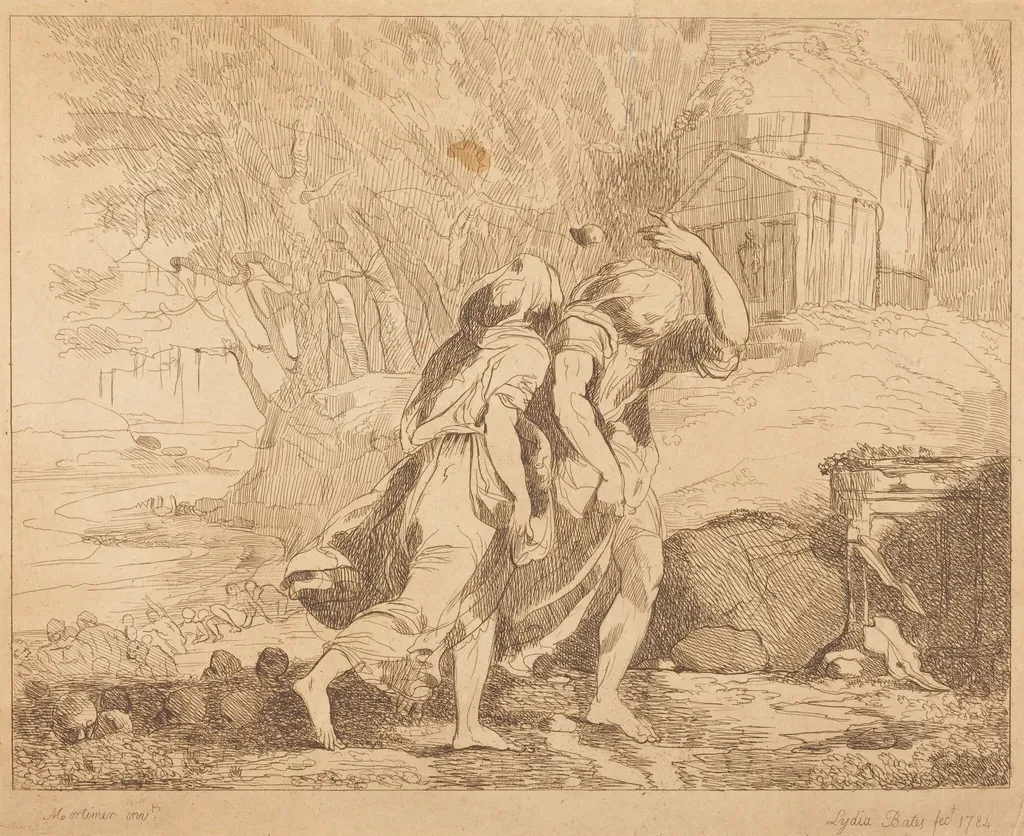
Two Fleeing Figures is an ink print by the Romanticist artist Lydia Bates. It dates from 1784 and is held in the collection of the National Gallery of Art.
About this work
Overview
Two Fleeing Figures is an 1784 etching by Lydia Bates, rendered in brown ink on paper. The work belongs to the printmaking tradition of the late eighteenth century and captures a moment of abrupt motion. Unlike painted compositions of the era, this piece relies on the linear precision and tonal subtlety of etching to convey urgency, with no color beyond the warm sepia of the ink.
Subject & Meaning
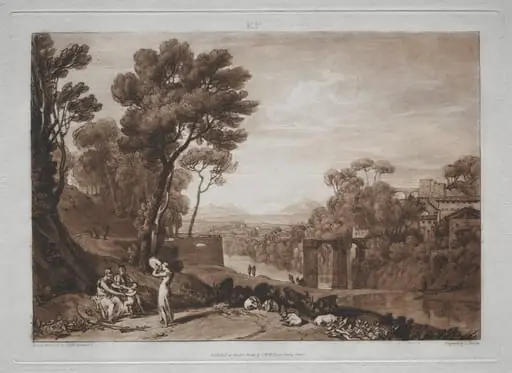
Two figures, draped in elongated robes, are shown in motion, one supporting the other as they retreat from an unseen danger.
Two figures, draped in elongated robes, are shown in motion, one supporting the other as they retreat from an unseen danger. The absence of a clear threat amplifies the sense of vulnerability. Their postures suggest exhaustion and desperation, while the sparse background elements—partial architecture and a single tree—hint at a disrupted environment, reinforcing the theme of sudden displacement without narrative specificity.
Technique & Style
Bates employed fine, incised lines typical of etching to model form and movement. The brown ink, applied with controlled density, creates gradations of shadow that define the figures’ drapery and the ground beneath them. The composition is tightly framed, directing focus to the figures’ intertwined limbs and the direction of their flight, using minimal background detail to heighten emotional tension.
History & Provenance
The work is documented as part of a small group of prints attributed to Lydia Bates, active in England during the 1780s. Few of her prints survive, and this one is held in a private collection with no public exhibition history. Its date and attribution are confirmed through stylistic comparison and archival records of her known etchings, though little is recorded about her life or intentions for this piece.
Context
Created during a period when printmaking was increasingly used for personal or literary expression, Bates’s work reflects a shift away from grand historical scenes toward intimate, emotionally charged moments. While not formally aligned with Romanticism, its emphasis on individual distress and atmospheric tension anticipates themes later developed in that movement, particularly in British graphic arts of the early 1800s.
Legacy
Two Fleeing Figures remains one of the few surviving works by Lydia Bates, offering insight into the role of women printmakers in the late eighteenth century. Its quiet intensity and technical restraint distinguish it from more theatrical contemporaries. Though not widely studied, it contributes to a growing recognition of overlooked artists who used print media to explore human vulnerability outside institutional commissions.
Artist & collection


 Shepherd in a Landscape
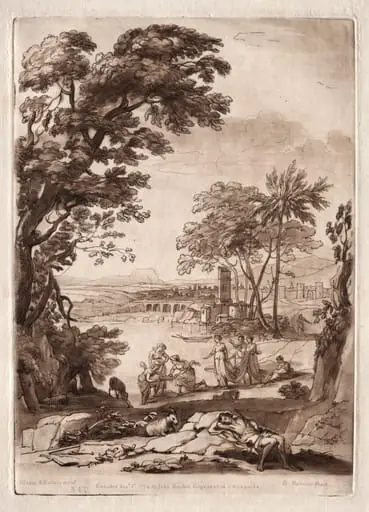 Liber Veritatis: No. 47, A River Scene with the Finding of Moses
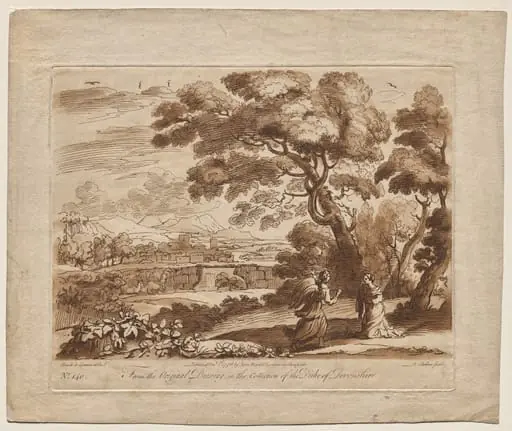 Landscape, Plate No. 140
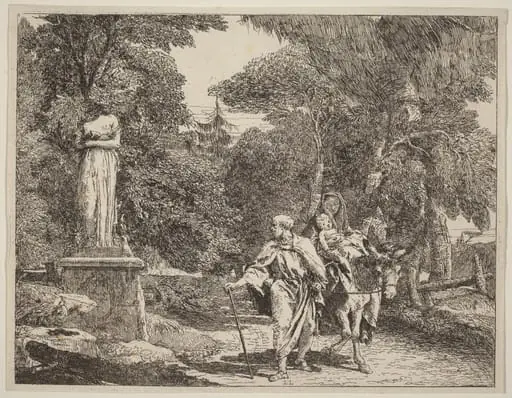 The Episode of the Falling Idol
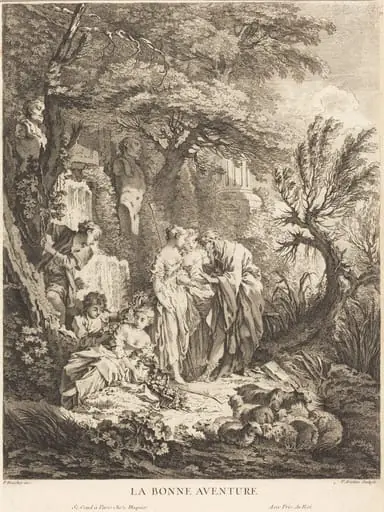 La Bonne Aventure
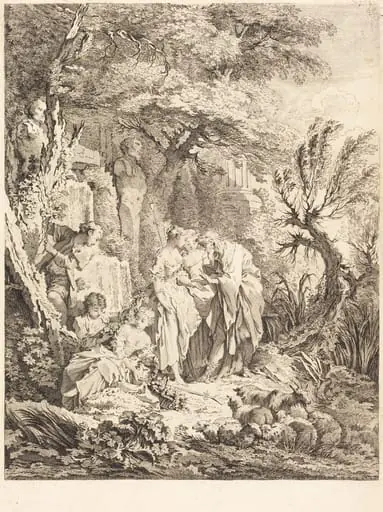 La Bonne Aventure
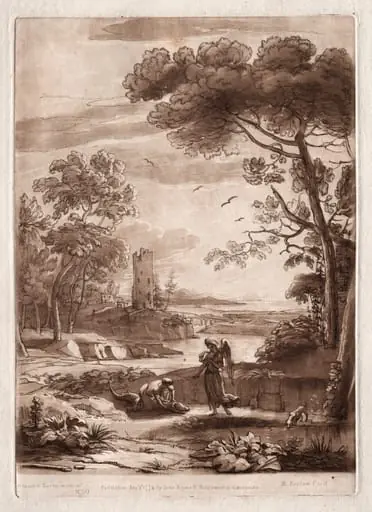 Liber Veritatis: No. 50, A River Scene with Tobias and the Angel
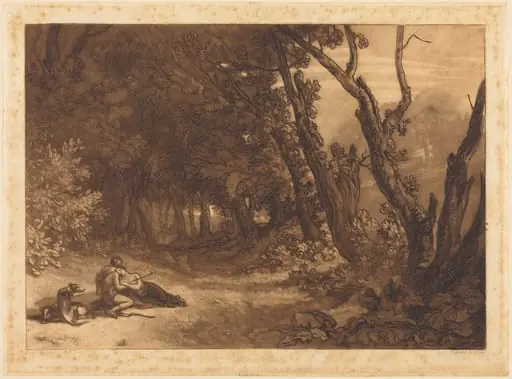 Procris and Cephalus
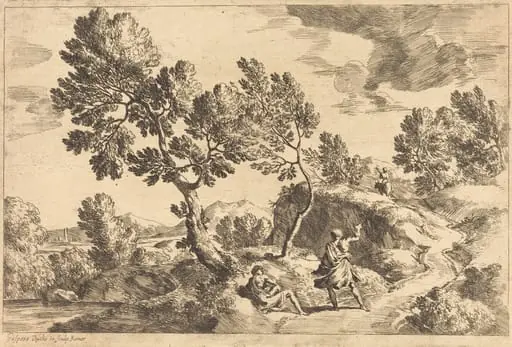 Roman Landscape
 Liber Studiorum: The Woman and the Tambourine