Artwork
Landscape, Plate No. 140
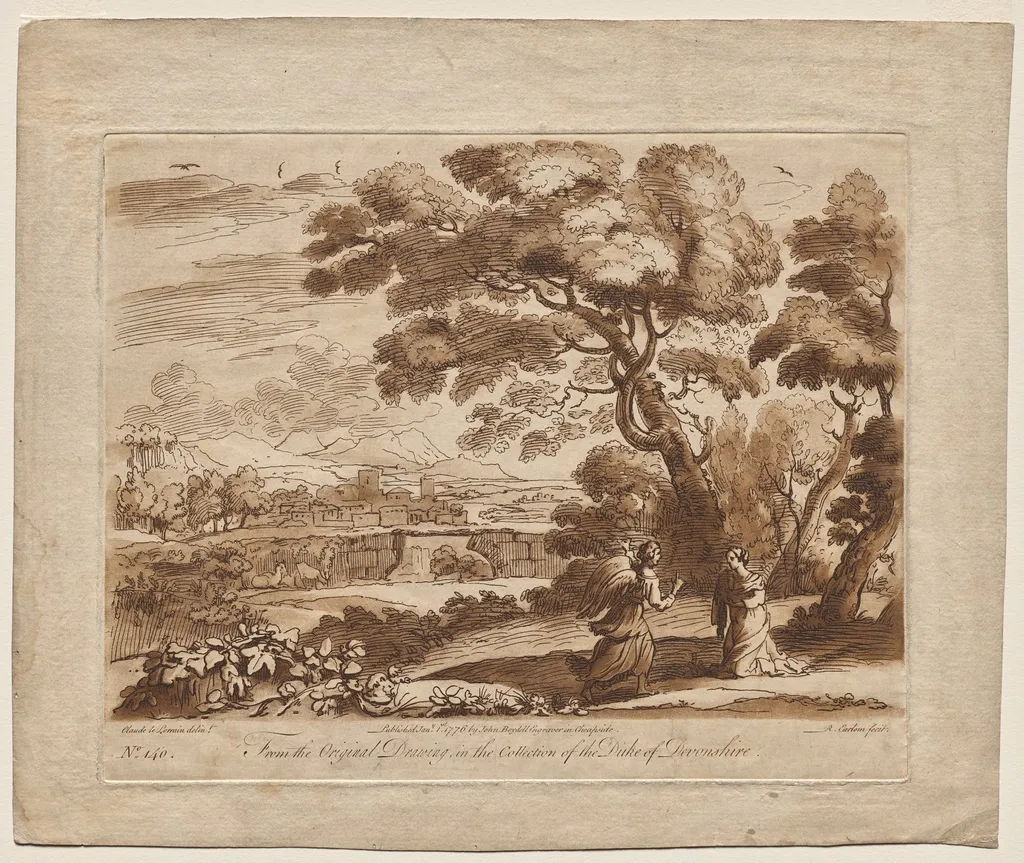
Landscape, Plate No. 140 is a print by the Romanticist artist Richard Earlom. It dates from 1776 and is held in the collection of the Cleveland Museum of Art. Landscape, Plate No.
About this work
Overview
It is part of a series of landscape reproductions derived from drawings by the English artist John Robert Cozens.
Landscape, Plate No. 140 is a mezzotint print produced by Richard Earlom in 1776. It is part of a series of landscape reproductions derived from drawings by the English artist John Robert Cozens. The work is held in the collection of The Cleveland Museum of Art, where it is recognized for its subtle tonal gradations and quiet composition, reflecting the aesthetic preferences of late 18th-century British printmaking.
Subject & Meaning
The scene depicts a tranquil rural setting with two figures strolling beneath a gnarled tree, their presence small and unobtrusive. A winding river leads the eye toward a distant hilltop where a village and castle are barely discernible. The composition evokes contemplation rather than narrative, suggesting a meditative engagement with nature and the passage of time, consistent with the Romantic sensibility emerging in British art of the period.
Technique & Style
Earlom employed mezzotint, a technique that allows for rich tonal variation by roughening a metal plate with a rocker. He used this to create soft transitions between light and shadow, particularly in the sky and foliage. The figures and tree emerge from the pale background through careful gradations of ink, a method known as chiaroscuro, which enhances the atmospheric depth and quiet mood of the scene without sharp outlines.
History & Provenance
The print was made as part of Earlom’s series reproducing Cozens’s watercolor landscapes, commissioned to bring the artist’s evocative scenes to a wider audience. It was published in London in 1776 and circulated among collectors interested in picturesque scenery. The Cleveland Museum of Art acquired the print in the 20th century, preserving it as an example of high-quality reproductive printmaking from the Georgian era.
Context
Earlom’s work emerged during a period when landscape imagery gained popularity in Britain, influenced by the Picturesque movement and the growing appreciation for natural scenery over classical themes. His prints translated the loose, atmospheric watercolors of Cozens into the more durable medium of print, making these contemplative views accessible to middle-class collectors who sought refined, non-narrative art for domestic spaces.
Legacy
Though not widely known today, Earlom’s mezzotints helped bridge the gap between fine drawing and mass-produced art in the 18th century. His technical precision in rendering light and atmosphere influenced later printmakers and contributed to the acceptance of landscape as a serious subject in print media. The work remains a quiet testament to the era’s fascination with nature’s subtleties.
Artist & collection

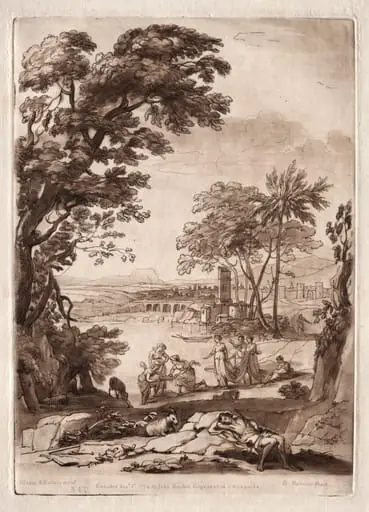 Liber Veritatis: No. 47, A River Scene with the Finding of Moses
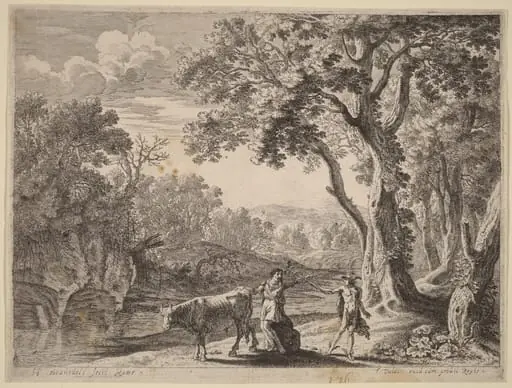 Battus Transformed into Stone
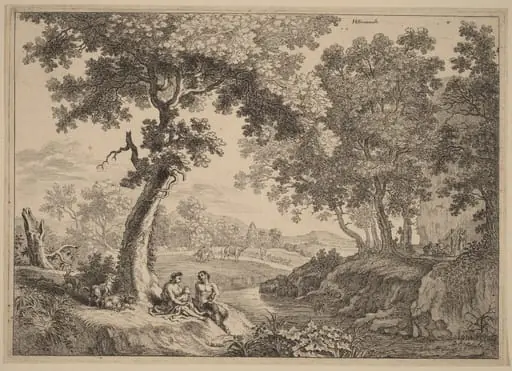 Satyr Family Seated under a Tree
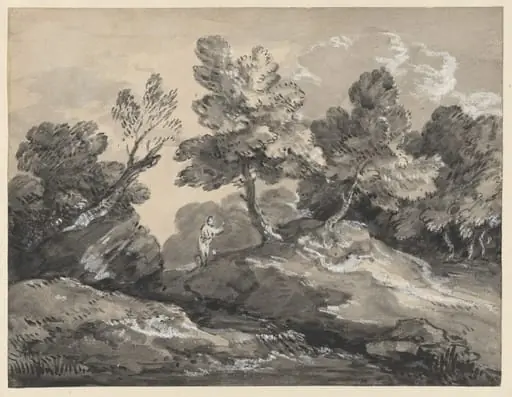 A Rocky Wooded Landscape with a Figure by a Stream
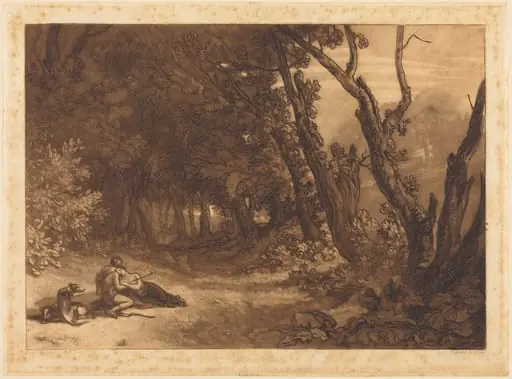 Procris and Cephalus
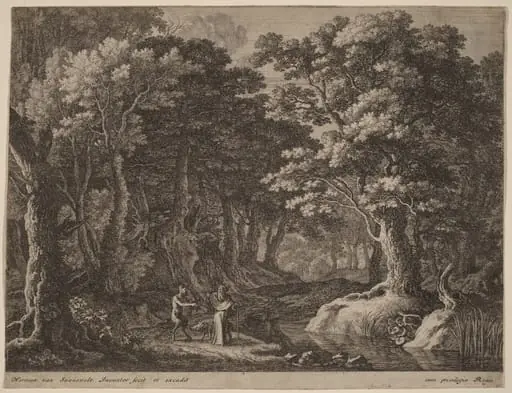 Devil Tempting St. Anthony
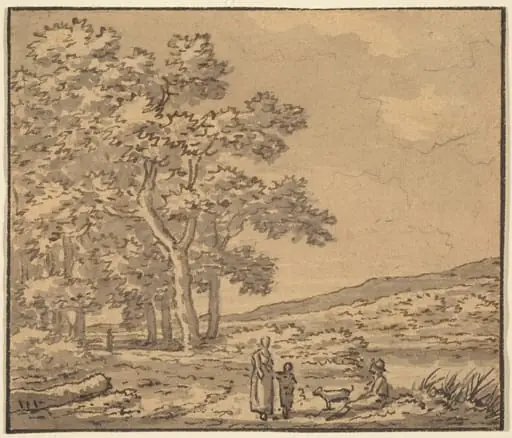 A Landscape with Three Figures and a Dog
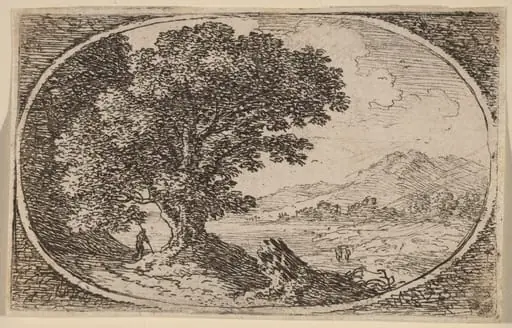 Path to Left of a Large Tree and a Stump
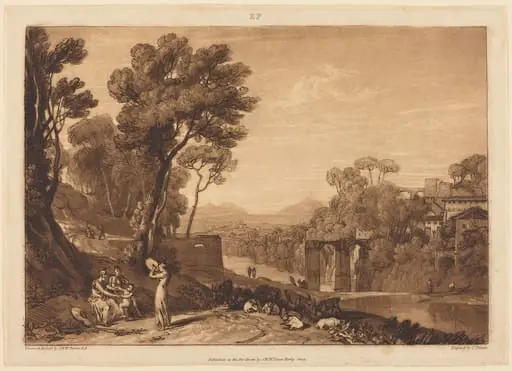 The Woman and Tambourine
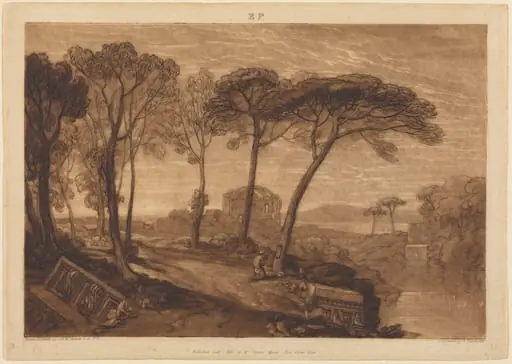 The Temple of Minerva Medica
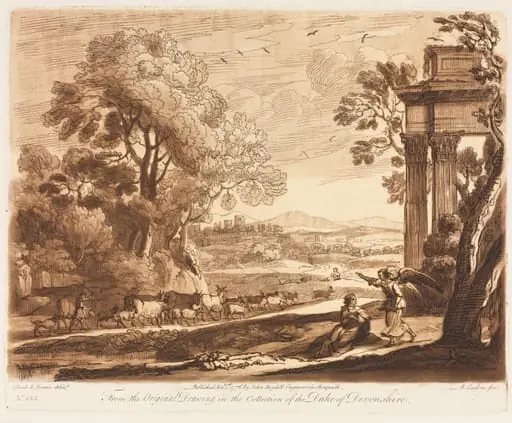 Liber Veritatis: No. 133, A Landscape, with Cattle, and the Angel Comforting Hagar
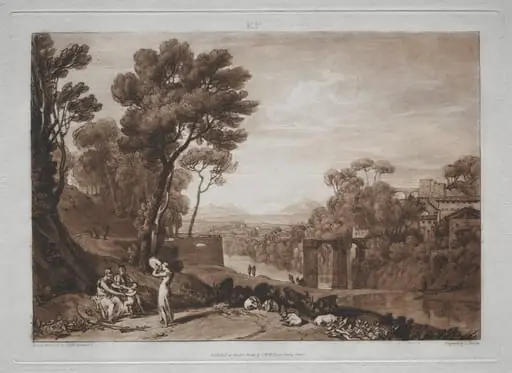 Liber Studiorum: The Woman and the Tambourine