Artwork
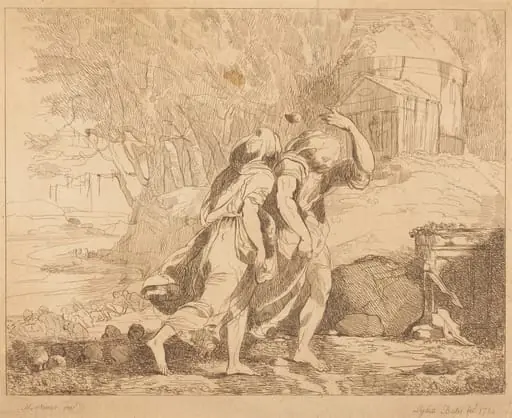
Two Fleeing Figures (Atlanta and Hippomenes?)
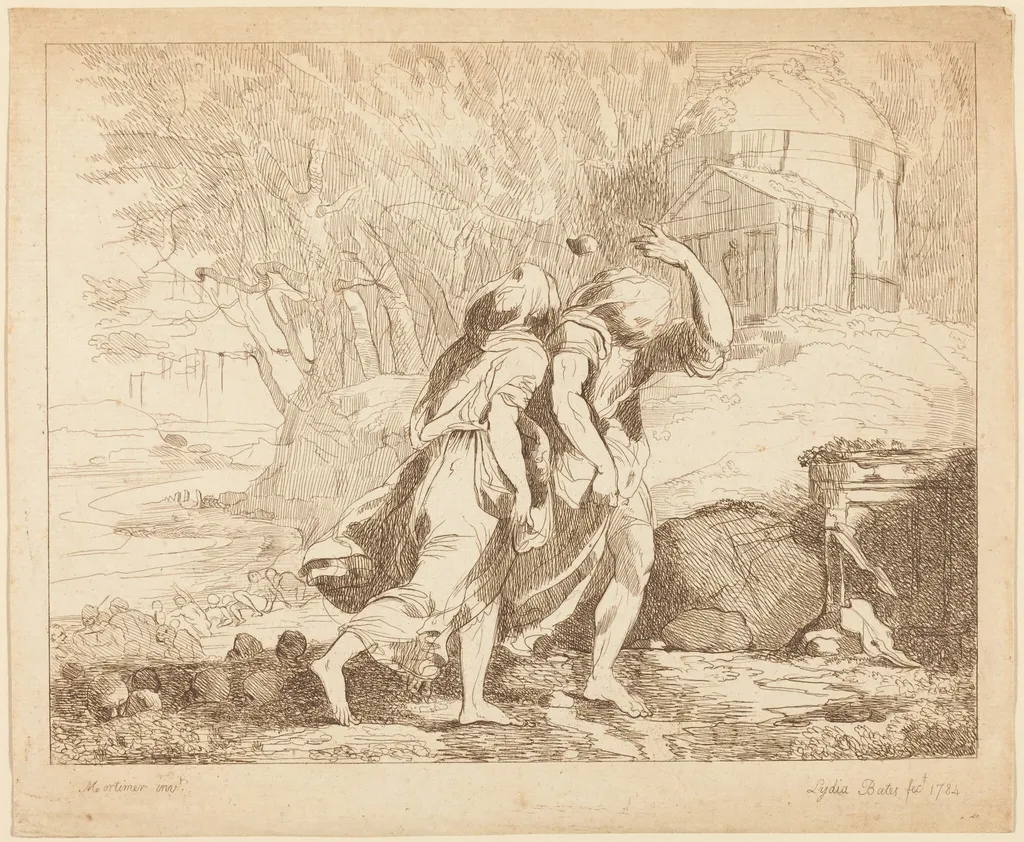
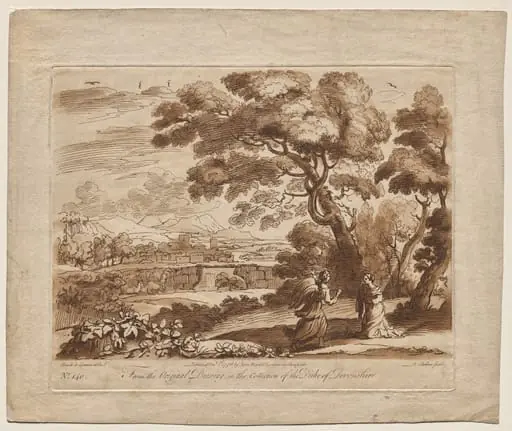
Two Fleeing Figures (Atlanta and Hippomenes?) is an ink print by the Romanticist artist Lydia Bates. It dates from 1784 and is held in the collection of the National Gallery of Art.
About this work
Overview
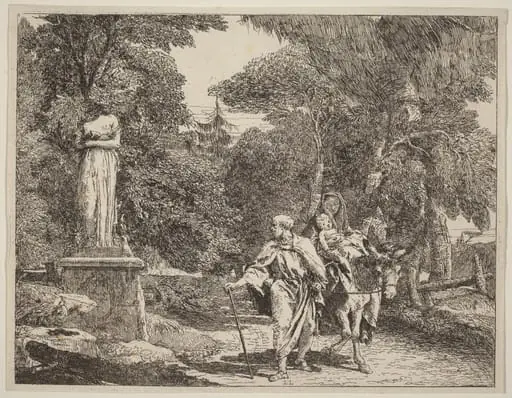
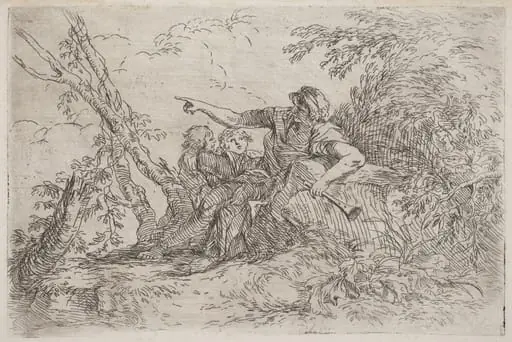
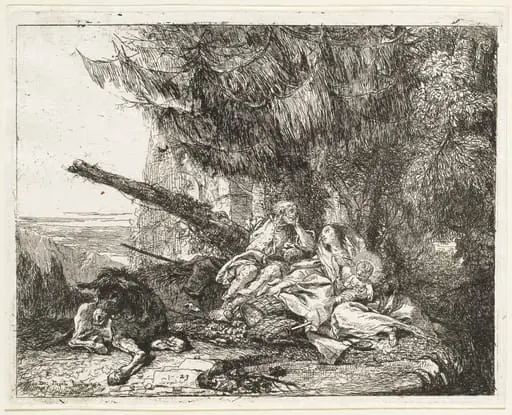
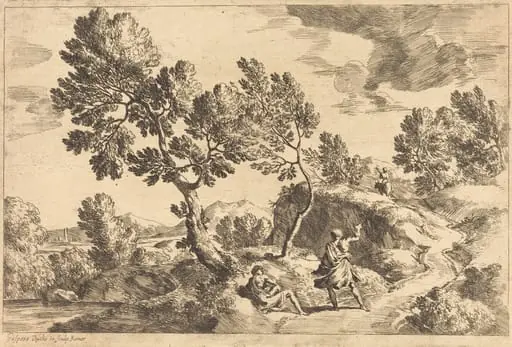
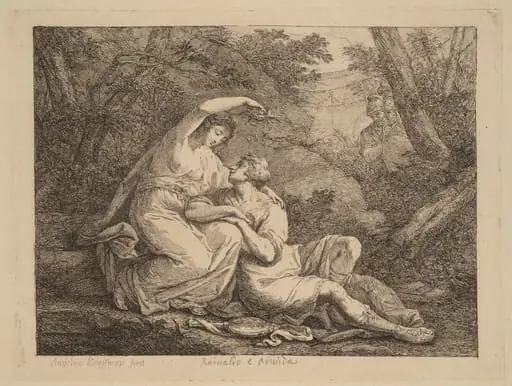
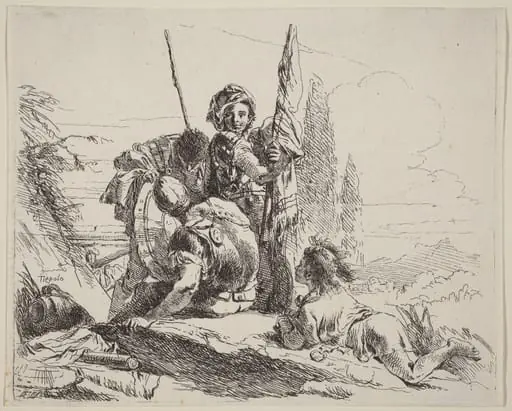
Lydia Bates’ 1784 etching presents a pair of figures in mid‑flight across a pastoral setting. Rendered in monochrome, the work captures a fleeting moment of motion, with one figure turning to glance backward while the other presses forward, set against a backdrop of trees and a distant structure.
Subject & Meaning
The composition is commonly identified with the myth of Atalanta and Hippomenes, portraying the couple as they flee after the race that secured their union. The tense posture and backward glance suggest both pursuit and the lingering uncertainty of their escape.
Technique & Style
Executed with fine lines characteristic of eighteenth‑century etching, the image relies on cross‑hatching to model form and convey atmospheric depth. The dramatic gestures and heightened emotional tone align the piece with early Romantic sensibilities, emphasizing movement over strict classical restraint.
History & Provenance
Created in 1784, the print reflects Bates’ engagement with contemporary literary and mythological subjects. While specific ownership records are limited, the work has been documented in collections focusing on British printmaking of the late eighteenth century.
Context
During the 1780s, British artists increasingly explored narrative scenes drawn from classical mythology, often infusing them with a burgeoning Romantic interest in individual feeling and dynamic action. Bates’ choice of a mythic chase illustrates this shift toward emotive storytelling in print media.
Artist & collection