Artwork
Allegorie der Musik
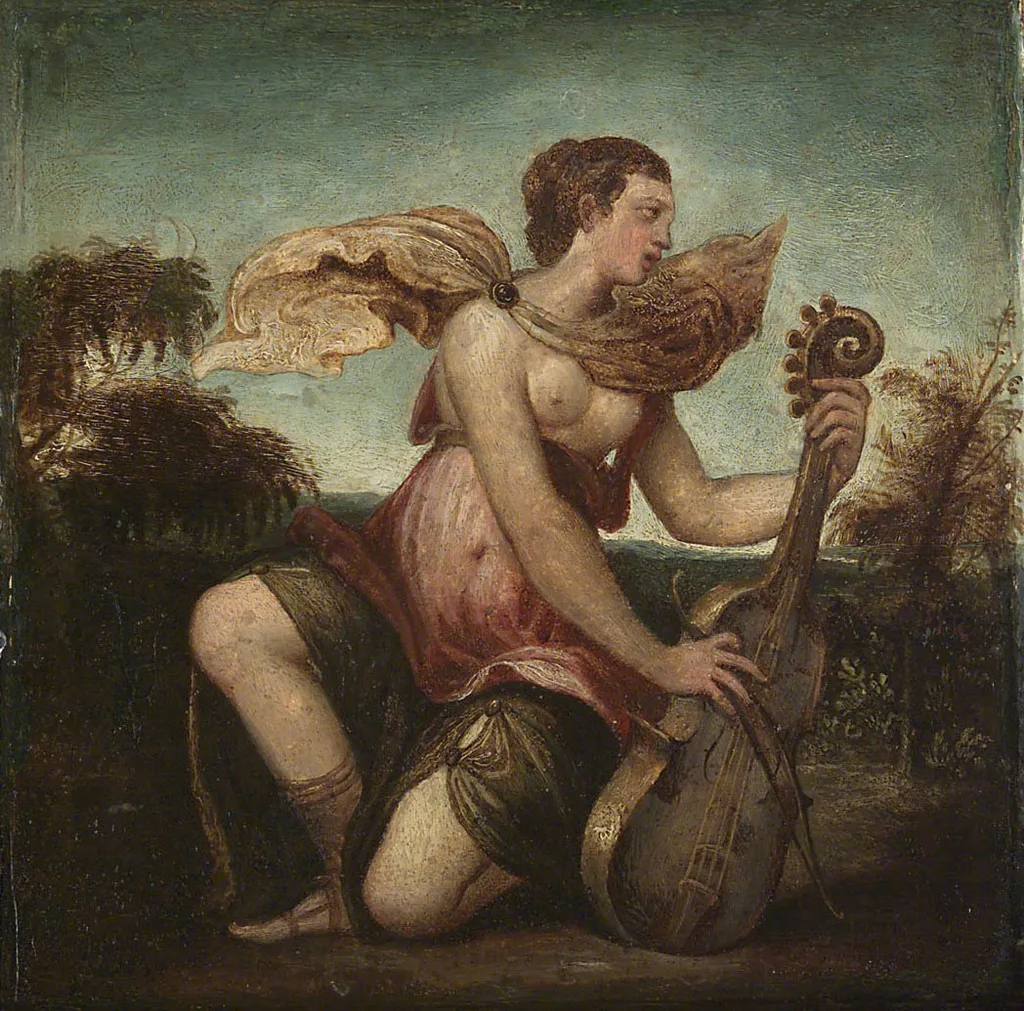
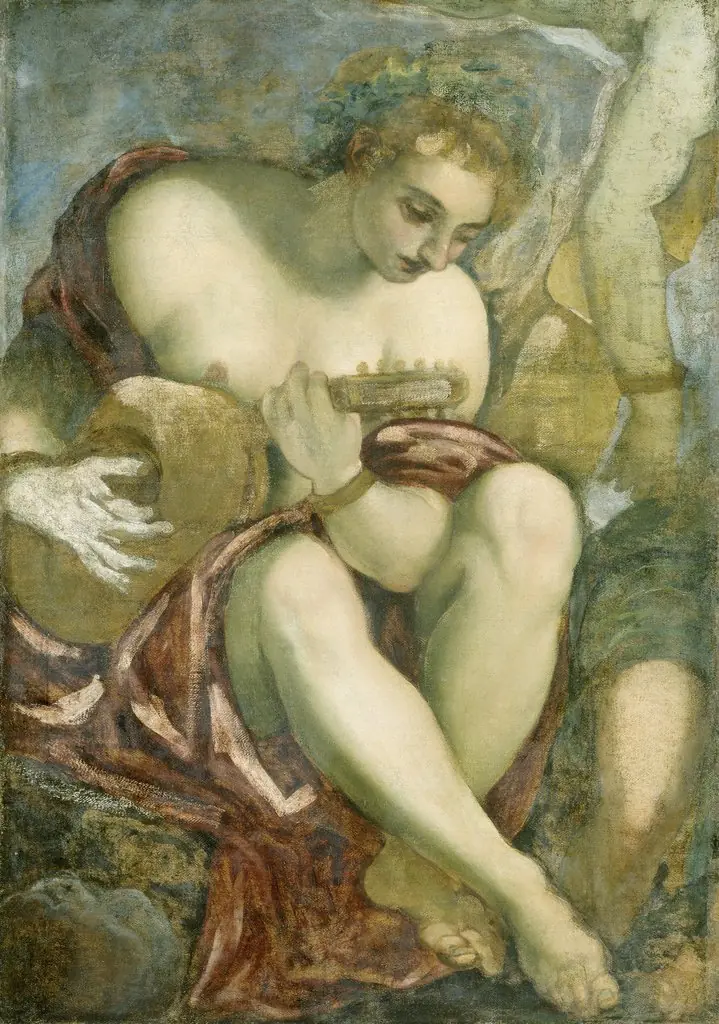
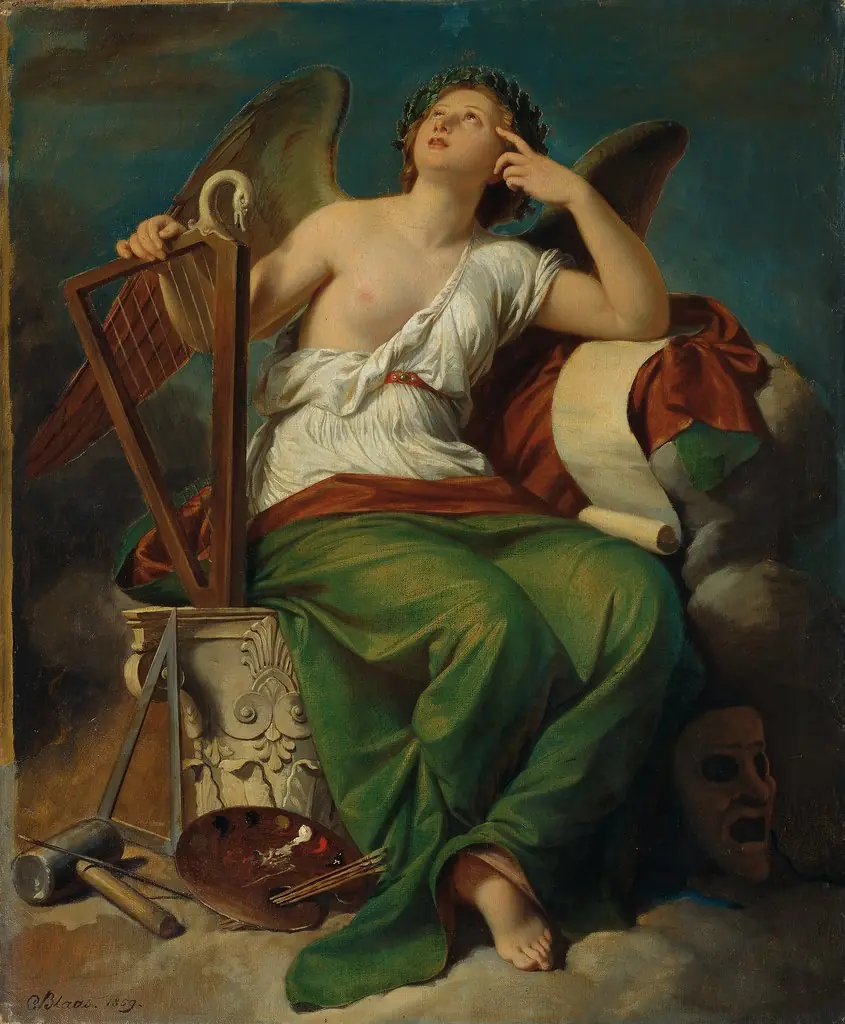
Allegorie der Musik is an unspecified painting by the Mannerist artist Battista d'Agnolo. It dates from 1555 and is held in the collection of the Kunsthistorisches Museum.
About this work
Overview
Created in 1555 by the Italian painter Battista d’Agnolo, *Allegorie der Musik* is an oil painting now in the collection of the Kunsthistorisches Museum. Executed during the later phase of the Renaissance, it reflects the Mannerist tendency toward stylized figures and complex allegory.
Subject & Meaning
The composition centers on a winged, kneeling figure positioned on a rocky shoreline. The figure holds a lute and presses a seashell to the ear, suggesting an act of listening or a symbolic connection between music and the sea. The red drapery and flowing hair or feathers enhance the sense of movement and otherworldliness.
Technique & Style
D’Agnolo employs a pronounced chiaroscuro, contrasting deep shadows with bright highlights to model the figure and its surroundings. Thick, impasto brushwork is evident on the wings and the fabric, giving the surface a tactile quality that emphasizes the painting’s dramatic lighting.
History & Provenance
Trained under Francesco Torbido—whose surname d’Agnolo later adopted—and influenced by Titian, the artist worked in Verona, Mantua and Venice. After its creation, the work entered the holdings of the Kunsthistorisches Museum, where it remains on display as part of the museum’s Renaissance collection.
Context
The painting belongs to the Mannerist movement, which favored elongated forms, artificial poses and allegorical content over the balanced naturalism of the High Renaissance. Its musical theme aligns with contemporary interests in the visual representation of the senses and the harmony between art and nature.
Artist & collection
Artist
Battista del Moro (1512 – after 1568) was an Italian painter of the Renaissance period active in his native Verona, as well as in Mantua and Venice.