Artwork
Muse with Lute
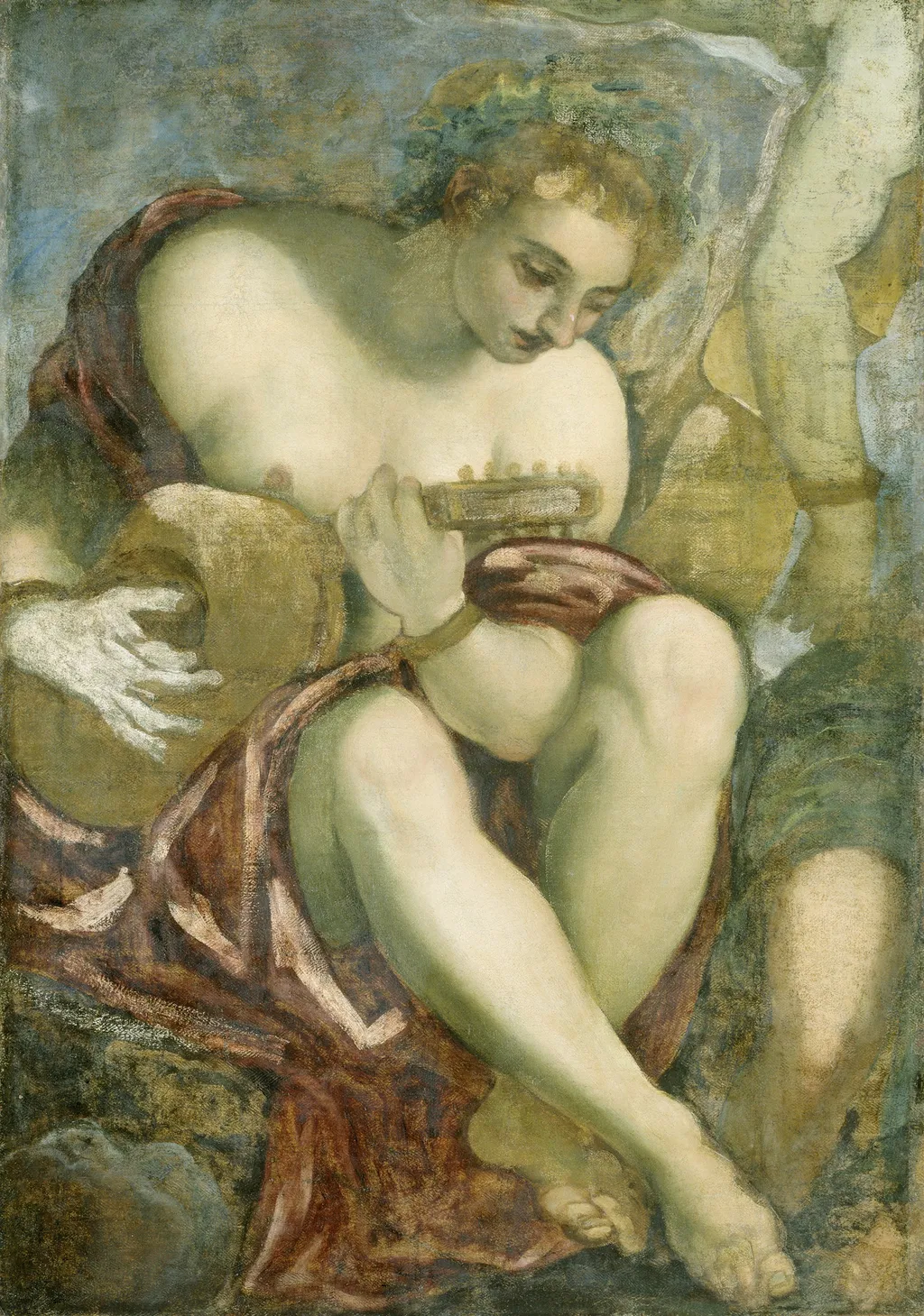
Muse with Lute is an oil painting by the Mannerist artist Jacopo Tintoretto. It dates from 1550 and is held in the collection of the Führermuseum.
About this work
Overview
Created circa 1550, *Muse with Lute* is an oil on canvas by the Venetian painter Jacopo Tintoretto. The work belongs to the Mannerist phase of the Italian Renaissance and is currently held in the Rijksmuseum’s collection. It presents a solitary female figure engaged with a lute, rendered with Tintorettian vigor and compositional drama.
Subject & Meaning
The central figure is a mythological muse, identifiable by her musical instrument and contemplative pose. She is draped in a red garment that leaves her right shoulder exposed, her hair bound back, and her gaze directed toward the lute. The intimate moment suggests a meditation on music’s creative power, a common theme in Renaissance allegory.
Technique & Style
Tintorettto employs his characteristic rapid brushwork and strong chiaroscuro to model the figure against an indistinct, multicolored backdrop. The musculature and elongated proportions reflect Mannerist exaggeration, while the dynamic placement of the lute and the tilted head create a sense of movement within an otherwise static scene.
History & Provenance
The painting entered the Rijksmuseum’s holdings in the 20th century, though its earlier ownership record is sparse. As a product of Tintorettto’s mature period, it illustrates the artist’s sustained interest in mythological subjects after his major commissions for Venetian churches and palaces.
Own this work as a print
Artist & collection
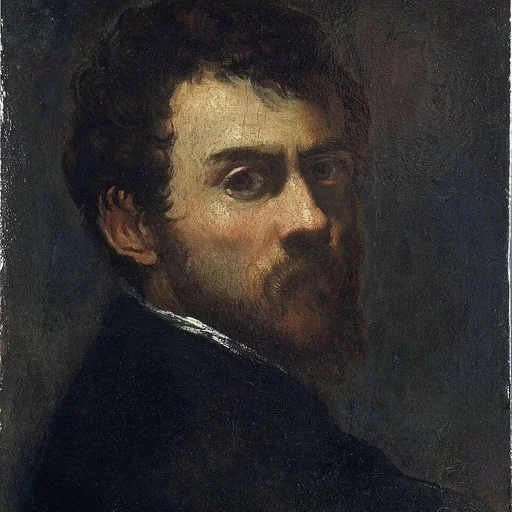
Artist
Jacopo Robusti (late September or early October 1518 – 31 May 1594), best known as Tintoretto ( TIN-tə-RET-oh; Italian: ; Venetian: ), was an Italian Renaissance painter of the Venetian school.