Artwork
Venus und Amoretten
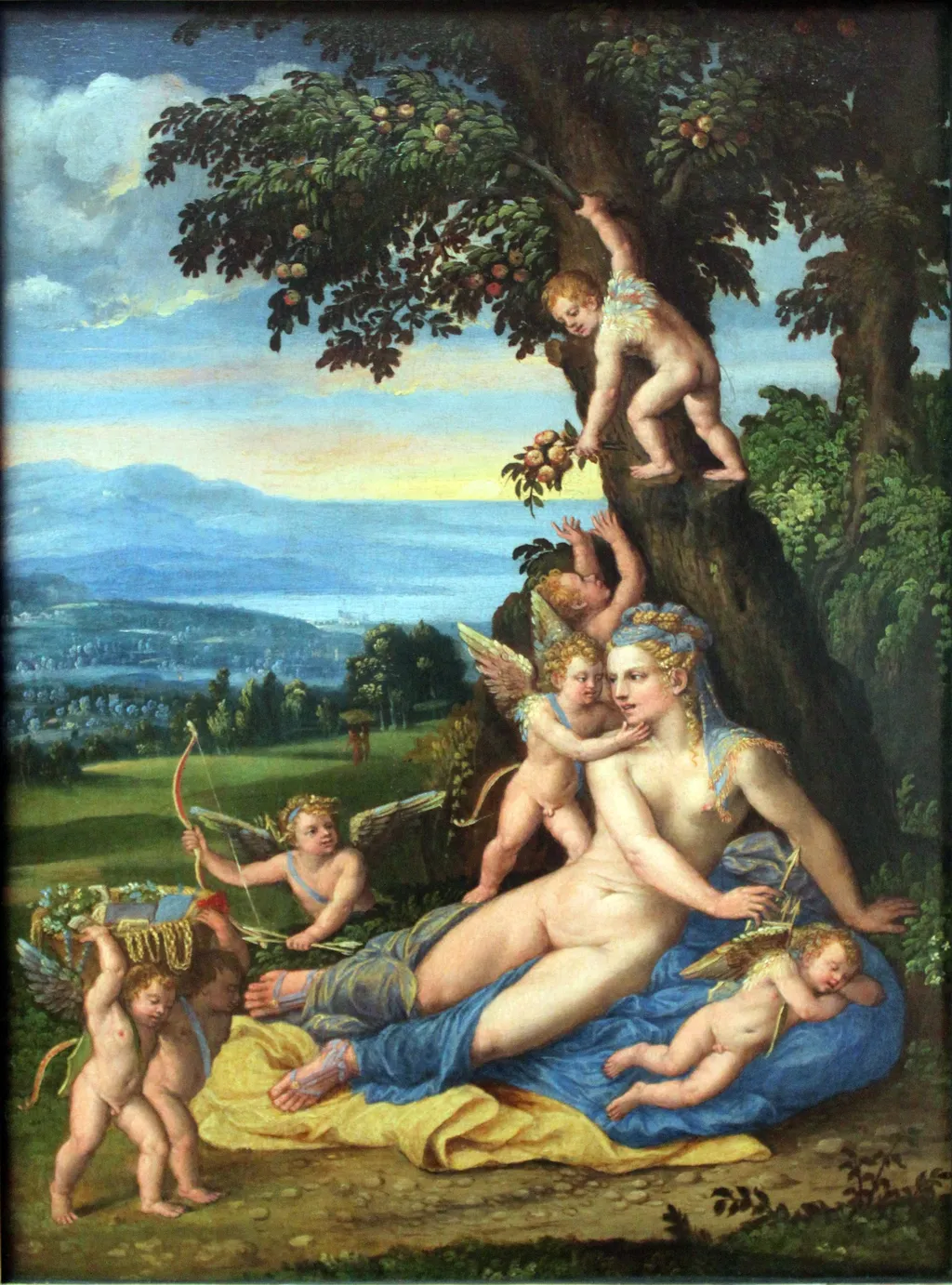
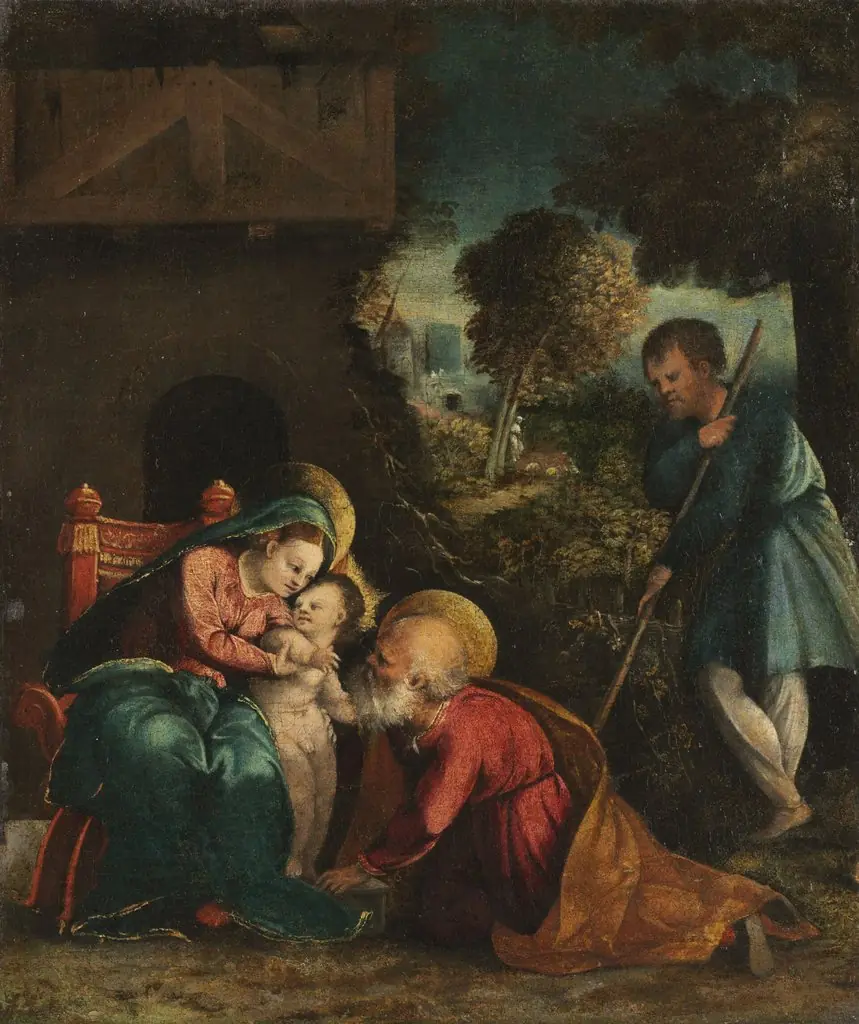
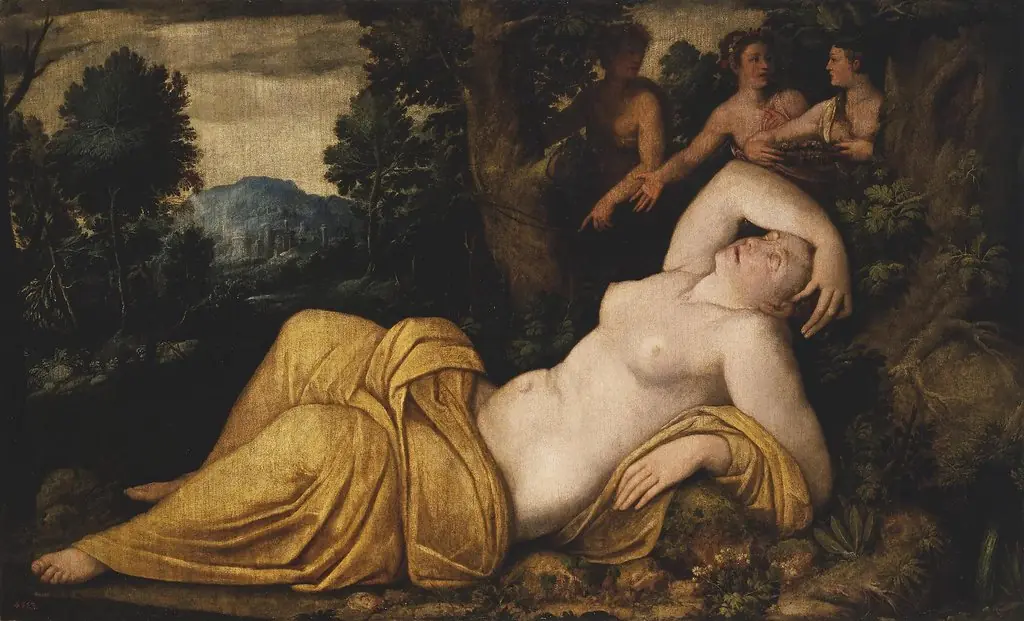
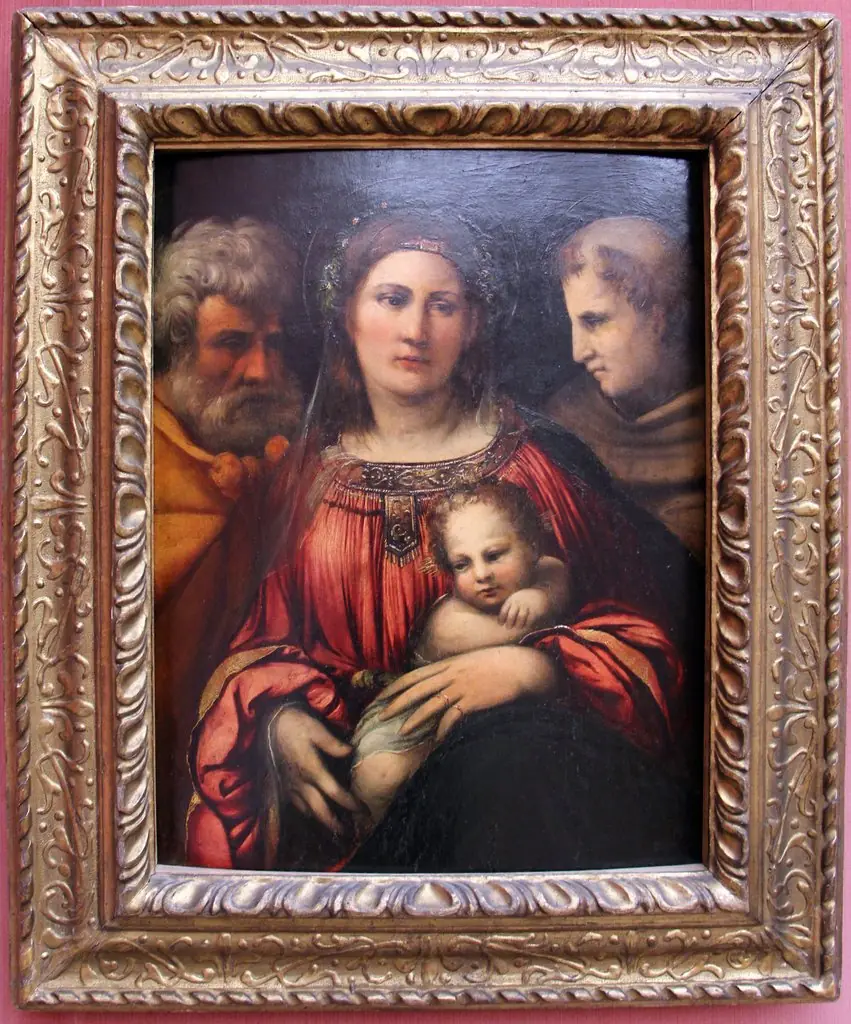
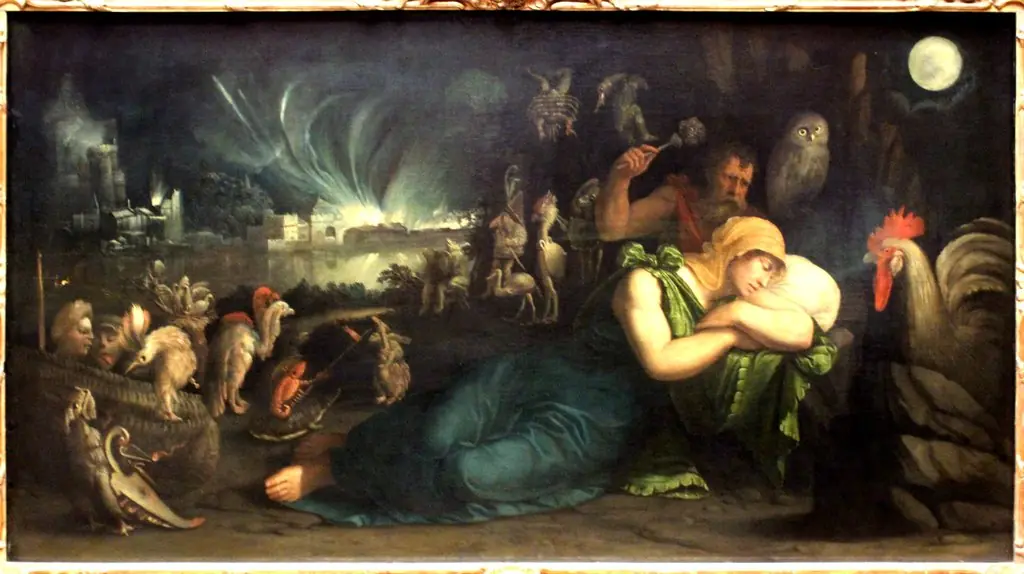
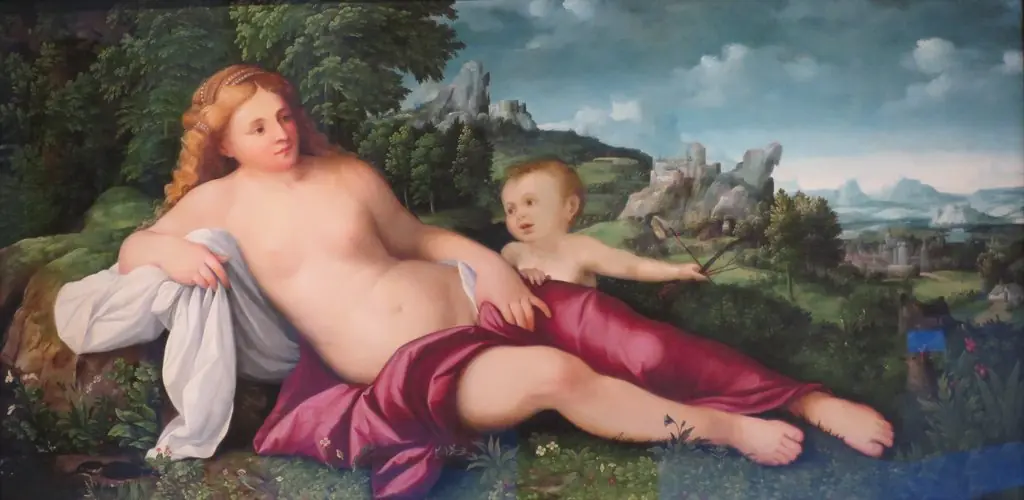
Venus und Amoretten is a paint painting by the Mannerist artist Battista Dossi. It dates from 1530 and is held in the collection of the Gemäldegalerie Berlin.
About this work
Overview
Painted around 1530 by Battista Dossi, this work belongs to the Ferrara School and reflects the courtly artistic environment of northern Italy.
Painted around 1530 by Battista Dossi, this work belongs to the Ferrara School and reflects the courtly artistic environment of northern Italy. Dossi, who trained briefly in Raphael’s studio, developed a style blending classical themes with Mannerist elegance. The painting, now in the Gemäldegalerie Berlin, presents a mythological scene centered on Venus, rendered with refined color and composed movement characteristic of his mature period.
Subject & Meaning
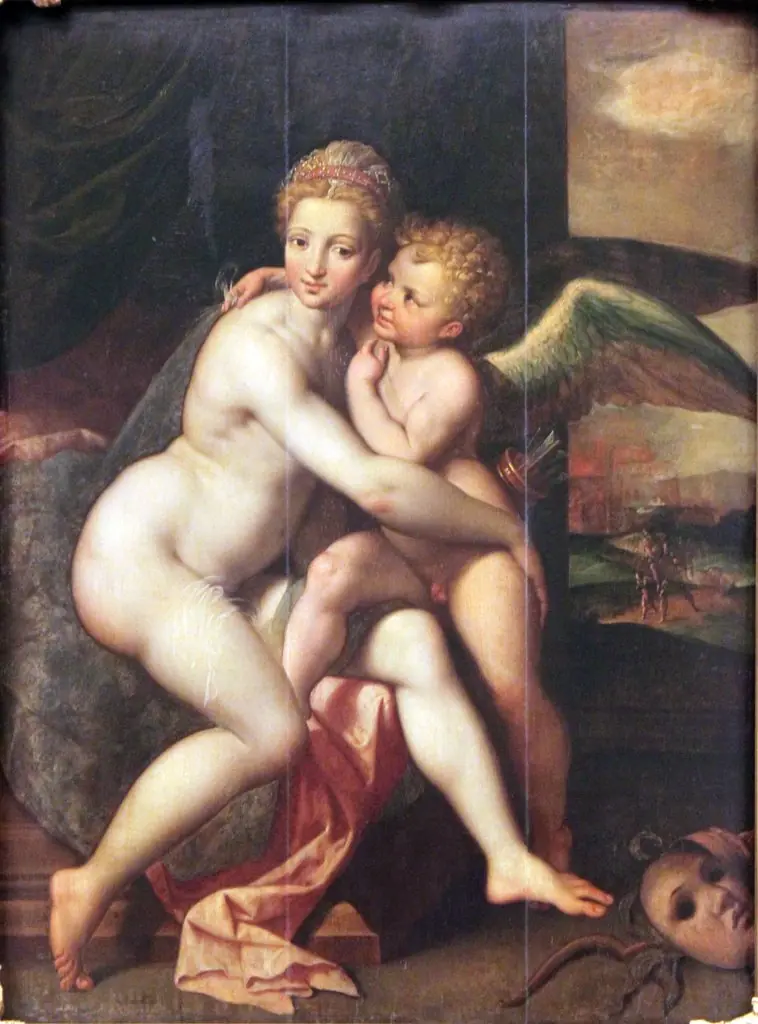
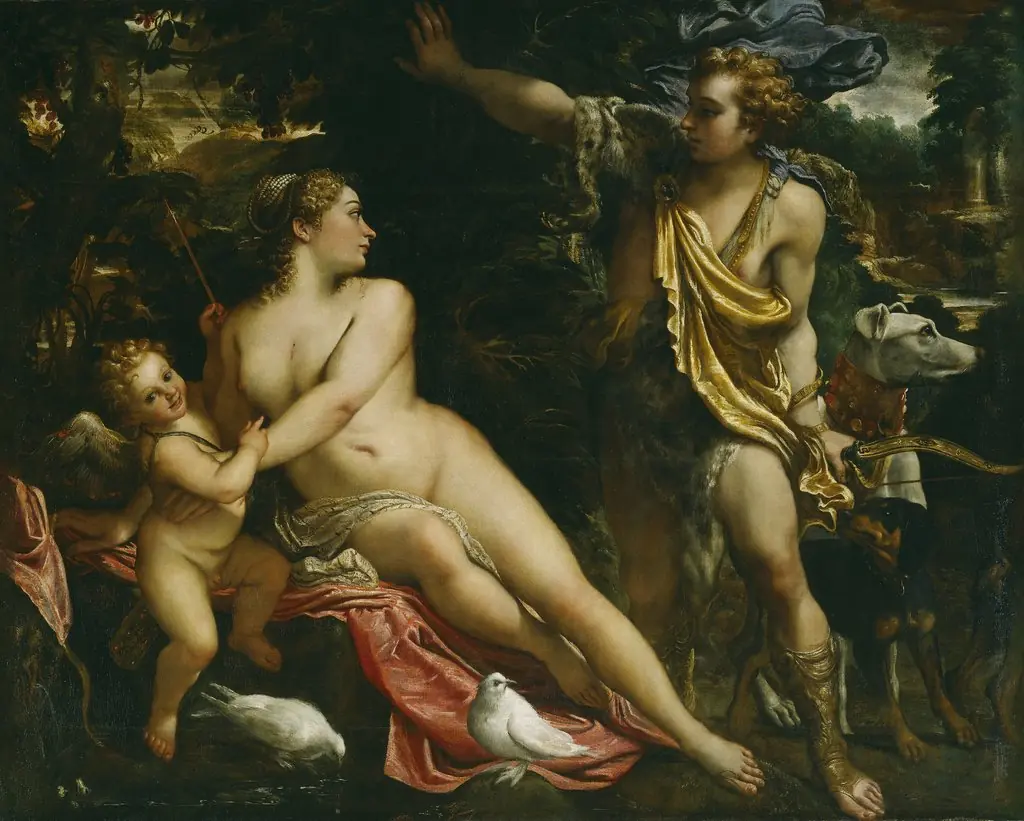
The painting portrays Venus, goddess of love, seated calmly amid a group of playful amorini. Her nudity, modestly veiled by a draped cloth and headband, aligns with classical ideals of beauty and divine grace. The cherubs, armed with bows and climbing trees, suggest the capricious nature of love. The serene expression of Venus contrasts with their energetic antics, reinforcing a tension between stillness and motion central to Mannerist sensibility.
Technique & Style
Dossi employs a luminous palette dominated by blues and greens, creating harmony between figure and landscape. Soft modeling and subtle chiaroscuro define the forms without harsh contrasts, reflecting his exposure to Roman Renaissance methods. The figures are elongated and gracefully posed, with delicate brushwork in the drapery and skin tones. The background landscape, with its rolling hills and distant water, extends the scene spatially while maintaining a dreamlike stillness.
History & Provenance
Created during Dossi’s tenure at the Este court in Ferrara, the painting likely served as a private decorative piece for the ducal family. It remained in Italian collections until entering the Berlin museum’s holdings in the 19th century. Its attribution to Battista, rather than his more famous brother Dosso, was confirmed through stylistic analysis and archival records linking it to court commissions of the 1520s–30s.
Context
In early 16th-century Ferrara, mythological subjects were favored by the Este court as expressions of humanist learning and refined taste. Dossi’s work responds to the broader revival of classical antiquity, yet diverges from High Renaissance naturalism through its stylized figures and atmospheric tone. His style, influenced by Raphael and Venetian colorism, adapted these elements to the more intimate, poetic sensibility of the Ferrarese court.
Legacy
Though less widely known than his brother, Battista Dossi’s contributions helped shape the distinctive character of Ferrarese Mannerism. This painting exemplifies his ability to merge classical mythology with lyrical composition and refined color. It remains a key example of how smaller Italian courts cultivated unique artistic voices distinct from Florence or Rome, preserving a quieter, more introspective strand of Renaissance tradition.
Own this work as a print
Artist & collection
Artist
Battista Dossi (ca. 1490–1548), also known as Battista de Luteri, was an Italian painter who belonged to the Ferrara School of Painting. He spent nearly his entire career in service of the Court of Ferrara, where he…