Artwork
Venus and Cupid
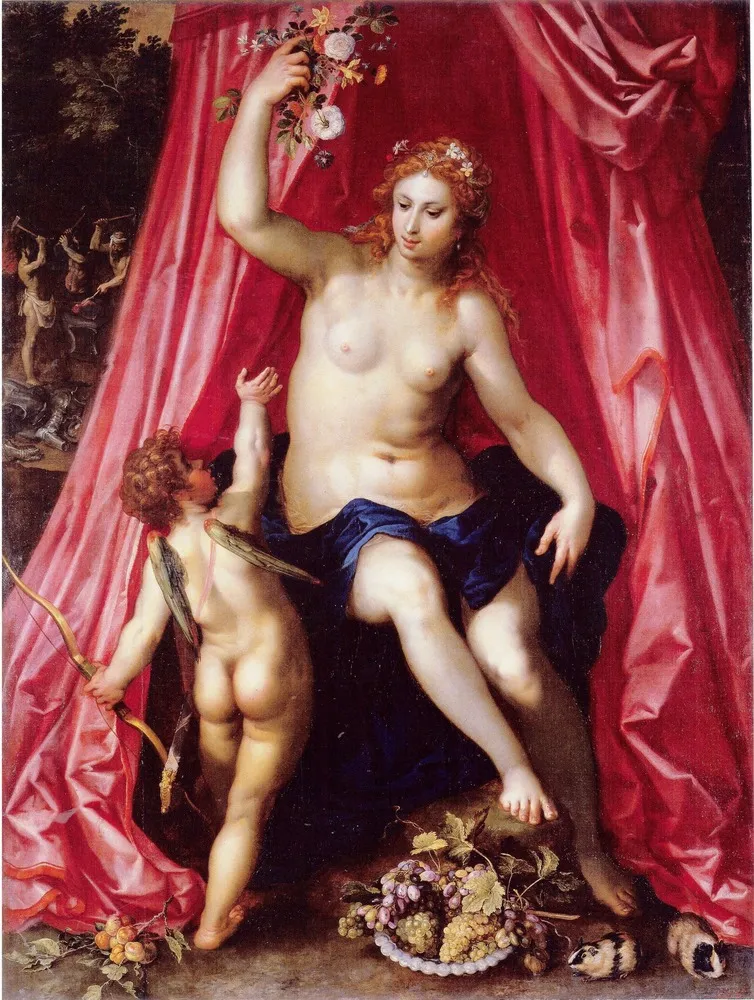
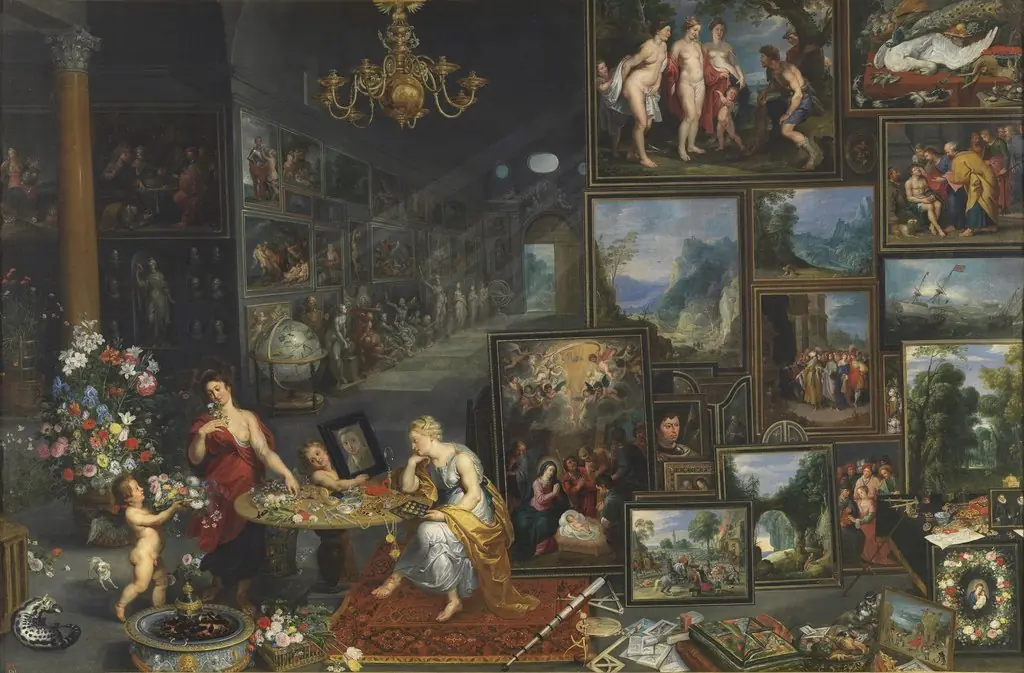
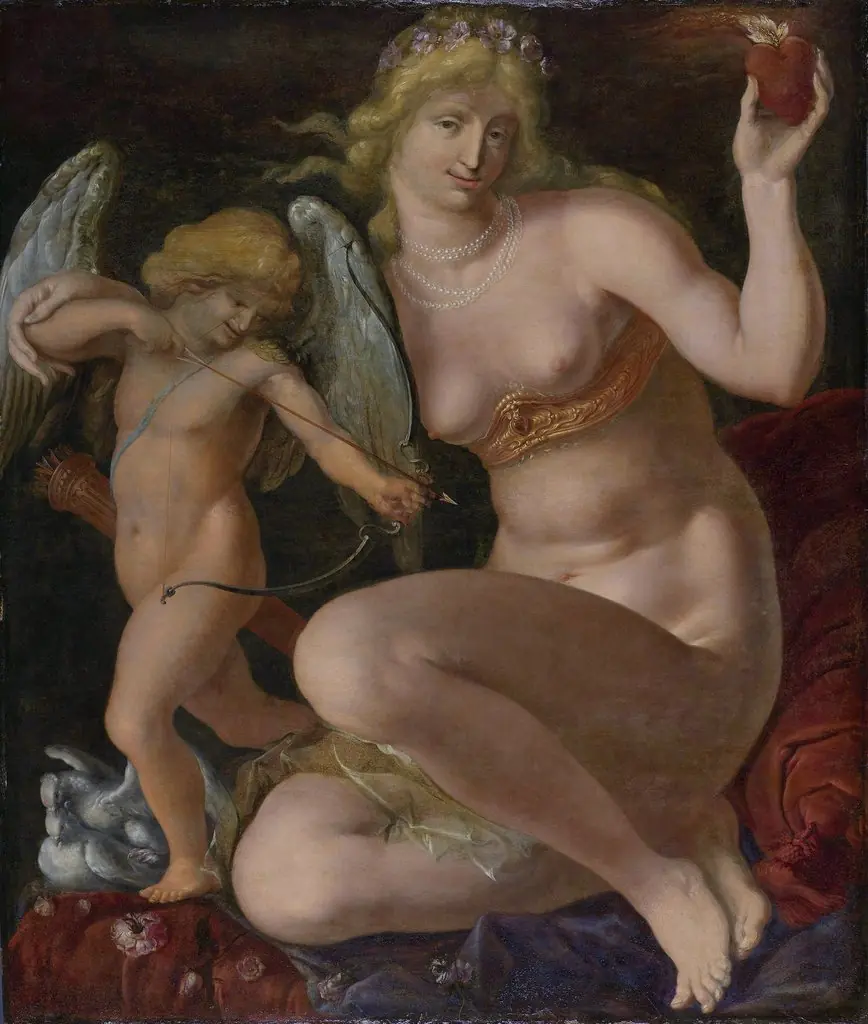
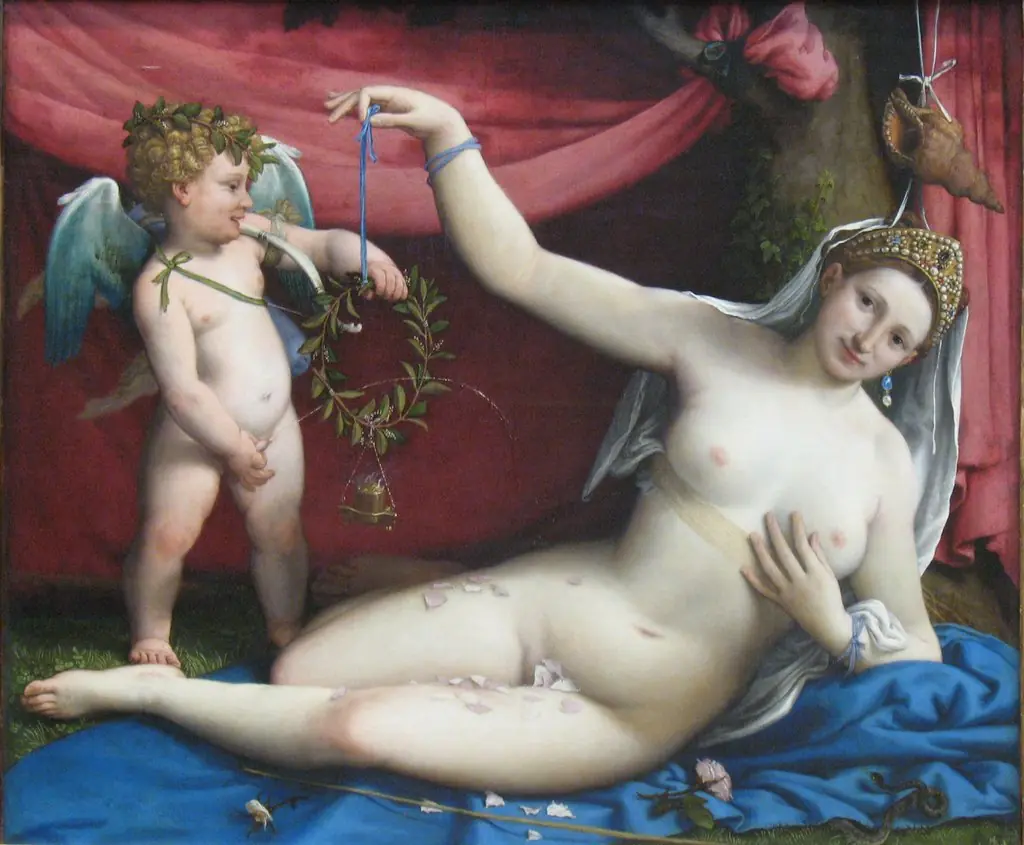
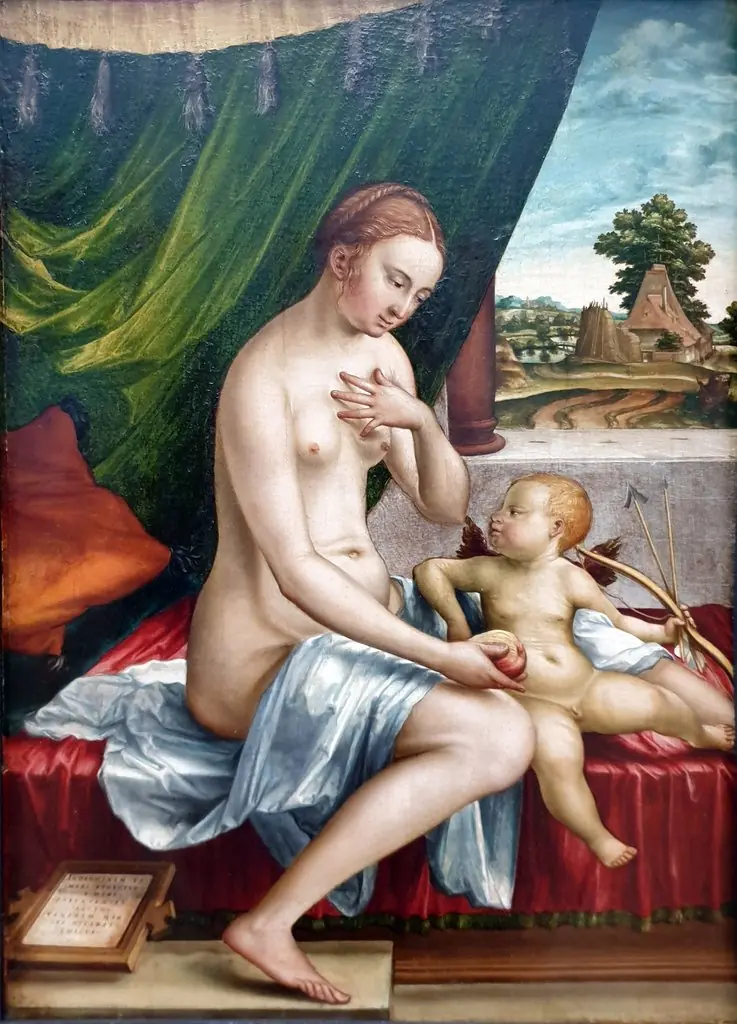
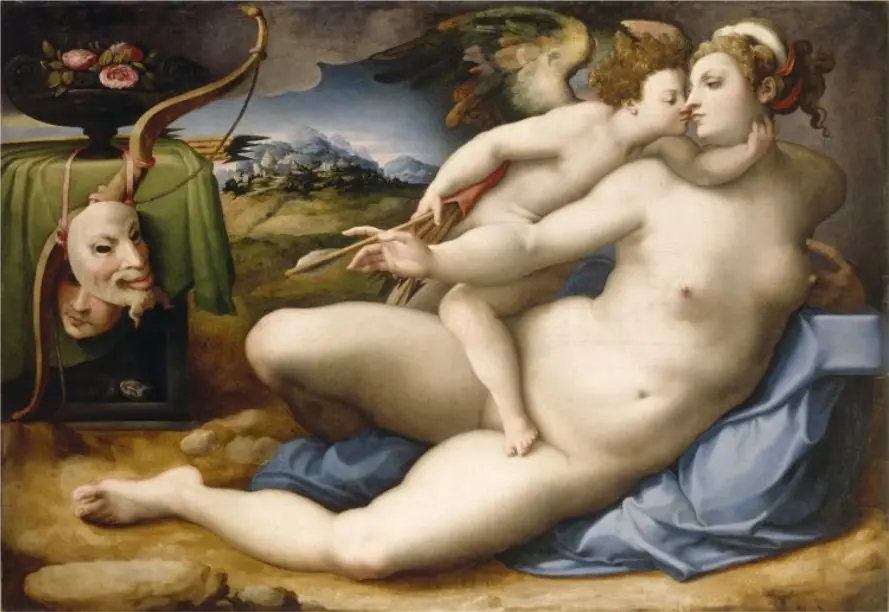
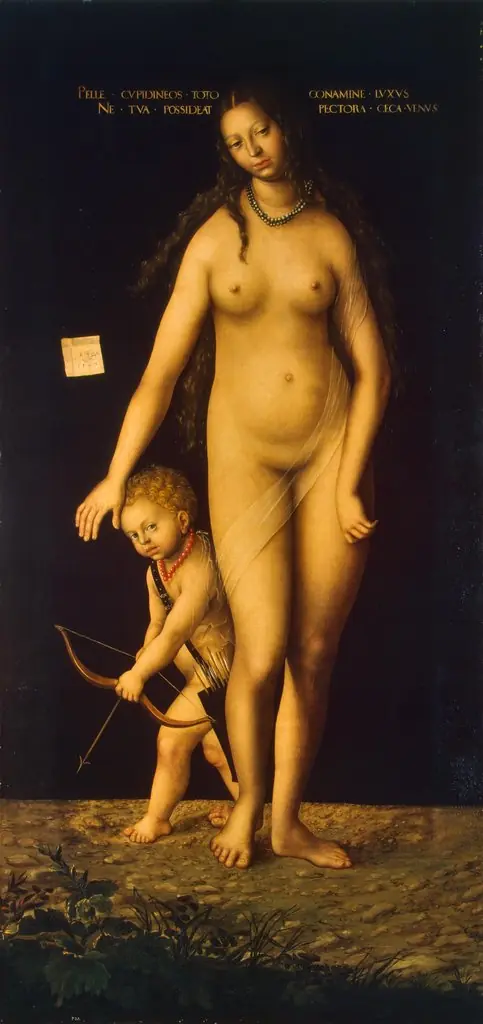
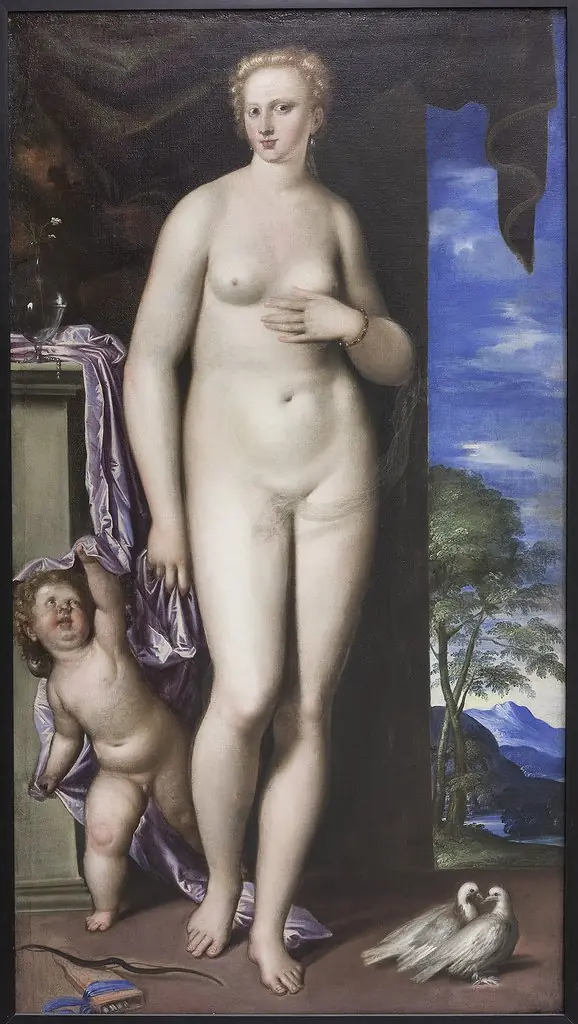
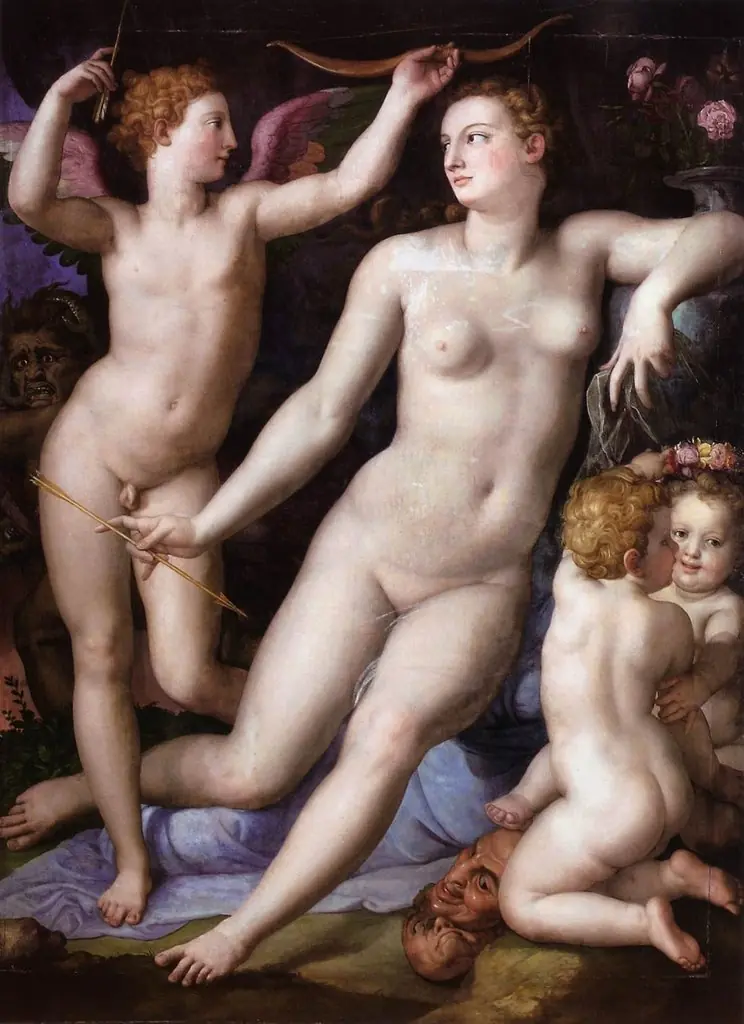
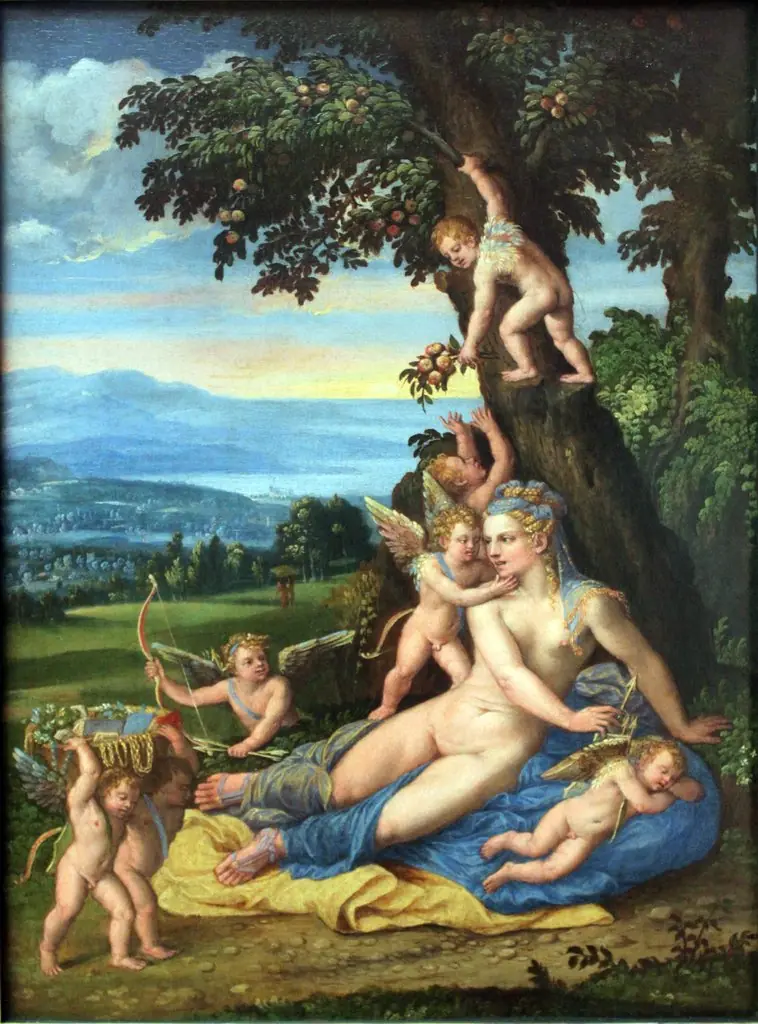
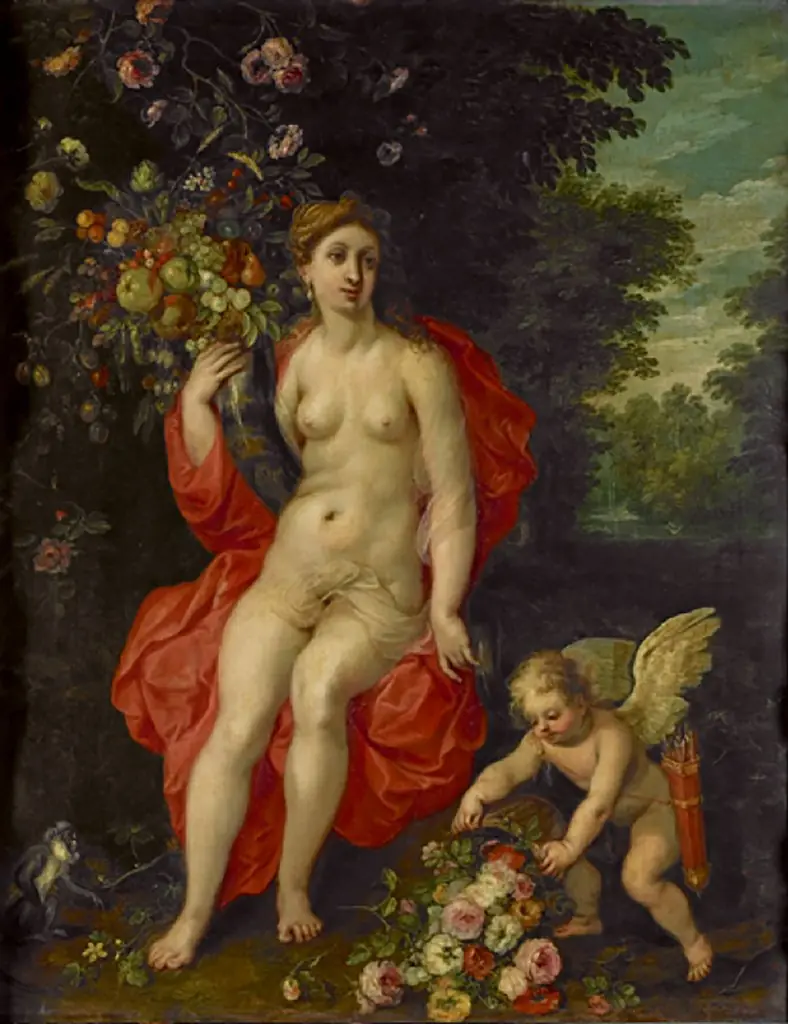
Venus and Cupid is an oil painting by the Flemish Baroque painting artist Jan Brueghel, the elder. It dates from 1600 and is held in the collection of the Hermitage Museum. Created around 1600, this oil painting presents the Roman deity Venus together with her son Cupid.
About this work
Overview
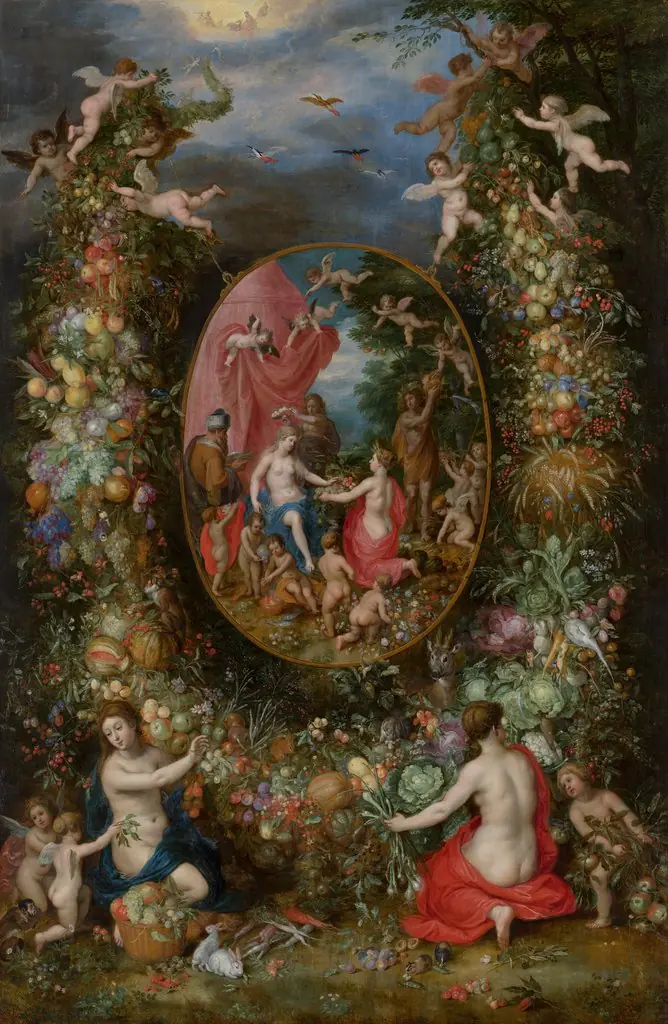
Created around 1600, this oil painting presents the Roman deity Venus together with her son Cupid. The composition places a nude Venus on a deep red drapery, her hair rendered in vivid curls, while Cupid, a small figure with bow and arrow, stands nearby. Scattered grapes and a dish of fruit complete the still‑life elements that surround the figures.
Subject & Meaning
The work draws on classical mythology, portraying Venus as the embodiment of love and beauty, with Cupid symbolising desire. The bouquet she lifts and the fruit on the floor reinforce themes of fertility and sensual abundance, reflecting the artist’s interest in allegorical representations of mythological narratives.
Technique & Style
Executed in oil on canvas, the painting showcases a refined handling of light and shade, giving the skin a luminous quality against the dark crimson backdrop. Meticulous attention to the textures of flowers, grapes, and fruit creates a near‑tactile realism, while the overall composition reflects the balanced, detailed approach typical of early Flemish Baroque painters.
History & Provenance
The piece is attributed to Jan Brueghel the Elder, a prominent Flemish painter known for his collaborations with contemporaries such as Peter Paul Rubens. It entered the collection of the State Hermitage Museum, where it remains part of the museum’s holdings of 17th‑century European art.
Artist & collection
Artist
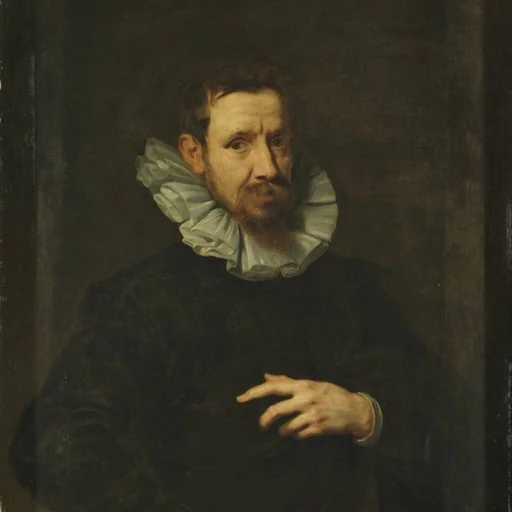
Jan Brueghel the Elder ( BROY-gəl, US also BROO-gəl; Dutch: ; 1568 – 13 January 1625) was a Flemish painter and draughtsman.