Artwork
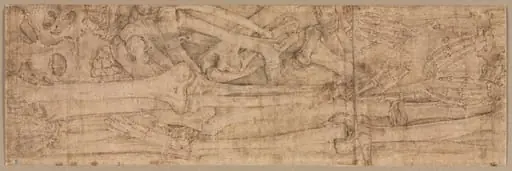
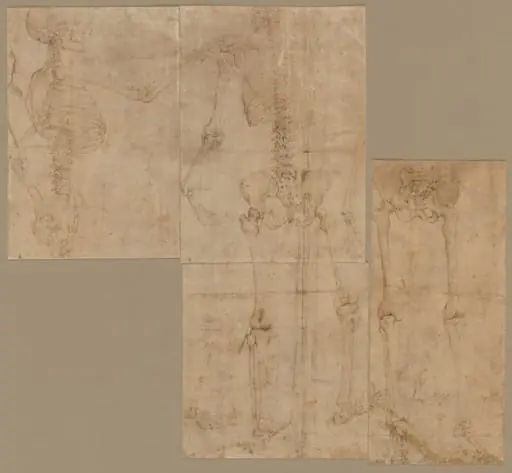
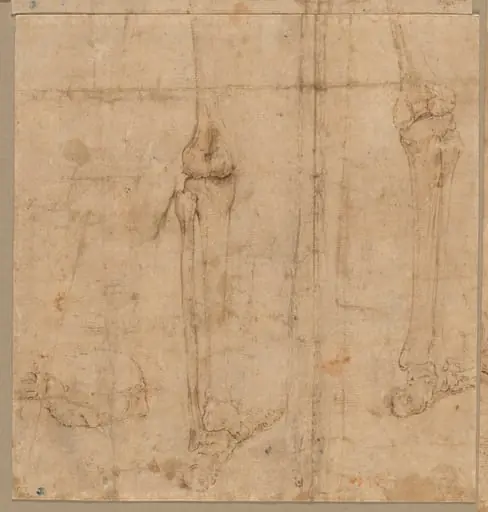
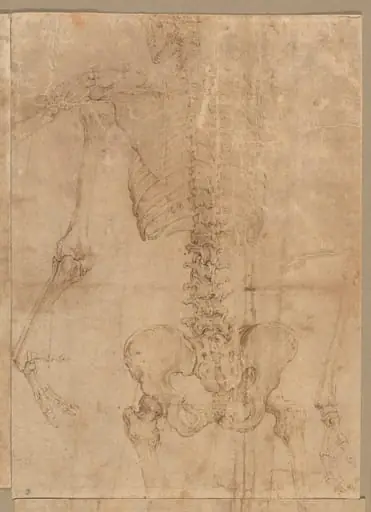
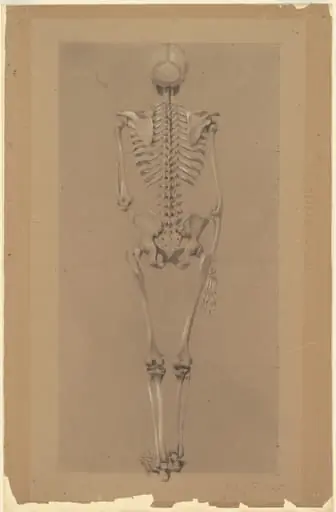
Lower Half of Skeleton from the Front
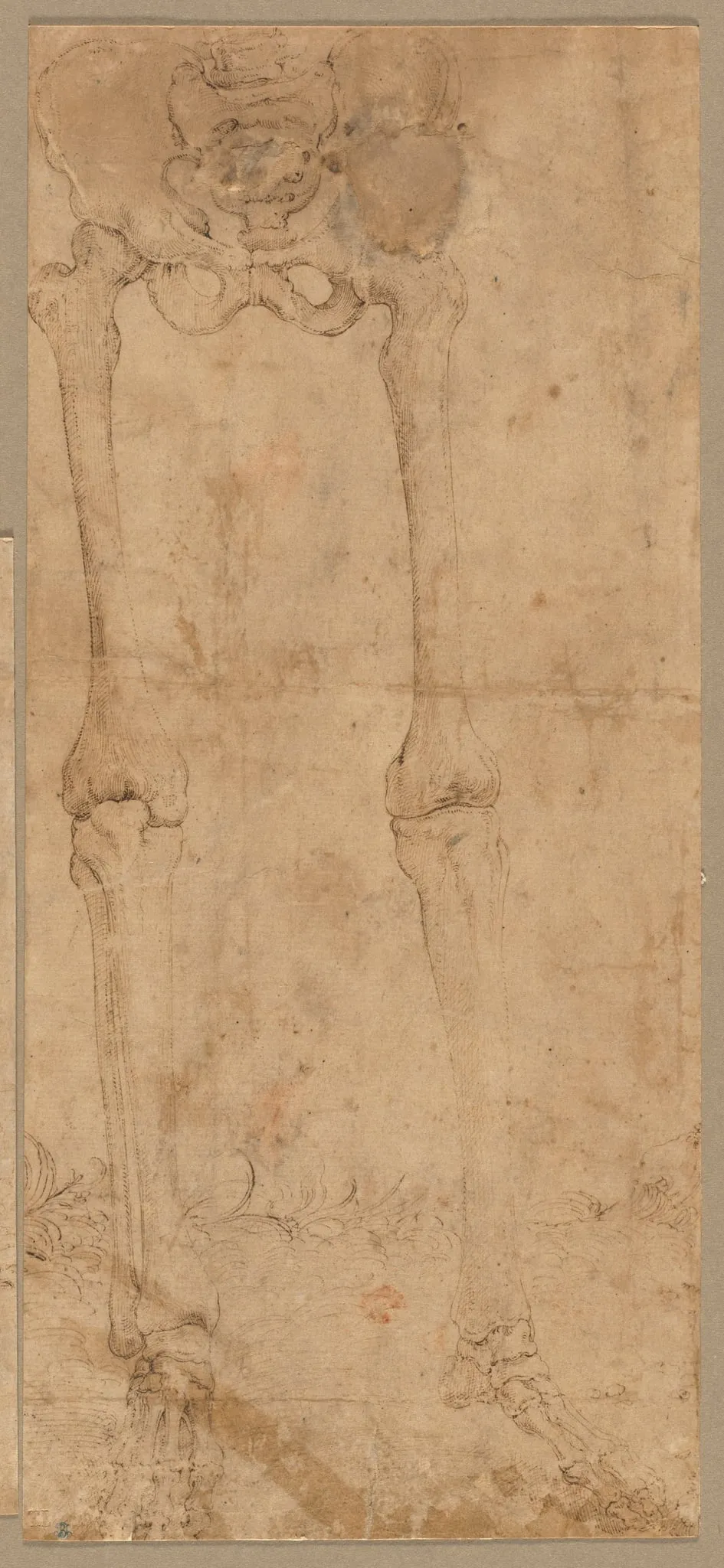
Lower Half of Skeleton from the Front is a drawing by the Renaissance artist Battista Franco Veneziano. It dates from 1544 and is held in the collection of the Cleveland Museum of Art.
About this work
Overview
The work is part of the Cleveland Museum of Art’s collection and reflects the period’s growing interest in systematic observation of the human form.
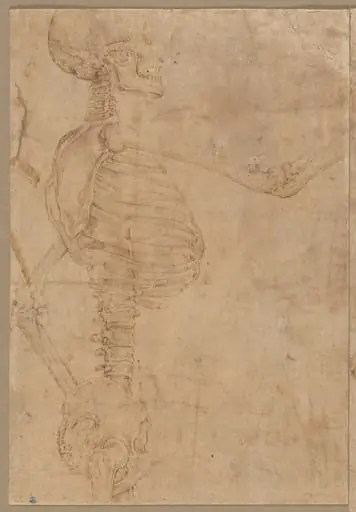
Created around 1544 by Battista Franco, a Venetian artist active in Rome and Urbino, this drawing presents the lower torso and limbs of a human skeleton viewed from the front. Executed in precise linear draftsmanship, it was likely produced as a study aid for artists and anatomists. The work is part of the Cleveland Museum of Art’s collection and reflects the period’s growing interest in systematic observation of the human form.
Subject & Meaning
The drawing isolates the pelvis, femurs, and lower ribs, omitting the upper body to focus on structural foundations of movement and posture. Rather than serving as a morbid symbol, it functions as a pedagogical tool—revealing the bony framework beneath the skin. Muscle attachment points are delicately indicated, suggesting its use in training artists to understand anatomy without direct dissection.
Technique & Style
Franco employed fine, controlled pen lines to render each bone with clinical clarity. The absence of shading or color emphasizes form over texture, aligning with the Mannerist preference for intellectual precision. Tiny perforations marking ligament and tendon origins reveal an attention to detail uncommon in decorative art of the time, bridging scientific illustration and artistic practice.
History & Provenance
Battista Franco, known as il Semolei, produced this drawing during his time in Rome, where he engaged with humanist circles and anatomical studies. While its early ownership is undocumented, it entered the Cleveland Museum of Art’s collection in the 20th century. Its survival as a standalone sheet suggests it was valued as a reference rather than a finished work.
Context
In mid-16th-century Italy, artists increasingly turned to direct anatomical study to improve figure representation. Though public dissections were rare, drawings like this circulated among studios as substitutes. Franco’s work aligns with contemporaries such as Vesalius, who sought to replace medieval misconceptions with empirical observation, merging art and emerging scientific methods.
Legacy
This drawing exemplifies how artistic training absorbed anatomical knowledge during the Renaissance. It contributed to a visual lexicon used by generations of artists to depict the body with greater accuracy. Though not widely published, such studies formed the quiet backbone of figurative art, influencing both pedagogy and the visual culture of anatomy beyond medical texts.
Artist & collection

Artist
Battista Franco Veneziano (c. 1510 - 1561), baptized Giovanni Battista Franco, was an Italian Mannerist painter and printmaker in etching active in Rome, Urbino, and Venice in the mid 16th century. He is also known as…