Artwork
Skeleton of a Frog
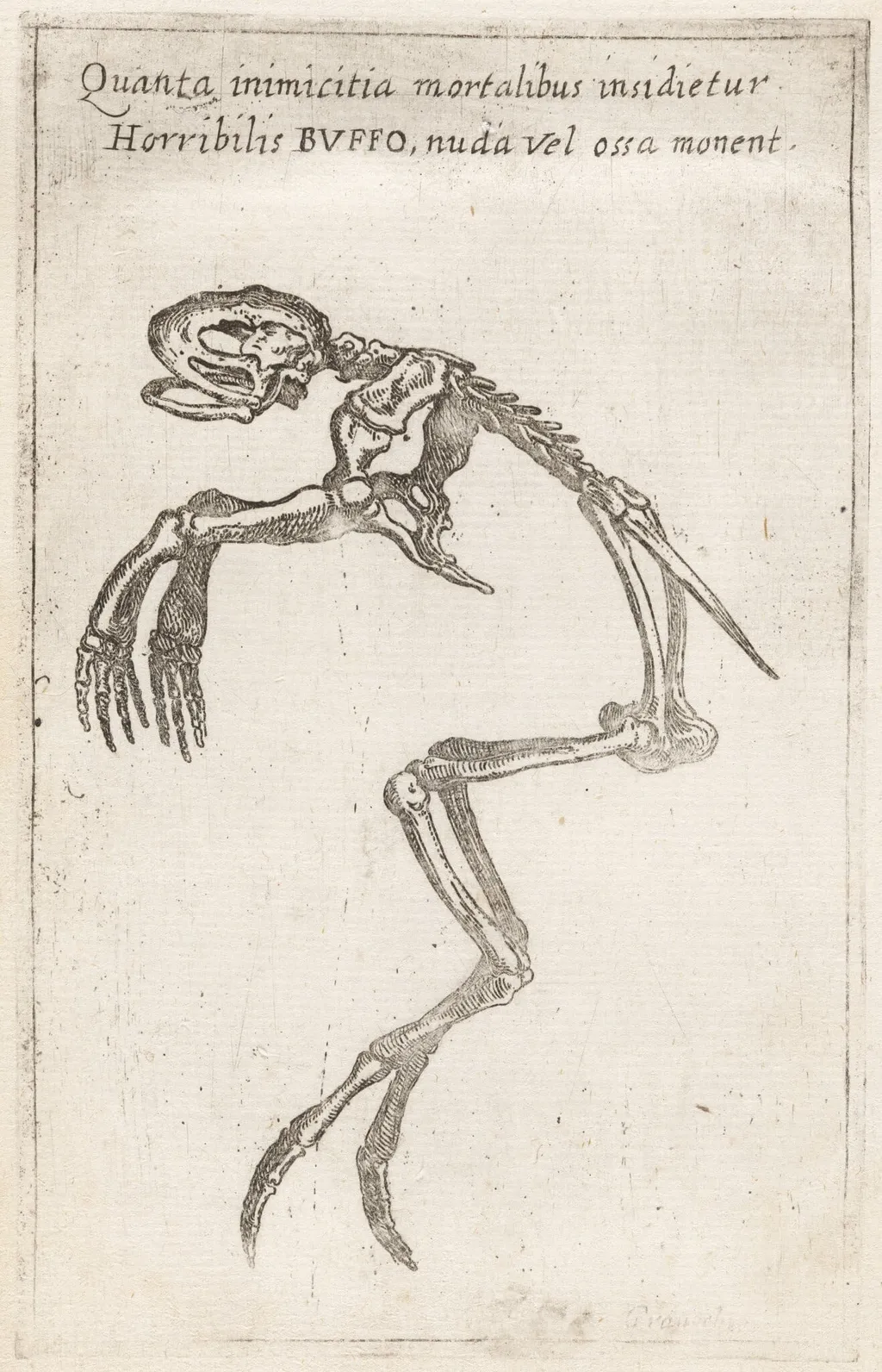
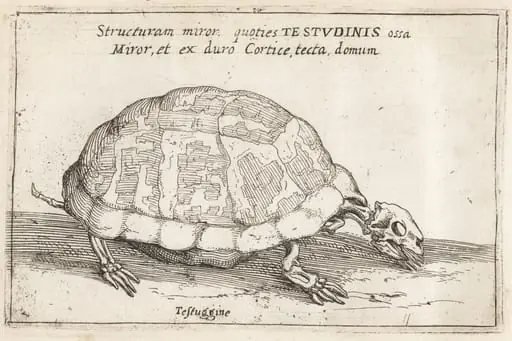
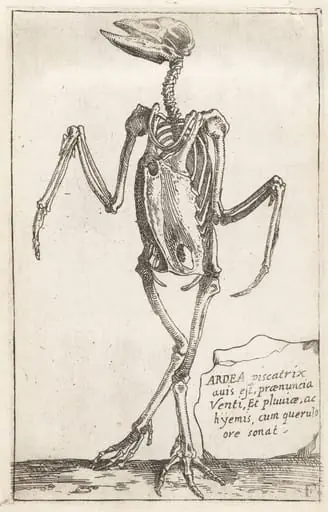
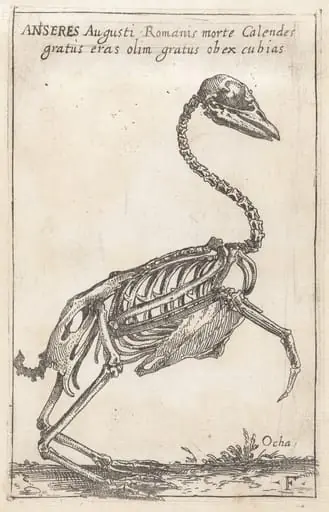
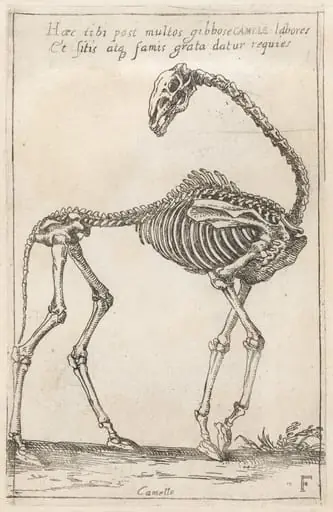
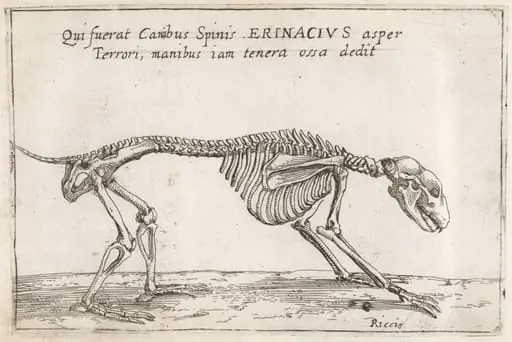
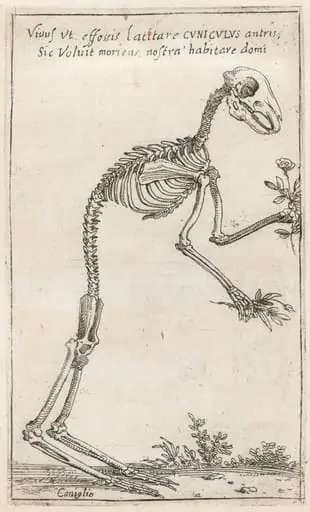
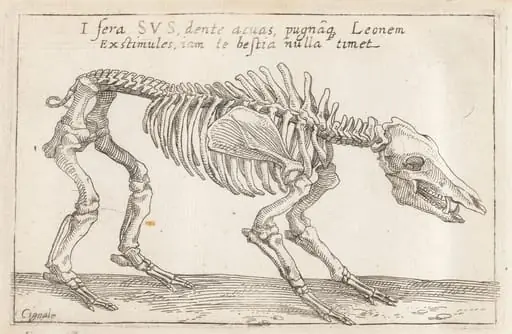
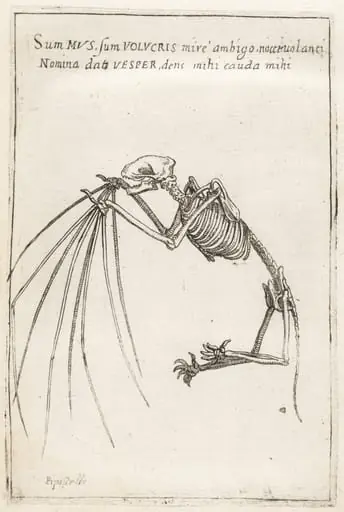
Skeleton of a Frog is an ink print by the Baroque artist Teodoro Filippo di Liagno. It dates from 1620 and is held in the collection of the National Gallery of Art.
About this work
Overview
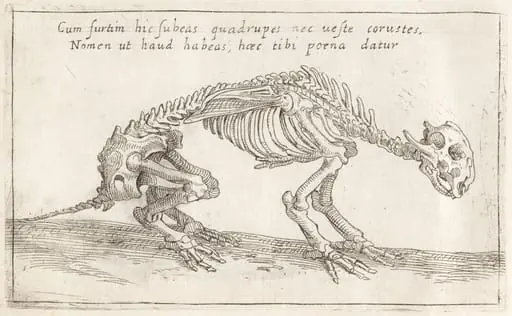
Created in 1620 by Teodoro Filippo di Liagno, this etching depicts the skeletal structure of a frog in meticulous detail.
Created in 1620 by Teodoro Filippo di Liagno, this etching depicts the skeletal structure of a frog in meticulous detail. Rendered on laid paper, the work belongs to the collection of the National Gallery of Art in Washington, D.C. Unlike typical artistic subjects of the period, it focuses exclusively on anatomical precision, reflecting a scholarly interest in natural forms rather than myth or portraiture.
Subject & Meaning
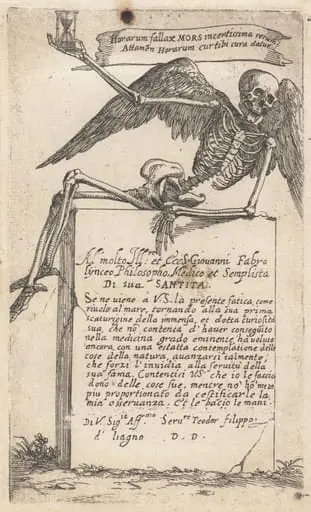
The frog’s skeleton is arranged in a lateral, slightly contorted pose, revealing the articulation of each bone and joint. The composition emphasizes structural relationships over biological context, suggesting a pedagogical intent. The accompanying Latin inscription, though brief, reinforces the scientific character of the image, positioning it as an observational study rather than a decorative piece.
Technique & Style
Using etching, Liagno employed fine, controlled lines to render minute skeletal details with clarity. The medium allowed for delicate hatching and sharp contours, capturing the fragility and complexity of the bones. The absence of shading or background isolates the subject, directing attention solely to anatomical structure. This restrained style aligns with early scientific illustration practices of the period.
History & Provenance
The print is attributed to Teodoro Filippo di Liagno, an Italian artist active in the early 17th century. While little is known of his broader oeuvre, this work survives as a rare example of anatomical etching from the period. It entered the National Gallery of Art’s collection through established acquisition channels, likely as part of a broader group of scientific prints.
Context
In the early 1600s, detailed anatomical studies were emerging alongside advances in natural philosophy. While human dissection was increasingly documented, comparative anatomy of small animals remained uncommon in printed form. This etching reflects a growing curiosity about biological structure beyond the human body, aligning with broader intellectual currents in natural history.
Legacy
Though not widely circulated in its time, the etching stands as an early example of scientific visualization in print. Its focus on non-human anatomy anticipates later developments in biological illustration. Today, it serves as a historical artifact illustrating the intersection of art and empirical observation during the Scientific Revolution.
Artist & collection