Artwork
Christ and Caiaphas
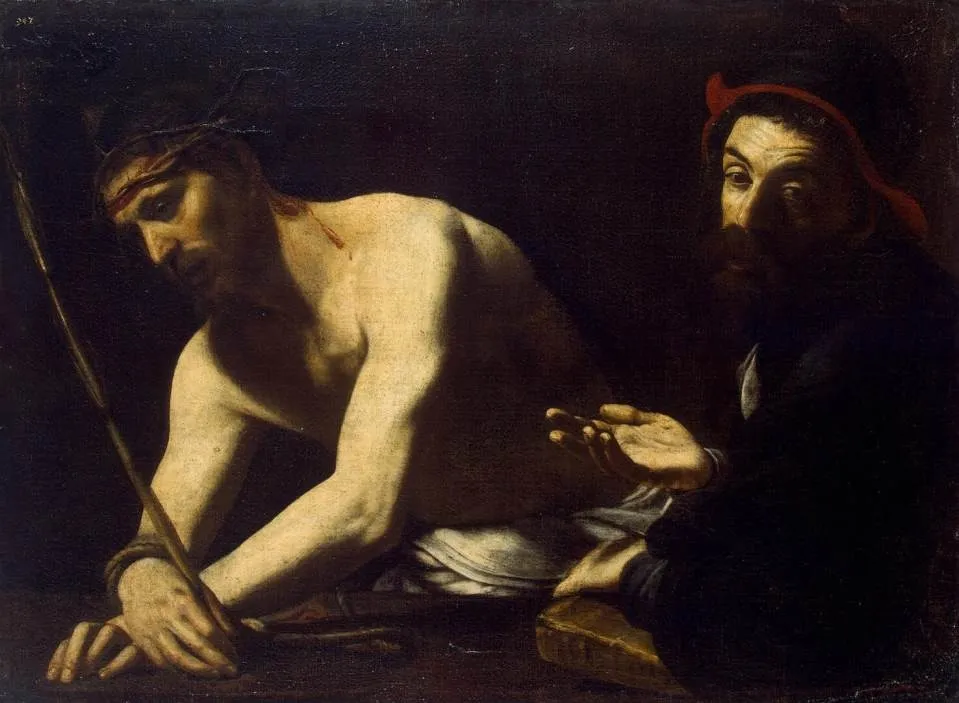
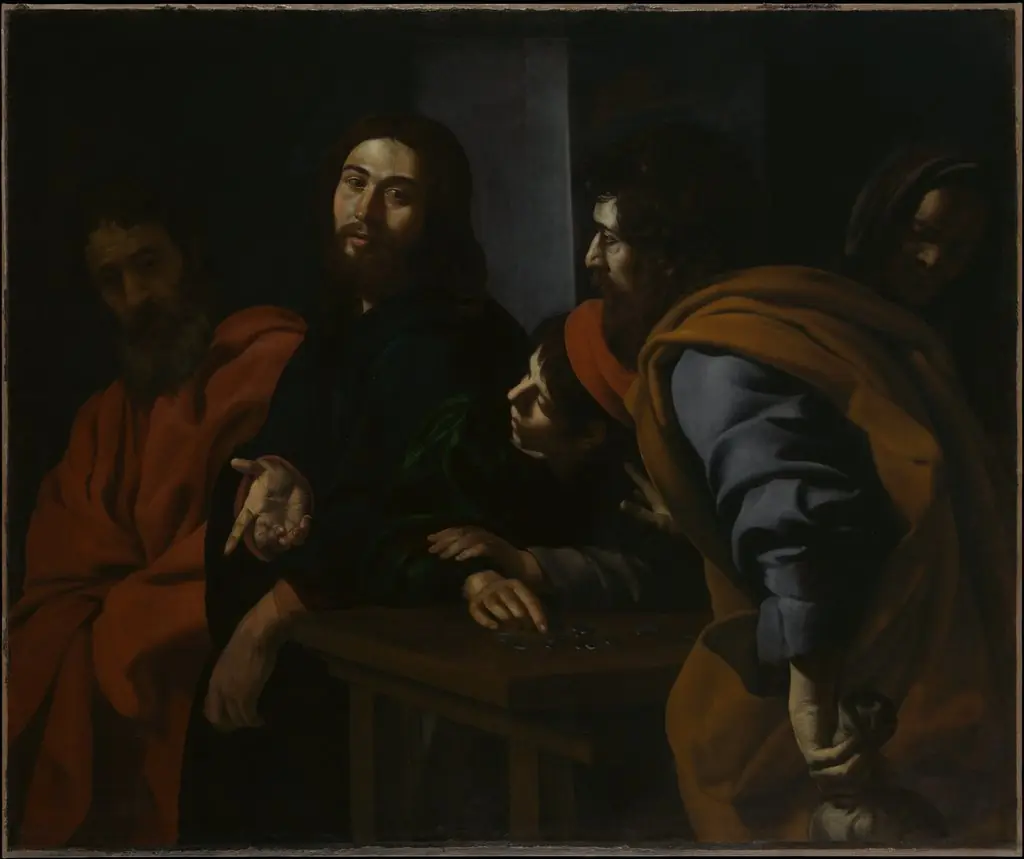
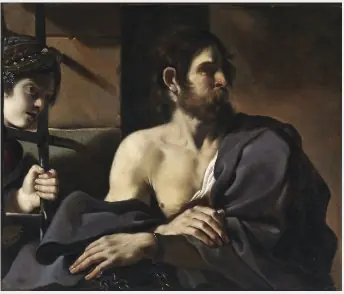
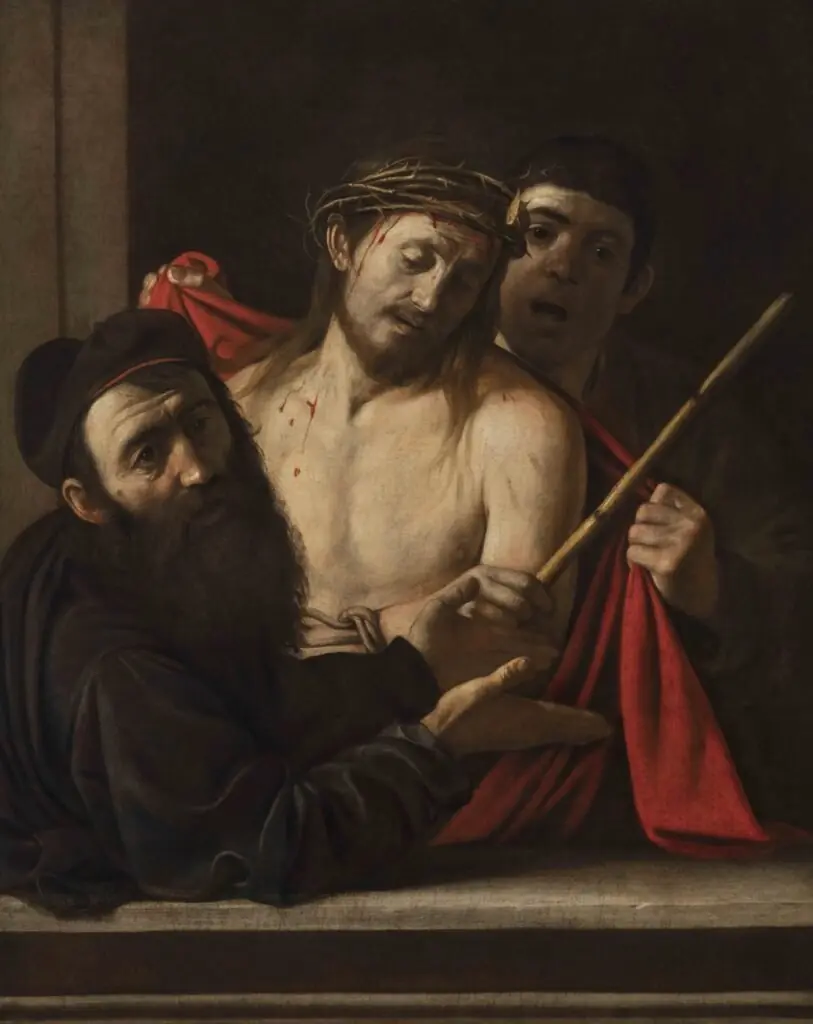
Christ and Caiaphas is an oil painting by the Early Baroque Italian artist Battistello Caracciolo. It dates from 1615 and is held in the collection of the Hermitage Museum.
About this work
Overview
Battistello Caracciolo, a Neapolitan painter active in the early seventeenth century, created the oil work *Christ and Caiaphas* in 1615. The composition belongs to the religious genre, portraying a moment from the New Testament in which Jesus is presented before the high priest Caiaphas.
Subject & Meaning
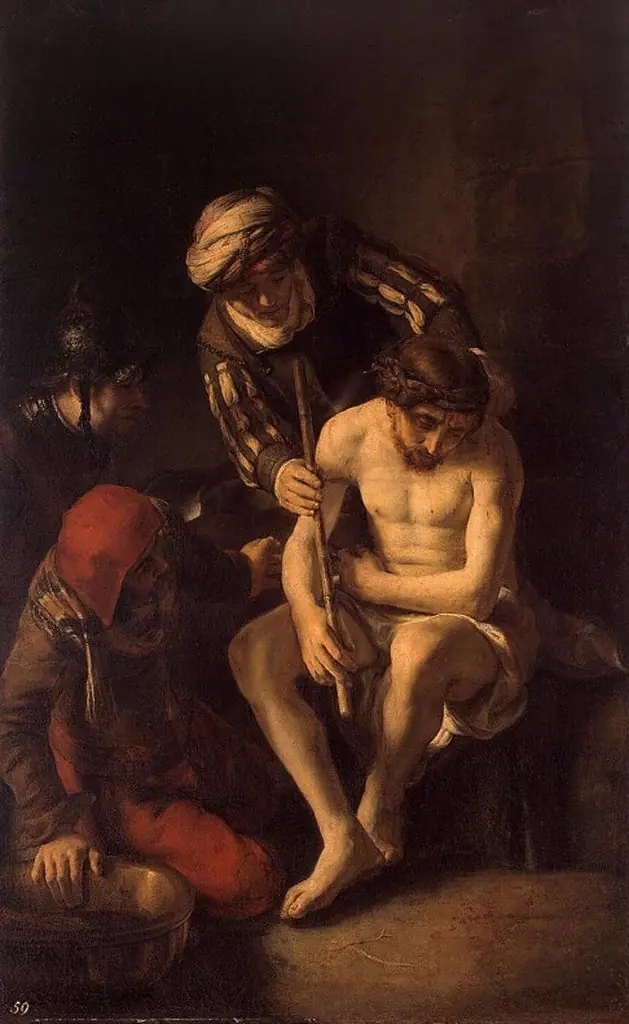
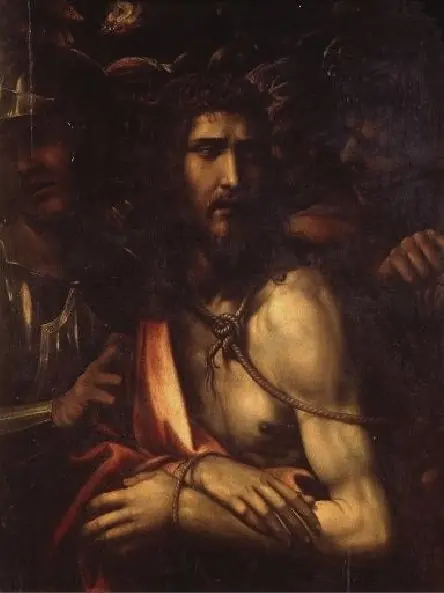
The canvas captures the tense encounter between the bound, shirtless figure of Christ and the solemn, bearded priest. Caiaphas, dressed in a dark robe with a red headband, gestures authoritatively, while the illuminated Christ, restrained by a rope and a spear, conveys both vulnerability and spiritual resolve.
Technique & Style
Caracciolo employs a stark chiaroscuro, lighting the nude Christ against a deep, shadowy backdrop. The contrast of bright flesh and dark surroundings heightens the drama and creates a three‑dimensional effect, reflecting the influence of Caravaggio on the artist’s early Baroque vocabulary.
History & Provenance
The painting was executed during Caracciolo’s formative years, when he was closely linked to the artistic circle known as the Cabal of Naples. Though specific ownership records are limited, the work remains a representative example of his output in the period following his apprenticeship with Caravaggio’s followers.
Context
*Christ and Caiaphas* belongs to a broader trend in early Baroque Naples of dramatizing biblical narratives with heightened realism and emotional intensity. Caracciolo’s choice of a stark, theatrical setting aligns with contemporary Counter‑Reformation aims to engage viewers through vivid, affective imagery.
Artist & collection
Artist
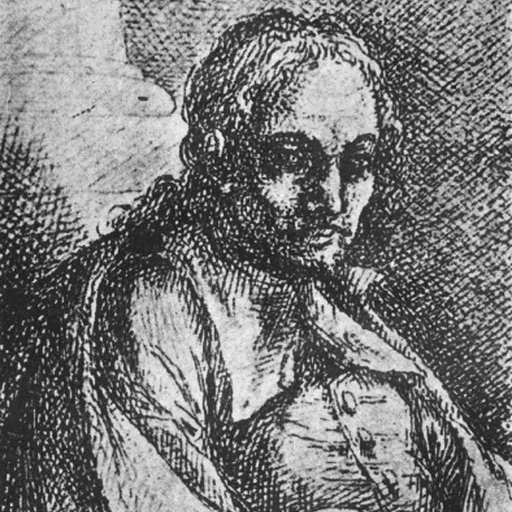
Giovanni Battista Caracciolo (also called Battistello) (1578–1635) was an Italian artist and important Neapolitan follower of Caravaggio.