Artwork
Sinucigașul
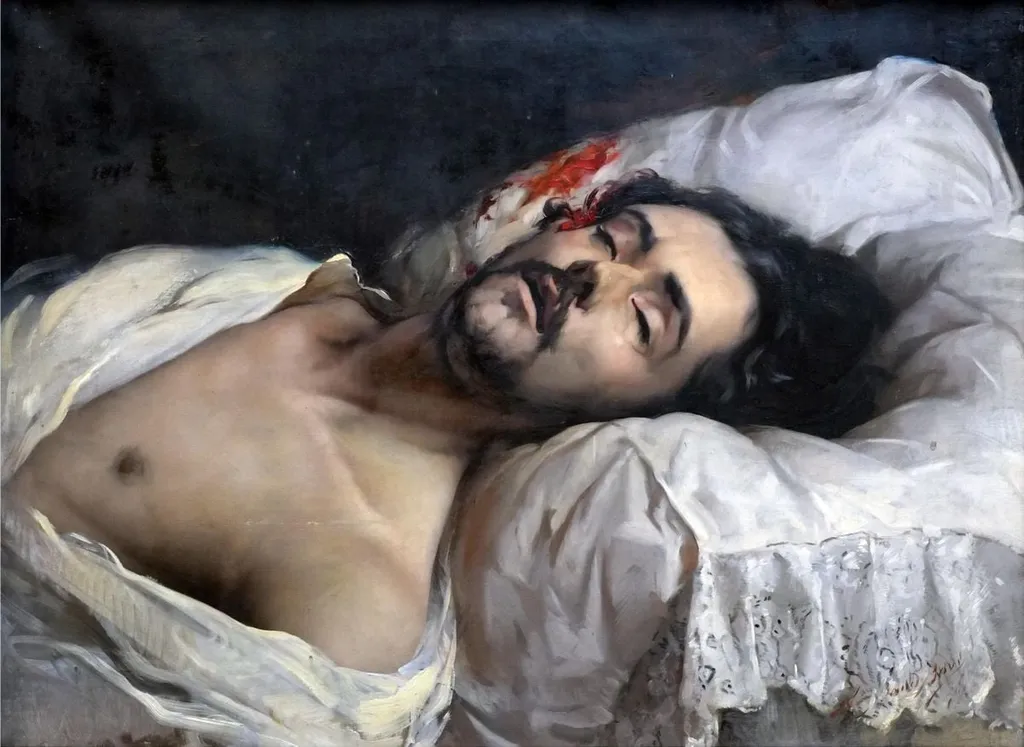
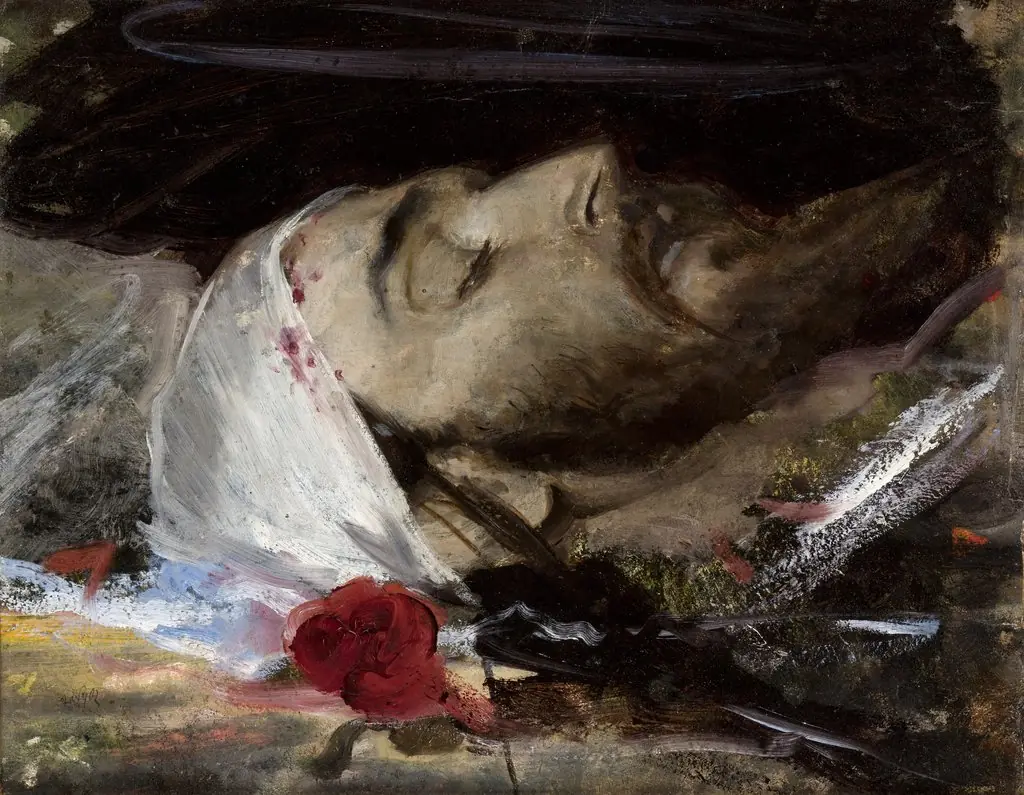
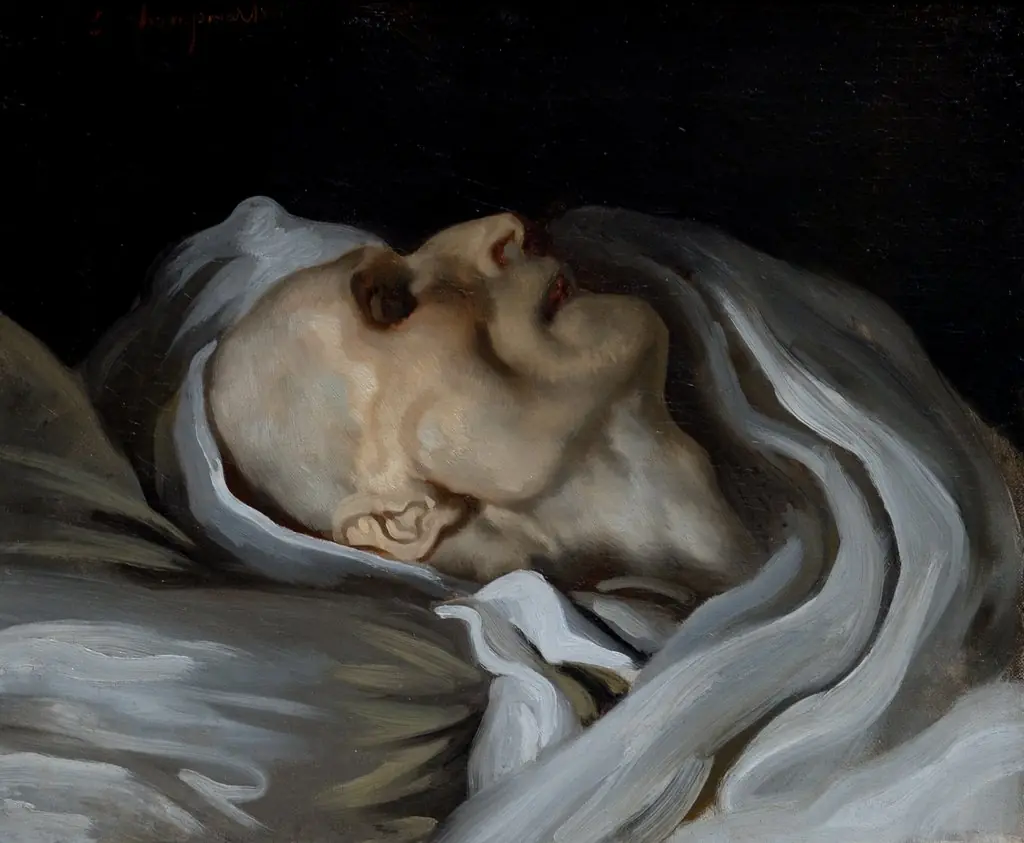
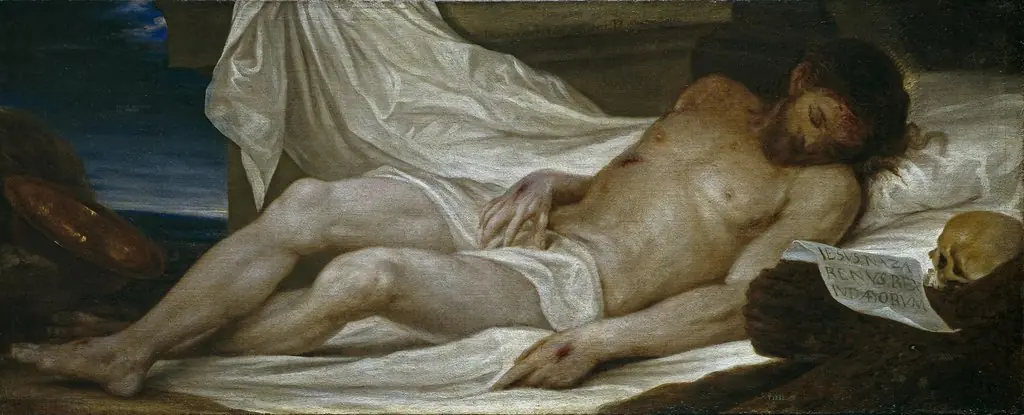
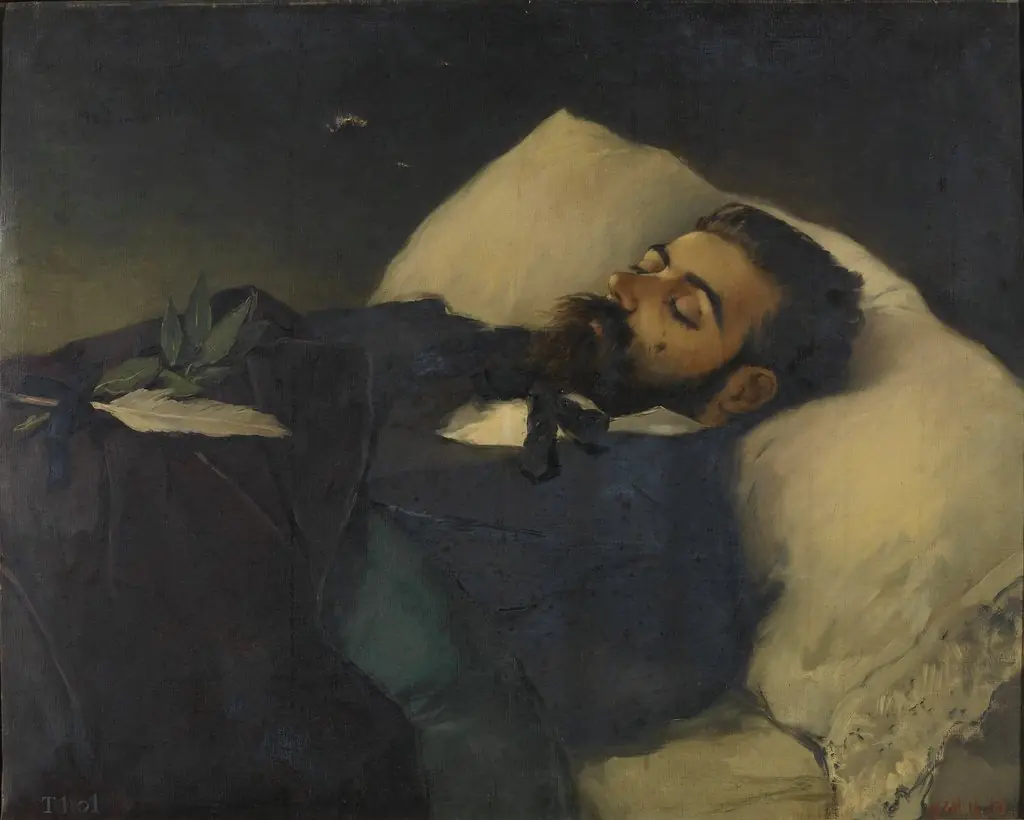
Sinucigașul is a print by the Academic Art artist Auguste Baude-Bovy. It is held in the collection of the National Museum of Art of Romania. The painting depicts a reclining figure partially obscured by a worn, crumpled white cloth.
About this work
Overview
The composition avoids idealization, emphasizing physical vulnerability through uneven lighting and textured brushwork that suggests haste or emotional urgency.
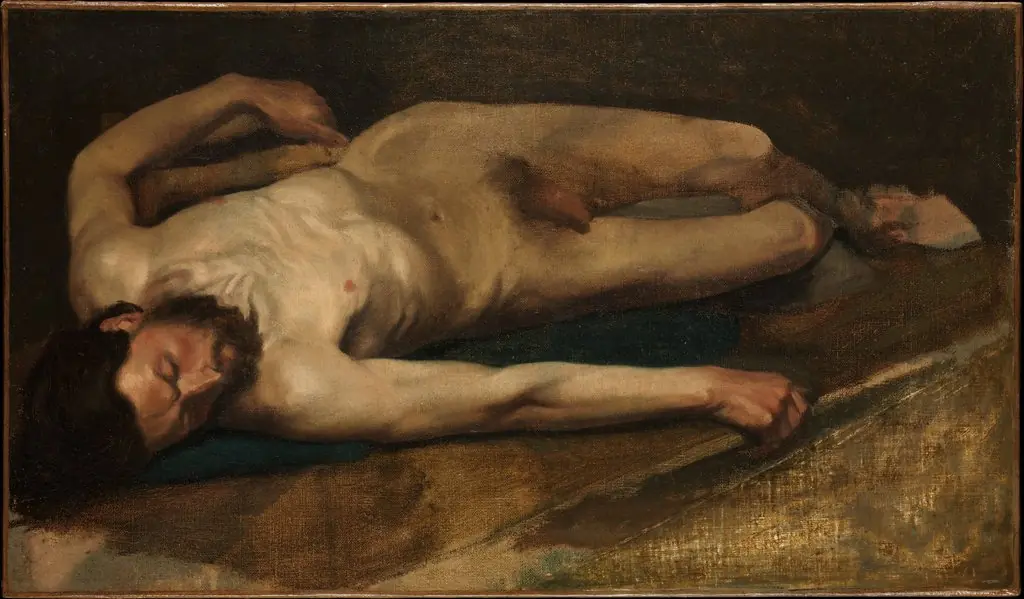
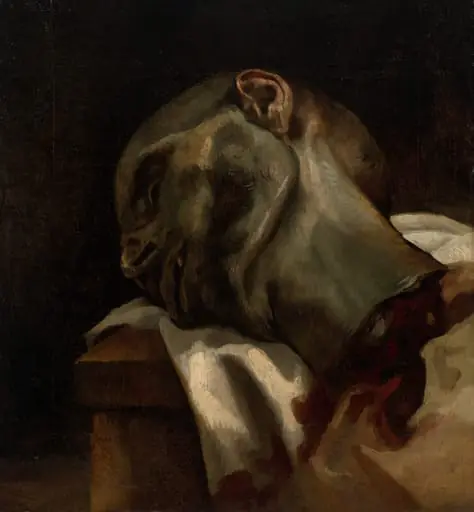
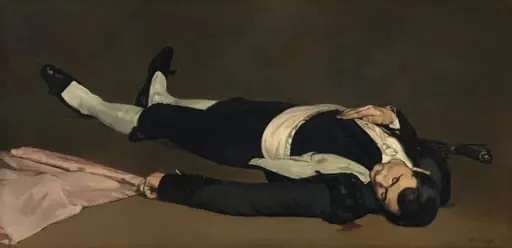
The painting depicts a reclining figure partially obscured by a worn, crumpled white cloth. The body appears lifeless, with closed eyes and a faint trace of dried blood near the temple. The skin is rendered in pale tones, contrasting sharply with deep shadows. The composition avoids idealization, emphasizing physical vulnerability through uneven lighting and textured brushwork that suggests haste or emotional urgency.
Subject & Meaning
The figure lies in stillness, suggesting death or unconsciousness. The blood and torn fabric imply violence or neglect, while the averted gaze and closed eyes convey resignation. There is no narrative context, leaving the cause of the condition ambiguous. The work invites contemplation of mortality and the quiet aftermath of trauma, stripped of sentimentality or dramatic flourish.
Technique & Style
The artist employs stark chiaroscuro to model form, with light falling erratically across the body and cloth. Brushstrokes are coarse and visible, avoiding smooth blending. The fabric’s texture is built with thick, uneven pigment, enhancing its worn appearance. The lack of refined detail and the raw handling of paint contribute to a sense of immediacy and emotional disquiet.
History & Provenance
The painting’s origin and early ownership remain undocumented. It lacks a clear exhibition history or documented collector lineage. Its title, Sinucigașul, suggests a regional or folk reference, possibly Romanian, though no verified archival records confirm its creation date or artist. The work appears to have circulated privately before entering institutional hands.
Context
The painting aligns with early 20th-century Eastern European realism that rejected academic polish in favor of psychological intensity. Its focus on the body in distress reflects broader cultural preoccupations with suffering and resilience after periods of upheaval. The absence of identifiable setting or symbols grounds the scene in universal human experience rather than specific event or identity.
Legacy
Though not widely reproduced or studied, the painting’s unflinching depiction of bodily fragility has influenced regional artists seeking to portray trauma without melodrama. Its raw technique and emotional restraint resonate with later movements that privileged authenticity over aesthetic refinement, serving as a quiet reference point in discussions of post-war visual expression.
Artist & collection
Artist
Auguste Baude-Bovy spent his days sketching between Lausanne’s old town and the vineyards above Lake Geneva, where he’d pause to jot down street scenes on scraps of paper.