Artwork
Cristo muerto
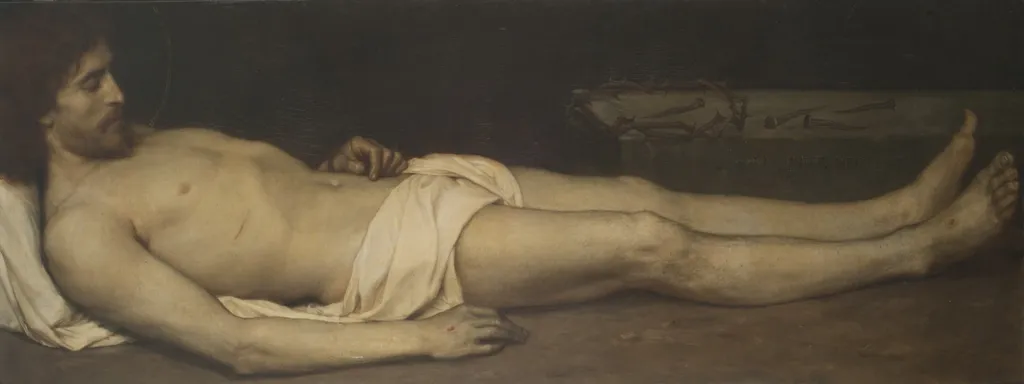
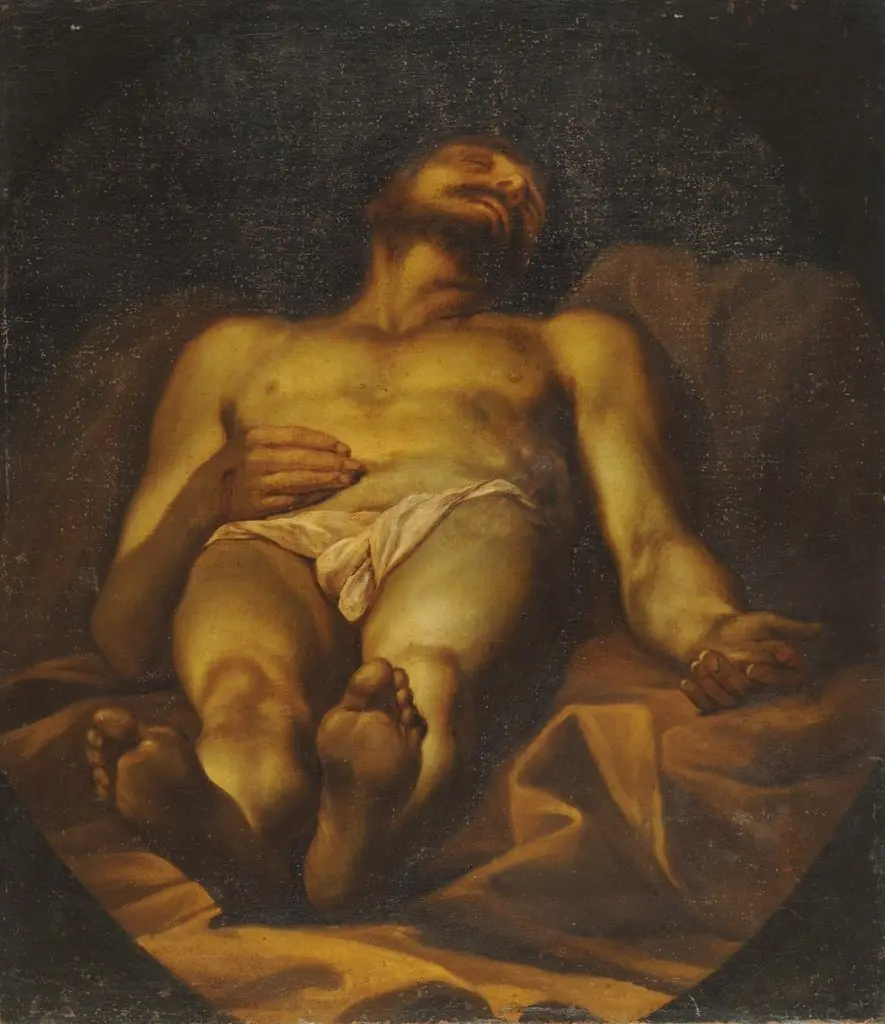
Cristo muerto is an oil painting by the Impressionist artist Jules-Joseph Meynier. It dates from 1890 and is held in the collection of the National Museum of Fine Arts, Argentina.
About this work
Overview
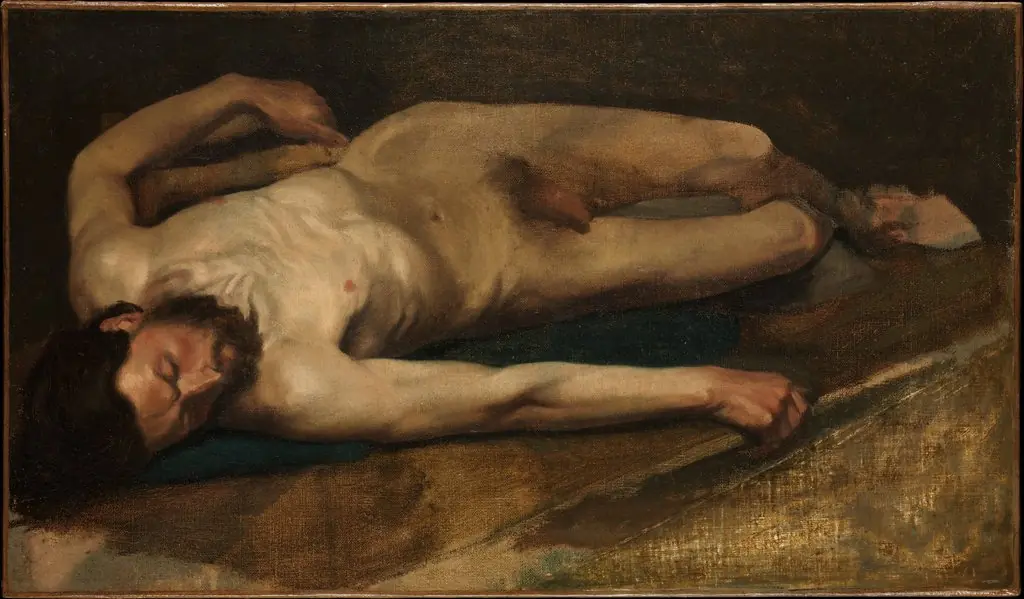
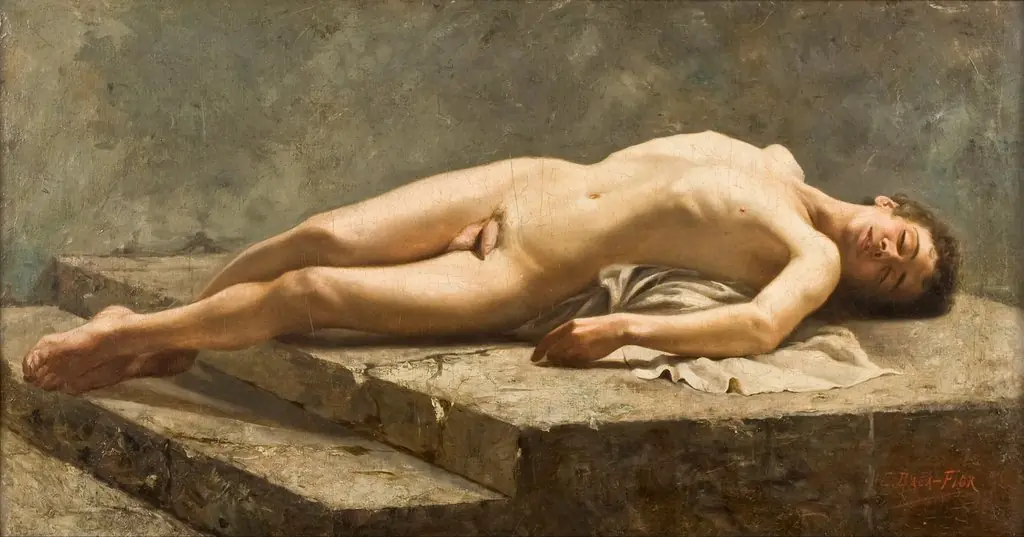
Painted in 1890 by Jules-Joseph Meynier, this oil on canvas work portrays a lifeless male figure in repose. The painting is part of the collection at the National Museum of Fine Arts in Buenos Aires. Its restrained palette and focused composition emphasize the physicality and stillness of the subject, evoking a quiet, meditative atmosphere without overt religious symbolism.
Subject & Meaning
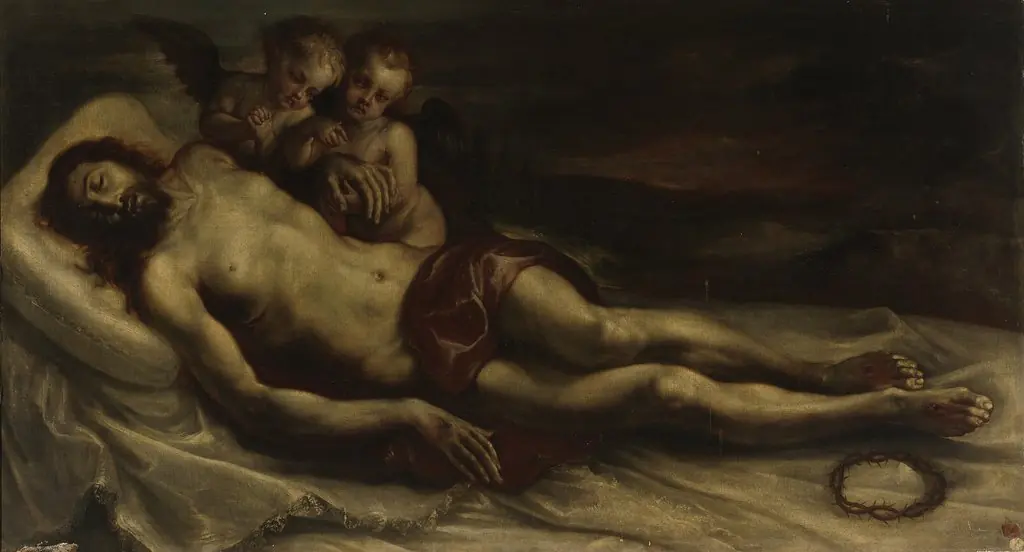
The figure lies nude except for a modest drapery, his posture suggesting surrender rather than suffering. The somber expression and limp limbs convey absence of life, inviting reflection on mortality. Though reminiscent of Christological imagery, the work avoids explicit iconography, instead presenting a universal human form in repose, open to interpretations beyond specific doctrine.
Technique & Style
Meynier employs chiaroscuro to model the body with subtle gradations of light and shadow, enhancing its three-dimensionality against a near-black background. The brushwork is controlled and smooth, avoiding dramatic flourishes. The lighting isolates the figure, directing focus to the contours of the torso and limbs, while the sparse background elements suggest an undefined, silent space.
History & Provenance
Completed in 1890, the painting entered the collection of the National Museum of Fine Arts in Buenos Aires, where it remains today. Its acquisition reflects late 19th-century interest in academic realism and humanist themes. No record of prior ownership or exhibition history beyond its institutional custody is widely documented.
Context
Created during a period when European academic art still dominated institutional collections, the work aligns with contemporary interest in anatomical precision and emotional restraint. While religious subjects were common, Meynier’s approach—devoid of narrative or symbolic props—reflects a broader trend toward secularized depictions of the human form in mourning or repose.
Legacy
The painting endures as an example of late 19th-century academic realism in Latin American collections. It contributes to the museum’s representation of European-trained artists working within classical traditions. Its quiet intensity continues to engage viewers through its understated treatment of death, avoiding sentimentality in favor of formal clarity.
Artist & collection

Museum
National Museum of Fine Arts, Argentina
Continue through works from the same source collection.