Artwork
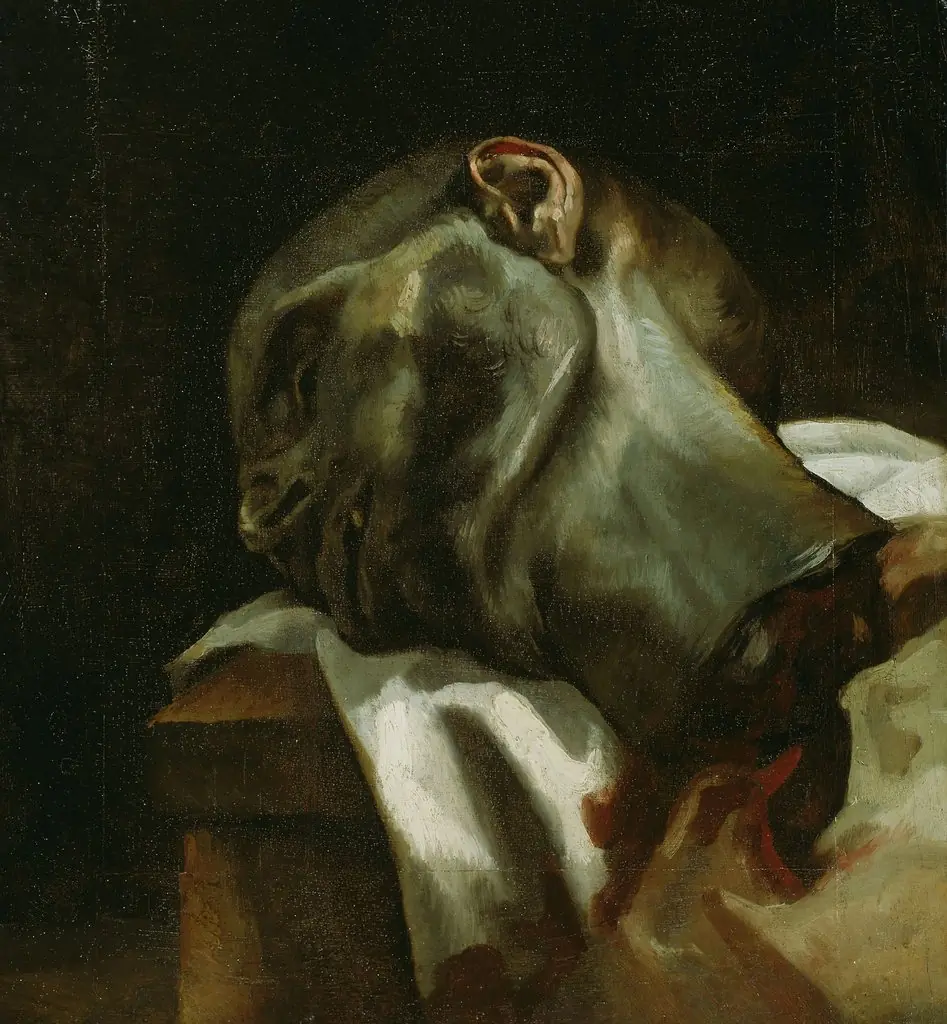
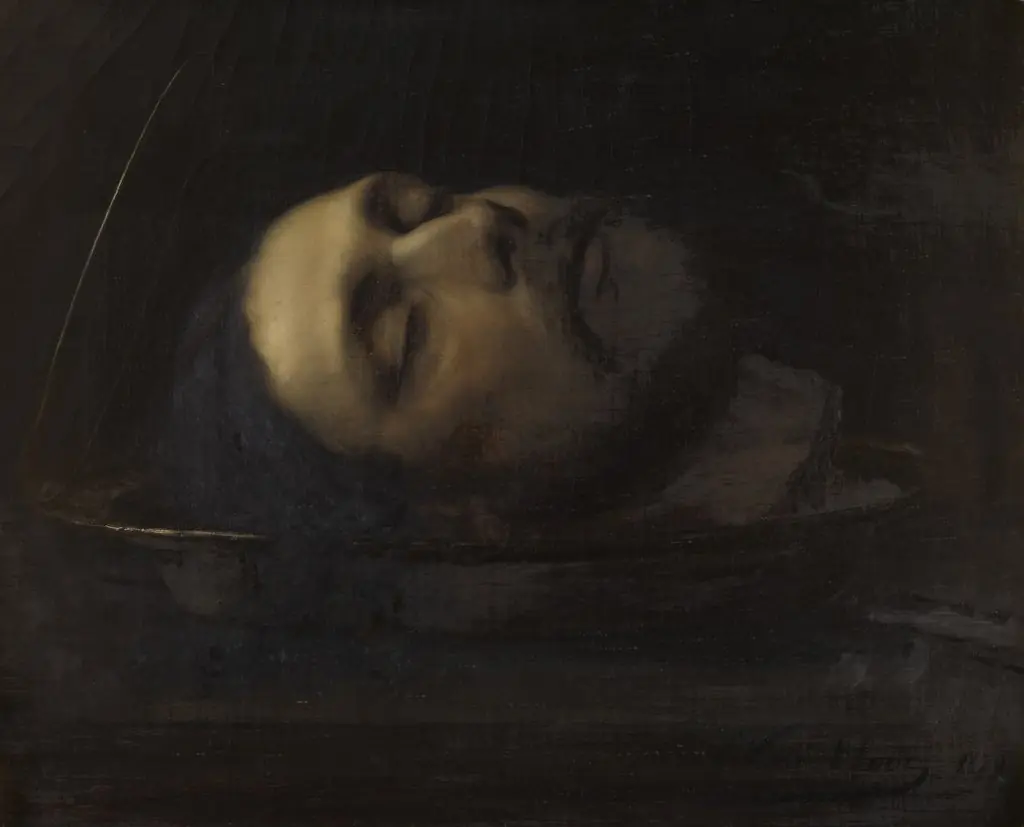
Head of a Guillotined Man
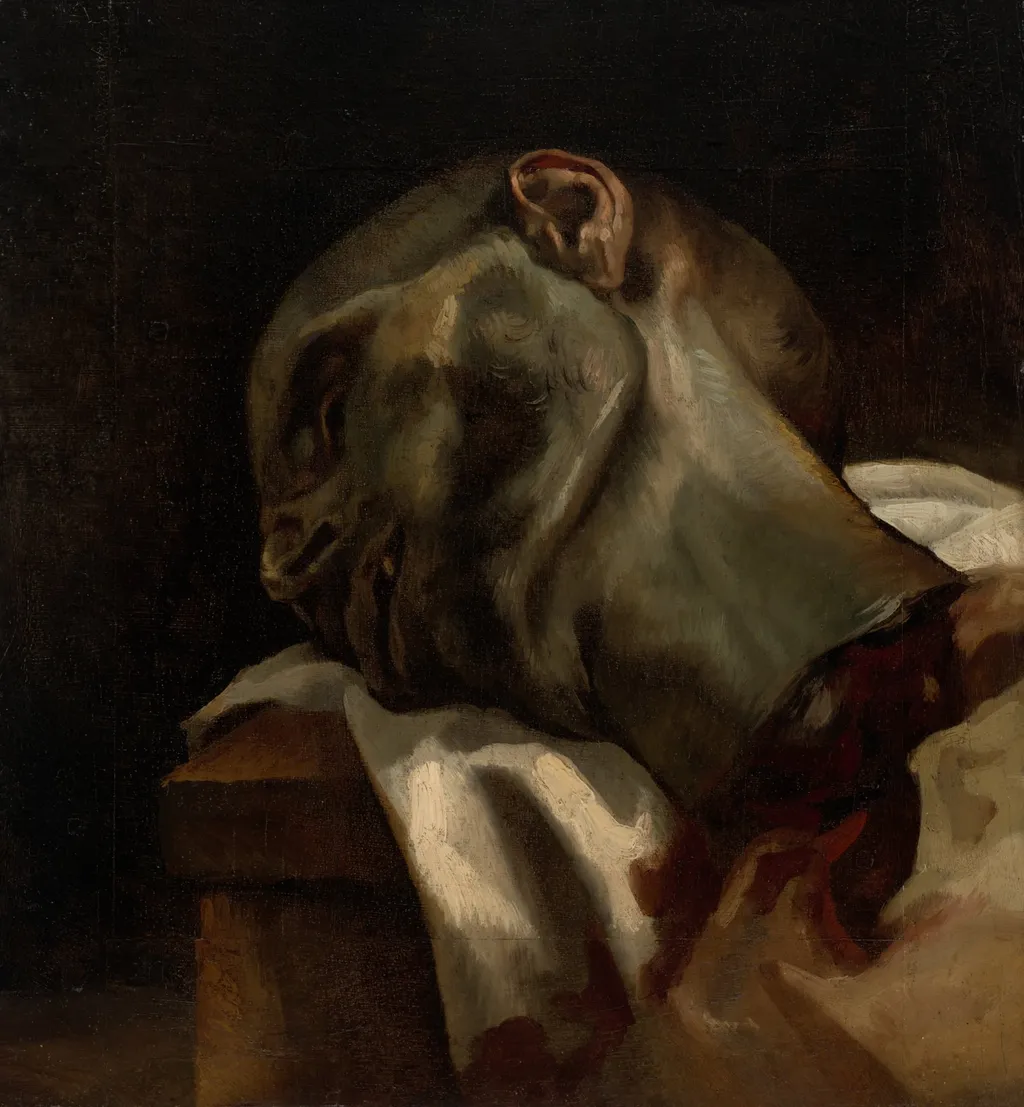
Head of a Guillotined Man is an oil painting by the Romanticist artist Théodore Géricault. It dates from 1818 and is held in the collection of the Art Institute of Chicago.
About this work
Overview
Théodore Géricault’s oil on panel presents a severed head positioned on a blood‑stained cloth atop a wooden table. The figure is rendered in muted gray tones, emphasizing the lifelessness of the subject. The composition isolates the anatomical form, inviting close observation of the effects of post‑mortem change without surrounding narrative elements.
Subject & Meaning
The work depicts a decapitated head, most plausibly that of a condemned criminal, reflecting the public executions carried out by guillotine in early‑19th‑century France. By treating the corpse as a still‑life, Géricault juxtaposes the macabre reality of death with the traditional genre of inanimate objects, prompting contemplation of mortality and the clinical study of the human body.
Technique & Style
Géricourt executed the painting directly from a fresh specimen obtained from a local morgue, immersing himself in the sensory environment of decay. His handling of oil on panel captures subtle variations in flesh tone and the sheen of blood, while the stark chiaroscuro underscores the anatomical precision and the unsettling stillness of the scene.
History & Provenance
Created during a period when Géricault frequently visited morgues to dissect and sketch cadavers, the painting exemplifies his systematic investigation of anatomy and decomposition. The canvas remained within private collections before entering a museum inventory in the late 20th century, where it is now displayed as part of the artist’s broader oeuvre exploring violent contemporary subjects.
Own this work as a print
Artist & collection
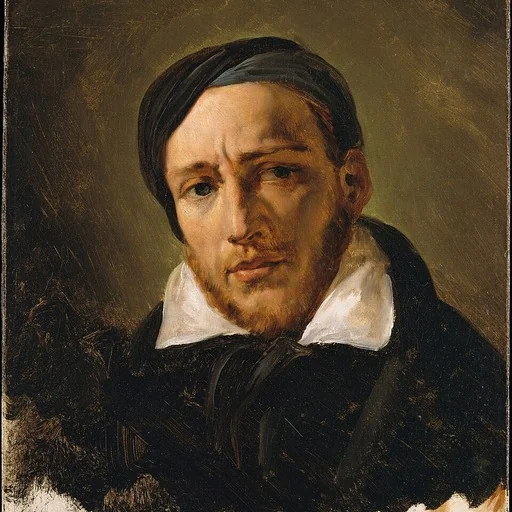
Artist
Jean-Louis André Théodore Géricault (French: ; 26 September 1791 – 26 January 1824) was a French painter and lithographer.