Artwork
Family Promenade in the Park
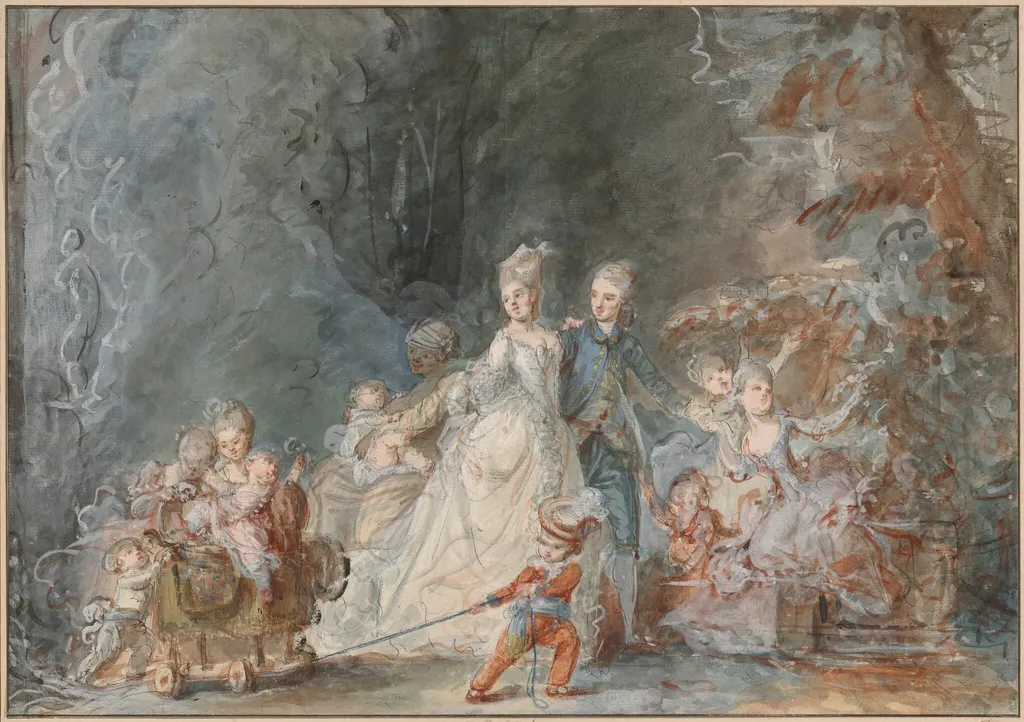
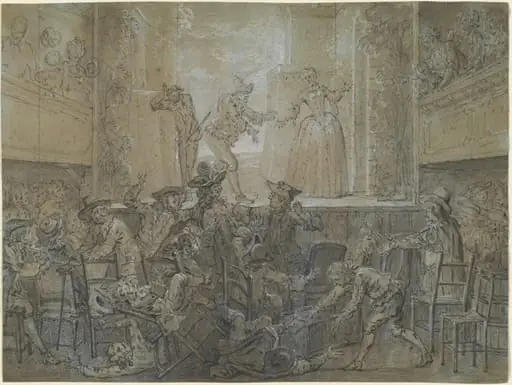
Family Promenade in the Park is an ink drawing by the Romanticist artist Pierre-Antoine Baudouin. It dates from 1766 and is held in the collection of the National Gallery of Art.
About this work
Overview
Baudouin, trained in the Rococo tradition of his father-in-law François Boucher, used these materials to capture a quiet moment of domestic life.
Created in 1766 by Pierre-Antoine Baudouin, this drawing combines gouache, pen and ink, and faint black chalk on laid paper. Baudouin, trained in the Rococo tradition of his father-in-law François Boucher, used these materials to capture a quiet moment of domestic life. The work belongs to the genre of intimate genre scenes popular among French aristocratic patrons, emphasizing refinement over grand narrative.
Subject & Meaning
The scene portrays a bourgeois family strolling through a cultivated park, dressed in period attire that distinguishes adult formality from children’s simpler garments. Their relaxed postures and subtle interactions suggest harmony and leisure, reflecting ideals of familial affection valued in mid-18th-century France. The setting, neither pastoral nor exotic, grounds the image in everyday experience rather than myth or allegory.
Technique & Style
Baudouin employed gouache for its opaque, luminous quality, layered over delicate ink lines and faint chalk underdrawings to define forms and shadows. The precision of the penwork captures fabric textures and facial expressions with restraint, while the chalk adds softness to foliage and sky. The composition is balanced yet informal, avoiding theatricality in favor of naturalistic detail and tonal subtlety.
History & Provenance
The drawing was produced during Baudouin’s active years in Paris, when he frequently illustrated scenes of upper-class domesticity for private collectors. Though its early ownership is undocumented, it entered institutional collections in the 19th century, likely through the dispersal of French private holdings after the Revolution. Its survival reflects continued appreciation for Rococo-era genre drawings.
Context
In 1766, France’s artistic climate still favored Rococo elegance, though Enlightenment ideals were beginning to shift tastes toward sincerity and nature. Baudouin’s work aligns with contemporaries who depicted private life with grace, avoiding the moralizing tone of later Neoclassicism. The park setting, a symbol of cultivated nature, resonated with emerging urban elites seeking refined leisure away from courtly formality.
Legacy
Though Baudouin is not widely known today, this drawing exemplifies the quiet persistence of Rococo sensibility into the late 18th century. It stands as a record of how middle- and upper-class families visualized their own domestic ideals. The work’s preservation offers insight into the transition between ornamental art and the more earnest realism that would follow in the decades after his death.
Artist & collection
Artist
Pierre-Antoine Baudouin (French pronunciation: ; 17 October 1723 – 15 December 1769) was a French painter. He worked in the same Rococo style of his father-in-law, François Boucher.

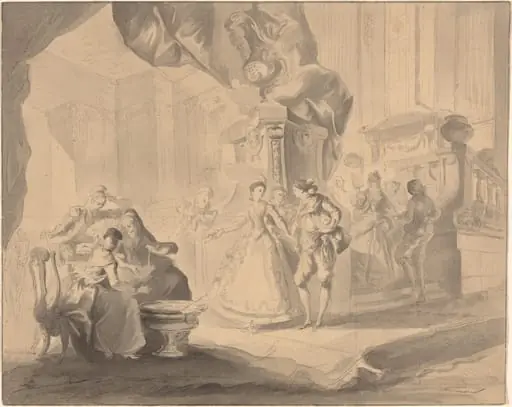 Dance in a Palace
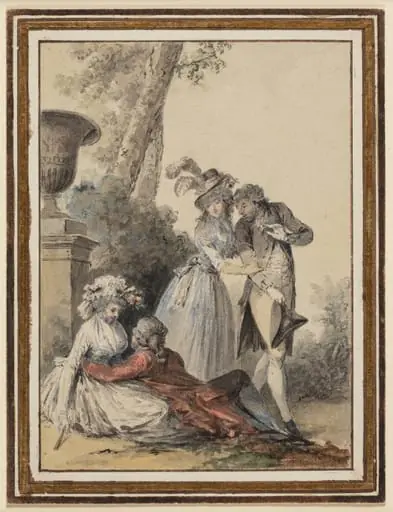 To galante par i en have, det ene liggende, det andet stående
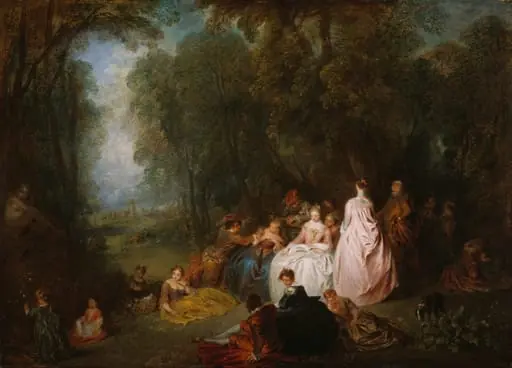 Fête champêtre (Pastoral Gathering)
 Dance in a Village Square
 Loaned Kiss
 Fête Champêtre
 Landscape with peasants
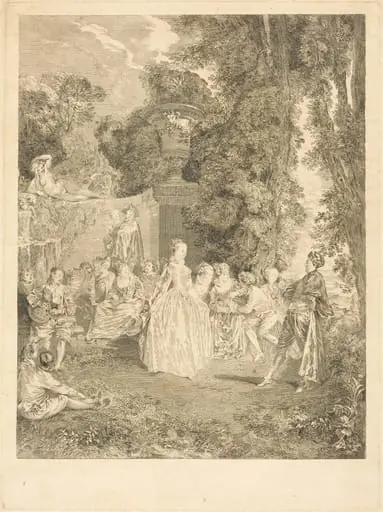 Fetes venitiennes
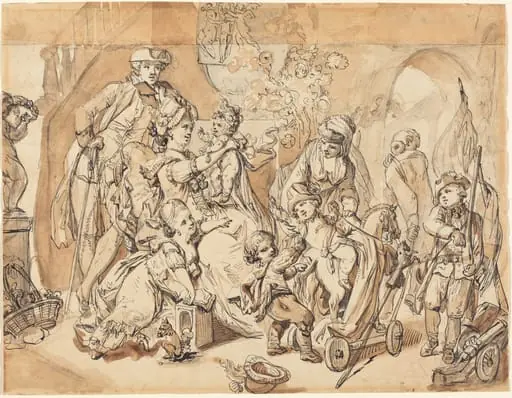 The Happy Family with Children Playing
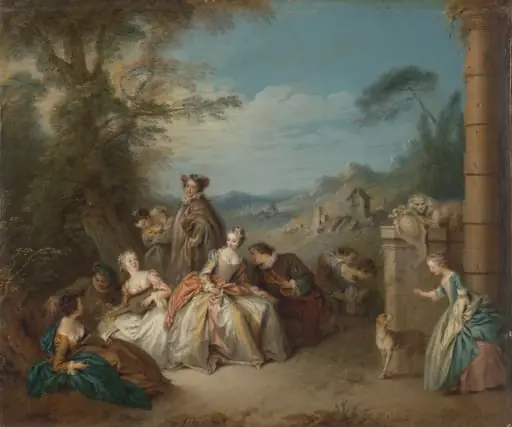 Fête galante in a Landscape
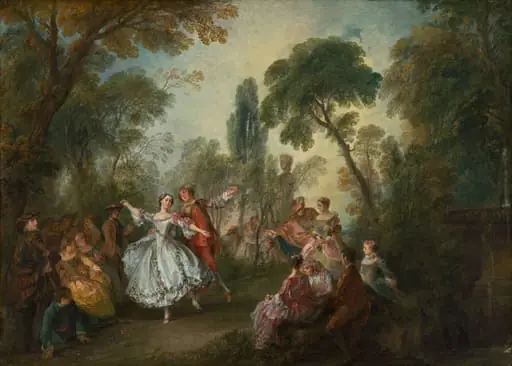 La Camargo Dancing
 The Scene with the Tall Baguenodière