Artwork
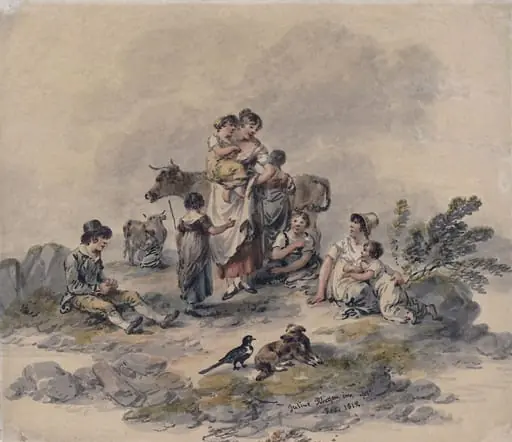
Landscape with peasants
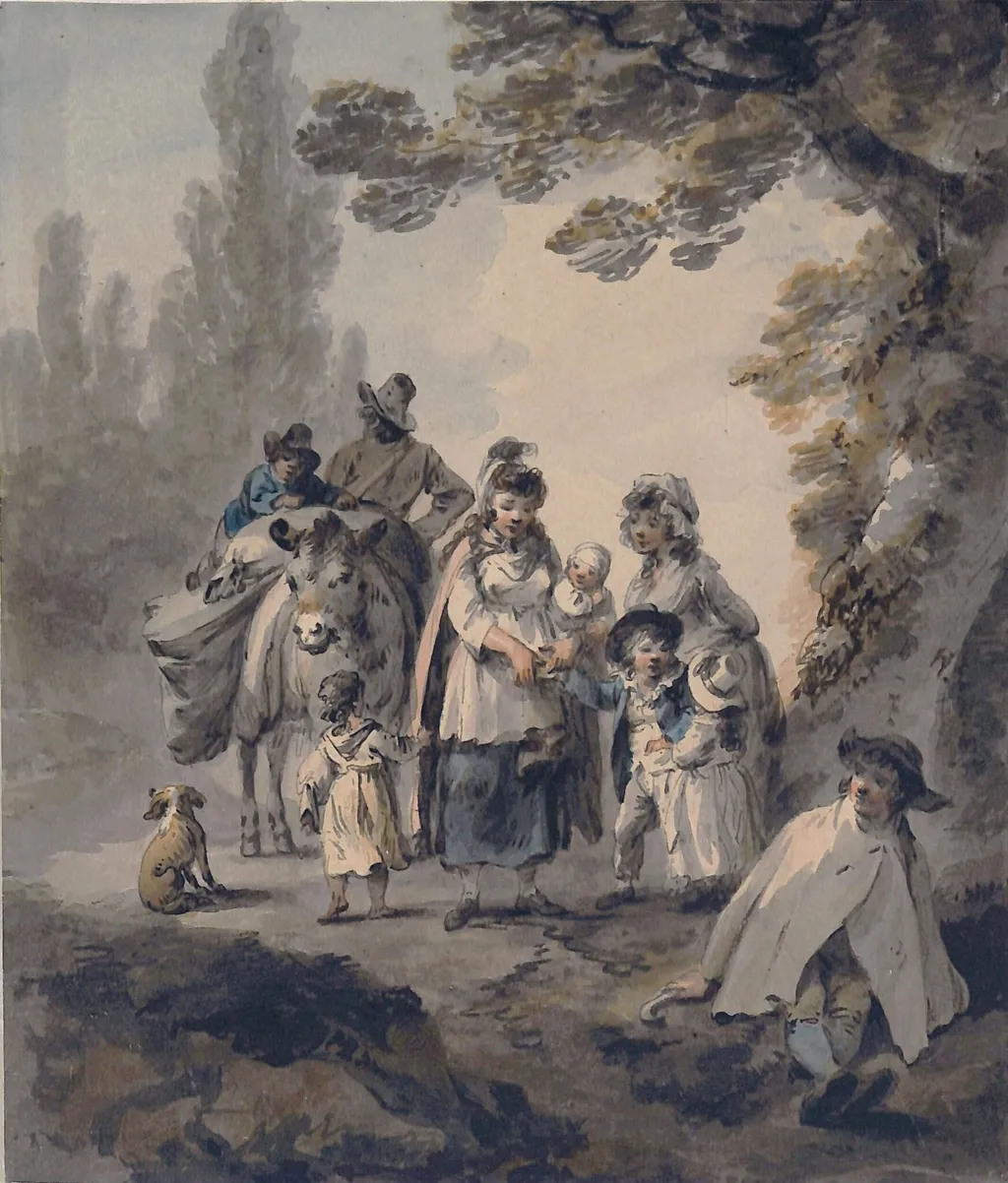
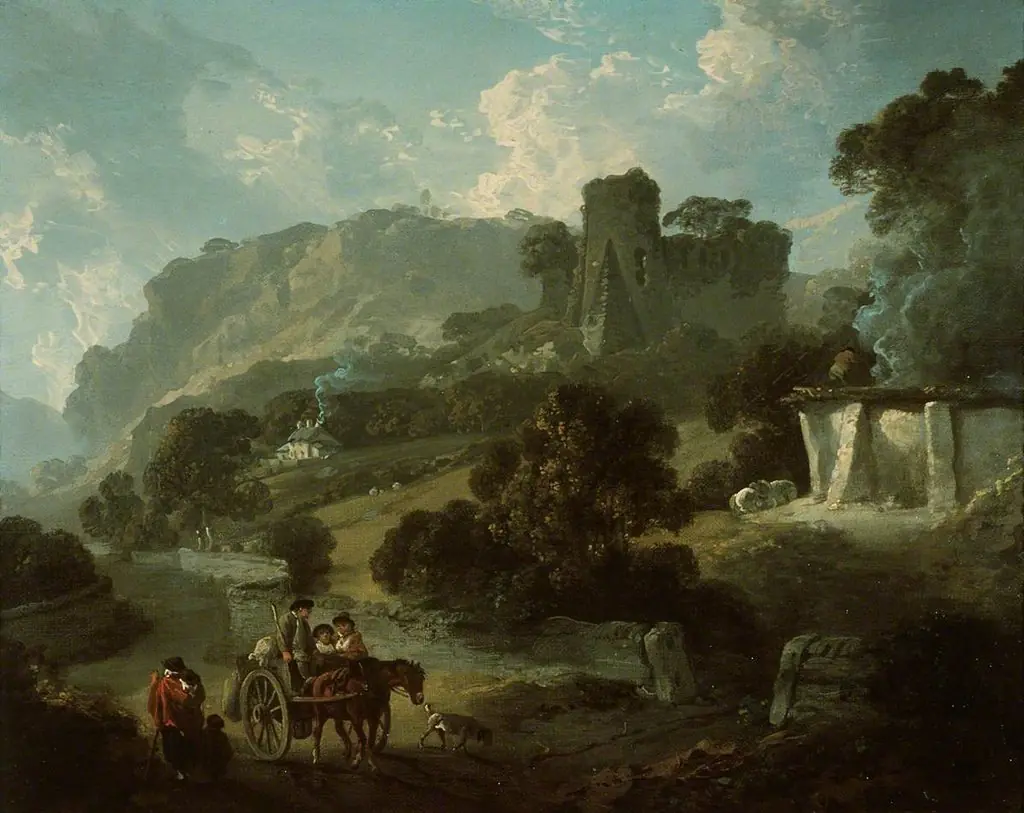
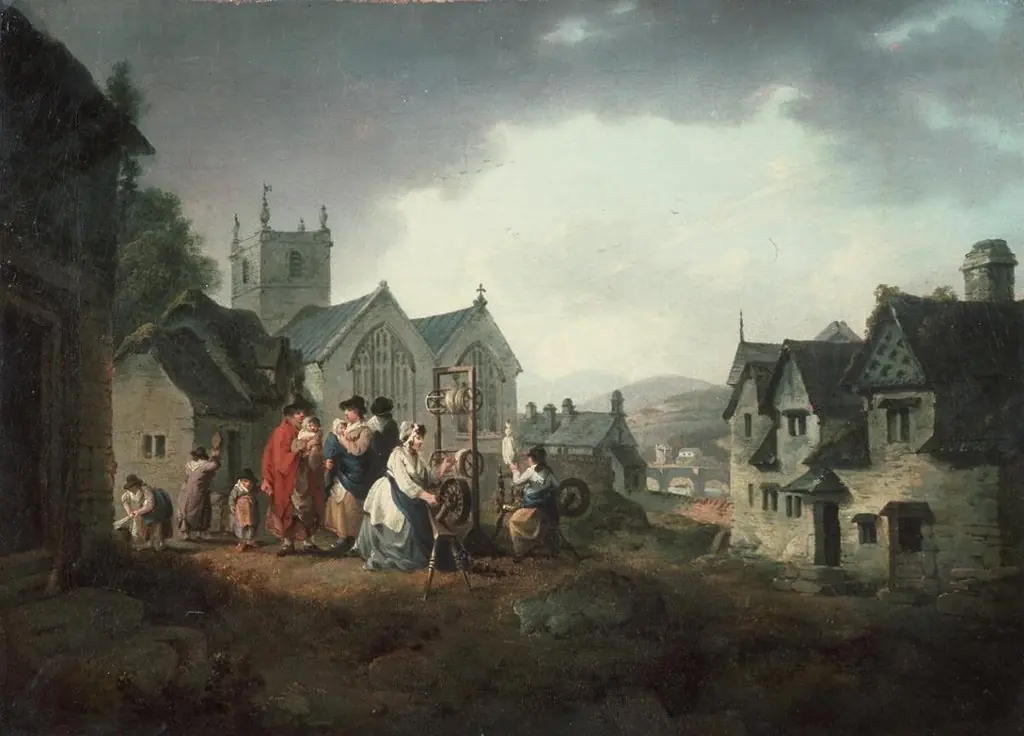
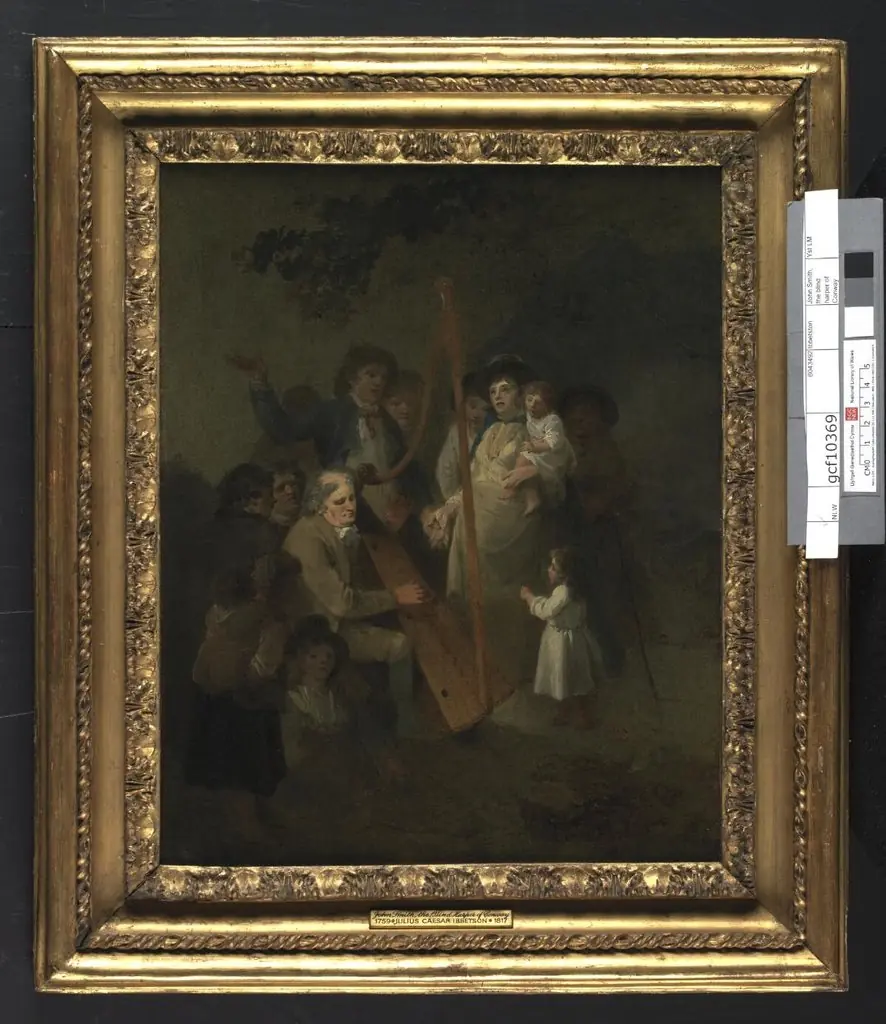
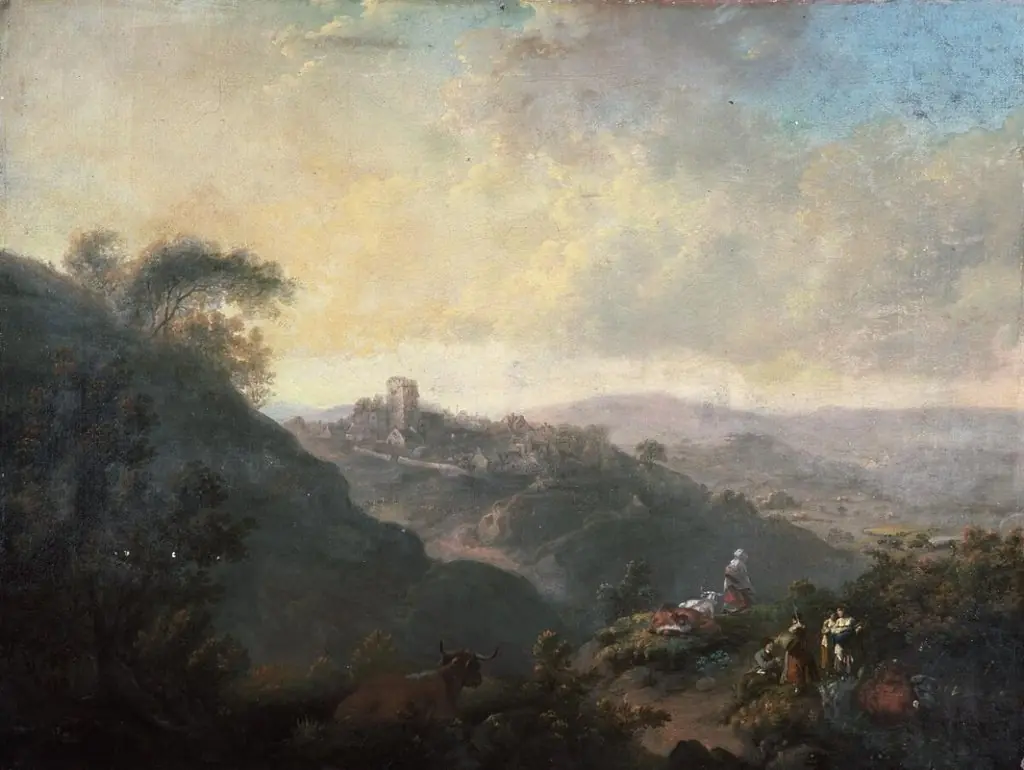
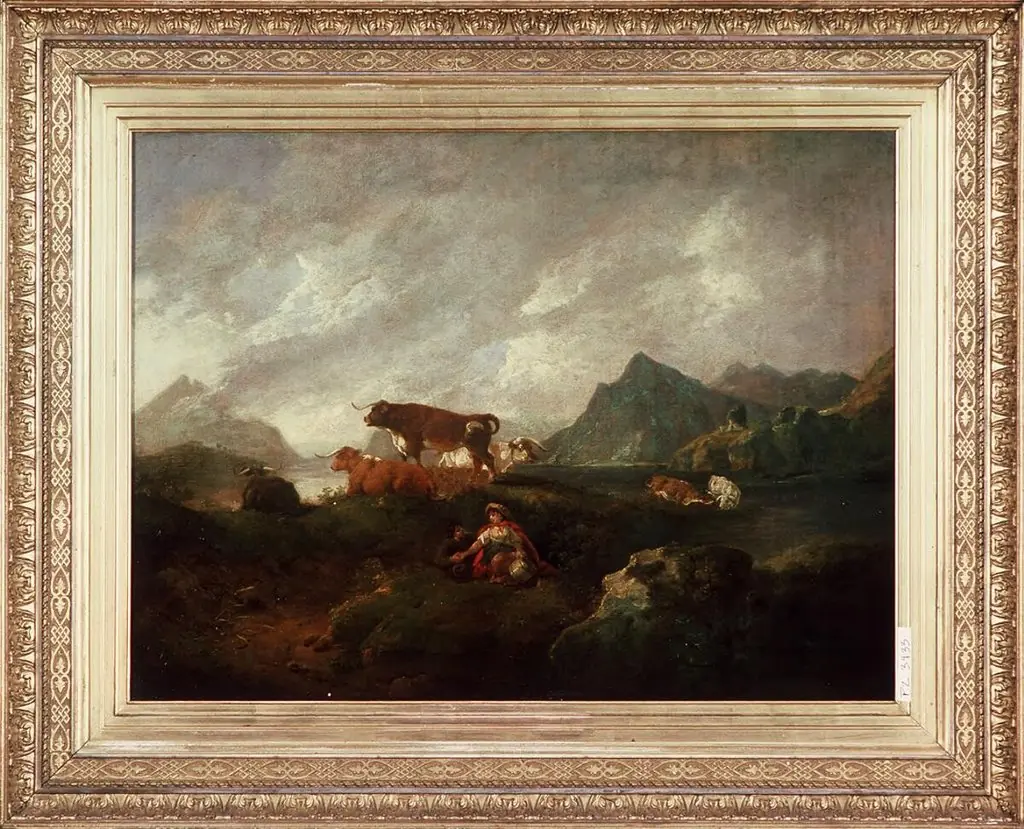
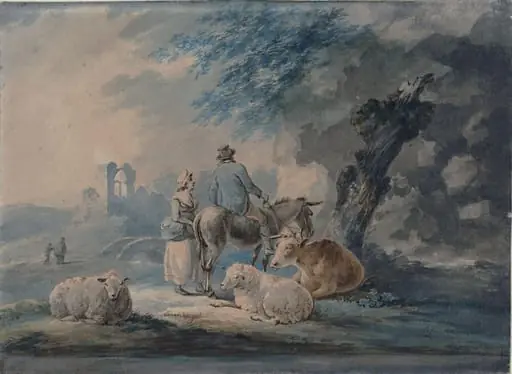
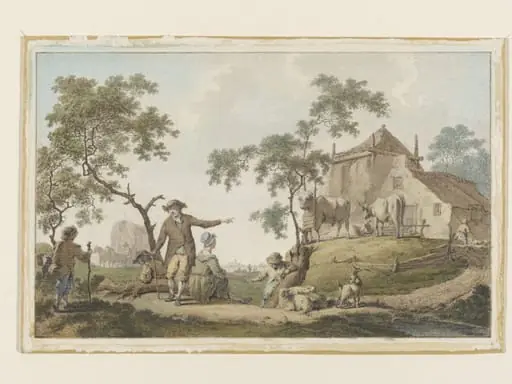
Landscape with peasants is a watercolor work on paper by the Rococo painting artist Julius Caesar Ibbetson. It dates from 1750 and is held in the collection of the Victoria and Albert Museum. This watercolour, attributed to Ibbetson and dated circa 1750, captures a quiet rural procession along a dirt path.
About this work
Overview
The medium’s transparency and lightness suit the scene’s subdued tone, reflecting a growing interest in everyday life during the mid-18th century.
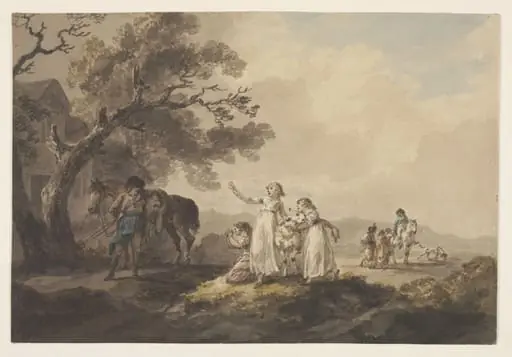
This watercolour, attributed to Ibbetson and dated circa 1750, captures a quiet rural procession along a dirt path. Eight figures, a cow, and a dog move through a modest landscape under a hazy sky. The composition is unembellished, focusing on ordinary movement rather than dramatic action. The medium’s transparency and lightness suit the scene’s subdued tone, reflecting a growing interest in everyday life during the mid-18th century.
Subject & Meaning
The scene portrays a family unit traveling with modest possessions: a man rides a donkey bearing sacks, while a woman and children follow. One child holds a dog’s leash, another rests on the ground. No narrative climax is suggested; instead, the image conveys routine rural life. The absence of idealization implies an observational intent, valuing the quiet dignity of labor and domestic movement over spectacle.
Technique & Style
Executed in watercolour, the work employs loose, fluid brushwork that suggests rather than defines forms. Colors are muted—earthy browns, faded textiles, and pale skies—enhancing the sense of atmosphere. The sketchlike quality implies immediacy, as if the scene was recorded on the spot. This approach aligns with contemporary practices among artists seeking naturalism over polished finish.
History & Provenance
The work is attributed to Ibbetson, an artist active in the mid-18th century known for rural and topographical subjects. Its survival suggests it was kept within private collections, though its early ownership remains undocumented. No major exhibitions or publications are recorded for this piece, indicating it was likely appreciated locally rather than widely disseminated.
Context
In the 1750s, British artists increasingly turned to scenes of peasant life, influenced by Dutch genre painting and Enlightenment ideals of observation. Watercolour, once used for maps and surveys, gained popularity as a medium for informal studies. This work reflects that shift—its simplicity and directness align with a broader cultural turn toward authenticity in depicting the natural world and common people.
Legacy
Though not widely reproduced or studied today, the painting exemplifies a quiet tradition of British watercolour that prioritized observation over grandeur. It contributes to the foundation of 19th-century landscape and genre watercolours, where everyday moments became legitimate subjects. Its modest scale and unadorned style continue to reflect an early commitment to seeing the ordinary with care.
Artist & collection
Artist
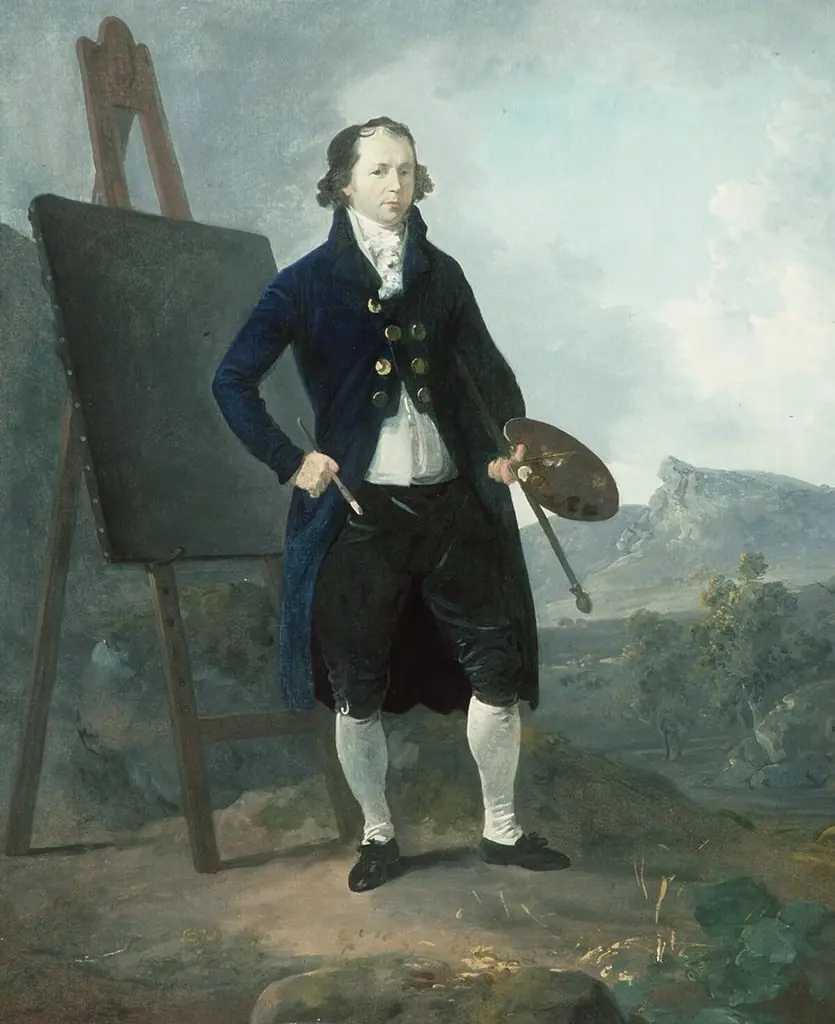
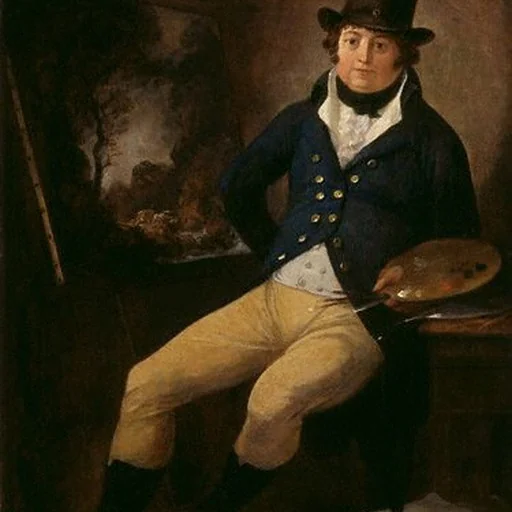
Julius Caesar Ibbetson (29 December 1759 – 13 October 1817) was a British 18th-century landscape and watercolour painter.