Artwork
Amiens Cathedral
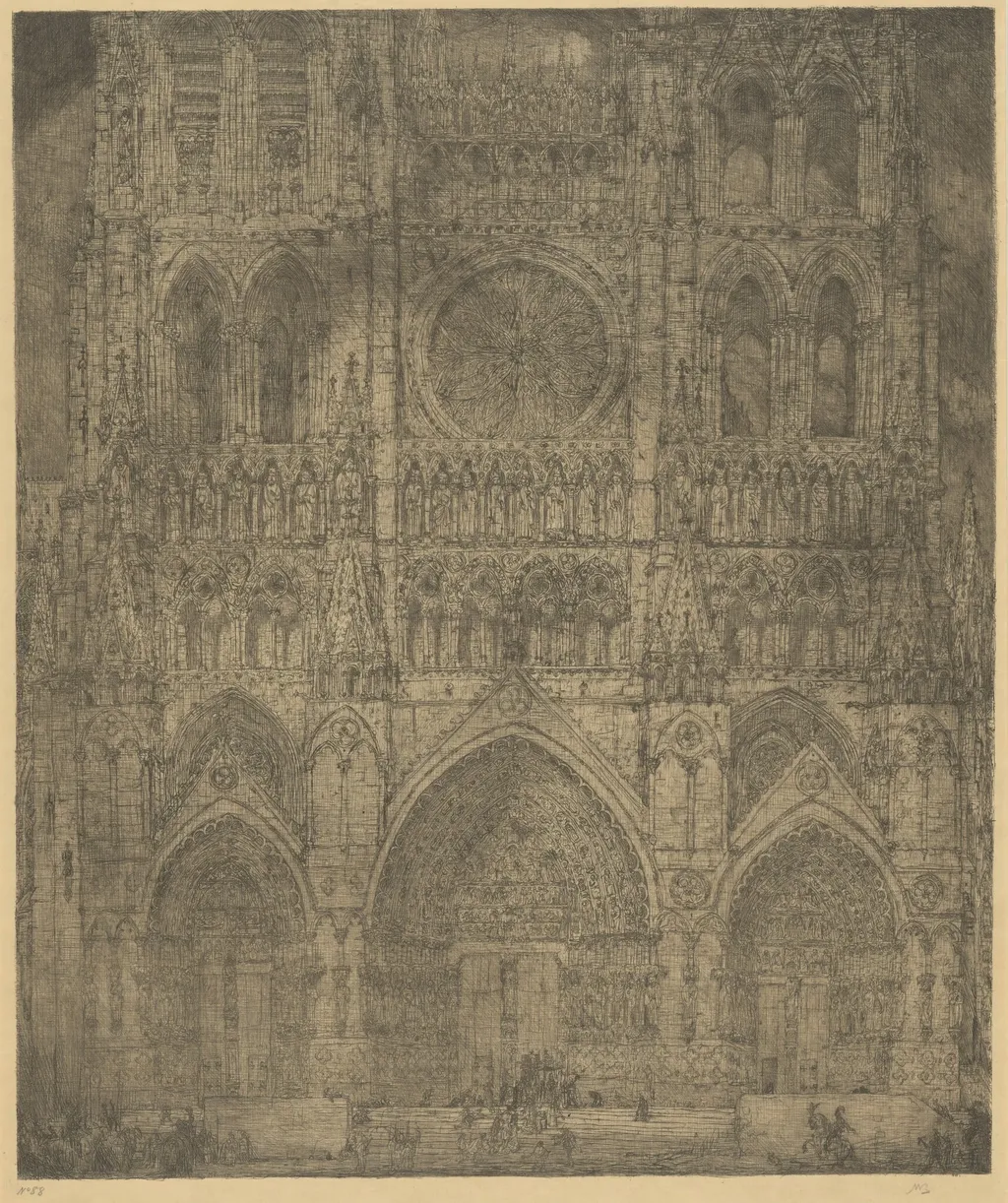
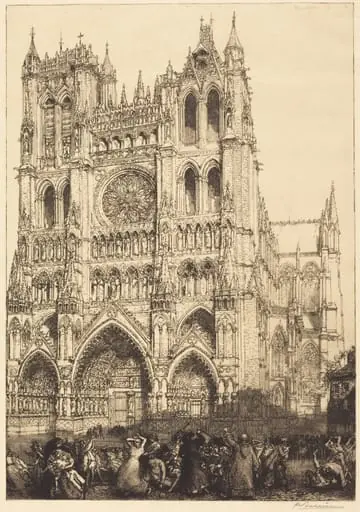
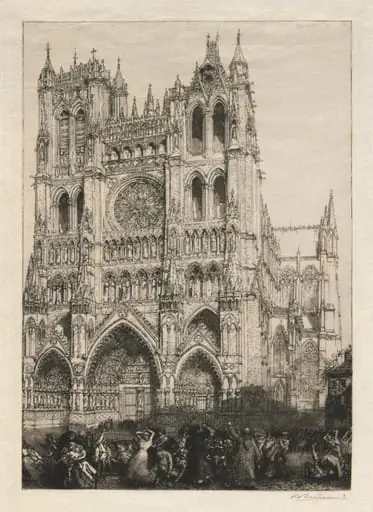
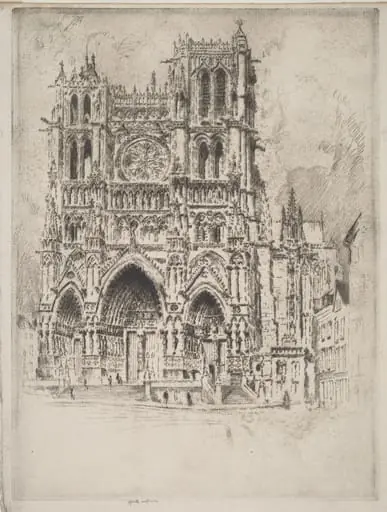
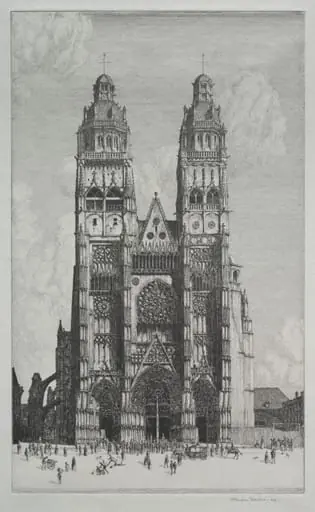
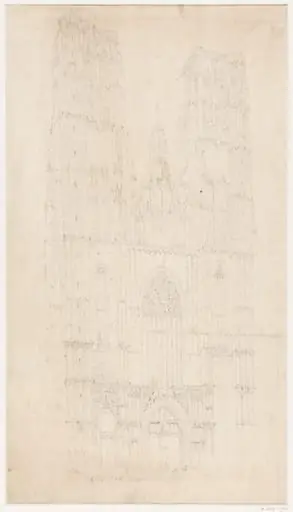
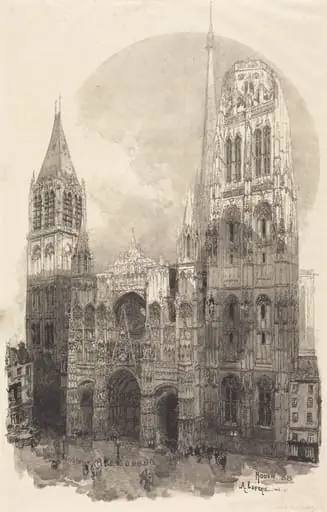
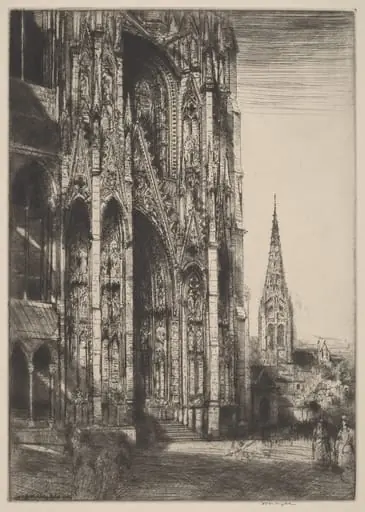
Amiens Cathedral is an ink print by the Impressionist artist Marius Alexander Jacques Bauer. It dates from 1890 and is held in the collection of the National Gallery of Art.
About this work
Overview
Created in 1890 by Marius Alexander Jacques Bauer, this print depicts Amiens Cathedral using etching and drypoint techniques on beige wove paper.
Created in 1890 by Marius Alexander Jacques Bauer, this print depicts Amiens Cathedral using etching and drypoint techniques on beige wove paper. The work is part of the National Gallery of Art’s collection in Washington, D.C. It captures the cathedral’s verticality and intricate stonework through fine, controlled lines, reflecting Bauer’s interest in architectural detail and the atmospheric qualities of Gothic structures.
Subject & Meaning
The subject is Amiens Cathedral, a major Gothic structure in northern France known for its height and sculptural richness. Bauer’s focus on its façade emphasizes its ornate portals, towering spires, and clustered windows. The print conveys a sense of historical weight and quiet reverence, not as a monument to power but as a quiet testament to centuries of craftsmanship and devotion.
Technique & Style
Bauer employed etching and drypoint to render the cathedral’s surface with precision. Etching allowed for fine, even lines across the plate, while drypoint added dense, textured shadows through burr created by scratching directly into the metal. The result is a rich interplay of light and depth, with every carving, gargoyle, and arch rendered in meticulous, almost tactile detail.
History & Provenance
The print was made during Bauer’s period of active travel and study in Europe, when he documented significant architectural sites. It entered the National Gallery of Art’s collection in the 20th century, likely through a donation or acquisition focused on European graphic arts. Its preservation reflects early interest in printmaking as a medium for architectural record and aesthetic study.
Context
In the late 19th century, artists across Europe turned to historic architecture as subjects, responding to industrialization and a renewed appreciation for pre-modern craftsmanship. Bauer’s work aligns with this trend, capturing Gothic forms not as relics but as living expressions of structural harmony. His technique echoes the precision of 18th-century topographical prints, yet infuses them with a more intimate, expressive hand.
Legacy
Bauer’s etching of Amiens Cathedral remains a quiet example of how printmaking could convey architectural grandeur without theatricality. It contributes to a broader corpus of 19th-century European prints that documented sacred spaces with scholarly care. While not widely known today, it stands as a thoughtful record of a building’s visual complexity, valued for its technical discipline and restrained observation.
Artist & collection