Artwork
Gothic Night
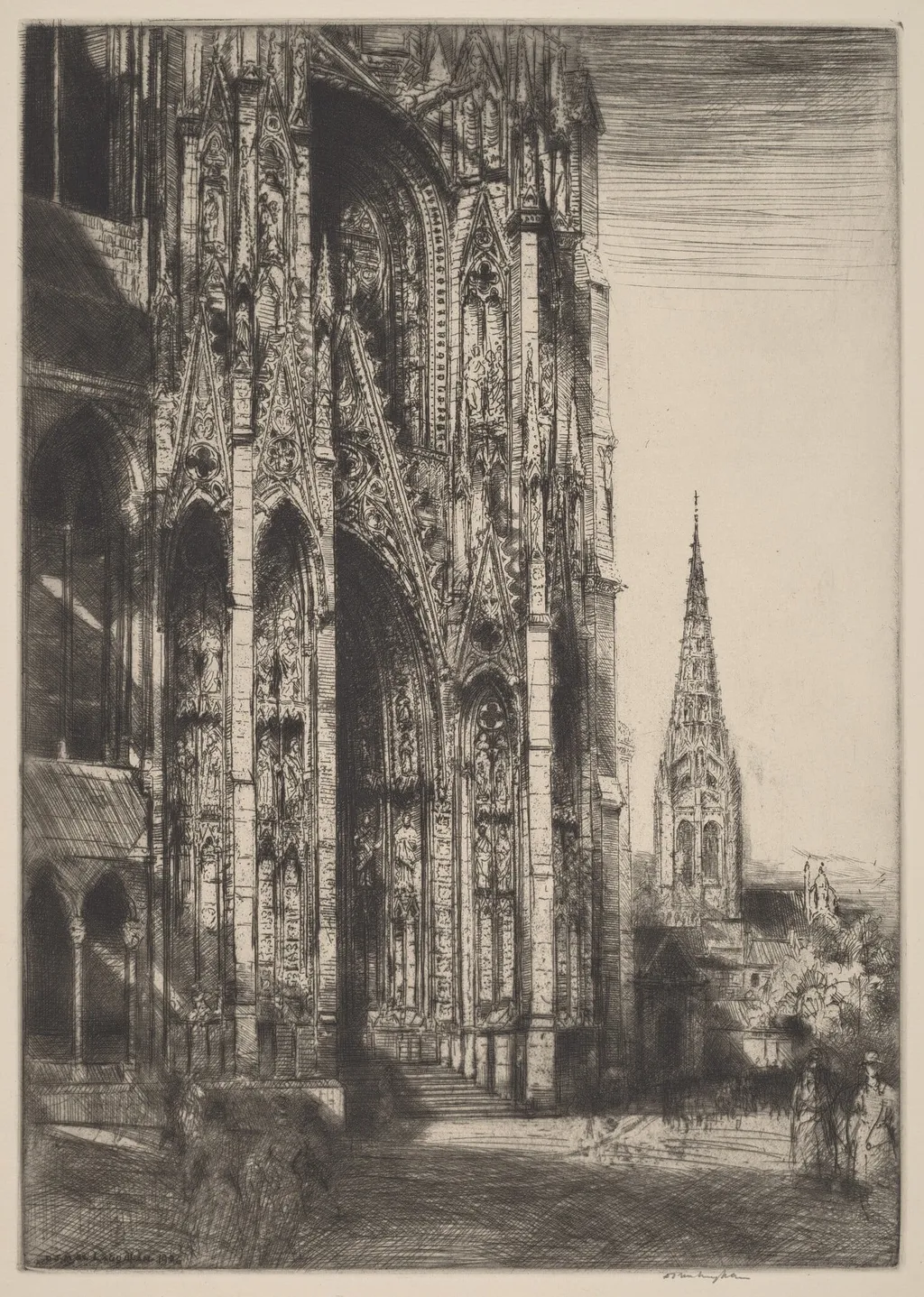
Gothic Night is an ink print by Donald Shaw MacLaughlan. It dates from 1926 and is held in the collection of the National Gallery of Art.
About this work
Overview
The composition centers on the ornate door, flanked by a slender spire rising above clustered rooftops and foliage, evoking a quiet, contemplative atmosphere.
Gothic Night is a 1926 black-and-white print by Donald Shaw MacLaughlan, executed in etching and drypoint. It depicts a towering cathedral entrance under nightfall, rendered with intricate line work that emphasizes contrast between shadow and light. The composition centers on the ornate door, flanked by a slender spire rising above clustered rooftops and foliage, evoking a quiet, contemplative atmosphere.
Subject & Meaning
The print focuses on a Gothic cathedral door, its surface densely carved with abstracted forms resembling twisted cords and pointed motifs. Tiny figures are embedded within the ornamentation, suggesting hidden narratives or spiritual presence. The nocturnal setting enhances the mystery, transforming architecture into a symbolic threshold between the earthly and the unseen, without overt religious narrative.
Technique & Style
MacLaughlan employed etching and drypoint to achieve fine, varied lines—etching for delicate contours, drypoint for rich, fuzzy blacks. The texture of the carvings mimics lace in complexity but retains a rough, hand-wrought quality. Aquatint may have been used to deepen tonal gradients, enhancing the sense of depth and nightfall. The high contrast between dark forms and pale background heightens the architectural drama.
History & Provenance
Created in 1926, Gothic Night emerged during a period of renewed interest in medieval aesthetics among early 20th-century printmakers. MacLaughlan, known for his architectural subjects, produced this work in the United States, likely as part of a series exploring Gothic forms. Its early reception was modest, and it remains primarily documented in institutional collections rather than public exhibitions.
Context
In the 1920s, American artists revisited European Gothic traditions as a counterpoint to industrial modernity. MacLaughlan’s work aligns with contemporaries who used printmaking to evoke historical weight and craftsmanship. Unlike overtly religious imagery, Gothic Night emphasizes form and mood, reflecting a secular fascination with architectural detail as a vessel for emotional resonance.
Legacy
Gothic Night endures as a quiet example of interwar American printmaking that prioritizes technical precision and atmospheric tone over narrative. It is held in several university and museum collections, valued for its refined use of line and its subtle engagement with Gothic revival themes. While not widely exhibited, it continues to inform studies of early 20th-century print techniques and architectural representation.
Artist & collection

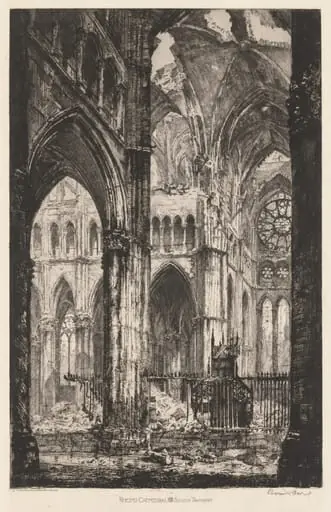 Rheims Cathedral, South Transept
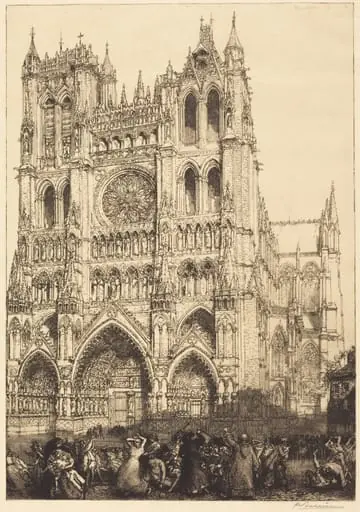 Amiens Cathedral (Cathedrale d'Amiens - Jour d'inventaire)
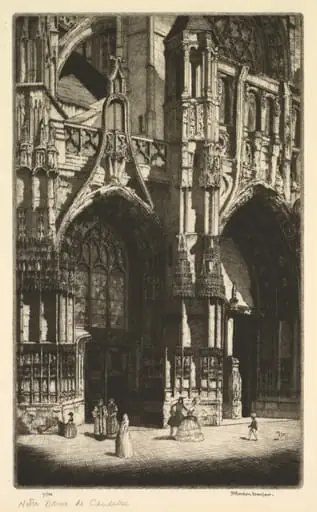 Notre Dame de Caudebec
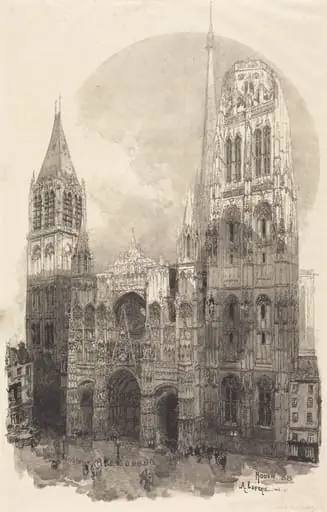 Rouen Cathedral (La Cathedral de Rouen)
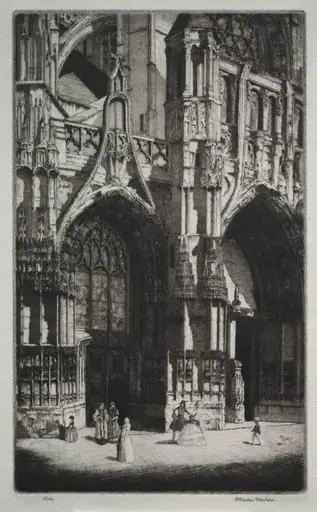 Nôtre Dame de Caudebec, France
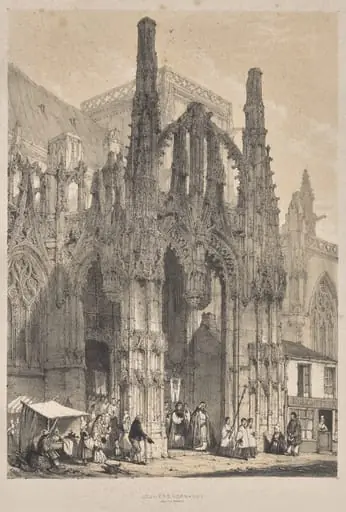 Architecture of the Middle Ages: Louviers, Normandy, South Porch
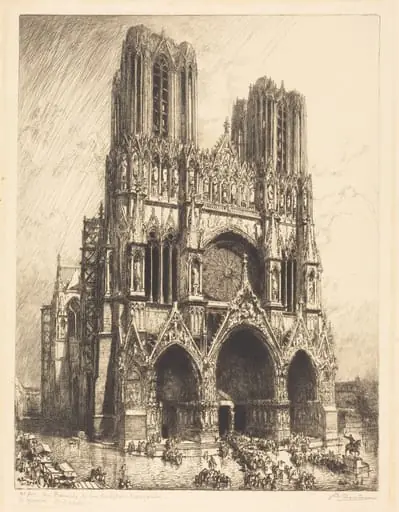 Reims Cathedral (Cathedrale de Reims)
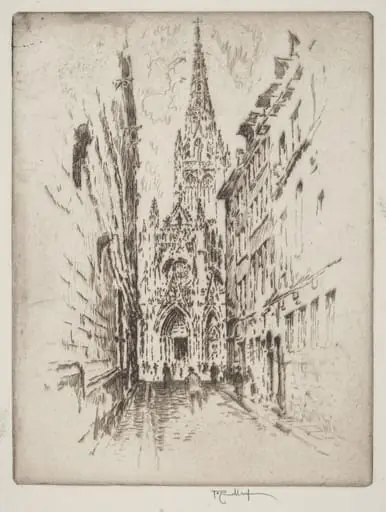 San Maclou, Rouen
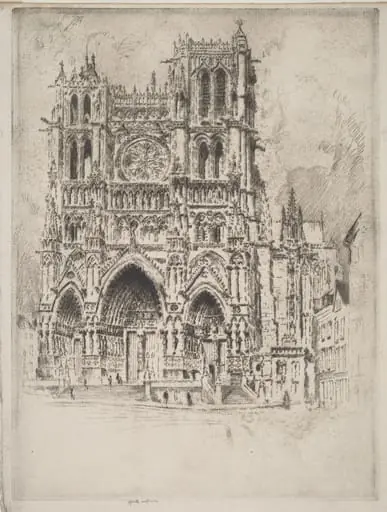 The West Front, Amiens
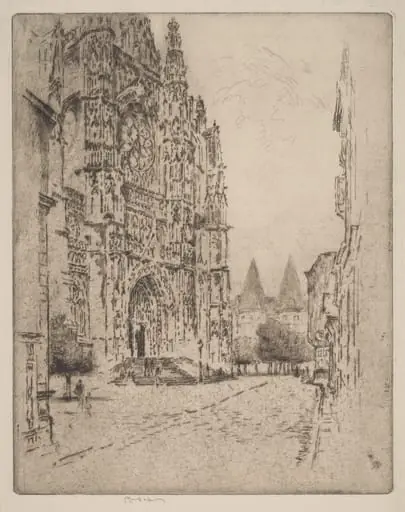 Towers of the Bishop's Palace, Beauvais
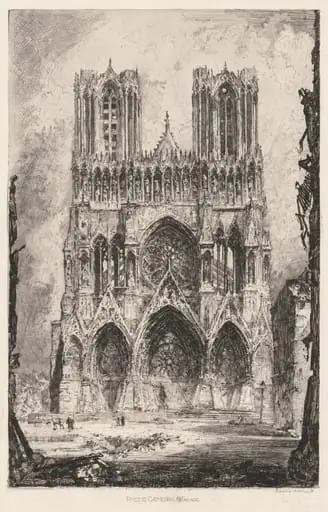 Rheims Cathedral, Facade
 The Night