Artwork
Amiens Cathedral, Inventory Day
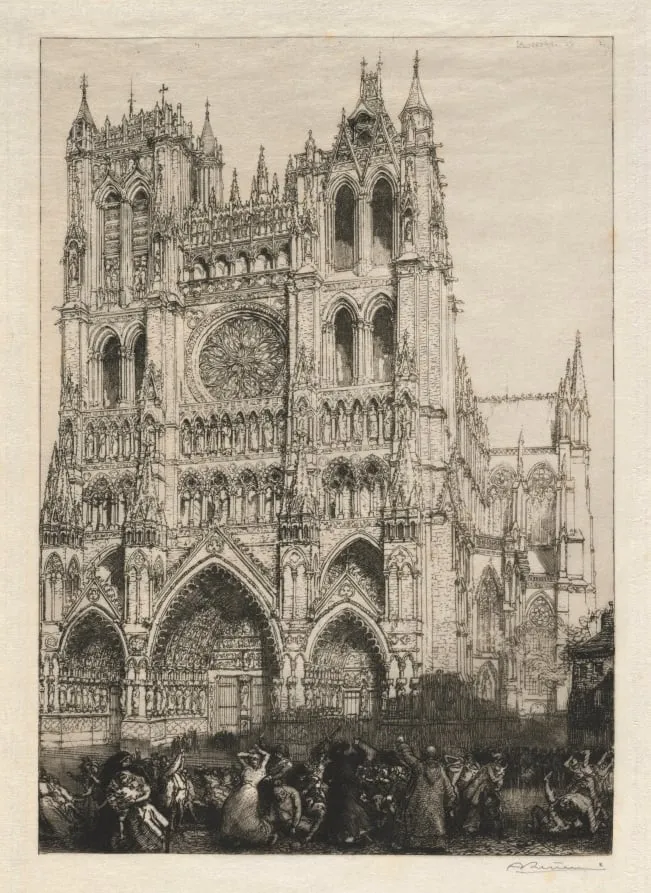
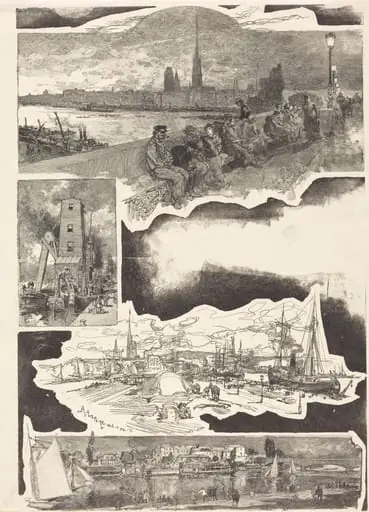
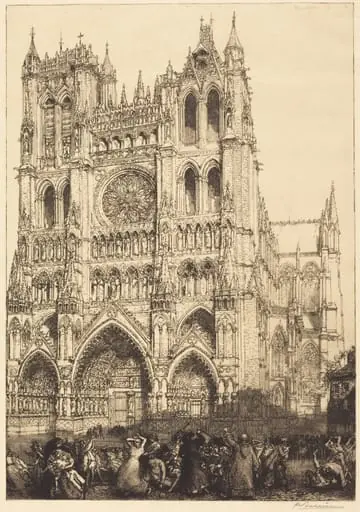
Amiens Cathedral, Inventory Day is a print by the Impressionist artist Auguste Lepère. It dates from 1887 and is held in the collection of the Cleveland Museum of Art.
About this work
The artist focused on tiny details, like the texture of the stone and the folds in the people’s clothes.
This drawing shows a grand, detailed cathedral with tall spires and pointed arches. The front has three big doors, each decorated with carvings and stained glass. Below, a crowd of people—some on horseback—stands in front of the building, looking busy.
The artist focused on tiny details, like the texture of the stone and the folds in the people’s clothes. This was made in 1887, when artists often mixed realistic scenes with everyday life.
Next, check out Realism to see how other artists showed ordinary moments with sharp precision.
Overview
Auguste Louis Lepère’s 1887 print captures Amiens Cathedral during a routine inventory, blending architectural precision with scenes of daily activity. As both a painter and printmaker, Lepère employed wood engraving to achieve fine detail, aligning with late 19th-century French artistic interests in revitalizing traditional print techniques. The work reflects his sustained focus on monumental structures and their interaction with contemporary life.
Subject & Meaning
The scene portrays the cathedral’s west façade as a backdrop to ordinary urban life: pedestrians, mounted figures, and laborers move about the plaza. Rather than idealizing the structure, Lepère situates it within a functioning society, suggesting the cathedral’s enduring role as both spiritual and civic center. The presence of people underscores its place in the rhythm of daily routines, not merely as a relic but as a living landmark.
Technique & Style
Lepère used wood engraving to render intricate textures—the roughness of stone, the folds of fabric, the delicate tracery of stained glass. His meticulous line work captures light and shadow with subtle gradations, characteristic of the revival of fine printmaking in France. The composition balances architectural grandeur with intimate human activity, demonstrating his skill in merging topographical accuracy with narrative observation.
History & Provenance
Created in 1887, the print emerged during a period of renewed interest in medieval architecture and traditional print methods in France. Lepère, active in Parisian artistic circles, produced this work as part of a broader movement to document historic buildings through detailed visual records. Its origin lies in the artist’s personal engagement with regional heritage, rather than institutional commission.
Context
In the late 1800s, French artists increasingly turned to realist depictions of architecture and public life, influenced by social observation and the rise of photography. Lepère’s print aligns with this trend, avoiding romanticization in favor of unembellished detail. His focus on Amiens Cathedral reflects broader cultural efforts to preserve and understand France’s Gothic heritage amid industrial modernization.
Legacy
Lepère’s print contributes to a body of work that documented France’s architectural heritage through precise, accessible imagery. While not widely exhibited, it remains a representative example of how printmakers bridged art and documentation in the 19th century. His technique influenced later generations interested in the intersection of craftsmanship, history, and everyday observation.
Artist & collection
Artist
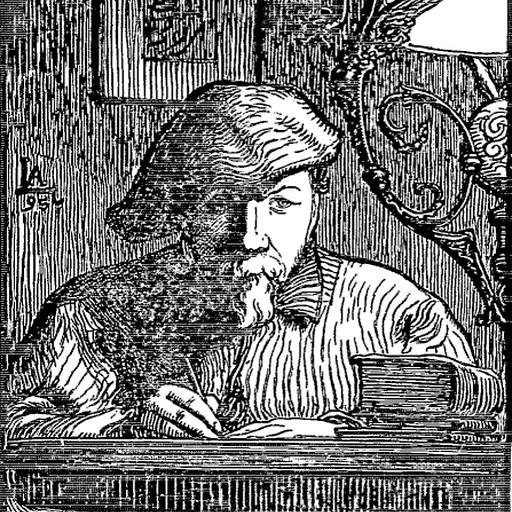
Louis-Auguste Lepère (30 November 1849 – 20 November 1918) was a French painter and etcher. Lepère is also considered a leader in the creative revival of wood engraving in Europe.