Artwork
Untitled
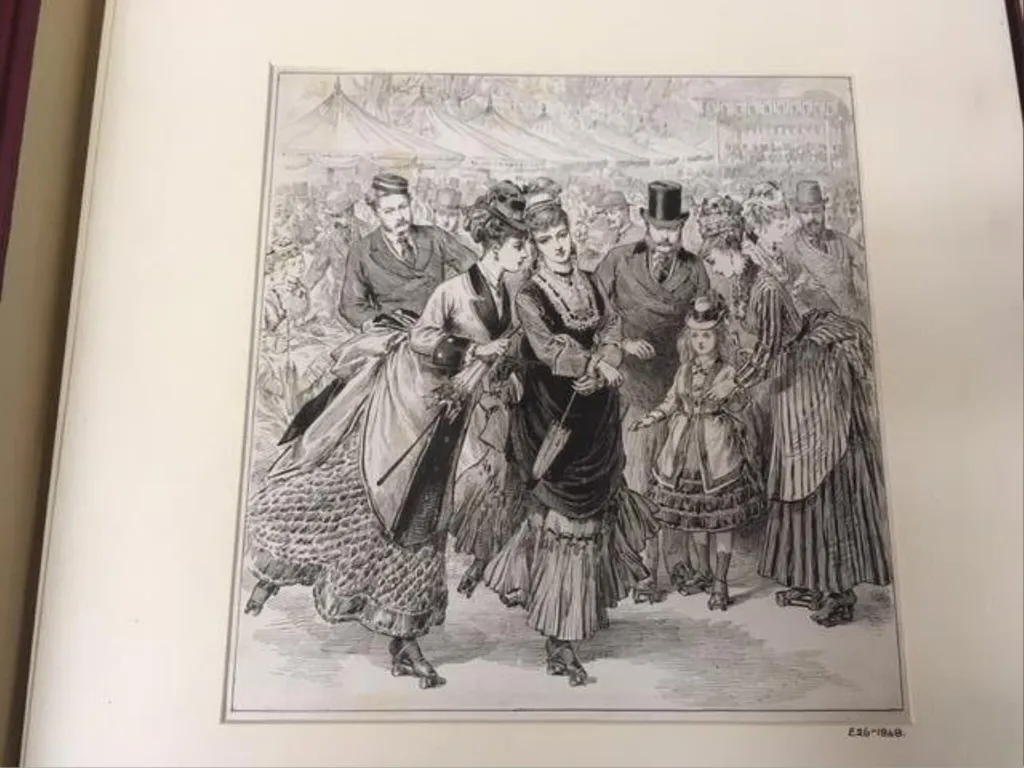
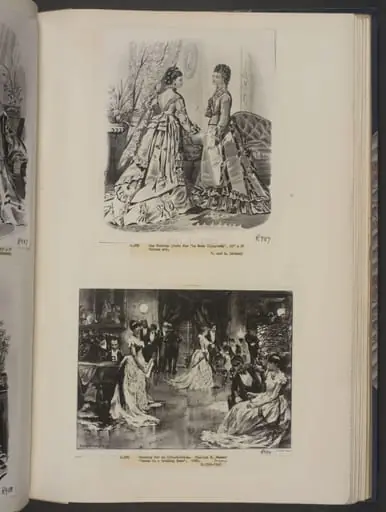
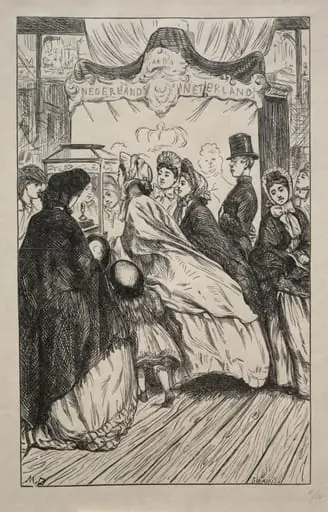
Untitled is a drawing by the Impressionist artist William Baxter. It dates from 1885 and is held in the collection of the Victoria and Albert Museum.
About this work
Overview
Created around 1885, this untitled drawing by William Baxter is part of the Victoria and Albert Museum’s collection.
Created around 1885, this untitled drawing by William Baxter is part of the Victoria and Albert Museum’s collection. It captures a moment in urban life, depicting five figures moving through a crowded public space. Executed in pencil or ink, the work emphasizes motion and social interaction rather than individual identity, reflecting the artist’s interest in everyday scenes of late Victorian society.
Subject & Meaning
The drawing portrays a group of five individuals—men in suits and top hats, women in elaborate dresses—walking in unison amid a bustling city environment. Their coordinated movement suggests a shared purpose or social ritual, possibly a leisurely outing. The anonymity of the figures and the dense background imply a commentary on the individual within the urban crowd, a recurring theme in 19th-century urban observation.
Technique & Style
Baxter employs fine, layered lines to suggest volume and motion, using cross-hatching to model forms and imply texture in fabric and architecture. The overlapping contours of figures and surrounding crowd create a sense of rhythmic flow, as if the scene is caught mid-stride. The absence of heavy shading keeps the composition light and dynamic, prioritizing line over tone to convey energy and spatial depth.
History & Provenance
The drawing entered the Victoria and Albert Museum’s collection in the late 19th or early 20th century, likely acquired as part of a broader effort to document contemporary graphic art. Its origins prior to museum acquisition are undocumented, but its detailed rendering suggests it may have been made for personal study or as a preparatory sketch for a larger work, rather than for public exhibition.
Context
Made during a period of rapid urban expansion in Britain, the drawing reflects the growing fascination with public life in cities like London. Artists and illustrators increasingly turned to street scenes to capture the rhythms of modernity. Baxter’s focus on pedestrian movement aligns with contemporaneous works by social observers who documented the changing nature of public space and class interaction.
Legacy
Though not widely exhibited, the drawing contributes to a modest but significant body of 19th-century British observational drawing. It offers a quiet record of everyday urban behavior, preserved as a study of social posture and spatial composition. Its presence in the V&A underscores the institution’s commitment to documenting the visual culture of ordinary life beyond grand historical narratives.
Artist & collection
Artist
William Baxter spent his life drawing the same street scene over and over, tweaking one small detail each time: a shadow lengthened, a window opened, a lone figure stepped into the frame.

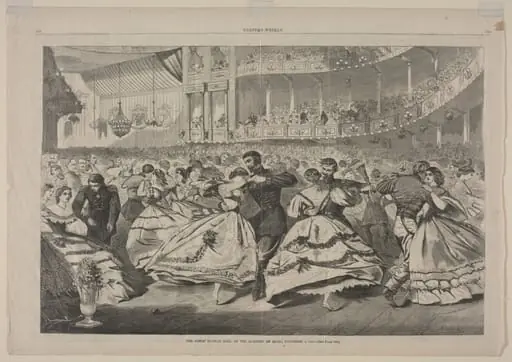 The Great Russian Ball at the Academy of Music, November 5, 1863
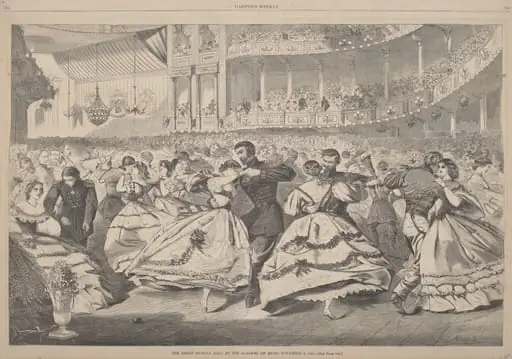 The Great Russian Ball at the Academy of Music, November 5, 1863
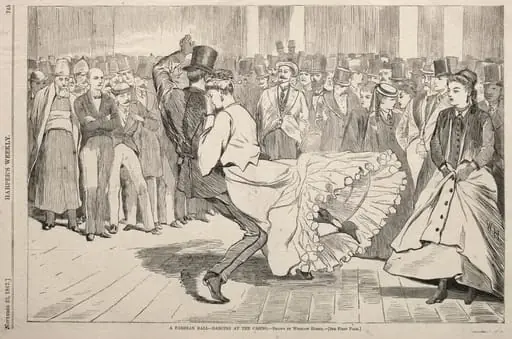 A Parisian Ball - Dancing at the Casino
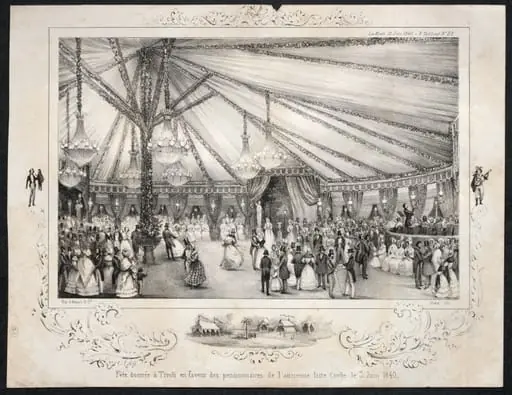 Fête donnée à Tivoli en faveur des pensionnaires de l'ancienne liste civile le 3 Juin 1840
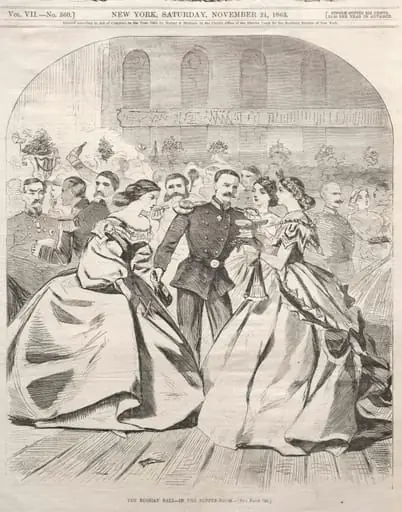 The Russian Ball - In the Supper Room
 Untitled
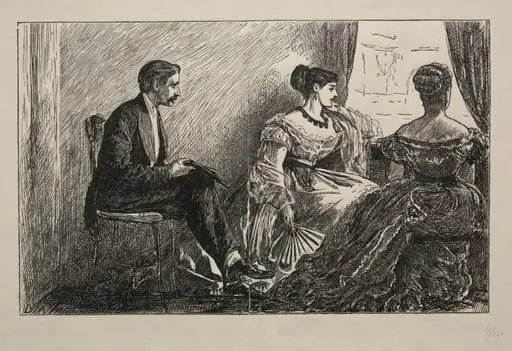 The White Camellia
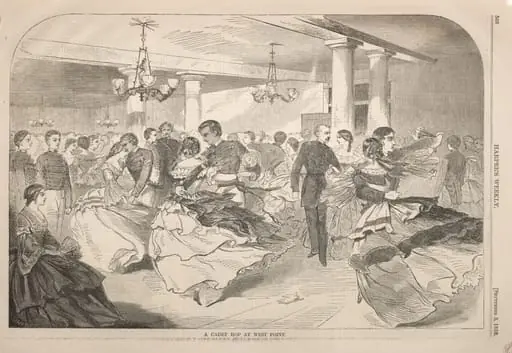 A Cadet Hop at West Point
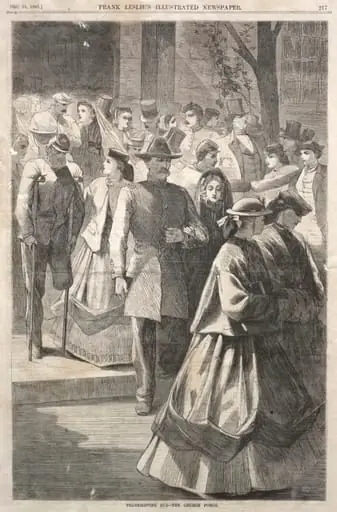 Thanksgiving Day - The Church Porch
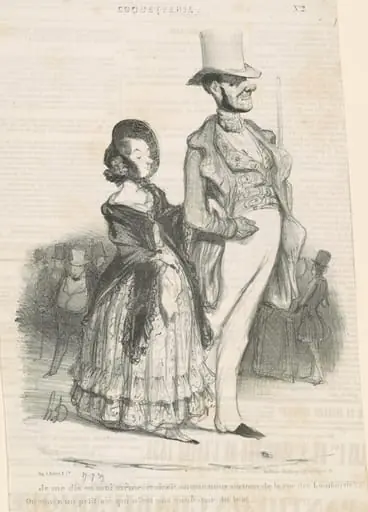 Je me dis en moi-même
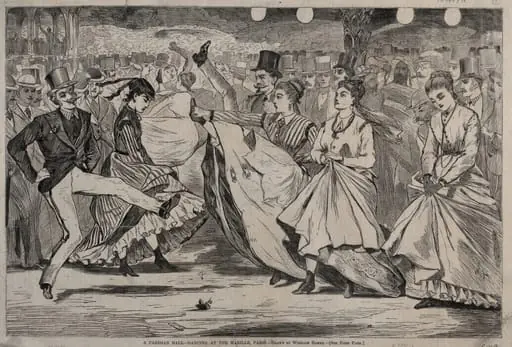 A Parisian Ball - Dancing at the Mabille, Paris
 Jewels - At the Great Exhibition