Artwork
Old Gloucester Shore
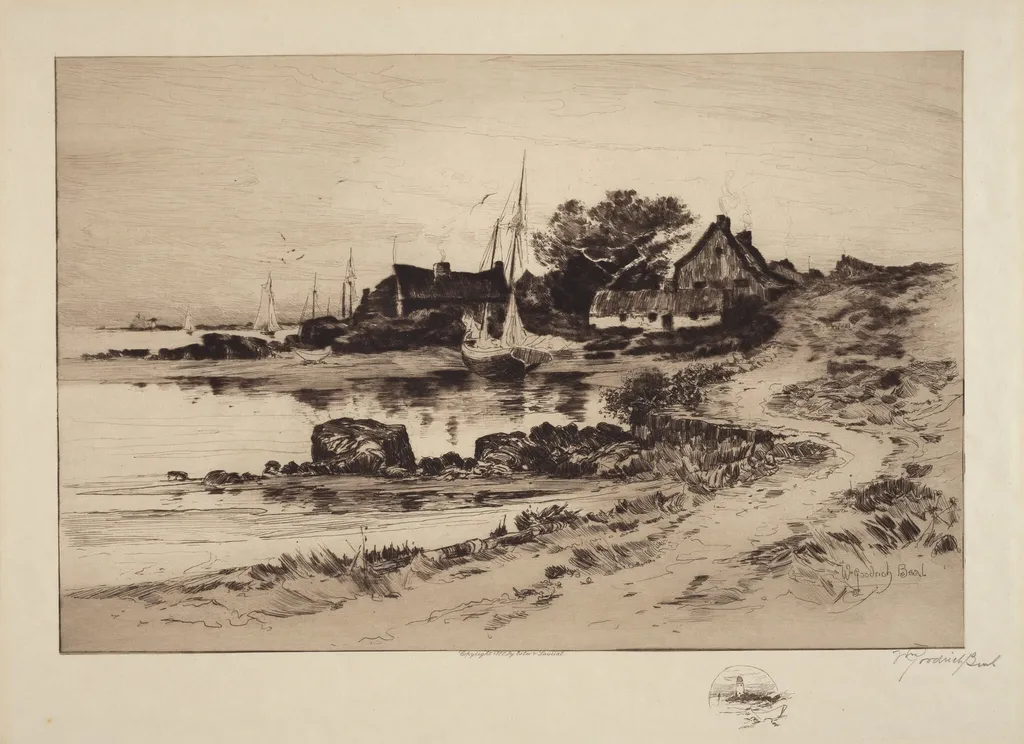
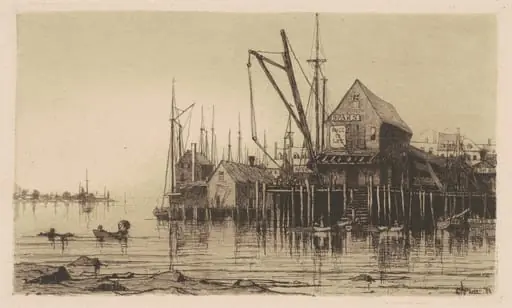
Old Gloucester Shore is an ink print by the Impressionist artist William Goodrich Beal. It dates from 1888 and is held in the collection of the National Gallery of Art.
About this work
Overview
Created in 1888 by William Goodrich Beal, Old Gloucester Shore is a print made using etching and drypoint techniques. It captures a modest coastal scene along the New England shore, emphasizing quiet solitude over bustling activity. The composition centers on anchored vessels near rugged rocks, with minimal human presence, inviting contemplation of the natural environment.
Subject & Meaning
The scene depicts a quiet harbor at rest, with small boats tethered near a rocky shoreline. Behind them, simple structures with thatched roofs and a solitary tree suggest a modest, enduring coastal community. The absence of figures and the subdued tones convey a sense of isolation and timelessness, reflecting the rhythms of rural maritime life without romanticization.
Technique & Style
Beal employed etching and drypoint to achieve fine, expressive lines that define texture and form. The roughness of waves and jagged rocks emerges through incised grooves holding dense ink, while the drypoint’s burr adds soft, velvety shadows. These methods allowed for nuanced contrast between the turbulent water and the stillness of the shore, enhancing the print’s tactile quality.
History & Provenance
The print was produced in 1888 during Beal’s active period as a printmaker in New England. It was likely made for private collectors or art societies interested in regional landscapes. No documented exhibition or ownership history is widely recorded, suggesting it remained within limited circles rather than achieving broad public circulation.
Context
In the late 19th century, American artists increasingly turned to local landscapes as subjects, moving away from European traditions. Beal’s focus on Gloucester’s working shore aligns with this trend, reflecting a broader interest in authentic, unidealized scenes of everyday coastal life, distinct from the grandeur of Hudson River School paintings.
Legacy
Though not widely reproduced or exhibited, Old Gloucester Shore exemplifies Beal’s commitment to quiet, observational printmaking. It contributes to a lesser-known but significant body of work by American etchers who documented regional environments with technical precision and restrained emotion, preserving a glimpse of coastal life at the turn of the century.
Artist & collection


 Fish-Houses
 Fulham
 A Smuggler's Landing Place
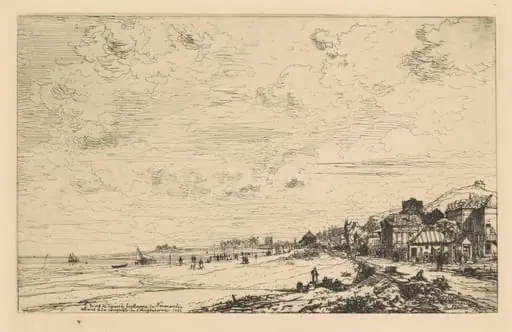 Beuzeval, Embouchure de la Dive (Calvados)
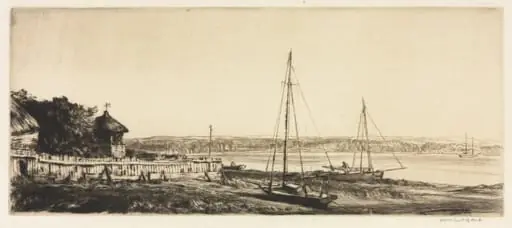 Near Chichester, Sussex
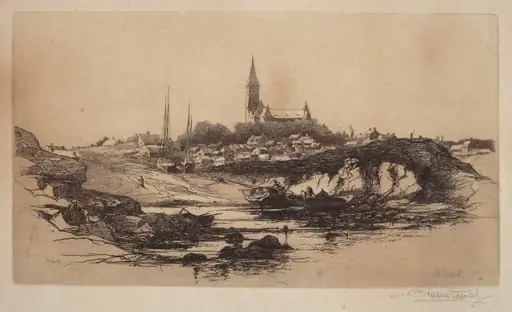 Marblehead
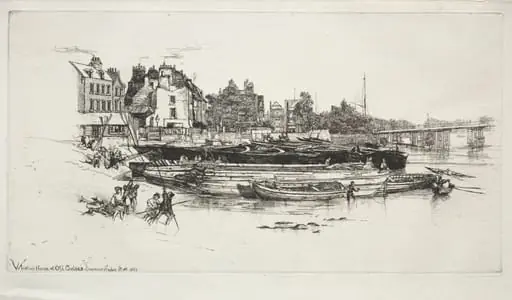 Whistler's House, Old Chelsea
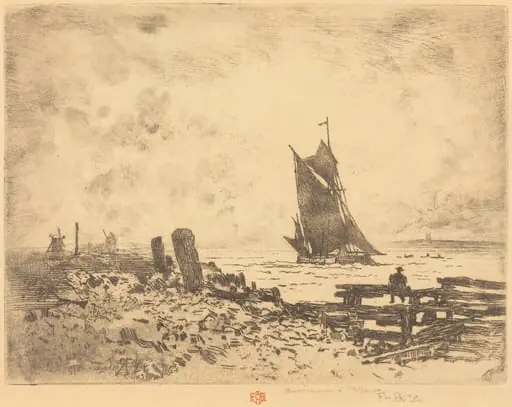 La Petite Marine - Souvenir de Medway (counterproof)
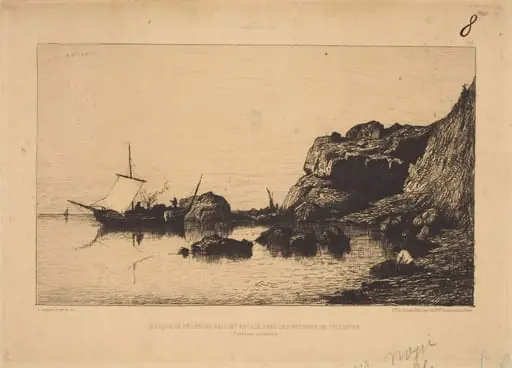 Barque de pecheurs faisant escale dans les rochers de Collioure
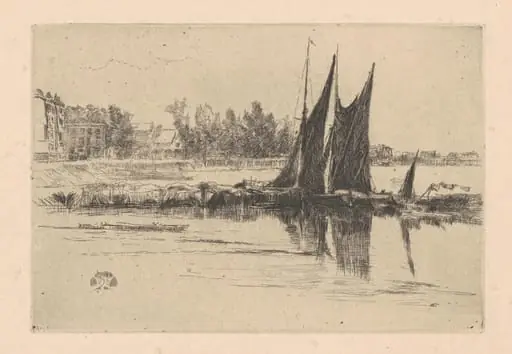 Hurlingham
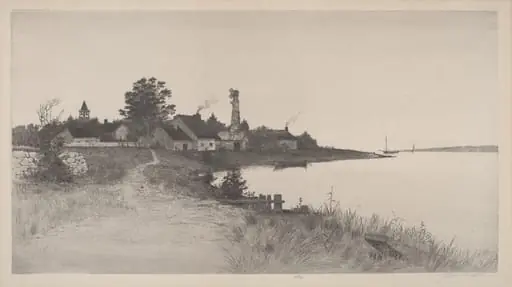 Untitled (Coastal Scene)
 Old Boat-House