Artwork
Old Boat-House
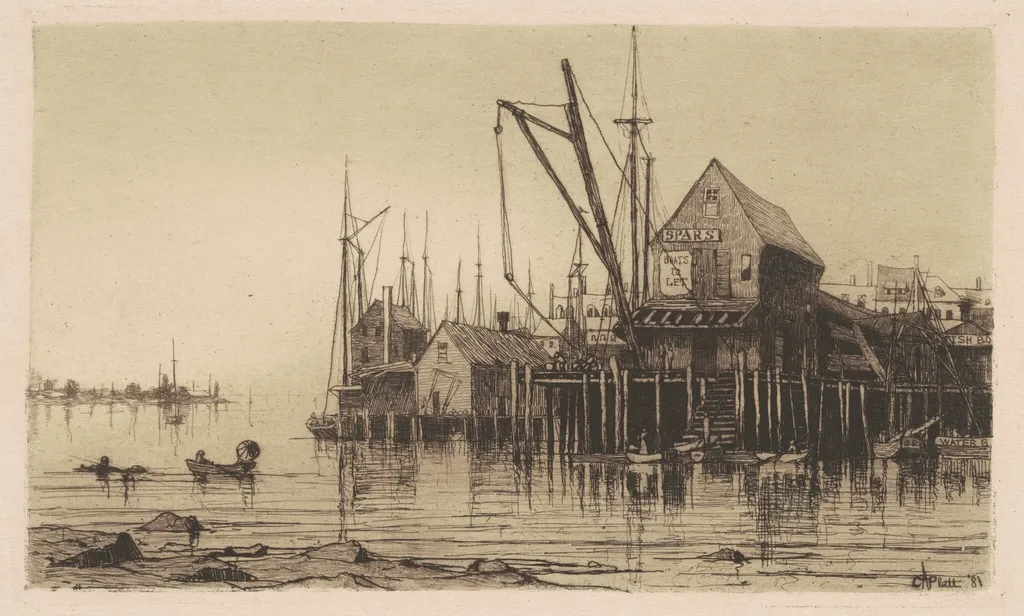
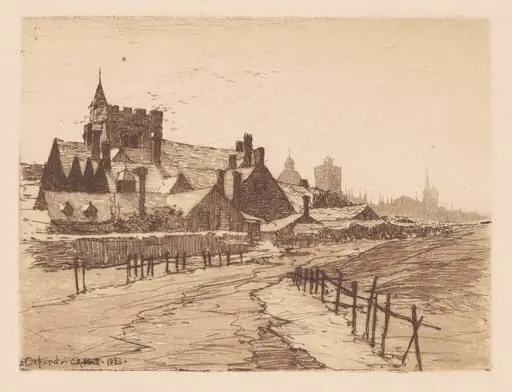
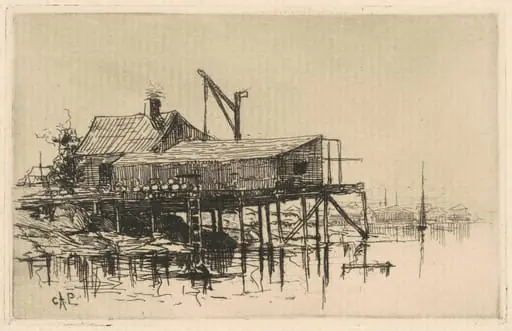
Old Boat-House is an ink print by the Impressionist artist Charles A. Platt. It dates from 1881 and is held in the collection of the National Gallery of Art.
About this work
Look close and you’ll see little dots—he added drypoint to make shadows darker.
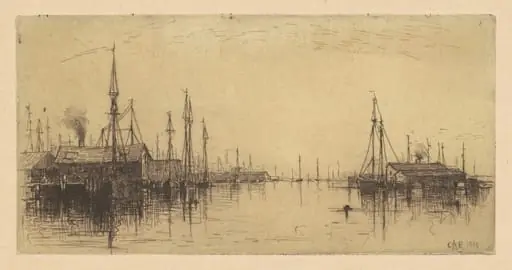
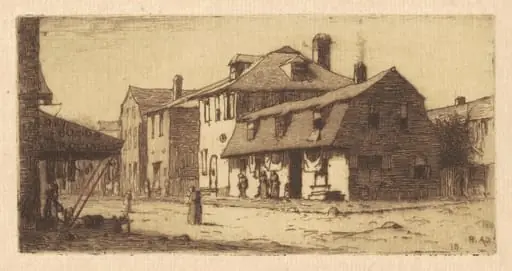
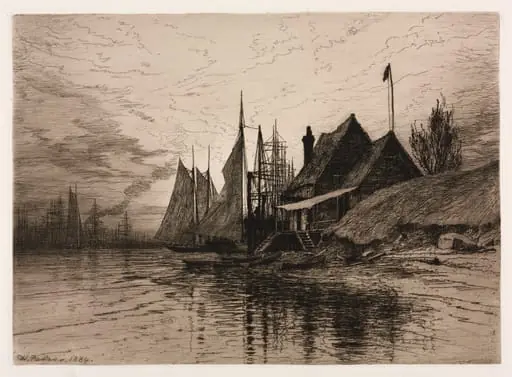
This etching shows a small wooden boathouse by a river. The roof is sagging. A single door hangs crooked on its hinges.
Charles Platt used a sharp needle to scratch lines into a metal plate. Then he filled the lines with ink and pressed paper onto it. That’s called etching.
Platt made this in 1881. His lines feel scratchy and real. Look close and you’ll see little dots—he added drypoint to make shadows darker.
Try Platt’s etching technique next.
Overview
Old Boat-House is a print created by Charles A. Platt in 1881, executed as an etching in black ink on laid paper. The work depicts a small, rustic wooden boathouse situated by a river, characterized by a sagging roof and a single, crookedly hanging door.
Subject & Meaning
The subject of Old Boat-House conveys a sense of neglect or abandonment, implied by the structural deterioration of the boathouse. This could reflect themes of transience or the passage of time, though the artist's specific intent is not explicitly documented.
Technique & Style
Platt utilized etching techniques, scratching lines into a metal plate with a sharp needle, then inking and pressing the plate onto paper. Additional drypoint elements, evident as small dots, were incorporated to enhance shadow depths, contributing to the piece's textured, realistic quality.
History & Provenance
Created in 1881, the etching's provenance details are not provided in the available information. It is attributed to Charles A. Platt, an artist of the time, with the work's current location and ownership status unspecified.
Own this work as a print
Artist & collection