Artwork
Marblehead
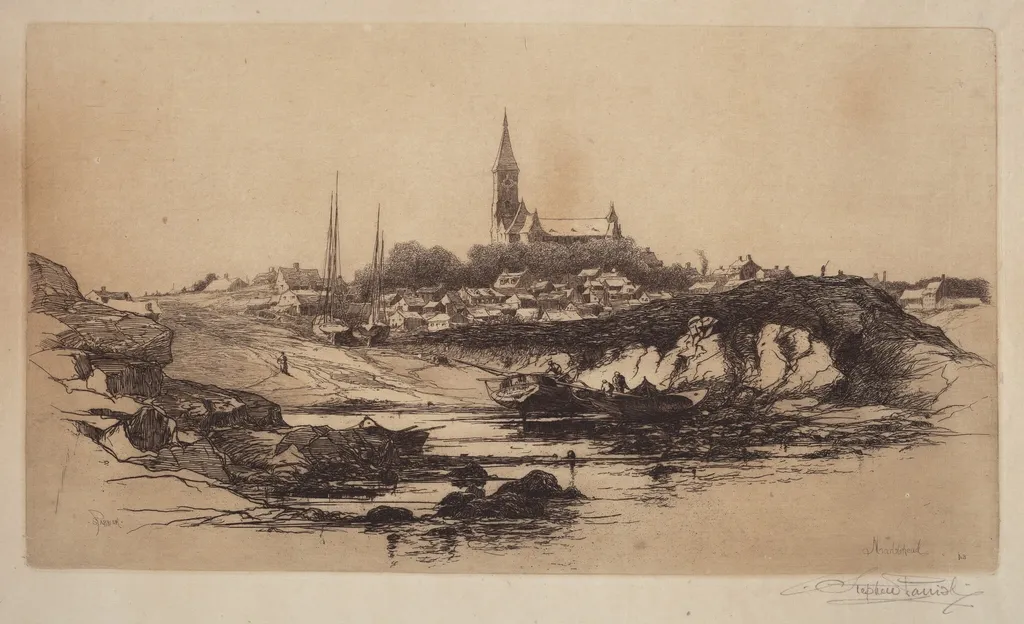
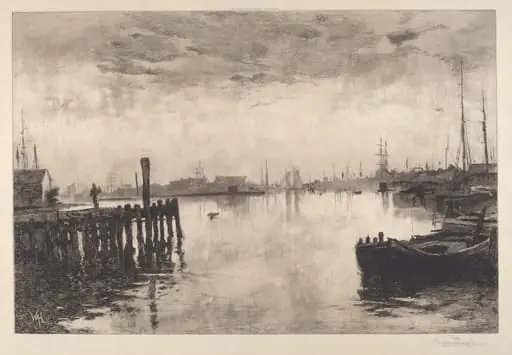
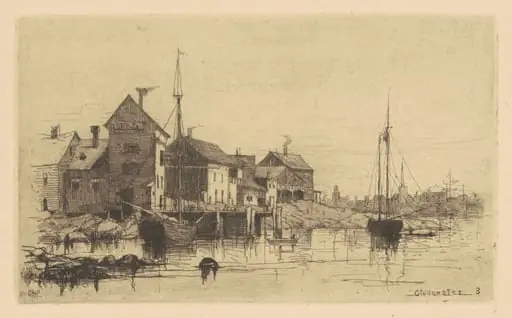
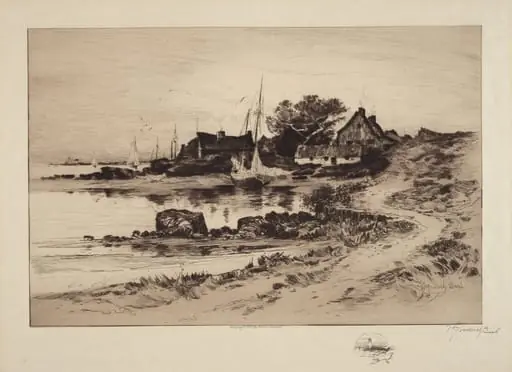
Marblehead is an ink print by the Impressionist artist Stephen Parrish. It dates from 1881 and is held in the collection of the National Gallery of Art.
About this work
Overview
It depicts a quiet New England coastal settlement, rendered with fine, incised lines that capture the texture of wind-swept water and weathered buildings.
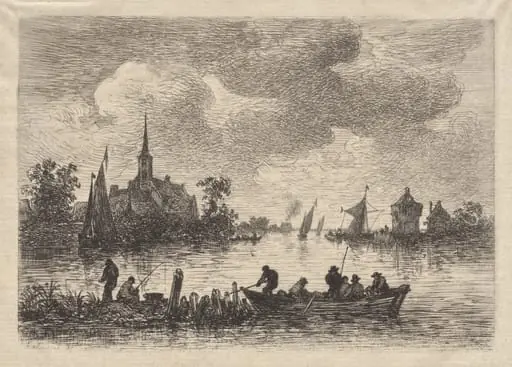
Marblehead is a black-and-white etching by Stephen Parrish, completed in 1881. It depicts a quiet New England coastal settlement, rendered with fine, incised lines that capture the texture of wind-swept water and weathered buildings. The print belongs to the tradition of 19th-century American etching, where artists used metal plates and acid to produce detailed, tonal images with a hand-drawn quality.
Subject & Meaning
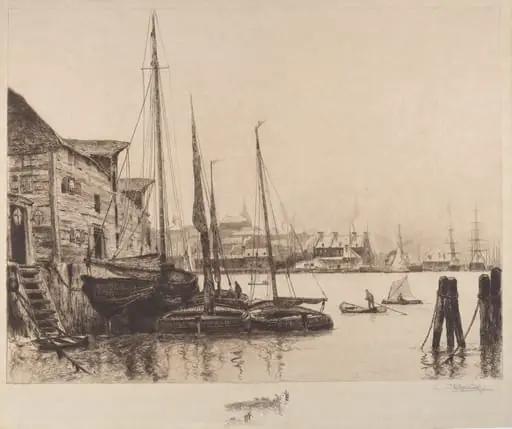
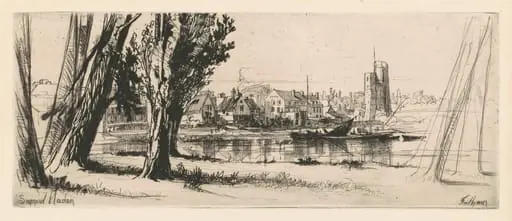
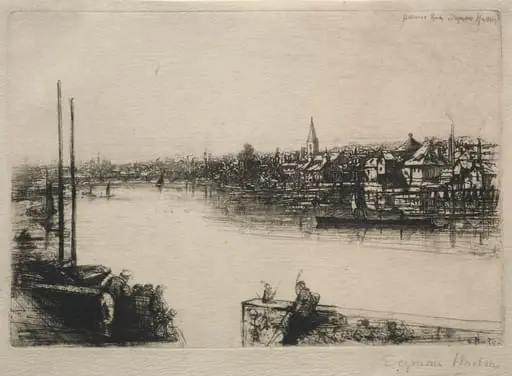
The scene portrays the town of Marblehead, Massachusetts, with its central church steeple anchoring the composition. Anchored boats and clustered dwellings along the shore suggest a working harbor, not a tourist destination. The absence of figures emphasizes solitude and the quiet rhythm of maritime life, reflecting a contemplative engagement with place rather than narrative drama.
Technique & Style
Parrish employed etching to achieve fine, expressive lines, using acid to bite into a metal plate and transfer ink onto paper. The water’s surface is rendered with rapid, irregular strokes that mimic choppy motion, while the buildings and cliffs use denser, cross-hatched marks to suggest mass and shadow. The technique favors texture over smoothness, giving the scene a tactile, almost sculptural presence.
History & Provenance
Created during Parrish’s active period as a printmaker, Marblehead reflects his interest in American coastal landscapes. The work was made shortly after his return from Europe, where he studied etching techniques. It was likely produced for private collectors or art societies, as etchings of this period were often circulated in limited editions rather than mass-produced.
Context
In the late 19th century, American artists turned to etching as a medium to assert artistic independence from academic painting. Parrish was part of a revival movement that valued the handcrafted quality of prints. Marblehead aligns with this trend, offering a personal, observational view of everyday American scenery rather than grand historical or mythological subjects.
Legacy
Marblehead stands as an example of how American etchers elevated everyday landscapes into serious artistic subjects. Parrish’s attention to atmospheric detail and tactile surface influenced later printmakers interested in regional realism. Though not widely known today, the work remains a quiet testament to the quiet dignity of coastal life in the Gilded Age.
Artist & collection