Artwork
A lake and trees beneath a stormy sky
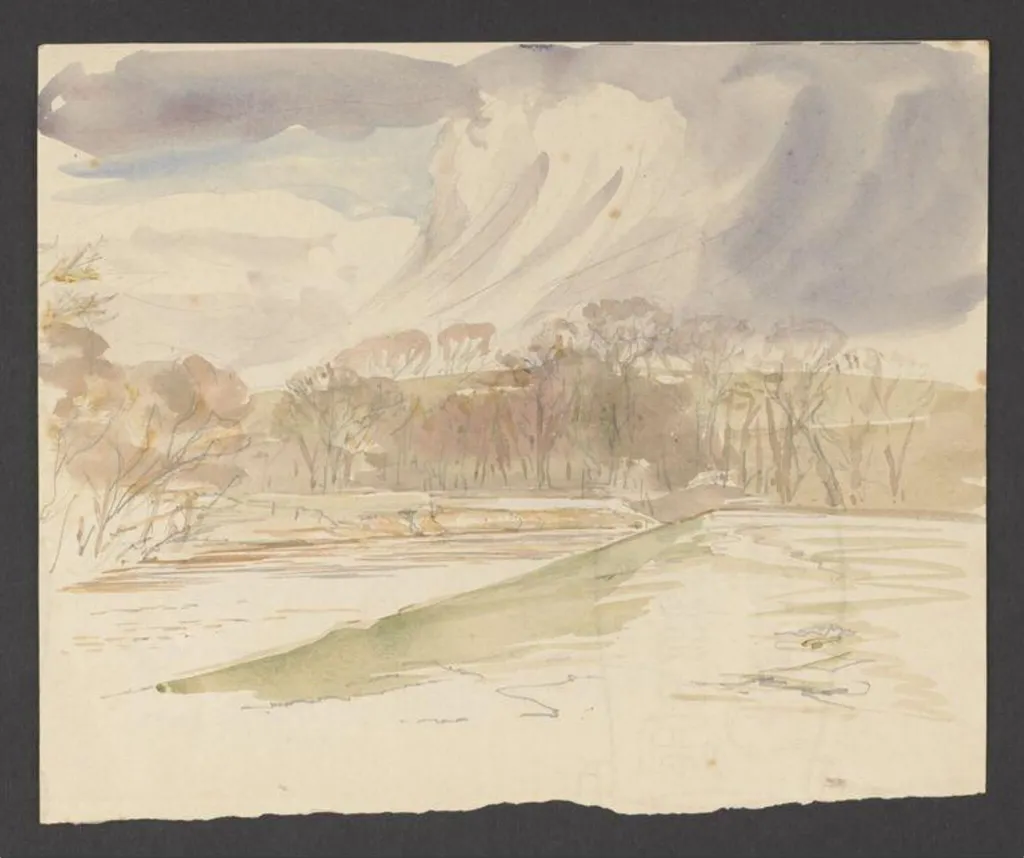
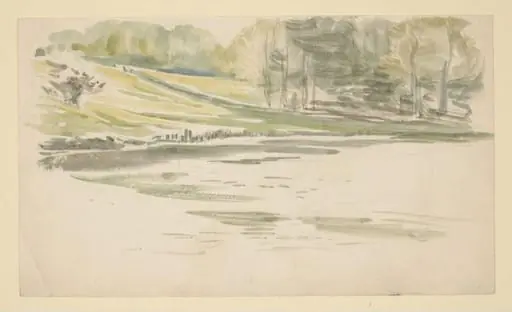
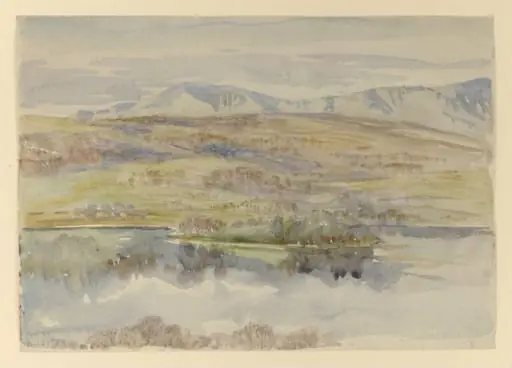
A lake and trees beneath a stormy sky is a watercolor work on paper by the Post-Impressionist artist Beatrix Potter. It dates from 1906 and is held in the collection of the Victoria and Albert Museum. This watercolour, created between 1900 and 1913, captures a tranquil lakeside scene beneath an overcast sky.
About this work
This watercolor shows a quiet scene of a lake lined with trees under a dark, stormy sky. Beatrix Potter made it between 1900 and 1913, part of her habit of sketching outdoors before she married in 1913.
Potter often painted the landscapes around Hill Top farm and Esthwaite Water, but this exact spot isn’t named.
Next, look up the artist.
Overview
Executed in delicate washes and pencil, it reflects Beatrix Potter’s habit of sketching outdoors during her travels across Britain.
This watercolour, created between 1900 and 1913, captures a tranquil lakeside scene beneath an overcast sky. Executed in delicate washes and pencil, it reflects Beatrix Potter’s habit of sketching outdoors during her travels across Britain. Though the specific location remains unidentified, the work belongs to a series of landscape studies she made before her marriage, when nature observation was central to her artistic practice.
Subject & Meaning
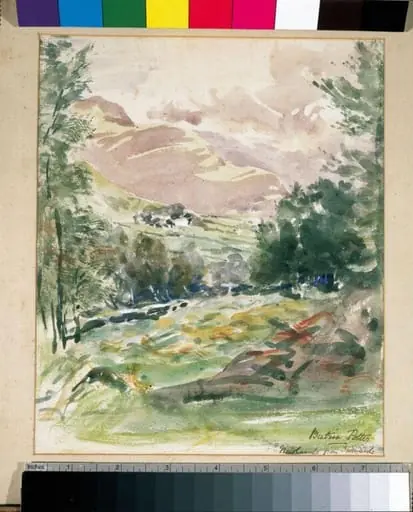
The painting presents a quiet, unpopulated landscape — a still lake bordered by trees under a brooding sky. There is no human presence or narrative, distinguishing it from her children’s book illustrations. The mood is contemplative, emphasizing atmosphere over story. It reveals Potter’s interest in the subtle shifts of light and weather, reflecting her deep engagement with the natural world beyond fiction.
Technique & Style
Potter employed transparent watercolour washes with restrained tonal variation to suggest the weight of clouds and the reflective surface of water. Pencil lines define tree trunks and shoreline with precision, while the sky is rendered in soft, layered greys. Her technique is observational and controlled, avoiding dramatic effects in favour of quiet accuracy, consistent with her scientific training and attention to detail.
History & Provenance
Created before Potter’s 1913 marriage, the work stems from her period of frequent sketching trips with her parents across England, Scotland, and Wales. After purchasing Hill Top Farm in 1905, she increasingly focused on the surrounding Lake District terrain, including Esthwaite Water. This piece, undated and unnamed, likely dates from this phase, though its exact origin remains unverified by records.
Context
During this time, Potter balanced her literary work with a serious interest in natural history and landscape. Her watercolours were not intended for publication but served as personal records of place and weather. They reflect the influence of Victorian topographical drawing and her own meticulous eye, developed through botanical illustration and field study, separate from her later fame as a children’s author.
Legacy
Though overshadowed by her illustrated tales, Potter’s landscape watercolours offer insight into her artistic discipline and emotional connection to the English countryside. These studies, preserved in archives and private collections, demonstrate her sustained practice as a visual observer. They remain valuable as documents of regional ecology and the quiet, private side of an artist known primarily for fiction.
Artist & collection
Artist
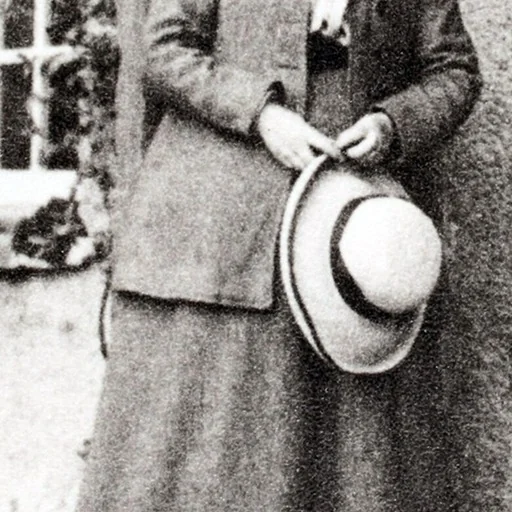
Helen Beatrix Heelis (née Potter; 28 July 1866 – 22 December 1943), usually known as Beatrix Potter ( BEE-ə-triks), was an English writer, illustrator, natural scientist, and conservationist.

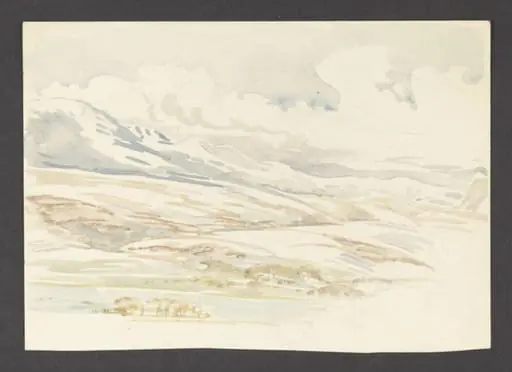 Landscape with hills under snow and a lake
 A lake with trees; study relating to The Tale of Mr Tod
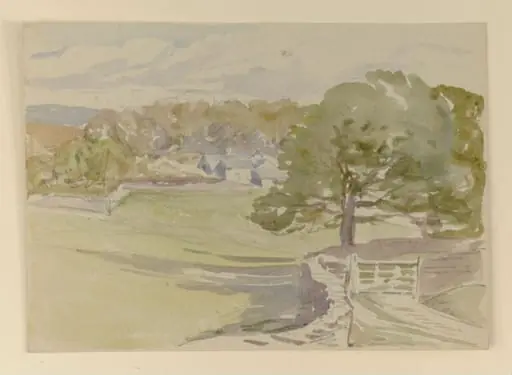 A lane with trees
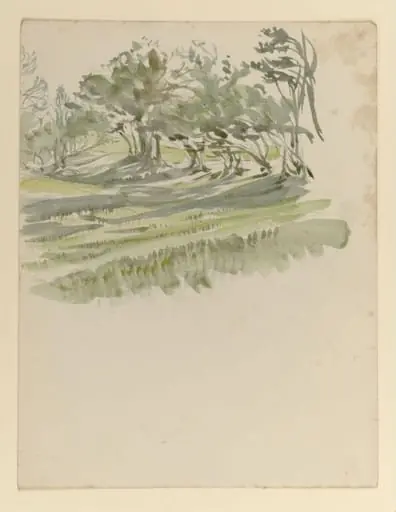 A meadow flanked by a line of trees
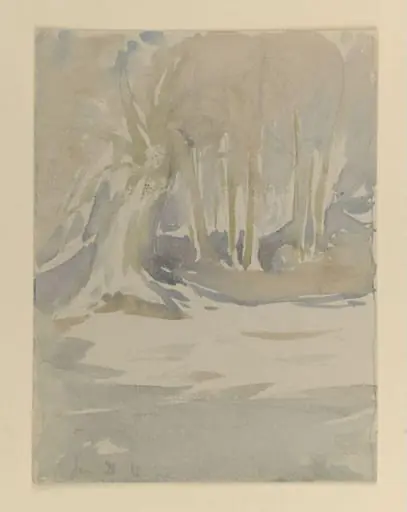 A clearing under snow
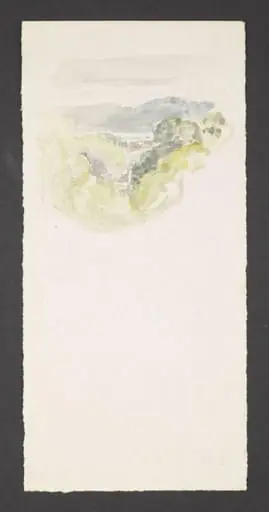 A view, through trees, of a lake and mountains
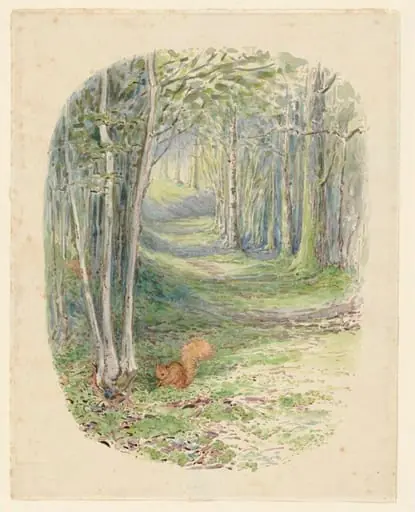
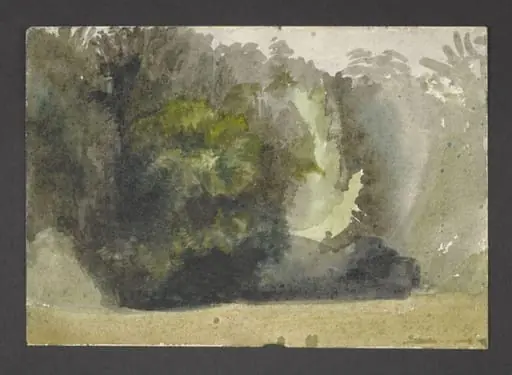 Study of a forest glade
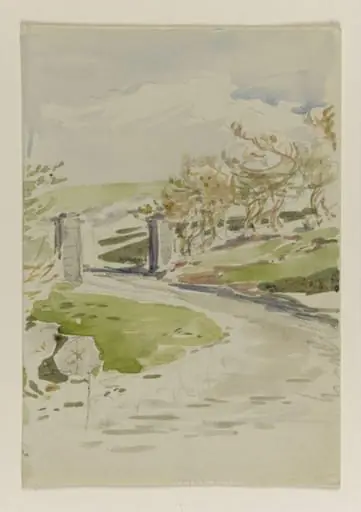 A pathway to moorland, passing through a stone gateway
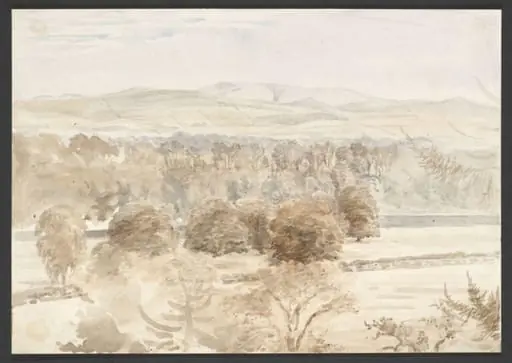 The Tweed surrounded by woodland, with the Cheviots in the background
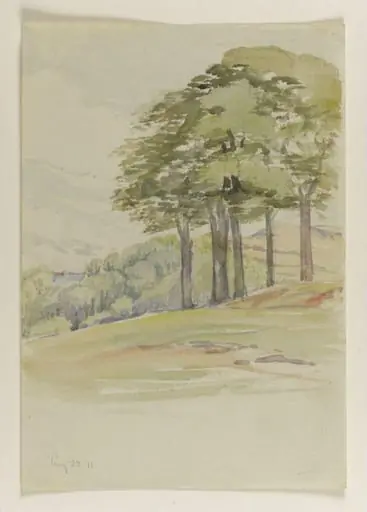 Hillside with five trees
 View across Esthwaite Water
 A river traversed by stone piles forming a bridge