Artwork
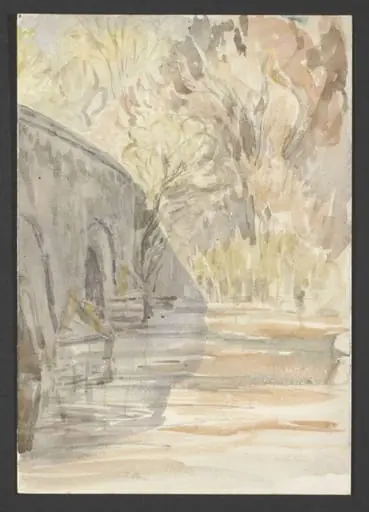
A river traversed by stone piles forming a bridge
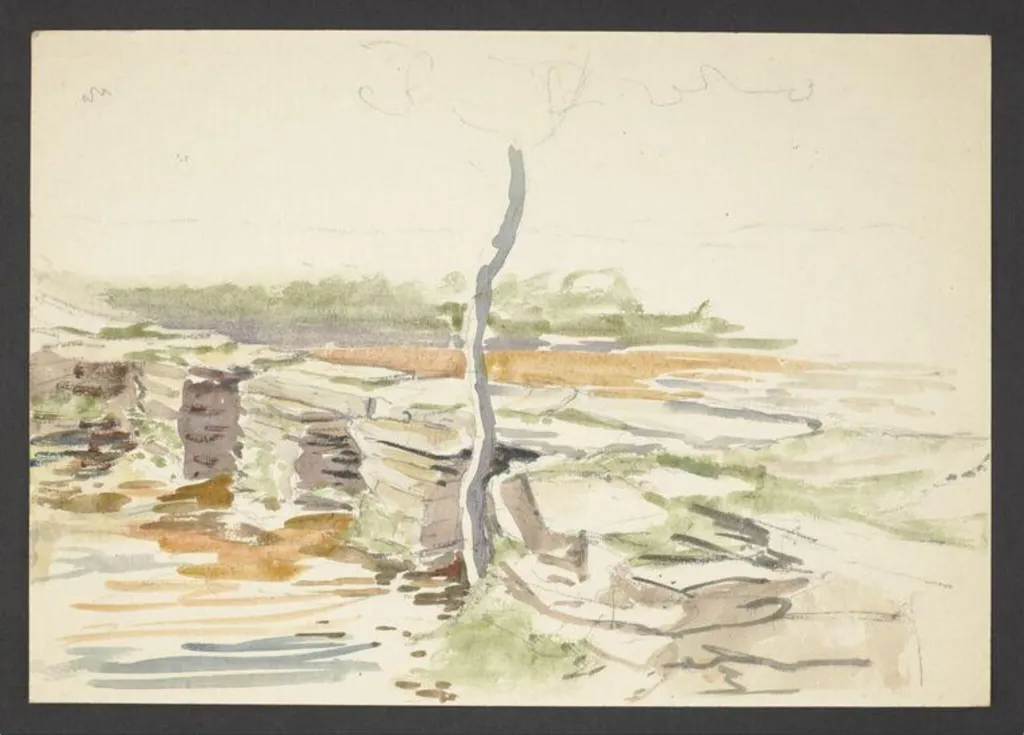
A river traversed by stone piles forming a bridge is a watercolor work on paper by Beatrix Potter. It dates from 1906 and is held in the collection of the Victoria and Albert Museum.
About this work
Overview
This watercolor depicts a modest stone bridge spanning a tranquil river, rendered in delicate washes characteristic of early twentieth‑century British landscape painting. The composition focuses on the interplay of light on water and stone, offering a quiet, observational view of a rural scene.
Subject & Meaning
The work captures a simple infrastructural element—a stone bridge—set within a natural riverine environment. By emphasizing the bridge’s modest scale against the surrounding landscape, the image reflects a contemplative appreciation of everyday rural life rather than a narrative illustration.
Technique & Style
Executed in watercolor, the piece employs soft, layered pigments to convey atmospheric depth and the reflective quality of water. Fine pen work outlines the bridge’s masonry, while broader washes suggest foliage and sky, illustrating the artist’s skill in balancing detail with the medium’s inherent translucency.
History & Provenance
Created during a period of extensive sketching trips across England, Scotland and Wales, the drawing likely originates from a visit to the Lake District, a region the artist frequented from the mid‑1880s. The piece predates her marriage in 1913 and her later acquisition of the Hill Top farm in the area.
Context
The watercolor belongs to a series of landscape studies produced before the artist achieved fame for her children’s books. These early works document her practice of plein‑air observation, recording the varied terrains and seasonal light of the British countryside.
Own this work as a print
Artist & collection
Artist
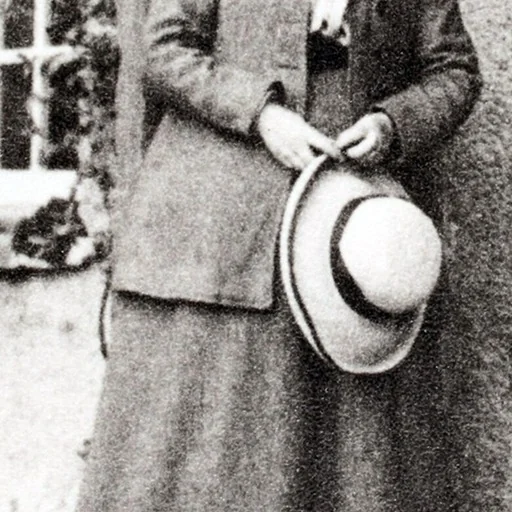
Helen Beatrix Heelis (née Potter; 28 July 1866 – 22 December 1943), usually known as Beatrix Potter ( BEE-ə-triks), was an English writer, illustrator, natural scientist, and conservationist.




 A lake and trees beneath a stormy sky
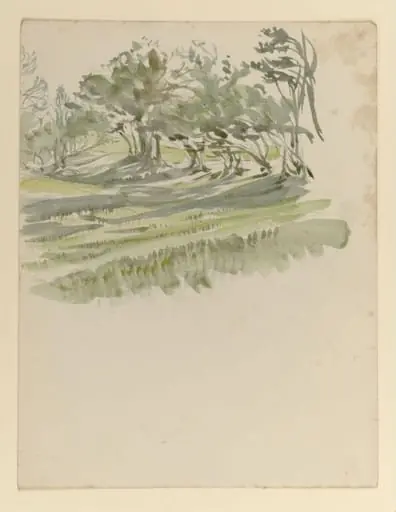 A meadow flanked by a line of trees
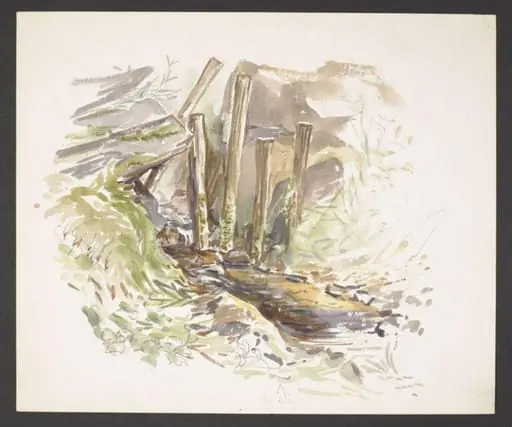 Study of a stream with wooden posts and boulders
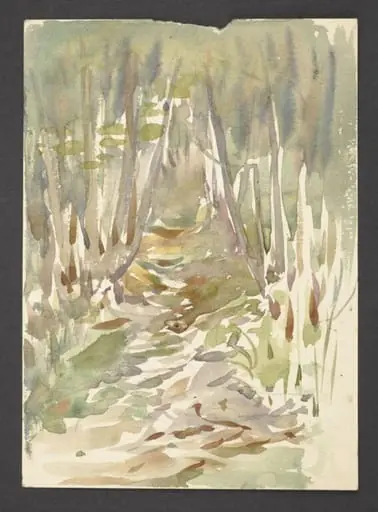 A path through a woodland in autumn
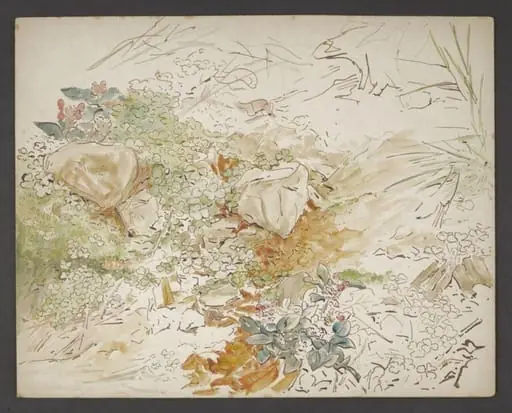 Study of a patch of ground with plants and rocks
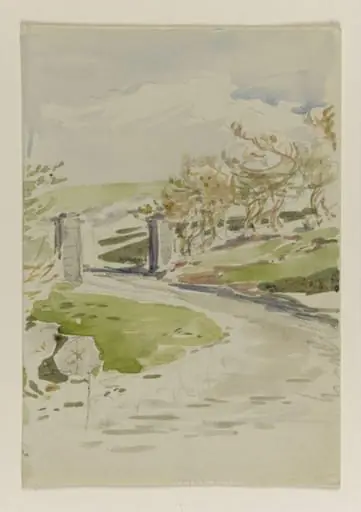 A pathway to moorland, passing through a stone gateway
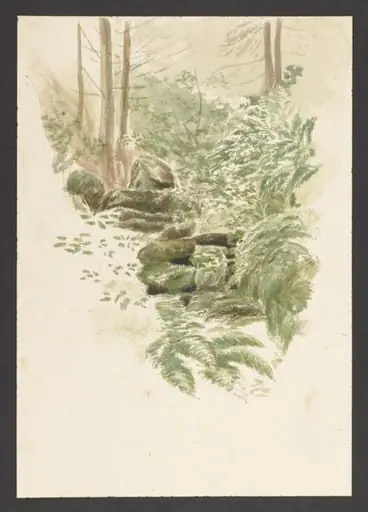 A stream running through a forest
 A bridge seen from a riverbank
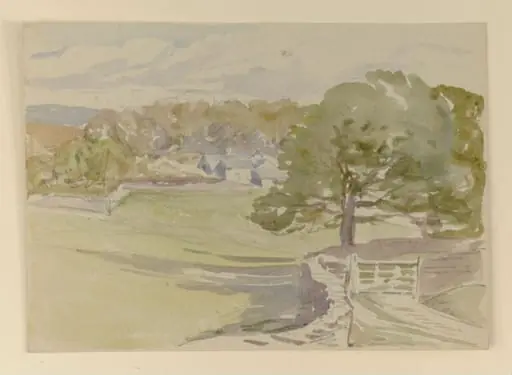 A lane with trees
 Untitled
 A view, through trees, of a lake and mountains
 Landscape with hills under snow and a lake