Artwork
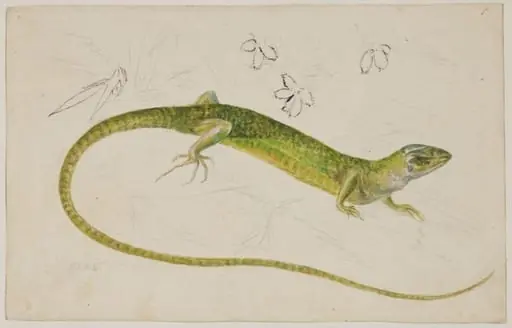
Drawings of common or viviparous lizard
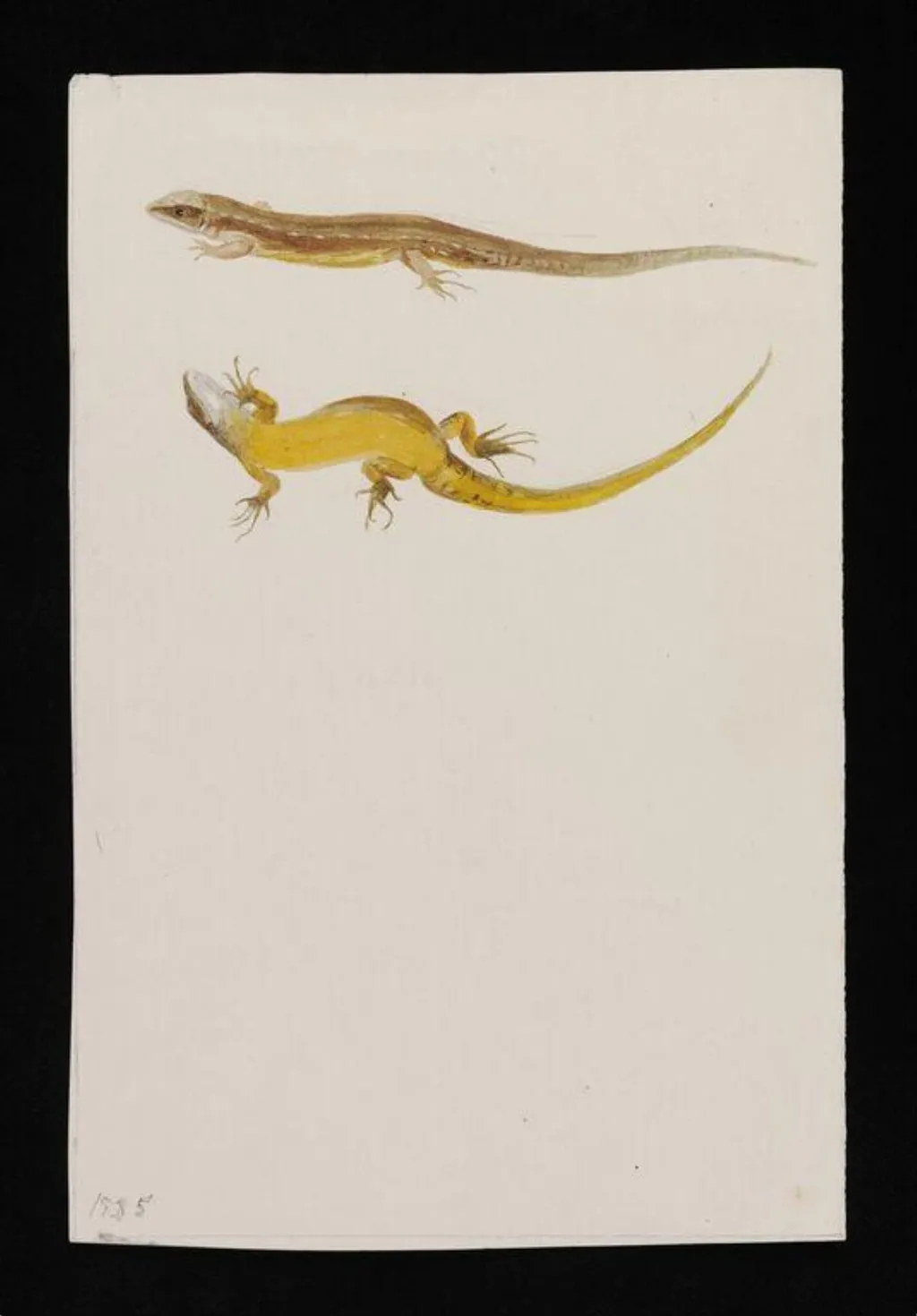
Drawings of common or viviparous lizard is a watercolor work on paper by the Impressionist artist Beatrix Potter. It dates from 1885 and is held in the collection of the Victoria and Albert Museum.
About this work
This work shows that even before Peter Rabbit, she studied nature closely.
Beatrix Potter painted this watercolor of common lizards in 1885. She was known for her sharp eye and careful notes on animals. This work shows that even before Peter Rabbit, she studied nature closely.
Potter kept lizards and other pets in her schoolroom as a child. She often sketched them with details about each species. Her early drawings reveal a deep interest in natural history.
Next, look up the Victoria and Albert Museum.
Overview
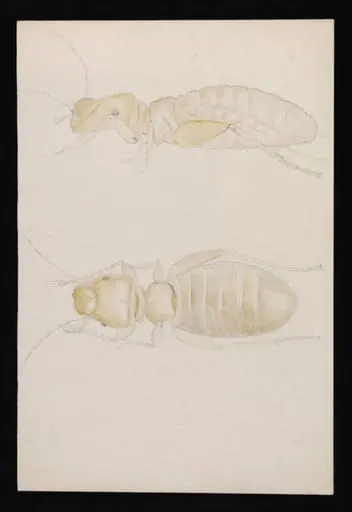
Created in 1885, this watercolour by Beatrix Potter depicts two perspectives of a common viviparous lizard. Executed with precision and quiet observation, the work reflects her early dedication to natural history illustration, predating her famous children’s books. The study is part of a broader body of scientific sketches she produced during her youth, informed by direct contact with live specimens and field observation.
Subject & Meaning
The two lizards are rendered with anatomical clarity, emphasizing scale patterns and posture. Potter’s focus on a single species, without anthropomorphism or narrative, reveals her commitment to biological accuracy. These drawings functioned as records of observation rather than artistic expression, underscoring her scientific mindset before she turned to storytelling.
Technique & Style
Rendered in watercolour on paper, the drawing employs delicate washes and fine linework to capture texture and form. Potter avoided dramatic lighting or embellishment, favoring neutral tones and meticulous detail. Annotations, though not visible here, were typical of her practice—indicating her habit of integrating factual notes with visual study.
History & Provenance
The drawing dates from a period when Potter was actively collecting and sketching animals kept in her London schoolroom, including lizards, bats, and rodents. It was produced during summers spent in the Lake District and other rural areas, where she documented local flora and fauna. The work is linked to the Linder Collection, which holds a more polished version of the same subject.
Context
In the 1880s, Potter’s artistic training was grounded in natural history, influenced by contemporary scientific illustration and her own rigorous self-study. She corresponded with mycologists and submitted botanical drawings to learned societies, reflecting a serious engagement with science that was uncommon for women of her social standing at the time.
Legacy
These early studies laid the foundation for her later illustrative style, characterized by precise animal forms and naturalistic settings. Though best known for fiction, her scientific drawings remain significant as examples of Victorian amateur naturalism and demonstrate how close observation informed her enduring literary characters.
Artist & collection
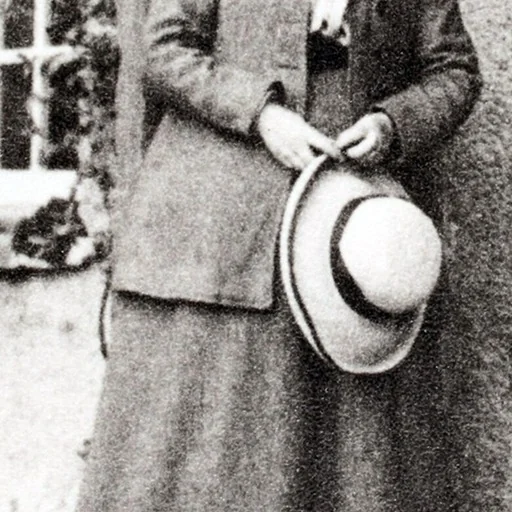
Artist
Helen Beatrix Heelis (née Potter; 28 July 1866 – 22 December 1943), usually known as Beatrix Potter ( BEE-ə-triks), was an English writer, illustrator, natural scientist, and conservationist.