Artwork
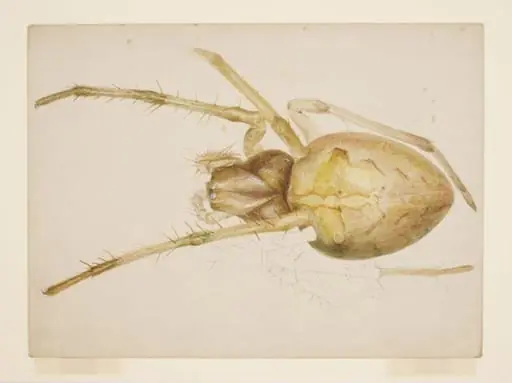
Study of a greenish-brown spider
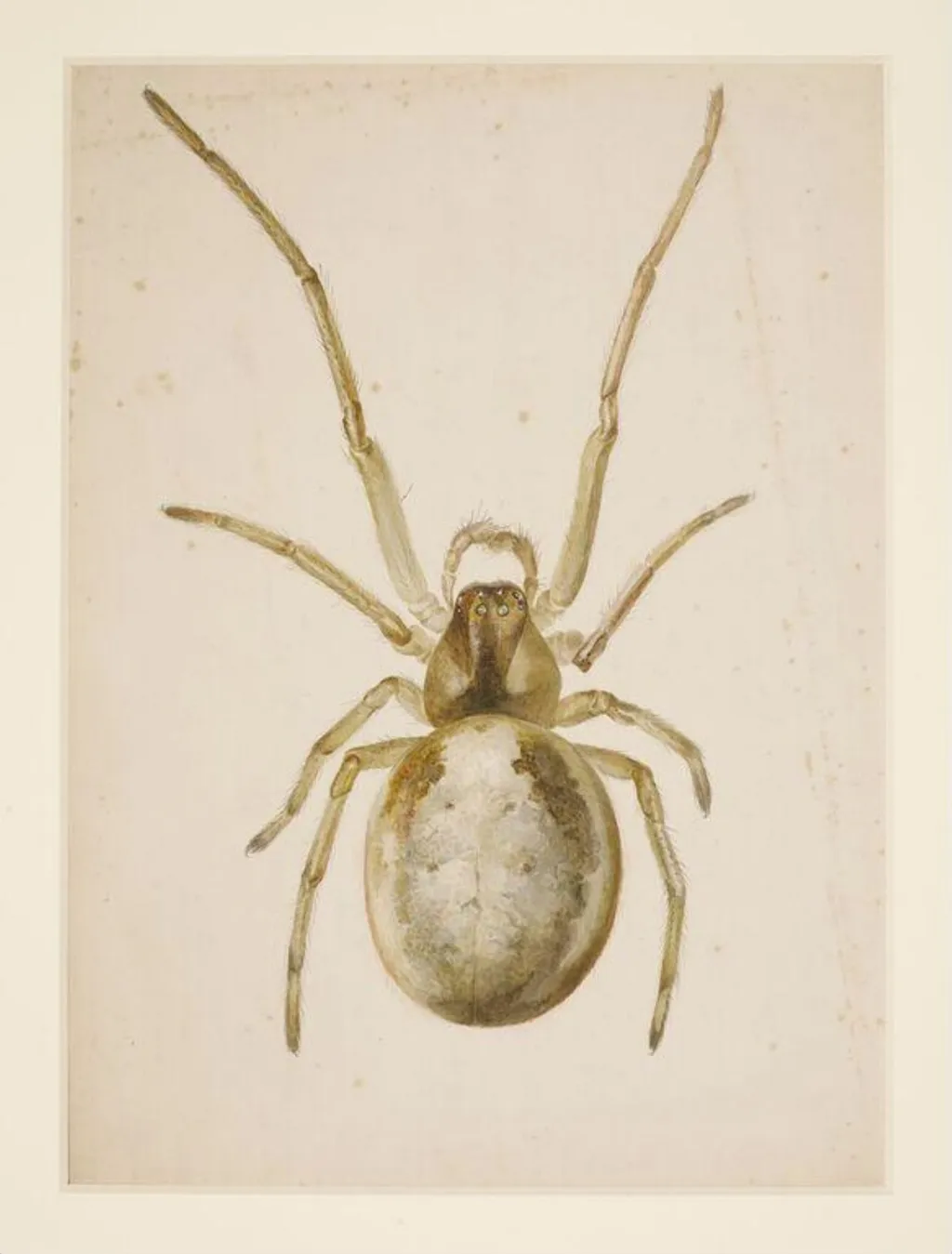
Study of a greenish-brown spider is a watercolor work on paper by the Impressionist artist Beatrix Potter. It dates from 14 and is held in the collection of the Victoria and Albert Museum. This watercolour study depicts a spider in shades of greenish-brown, rendered with precise detail.
About this work
Overview
Unlike her later children’s book illustrations, this work is a scientific record, emphasizing accuracy over narrative.
This watercolour study depicts a spider in shades of greenish-brown, rendered with precise detail. Created by Beatrix Potter, it reflects her lifelong dedication to observing and documenting the natural world. Unlike her later children’s book illustrations, this work is a scientific record, emphasizing accuracy over narrative. It belongs to a larger body of natural history sketches made during her formative years.
Subject & Meaning
The subject is a single spider, likely observed in its natural habitat. Potter’s focus on this small, often-overlooked creature reveals her interest in biodiversity and the subtle forms of rural life. The study carries no anthropomorphism or storytelling; instead, it serves as a neutral record of morphology, reflecting her scientific curiosity and respect for biological detail.
Technique & Style
Executed in watercolour, the piece demonstrates careful brushwork and muted, naturalistic tones. Potter applied layers to capture the spider’s texture and subtle colour variations, using fine lines to define legs and body segments. The composition is tightly framed, eliminating background distractions to emphasize anatomical precision. Her use of a magnifying glass informed the level of detail visible in the work.
History & Provenance
This study was made during Potter’s youth, likely between the 1880s and early 1890s, before her transition to children’s publishing. It was part of her personal collection of natural history drawings, kept alongside specimens in her home cabinet. Many such works were later donated to institutions, though this piece remains in private or institutional archives tied to her estate.
Context
Potter’s scientific pursuits occurred during a period when amateur naturalists, particularly women, contributed significantly to biological documentation. Her access to the Natural History Museum’s collections and her use of microscopy placed her within a broader Victorian tradition of empirical observation. These studies were not merely artistic exercises but active contributions to natural history.
Legacy
Though best known for her children’s books, Potter’s scientific illustrations remain valuable for their accuracy and attention to detail. Her spider study exemplifies how her artistic discipline served scientific inquiry. These works have since been recognized by biologists and historians as important records of late 19th-century naturalist practice, bridging art and science.
Artist & collection
Artist
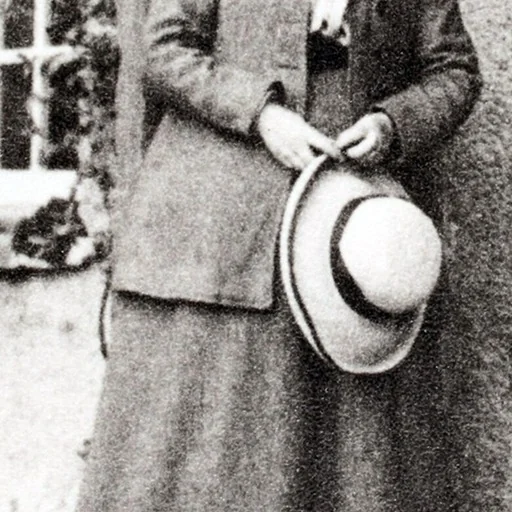
Helen Beatrix Heelis (née Potter; 28 July 1866 – 22 December 1943), usually known as Beatrix Potter ( BEE-ə-triks), was an English writer, illustrator, natural scientist, and conservationist.

 Study of a yellowish-brown spider
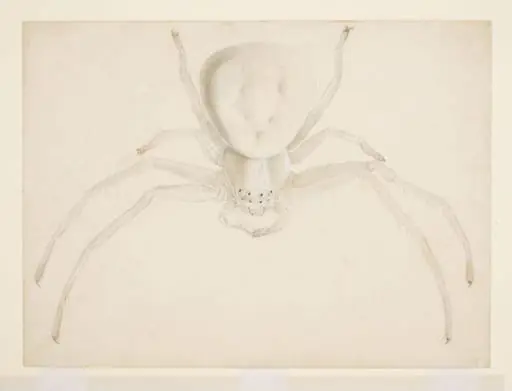 Study of a light grey spider
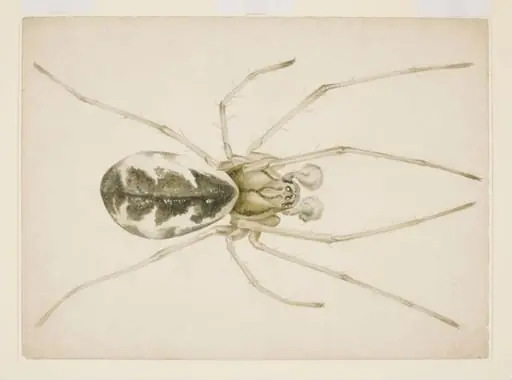 Study of a grey-brown spider (Linyphia triangularis)
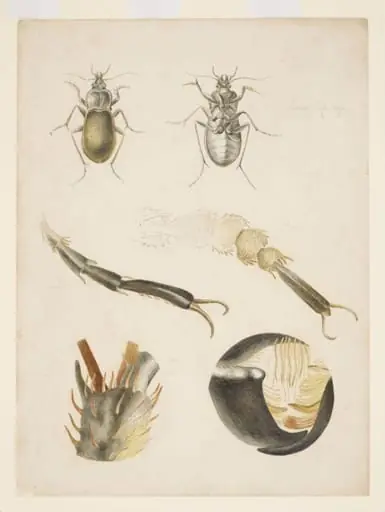 Magnified studies of a ground beetle
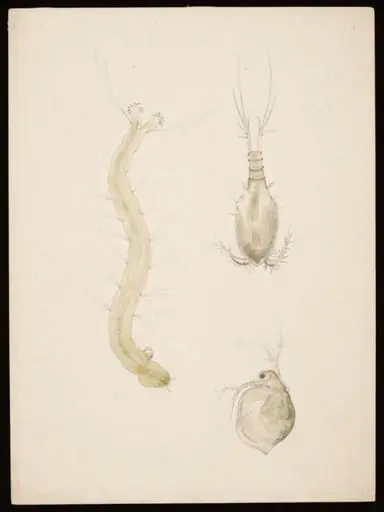 Magnified studies thought to show water-fleas and a midge lava
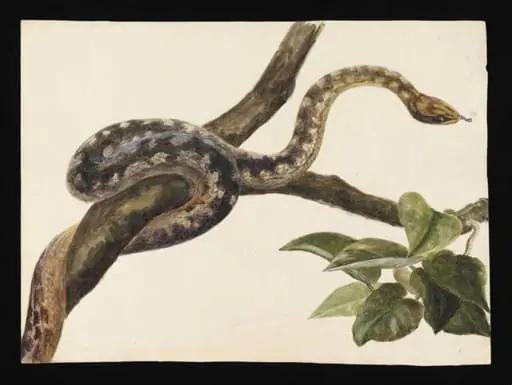 Study of a snake
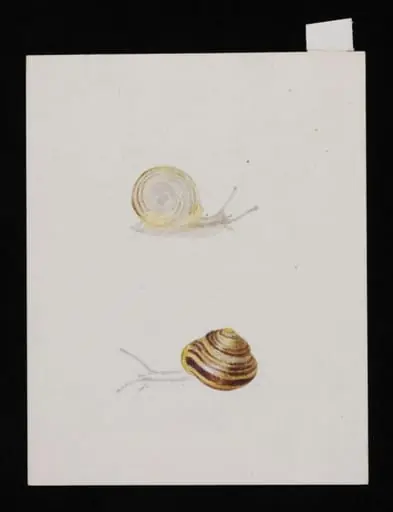 Study of two snails
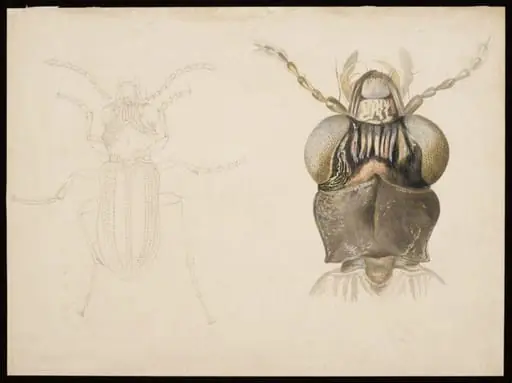 Magnified studies of a beetle (the ground beetle Notiophilus biguttatus?)
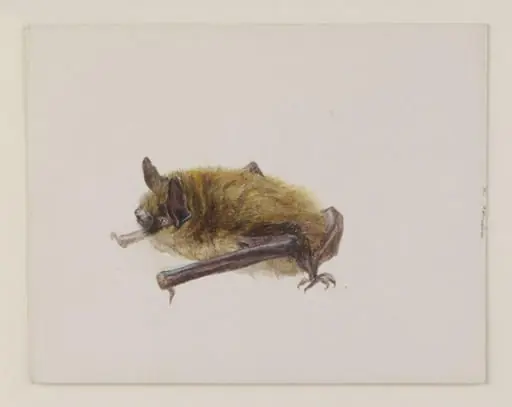 Side view of a bat with wings folded