Artwork
Study of a grey-brown spider (Linyphia triangularis)
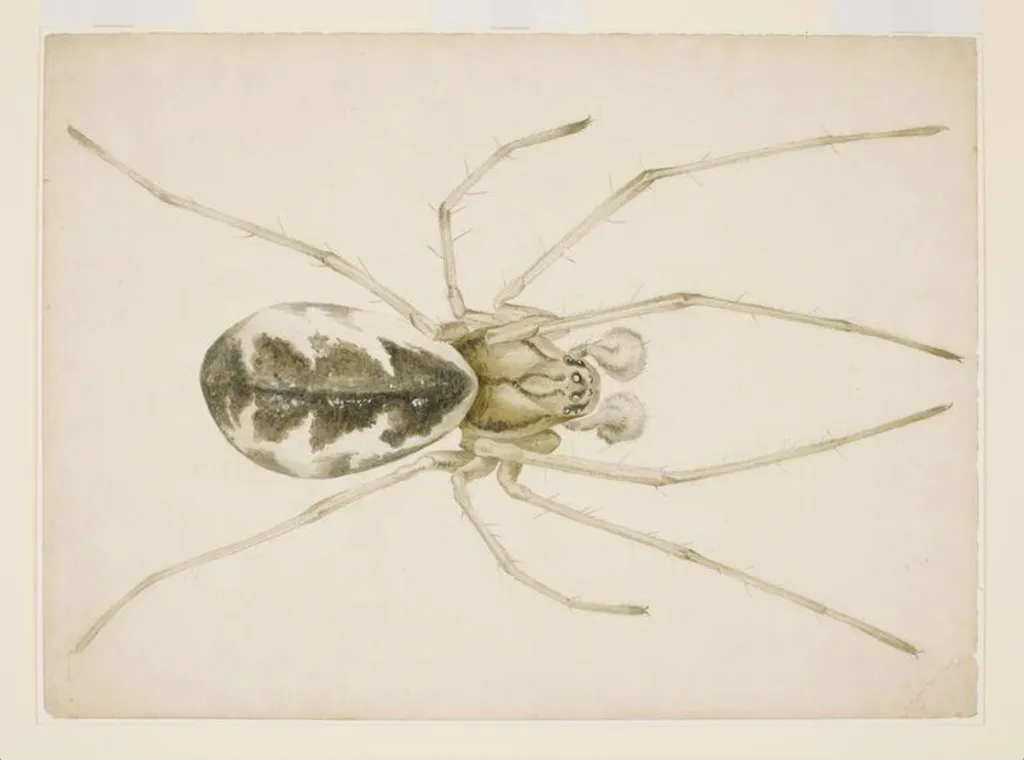
Study of a grey-brown spider (Linyphia triangularis) is a watercolor work on paper by the Impressionist artist Beatrix Potter. It dates from 1887 and is held in the collection of the Victoria and Albert Museum. This watercolour, executed around 1887, depicts a single grey‑brown spider identified as Linyphia triangularis.
About this work
Beatrix Potter painted this watercolor around 1887. It shows a grey-brown spider called Linyphia triangularis. She worked in watercolor, a tricky medium for fine details.
Potter was serious about nature. She kept pets as a kid and drew them all the time. Later, she studied animals closely, labeling each sketch.
She also wrote children’s books like Peter Rabbit. See more of her art at the Victoria and Albert Museum.
Overview
This watercolour, executed around 1887, depicts a single grey‑brown spider identified as Linyphia triangularis. Rendered in a compact format, the image presents the arachnid in a highly detailed, magnified view, emphasizing its anatomical features rather than a narrative scene.
Subject & Meaning
The work reflects Potter’s early fascination with natural history, focusing on an accurate representation of a specific species. By isolating the spider, the study serves both as a visual record and as a scientific observation, aligning with her habit of annotating sketches with taxonomic information.
Technique & Style
Created in watercolour, the piece demonstrates Potter’s skill in handling a medium that demands precision for fine detail. She employed delicate washes and controlled brushwork to render the spider’s body texture and leg segmentation, achieving a clear, almost microscopic clarity.
History & Provenance
The drawing originates from Potter’s formative years before her literary fame, when she was actively collecting and documenting specimens. It is linked to a contemporaneous lithograph of the same species, which includes enlarged detail panels, suggesting the watercolour may have served as a preparatory study for that print.
Context
During the late 19th century, amateur naturalists like Potter often combined artistic practice with scientific inquiry. Her access to museum collections and personal specimen cabinets informed the meticulous approach evident in this work, situating it within the broader Victorian tradition of illustrated natural history.
Artist & collection
Artist
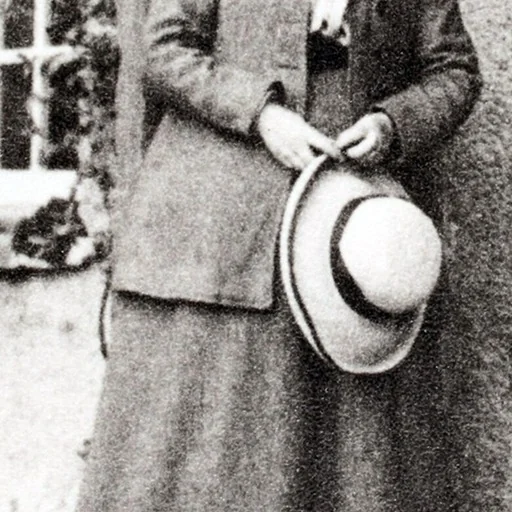
Helen Beatrix Heelis (née Potter; 28 July 1866 – 22 December 1943), usually known as Beatrix Potter ( BEE-ə-triks), was an English writer, illustrator, natural scientist, and conservationist.

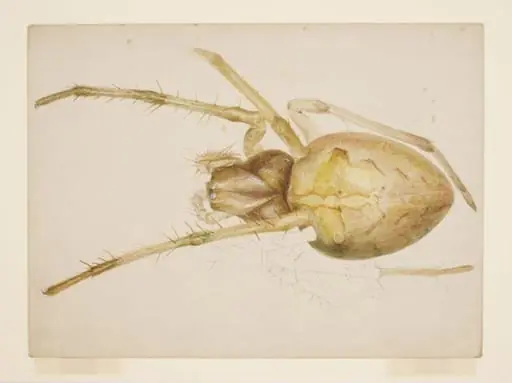 Study of a yellowish-brown spider
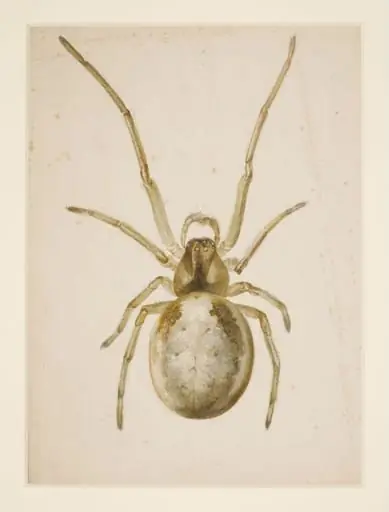 Study of a greenish-brown spider
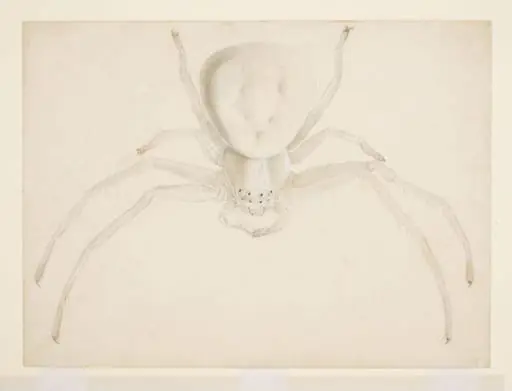 Study of a light grey spider
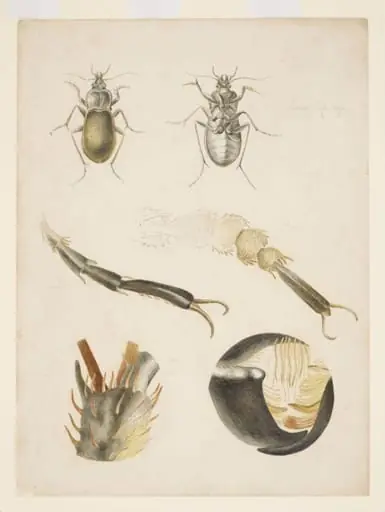 Magnified studies of a ground beetle
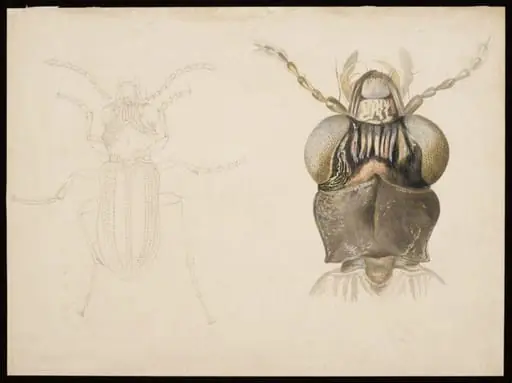 Magnified studies of a beetle (the ground beetle Notiophilus biguttatus?)
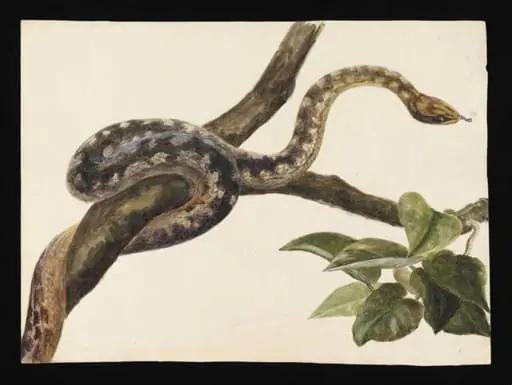 Study of a snake
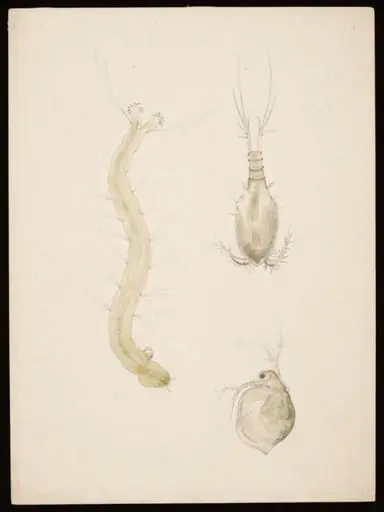 Magnified studies thought to show water-fleas and a midge lava
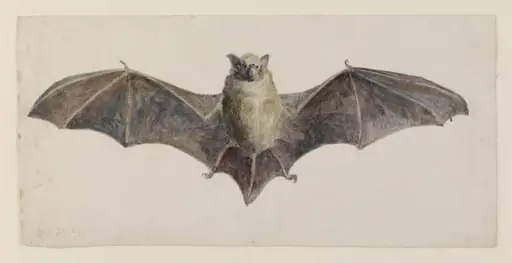 Front view of a bat
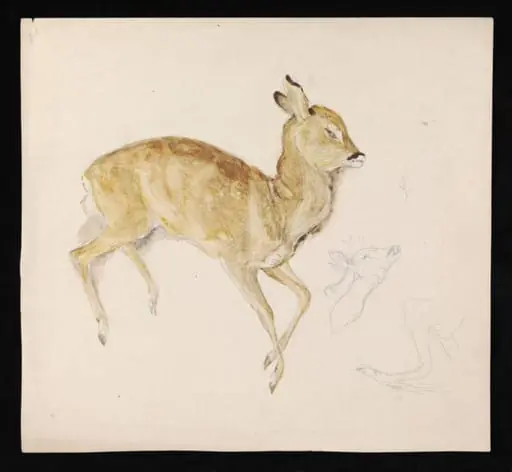 A dead fawn
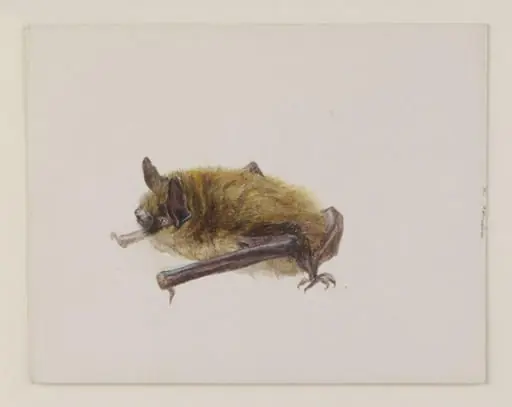 Side view of a bat with wings folded
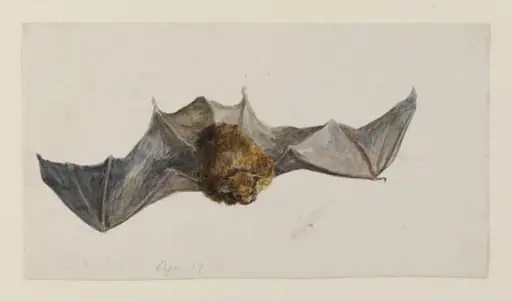 A bat seen from above