Artwork
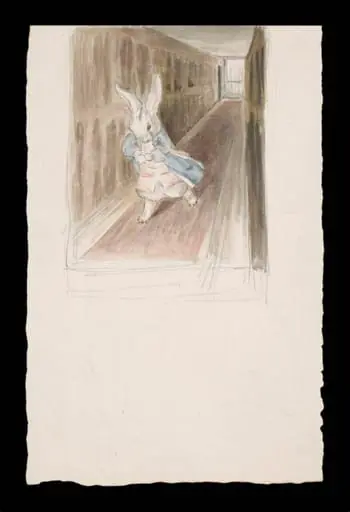
The Rabbits' Christmas Party: The Departure
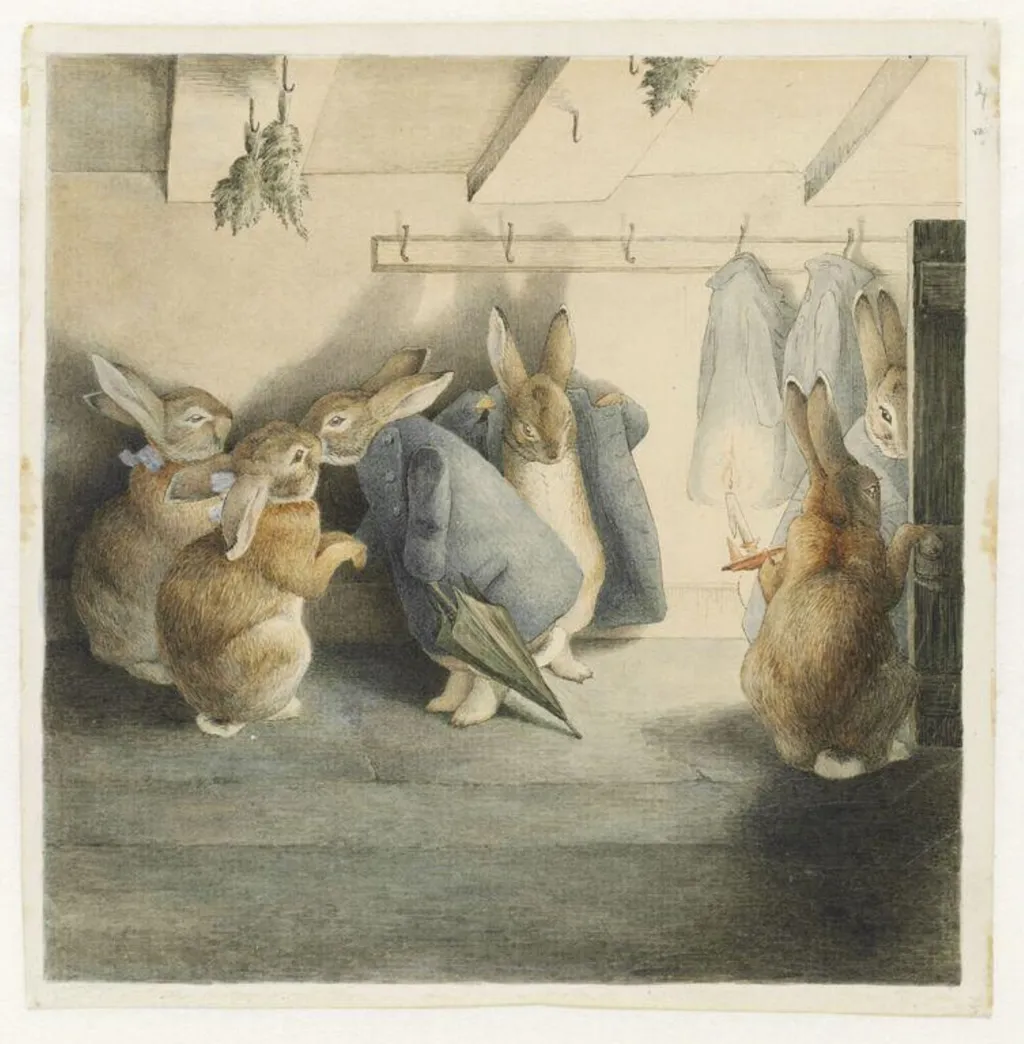
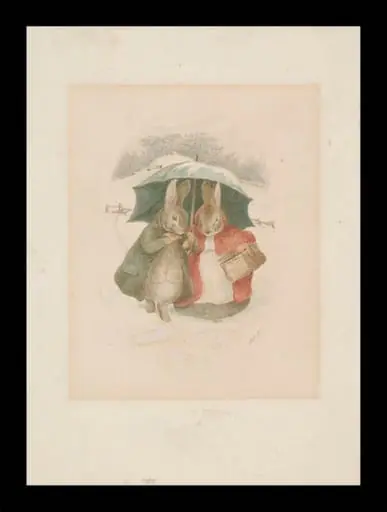
The Rabbits' Christmas Party: The Departure is a watercolor work on paper by the Impressionist artist Beatrix Potter. It dates from 1892 and is held in the collection of the Victoria and Albert Museum. Created in 1892, this watercolour is the final panel in a series of four intimate scenes depicting rabbits at a Christmas gathering.
About this work
The series shows the rabbits eating, playing, and now leaving—simple but charming stories in paint.
This is one of four watercolours by Beatrix Potter showing rabbits at a Christmas party. It’s the final scene, where the rabbits head home after the feast. Potter painted these in 1892, long before her Peter Rabbit books made her famous.
Potter gave these works to her aunt. The series shows the rabbits eating, playing, and now leaving—simple but charming stories in paint.
Look up Beatrix Potter next.
Overview
Created in 1892, this watercolour is the final panel in a series of four intimate scenes depicting rabbits at a Christmas gathering. Painted well before Beatrix Potter achieved fame through her published tales, the work reflects her early experimentation with narrative illustration. The piece was part of a private gift to her aunt, Lucy Roscoe, and later entered the V&A’s collection through the Linder Bequest.
Subject & Meaning
The scene captures the quiet departure of the rabbits after a festive evening. Dressed in miniature human attire, they bid farewell with bundled coats and lanterns, suggesting the end of a shared, domestic celebration. The absence of human figures and the focus on animal comportment reflect Potter’s interest in anthropomorphism as a gentle vehicle for observing social rituals.
Technique & Style
Executed in delicate watercolour, the work displays fine brushwork and restrained tonal variation. Potter’s attention to texture—furry coats, wooden furniture, and frost-laced windows—creates a sense of quiet realism. The composition is tightly framed, drawing focus to the rabbits’ gestures and the warm interior light, reinforcing the intimacy of the moment.
History & Provenance
The four watercolours were painted for Potter’s personal enjoyment and given to her aunt, Lucy Roscoe, in the 1890s. They remained in the family until entering the Linder Bequest, which was later acquired by the Victoria and Albert Museum. Two additional related scenes, showing dancing and Blind Man’s Buff, are known but held elsewhere.
Context
Painted during Potter’s formative years as an artist, this series predates her first published book by a decade. It reveals her early fascination with animal behavior and domestic life, themes she would later refine in her published tales. The work aligns with Victorian traditions of illustrated gift books and private artistic projects, rather than commercial publishing.
Legacy
Though not widely seen in her lifetime, these watercolours offer insight into the origins of Potter’s visual storytelling. Their quiet charm and attention to detail prefigure the aesthetic of her later books. Today, they stand as significant early examples of her artistic development, separate from but foundational to her published legacy.
Own this work as a print
Artist & collection
Artist
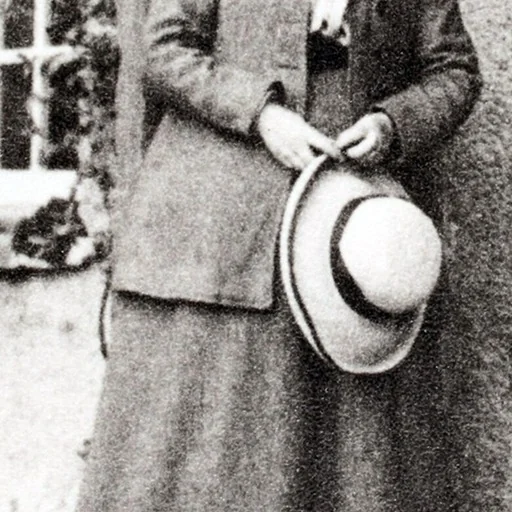
Helen Beatrix Heelis (née Potter; 28 July 1866 – 22 December 1943), usually known as Beatrix Potter ( BEE-ə-triks), was an English writer, illustrator, natural scientist, and conservationist.

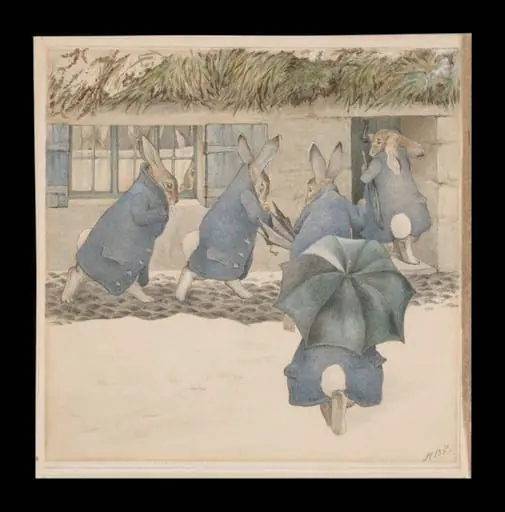 The Rabbits' Christmas Party: The Arrival
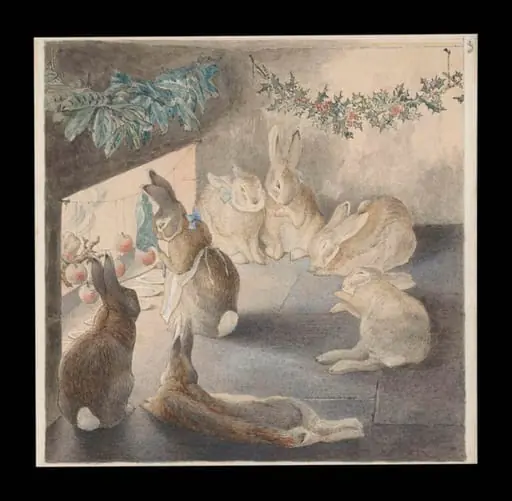 The Rabbits' Christmas Party: Roasting Apples
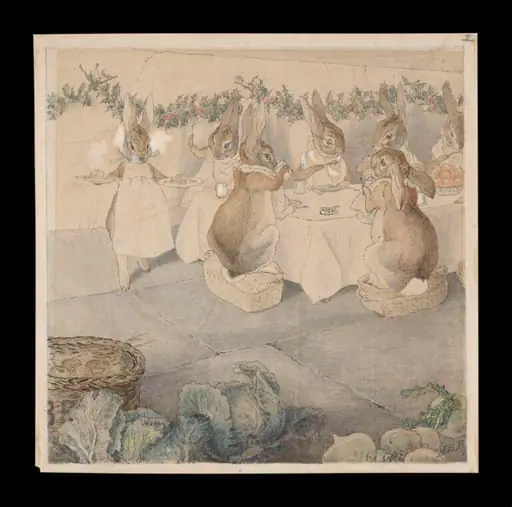 The Rabbits' Christmas Party: Christmas Dinner
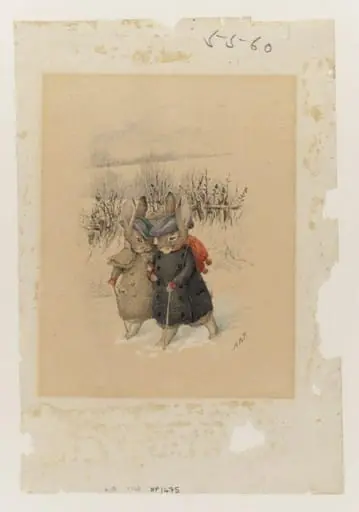 Two rabbits in hats and coats with walking sticks walking through snow
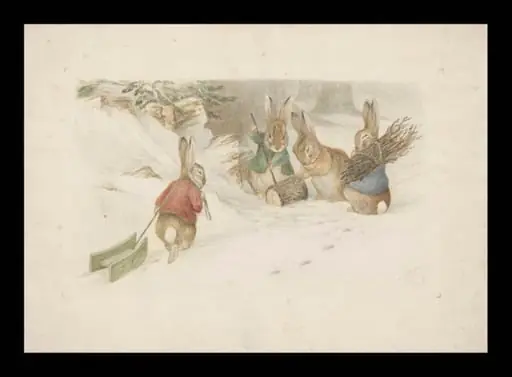 Four rabbits in the snow
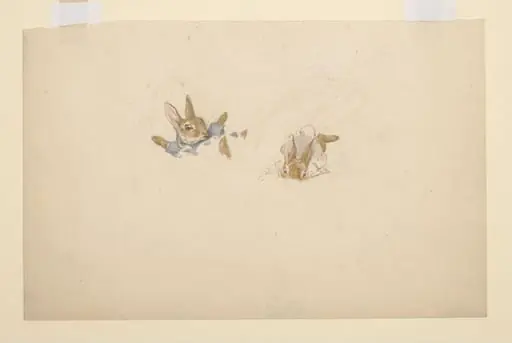 Rabbits falling into snow
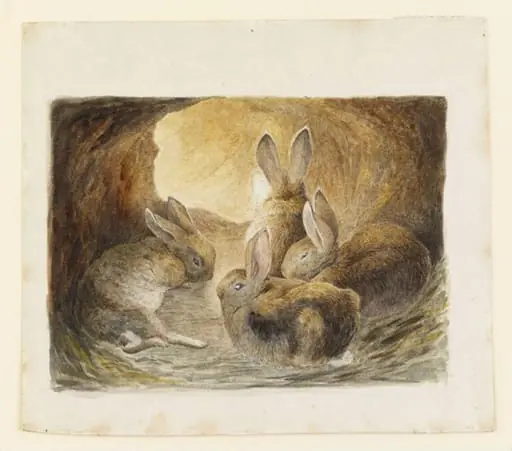 Four rabbits in a burrow
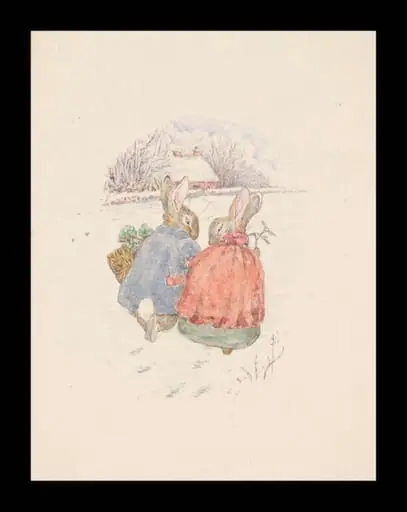 Design for a christmas card
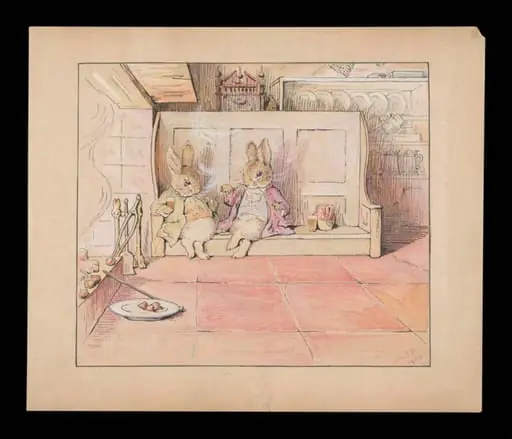 Two rabbits smoking pipes
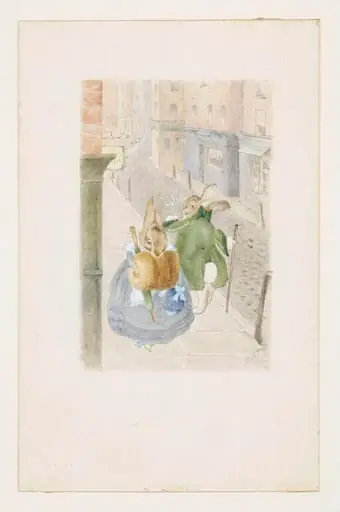 Lady rabbit and gentleman rabbit passing on the street
 The White Rabbit running along a long panelled corridor